The GASB awards research grants of up to $10,000 each for projects undertaken by graduate students that inform its standard-setting activities. The award honors Gilbert W. Crain whose work helped establish governmental accounting as a rigorous academic discipline. The typical application cycle has proposals due at the end of May, with awards announced about a month later before a new cycle resumes.
The joint FASB/GASB Postgraduate Technical Assistant Program places outstanding graduate accounting students with the Boards for a year, where they participate directly in standards development and research—a remarkable pathway into the accounting standards profession.
Marquee US universities like Stanford, Vanderbilt, Duke, Carnegie Mellon and others were built upon industrial fortunes. The pattern continues to this day because of the scale of recent personal private sector wealth and reduced government support.
Today at the usual hour we update our past coverage with a question about how long the build-out of higher education settlements that depend F-1 income can continue. Use the login credentials at the upper right of our home page.
There was a time when college buildings were most often named for scholars, presidents, and teachers whose lives were devoted to advancing knowledge. Their names reminded students that universities exist first to discover, preserve, and transmit learning.
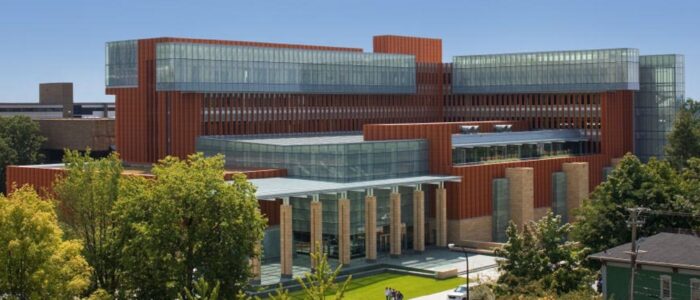
Today, many new buildings bear the names of benefactors whose generosity made their construction possible. Modern research laboratories, residence halls, performing arts centers, and athletic facilities often require gifts measured in the tens or hundreds of millions of dollars. The name recognizes not only financial support but also a lasting commitment to the institution’s future.
Neither tradition is without merit. One honors intellectual achievement. The other honors stewardship. Together they tell the story of how universities endure: ideas require both those who create them and those who provide the means for them to flourish.
Perhaps the question is not whether a building should bear the name of a scholar or a donor, but whether its name reminds future generations why the institution was built in the first place.
We track action in the catalog of this consortia standards developer because we continually seek ways to avoid spending a dollar to save a dime; characteristic of an industry that is a culture more than it is a business.
While not an ANSI accredited the FASB/GASB standards setting enterprise’s due process requirements (balance, open-ness, appeal, etc.)* are “ANSI-like” and widely referenced in education enterprise management best practice. Recent action in its best practice bibliography is listed below
At present the non-profit titles are stable with the 2020 revision. That does not mean there is not work than can be done. Faculty and students may be interested in the FASG program linked below:
Also, the “Accounting for Environmental Credit Programs”, last updated in January, may interest colleges and universities with energy and sustainability curricula. You may track progress at the link below:
We encourage our colleagues to communicate directly with the FASB on any issue (Click here). Other titles in the FASB/GASB best practice bibliography are a standing item on our Finance colloquia; open to everyone. Use the login credentials at the upper right of our home page.
Giovanni Paolo Panini, An architectural capriccio with figures among Roman ruins
The post-pandemic #WiseCampus transformation requires significant capital to meet the sustainability goals of its leadership. Campuses are cities-within-cities and are, to a fair degree, financed in a similar fashion. Tax-free bonds are an effective instrument for school districts, colleges and universities — and the host community in which they are nested — for raising capital for infrastructure projects while also providing investors with, say $10,000 to $100,000, to allocate toward a tax-free dividend income stream that produces a return in the range of 2 to 8 percent annually.
An aging population may be receptive to investment opportunities that protect their retirement savings from taxation.
Once a month, we walk through the prospectuses of one or two bond offerings of school districts, colleges and universities and examine offering specifics regarding infrastructure construction, operations and maintenance. We pay particular attention to details regarding “continuing operations”. Somehow the education industry has to pay for its green agenda. See our CALENDAR for the next Finance colloquium; open to everyone.
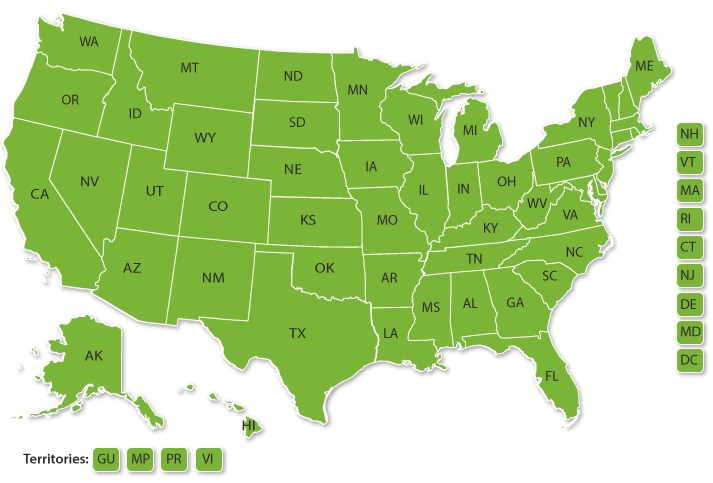
The interactive map provided by Electronic Municipal Market Access identifies state-by-state listings of tax-free bonds that contribute to the construction and operation of education facilities; some of which involved university-affiliated medical research and healthcare delivery enterprises.
CLICK ON IMAGE FOR INTERACTIVE MAP
If you need help cutting through this list please feel free to click in any day at 11 AM Eastern time. Use the login credentials at the upper right of our hope page. We collaborate with subject matter experts at Municipal Analytics and UBS.
*We see the pandemic as a driver for a step-reduction in cost in all dimensions of education communities. We coined the term with a hashtag about two years ago.
*College and university infrastructure projects are classified with public school districts under the rubric “municipal bonds” at the moment. CLICK HERE for more information.
Why the 10-Year Treasury Note Matters to School Bonds
The yield on the U.S. 10-year Treasury note is the principal benchmark for long-term borrowing throughout the American economy, including the municipal bond market that finances schools, colleges, and universities. When Treasury yields rise, investors generally expect higher returns from tax-exempt school bonds as well. To attract buyers, educational institutions must offer higher interest rates, increasing the cost of financing new classrooms, laboratories, residence halls, athletic facilities, and utility infrastructure.
Conversely, when 10-year Treasury yields decline, borrowing costs often ease, enabling school districts and universities to finance capital improvements at lower interest expense and reducing the long-term burden on taxpayers or tuition revenue. Although the final interest rate on any bond issue also reflects the issuer’s credit quality, market demand, insurance, and overall economic conditions, daily movements in the 10-year Treasury yield remain one of the most closely watched indicators of the direction and relative cost of educational facility financing.
As a rule of thumb, every 0.25 percentage point (25 basis point) increase in the borrowing rate adds about $25,000 per year in interest for every $10 million of outstanding principal.
Albert Kahn detail at the Alexander G. Ruthven Building at the University of Michigan
When universities speak of “campus growth,” what kind of growth do they mean? More students? (At the moment, international students comprise about 5 percent of total enrollment) More research? (61 percent of graduate students were international) More healthcare? (Healthcare enterprises are moving off campus to where the patients are). The traditional campus concentrated infrastructure — the modern academic health system distributes it. (At what point does a university cease to be a campus and become a regional enterprise?) More computing? (Electric or absorption chillers). Or are they simply replacing infrastructure that has reached the end of its useful life?
Abstract: Power grid operation and maintenance decision-making reform is an important part of power system reform. With the construction of massive historical quasi real-time data management platform, the reform of power system is also advancing. However, in the face of massive data explosion, the business level and business logic become disorganized and redundant. Based on the actual situation of Shenzhen Power Supply Bureau, the sg-erp data center is composed of structured data center, massive data center, unstructured data center and power grid GIS data center. With the unprecedented growth of business application data, the data center can improve business logic and promote power system reform. The experimental results show that big data technology has a broad application prospect in the reform of power industry.
American English is effectively the de facto reference language for most modern LLM tokenization. During today’s session we explore the at-present advantage Americans have in the development of artificial applications — whether it should always be that way or not. Tokenization isn’t language-neutral — it’s heavily skewed toward English due to data realities. This is one of the core reasons why “English-first” prompting often works best in today’s LLMs.
We will use the document linked below to begin the exploration:
Final Input to the AI Model:
[464, 2068, 7583, 1776, 18045, 625, 262, 16925, 3290, 13]
Background:
The model only sees this list of numbers. It has no direct understanding of English words anymore — it learned patterns from billions of examples during training using these number sequences.This numerical input then goes through embeddings (turning numbers into vectors), attention layers, etc., to generate a response. Most widely used tokenizers (e.g., OpenAI’s tiktoken, Llama’s, etc.) are trained primarily on English-heavy datasets (often 60–90%+ English in pre-training corpora).
Outcome:
Better compression for English — Common English words and patterns become single tokens or short subwords.
Worse efficiency for other languages — Non-English text often gets fragmented into more tokens (sometimes 2–5× more for the same semantic content).
Impact:
Higher token counts = higher API costs and shorter effective context windows for non-English users.
Poorer downstream performance on non-English tasks.
English becomes the “cheapest” and often “best-performing” language for prompting and reasoning.
Studies consistently show this “tokenization tax” or “language premium”: English typically has the lowest token-per-character or token-per-meaning ratio in major models.
Bias:
Multilingual models still underperform on low-resource languages.
It reinforces English as the default language for AI development.
It affects fairness, accessibility, and global adoption.
Efforts to fix this include dedicated multilingual tokenizers, language-specific fine-tuning, and more balanced approaches. However, because English dominates training data and benchmarks, it remains the practical standard that everything else is measured against.
Tokenization isn’t language-neutral — it’s heavily skewed toward English due to data realities. This is one of the core reasons why “English-first” prompting often works best in today’s LLMs.
* StandardsMichigan.COM normally deals with Language issues every Monday at least once per month.
The International Trade Administration (ITA) of the U.S. Department of Commerce (DOC) is requesting public comments to gain insights on the current global artificial intelligence (AI) market. Responses will provide clarity about stakeholder concerns regarding international AI policies, regulations, and other measures which may impact U.S. exports of AI technologies. Additionally, the request for information (RFI) includes inquiries related to AI standards development. ANSI encourages relevant stakeholders to respond by ITA’s deadline of October 17, 2022.
New update alert! The 2022 update to the Trademark Assignment Dataset is now available online. Find 1.29 million trademark assignments, involving 2.28 million unique trademark properties issued by the USPTO between March 1952 and January 2023: https://t.co/njrDAbSpwBpic.twitter.com/GkAXrHoQ9T