Cooking on a Budget: Learn how to make a flavourful dish for less than £1.70
Food Standards Agency UK: Meat and slaughter
Welcome back to a new academic year! 🤗
We’re thrilled to see staff and students back on campus and ready for another exciting term. Who’s ready to get started? ✨ pic.twitter.com/cvf9TQhYU8
— University of Southampton (@unisouthampton) September 30, 2024
“Python is the programming equivalent
of a Swiss Army Knife.”
— Some guy
Open source standards development is characterized by very open exchange, collaborative participation, rapid prototyping, transparency and meritocracy. The Python programming language is a high-level, interpreted language that is widely used for general-purpose programming. Python is known for its readability, simplicity, and ease of use, making it a popular choice for beginners and experienced developers alike. Python has a large and active community of developers, which has led to the creation of a vast ecosystem of libraries, frameworks, and tools that can be used for a wide range of applications. These include web development, scientific computing, data analysis, machine learning, and more.
Another important aspect of Python is its versatility. It can be used on a wide range of platforms, including Windows, macOS, Linux, and even mobile devices. Python is also compatible with many other programming languages and can be integrated with other tools and technologies, making it a powerful tool for software development. Overall, the simplicity, readability, versatility, and large community support of Python make it a valuable programming language to learn for anyone interested in software development including building automation.
As open source software, anyone may suggest an improvement to Python(3.X) starting at the link below:
Python can be used to control building automation systems. Building automation systems are typically used to control various systems within a building, such as heating, ventilation, air conditioning, lighting, security, and more. Python can be used to control these systems by interacting with the control systems through the building’s network or other interfaces.
There are several Python libraries available that can be used for building automation, including PyVISA, which is used to communicate with instrumentation and control systems, and PyModbus, which is used to communicate with Modbus devices commonly used in building automation systems. Python can also be used to develop custom applications and scripts to automate building systems, such as scheduling temperature setpoints, turning on and off lights, and adjusting ventilation systems based on occupancy or other variables. Overall, Python’s flexibility and versatility make it well-suited for use in building automation systems.
.@PyCon US 2025 is a wrap, and our hearts are full with #Python community love! Thanks to every single one of you who organized, volunteered, attended, & sponsored 🐍🫶 #PyConUS
The PSF office will be closed May 26-28 so our staff can rest & recover. See you back online soon! pic.twitter.com/Sy1hiRmvw4
— Python Software Foundation (@ThePSF) May 27, 2025
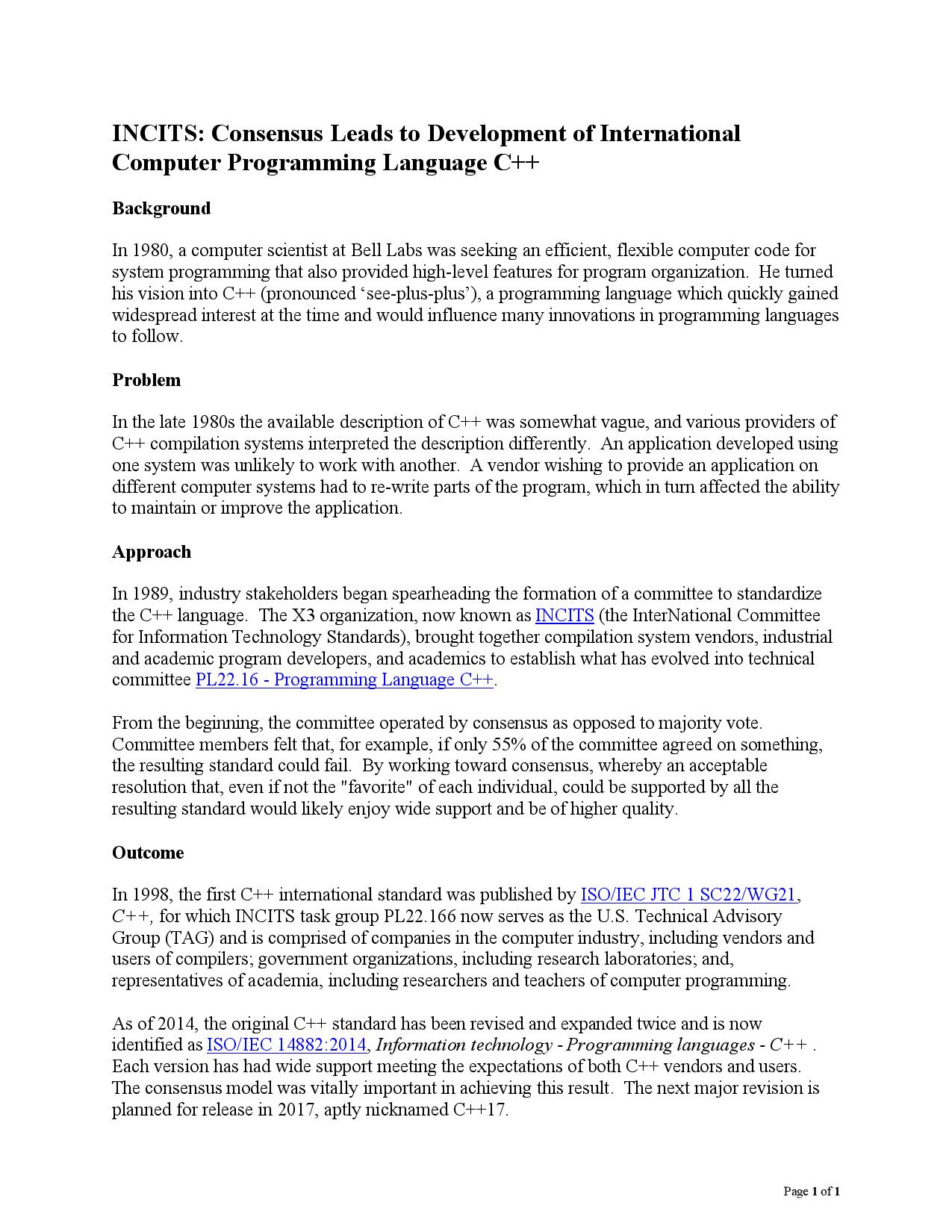
INCITS Announces Publication of INCITS/ISO/IEC 14882:2024[2025] – C++
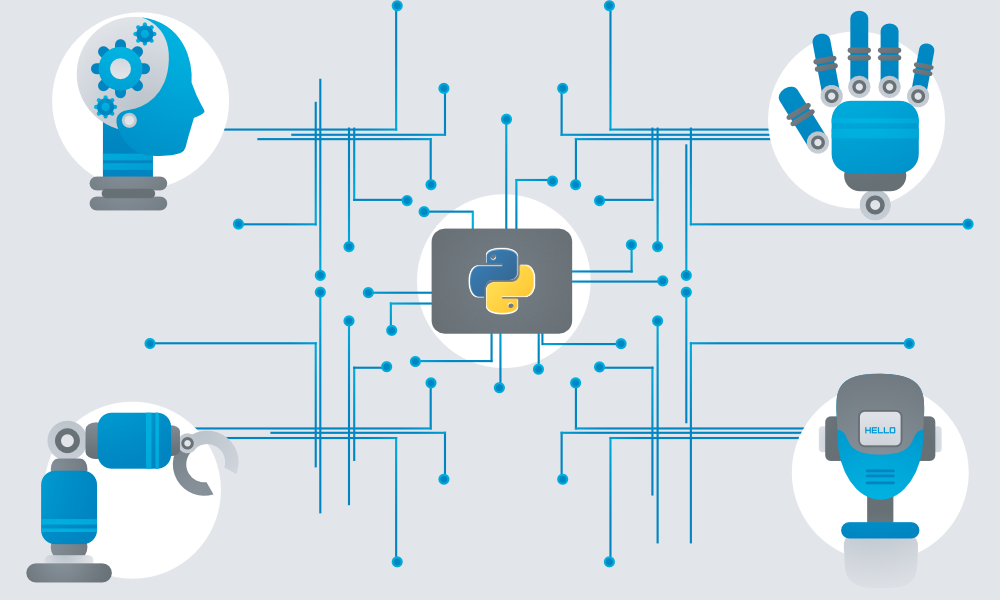
Python and C++ often work together rather than compete. Python provides an accessible, expressive language for developing applications, experiments and artificial-intelligence workflows, while C++ supplies speed and close control of computing resources. Many Python libraries therefore present a convenient Python interface while performing demanding calculations in compiled C or C++ code underneath. AI frameworks such as PyTorch follow this pattern extensively.
Developers can also connect the languages directly: Python can call C++ libraries, and C++ programs can embed Python. The result combines Python’s rapid development and enormous software ecosystem with C++ performance, making the partnership especially important in scientific computing and artificial intelligence.
* CLICK HERE to access ANSI Committee on Education Case Study Catalog
Tomas Mikolov, et. al
Google Inc. Mountain View
Abstract. The recently introduced continuous Skip-gram model is an efficient method for learning high-quality distributed vector representations that capture a large number of precise syntactic and semantic word relationships. In this paper we present several extensions that improve both the quality of the vectors and the training speed. By subsampling of the frequent words we obtain significant speedup and also learn more regular word representations. We also describe a simple alternative to the hierarchical softmax called negative sampling.
An inherent limitation of word representations is their indifference to word order and their inability to represent idiomatic phrases. For example, the meanings of “Canada” and “Air” cannot be easily combined to obtain “Air Canada”. Motivated by this example, we present a simple method for finding phrases in text, and show that learning good vector representations for millions of phrases is possible.
Large Language Models and Infrastructure Technical Standards
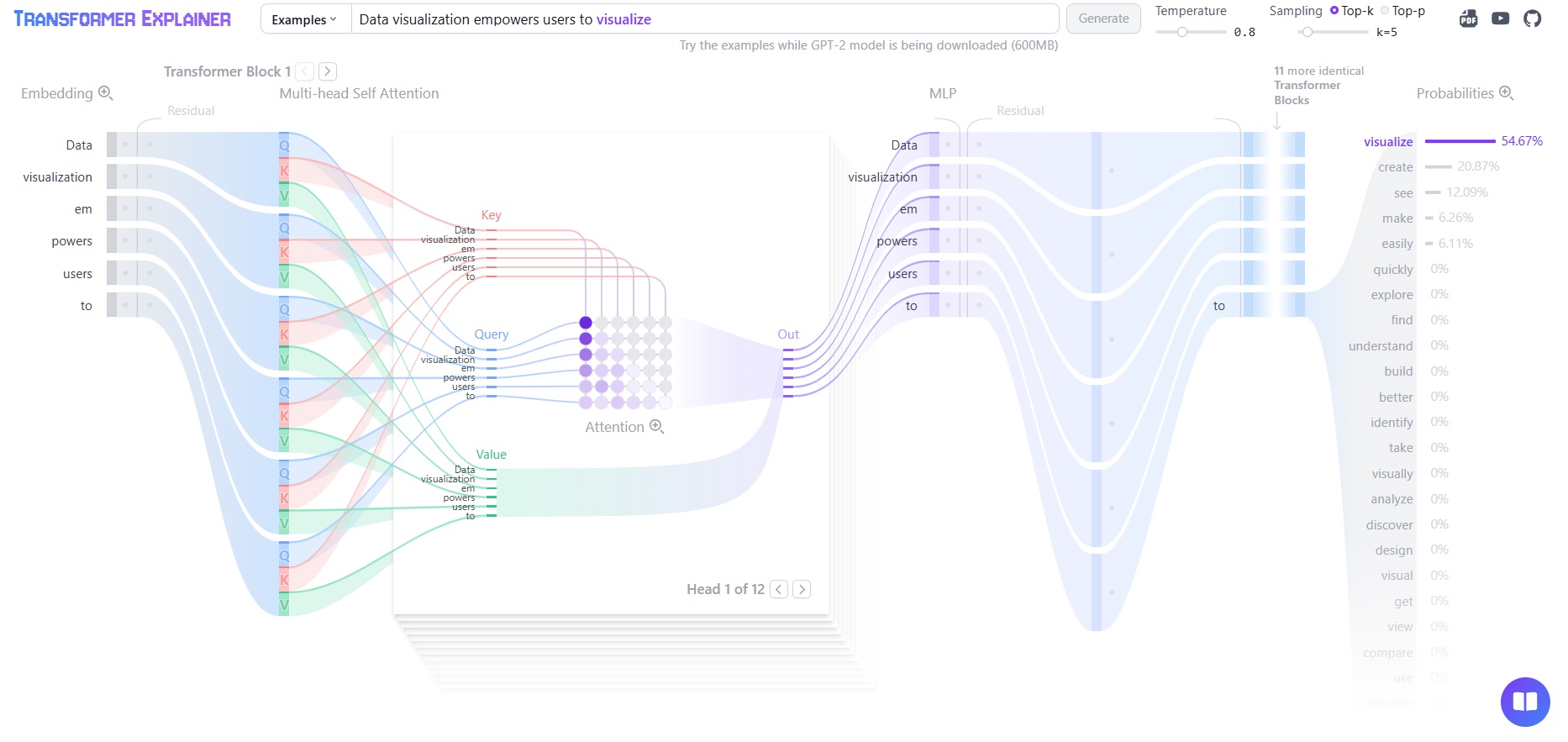
Large Language Models (LLMs) are poised to significantly accelerate and reshape the development of infrastructure standards — including engineering codes, technical specifications for civil works, transportation, energy grids, water systems, and related Standards Development Organization (SDO) processes at ASTM, IEEE, ASABE, ISO, and similar bodies. This connection traces back to foundational ideas in distributed representations (Hinton et al., Mikolov’s Word2Vec) that powered the transformer revolution, which in turn enabled modern LLMs and the shift from passive generative AI to active, goal-directed agentic AI.
While LLMs will not replace human expertise, consensus-building, or rigorous validation, they will transform traditionally slow, document-heavy workflows into faster, more collaborative, and data-driven processes.
1. Faster Drafting, Summarization, and Gap Analysis
LLMs can rapidly summarize lengthy documents, extract key requirements, identify inconsistencies across related standards, and generate initial draft sections or comparison tables. This is especially valuable for reviewing historical codes, research papers, regulations, and stakeholder inputs.
Infrastructure example: In renewable energy permitting or grid interconnection standards, LLMs excel at processing complex environmental impact statements and regulatory texts to accelerate reviews.
2. Enhanced Requirements Engineering and Consistency Checking
LLMs support formal requirements extraction, flag ambiguities, suggest measurable criteria, and translate between domains. They help maintain alignment between textual standards and digital implementations such as Building Information Modeling (BIM) or simulation tools.
3. Improved Accessibility, Education, and Stakeholder Participation
LLMs make standards more usable by generating plain-language explanations, FAQs, examples, and tailored training materials. They lower barriers for broader participation in SDO committees by helping non-experts understand and contribute to drafts.
4. Domain-Specific Applications in Infrastructure
5. Broader Process Changes for SDOs
Limitations and Important Caveats
Expect 2–5× faster iteration on drafts, superior knowledge management, and more adaptive standards. Early adopters using LLM assisted tools with proper governance will lead the next generation of infrastructure standards development.
Standards Nebraska | Statement of Net Position: $5.191B (Page 26)
Ingredients:
Directions:
(Note: This soup freezes well.) Matzo balls were prepared according to the recipe on the back of the box of matzo meal (Manischewitz).
b
Celebrating a decade of leadership!
Today marks the 10th anniversary of Chancellor Jeffrey P. Gold’s remarkable journey with UNMC. Thank you, @jeffreypgold, for your unwavering commitment to excellence and your visionary guidance to the UNMC community. https://t.co/jgGhyMH55r pic.twitter.com/fPxvyMsnz2
— University of Nebraska Medical Center (@unmc) February 1, 2024
Getting a dog during college can be an exciting thought for many students who are leaving home and are experiencing their first taste of true freedom; However, many young adults fail to consider the responsibilities and obligations that come with owning a dog while in school.
Apart from the necessity as companions for students with disabilities; consider the following:
Pros:
They can lead to decreased stress.
Dogs have the incredible ability to make you feel more relaxed and less stressed. A study actually found that when people took care of dogs for just three months, they showed significant drops in blood pressure and reactivity to stress. There’s no better feeling than coming home after a long day to your furry best friend who’s thrilled to see you.
They help motivate you to exercise.
Daily exercise is an essential part of a dog’s well-being and absolutely cannot be neglected. However, this requirement becomes mutually beneficial because it also ensures that you’re getting outside daily, intaking sunlight, and getting your own exercise. Even if you’re having a rough day and don’t feel like doing much, your dog will make sure that you go outside and get moving.
They make great companions if you live alone.
Dogs can be fantastic companions for students who choose to live alone. Living by yourself can be lonely. Your pet can serve as a companion to keep you occupied, as well as a solid guard dog when needed (or you can at least let them think they are).
Cons:
They require a time and patience.
If you’re thinking about getting a dog in college, be prepared to commit tons of time and attention to them. Training sessions will be vitally important in ensuring that your dog is potty-trained, can behave on a leash, and can be trusted around other dogs. You’ll also have to make time for vet appointments, play time, and letting them out on a consistent basis.
They can be expensive.
Dogs can be extremely expensive. Between vet bills, food, toys, and general dog supplies, the costs can quickly add up. Assessing your financial situation beforehand and determining whether or not now is the right time for you to get a dog, is absolutely essential.
They can cut into your social life; although can expand your social life with a starting point for common conversation with other dog lovers.
Like it or not, having a dog will cut into your social time with your friends. Staying out until 4 am on the weekends or being away from your house for 12 hours at a time is no longer feasible when your pet is waiting for you at home. Plan to make arrangements to fit your dog’s needs, which may mean missing out on social activities from time to time.
Readings
University of Michigan: Animals on Campus
North Central Michigan College
It sure looks 👀 different around @EastCarolina and CET this week. ➡️https://t.co/pPRZ35XhMw pic.twitter.com/niXow6C8rI
— ECU Engr&Technology (@ECUCET) March 5, 2024
Photo of the Week: The George H. Deuble Foundation Student Lounge is a popular destination for students @KentStateStark https://t.co/YWuD7kSl60 pic.twitter.com/tGAawUbiot
— Kent State (@KentState) February 24, 2023
New update alert! The 2022 update to the Trademark Assignment Dataset is now available online. Find 1.29 million trademark assignments, involving 2.28 million unique trademark properties issued by the USPTO between March 1952 and January 2023: https://t.co/njrDAbSpwB pic.twitter.com/GkAXrHoQ9T
— USPTO (@uspto) July 13, 2023
Standards Michigan Group, LLC
455 East Eisenhower Parkway, Suite 300
Ann Arbor, MI 48108 USA
888-748-3670