The West Virginia University PRT (Personal Rapid Transit) system is a unique and innovative form of public transportation that serves the WVU campus and the city of Morgantown, West Virginia. The PRT system consists of a series of automated, driverless vehicles that operate on an elevated track network, providing fast and convenient transportation to key destinations on and around the WVU campus.
The PRT system was first developed in the 1970s as a solution to the growing traffic congestion and parking demand on the WVU campus. The system was designed to be efficient, reliable, and environmentally friendly, and to provide a high-tech, futuristic mode of transportation that would appeal to students and visitors.
The PRT system currently operates five different stations, with stops at key campus locations such as the Mountainlair Student Union, the Engineering Research Building, and the Health Sciences Center. The system is free for all WVU students, faculty, and staff, and also offers a low-cost fare for members of the general public.
The PRT system has been recognized as one of the most advanced and innovative public transportation systems in the world, and has won numerous awards for its design, efficiency, and environmental sustainability. It has also become an iconic symbol of the WVU campus, and is often featured in promotional materials and advertising campaigns for the university.
“Evaluation of the West Virginia University Personal Rapid Transit System” | A. Katz and A. Finkelstein (Journal of Transportation Engineering, 1987) This paper evaluates the technical and operational performance of the WVU PRT system based on data collected over a six-year period. The authors identify several issues with the system, including maintenance problems, limited capacity, and difficulties with vehicle docking and undocking.
“Modeling of the West Virginia University Personal Rapid Transit System” by J. Schroeder and C. Wilson (Transportation Research Record, 2002) This paper presents a mathematical model of the WVU PRT system that can be used to analyze its performance and identify potential improvements. The authors use the model to evaluate the impact of various factors, such as station dwell time and vehicle capacity, on the system’s overall performance.
“Evaluating the Effectiveness of Personal Rapid Transit: A Case Study of the West Virginia University System” by K. Fitzpatrick, M. Montufar, and K. Schreffler (Journal of Transportation Technologies, 2013) This paper analyzes the effectiveness of the WVU PRT system based on a survey of users and non-users. The authors identify several challenges facing the system, including low ridership, reliability issues, and high operating costs.
“In the sweat of thy face shalt thou eat bread, till thou return unto the ground; for out of it wast thou taken: for dust thou art, and unto dust shalt thou return.
There are several ANSI accredited standards that apply to mortuary science, particularly in the areas of forensic science and medicolegal death investigation. These standards are developed to ensure the highest levels of professionalism, quality, and consistency in the field. Here are some key standards:
ANSI/ASB Best Practice Recommendations: The American National Standards Institute in collaboration with the American Academy of Forensic Sciences has developed various standards, including those related to the handling and processing of human remains. For example, the ANSI/ASB Best Practice Recommendation 094-2021 outlines procedures for postmortem friction ridge print recovery, emphasizing systematic approaches and legal compliance during the process ANSI/ASB Standard 125-2021: This standard focuses on the general requirements for medicolegal death investigation systems. It covers infrastructure, personnel training, and competency requirements to ensure high-quality death investigations. It also references other professional guidelines and accreditation checklists from organizations such as the National Association of Medical Examiners and the International Association of Coroners and Medical Examiners.
These standards are integral to maintaining rigorous protocols and ethical practices within mortuary science and related fields. They help ensure that procedures are consistent, legally compliant, and respectful of the deceased, ultimately contributing to the reliability and credibility of forensic investigations. For more detailed information, you can refer to the ANSI and ASB standards documentation available through their respective organizations.
Anatomical donation programs are supported by relatively stable best practice literature that are highly cross-referencing. The organ donation industry grows at a surprising clip and, as such, has its share of sketchy actors.
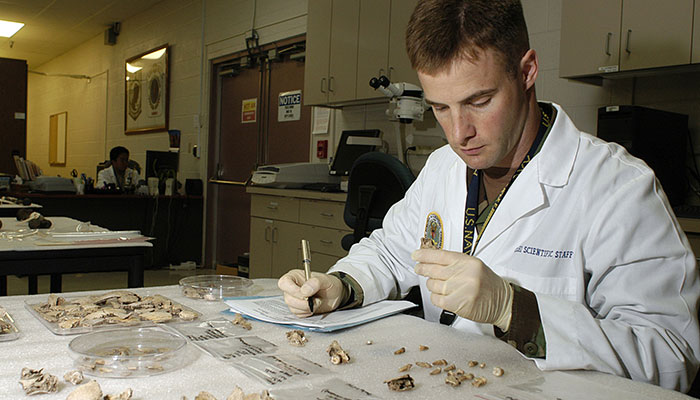
Our discussion today — at 15:00 UTC– is limited to the safety and sustainability of the support facilities for human cadavers only; with attention to the most recent construction projects.
This content is accessible to paid subscribers. To view it please enter your password below or send mike@standardsmichigan.com a request for subscription details.
This content is accessible to paid subscribers. To view it please enter your password below or send mike@standardsmichigan.com a request for subscription details.
This content is accessible to paid subscribers. To view it please enter your password below or send mike@standardsmichigan.com a request for subscription details.
This content is accessible to paid subscribers. To view it please enter your password below or send mike@standardsmichigan.com a request for subscription details.
New update alert! The 2022 update to the Trademark Assignment Dataset is now available online. Find 1.29 million trademark assignments, involving 2.28 million unique trademark properties issued by the USPTO between March 1952 and January 2023: https://t.co/njrDAbSpwBpic.twitter.com/GkAXrHoQ9T