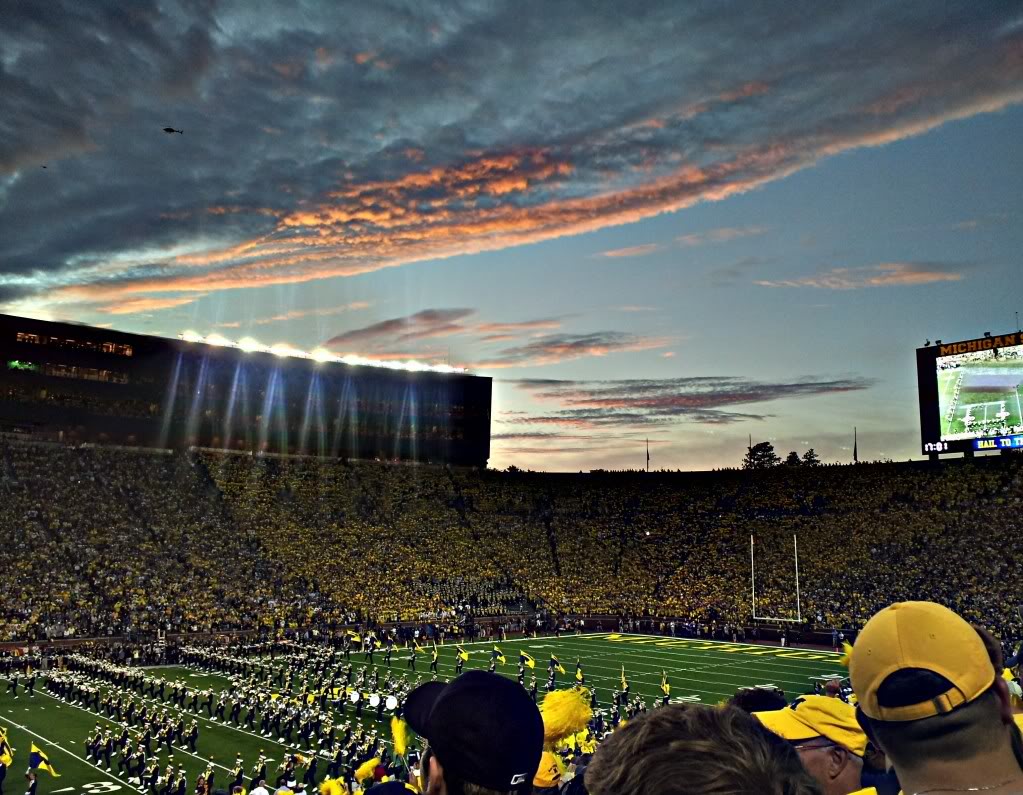

The University of Michigan has supported the voice of the United States education facility industry since 1993 — the second longest tenure of any voice in the United States. That voice has survived several organizational changes but remains intact and will continue its Safer-Simpler-Lower Cost-Longer Lasting advocacy on Code Panel 3 in the 2029 Edition.
Today, during our customary “Open Door” teleconference we will examine the technical concepts under the purview of Code Panel 1; among them:
Article 206 Signaling Circuits
Article 300 General Requirements for Wiring Methods and Materials
Article 590 Temporary Installations
Chapter 7 Specific Conditions for Information Technology
Chapter 9 Conductor Properties Tables
Public Input on the 2029 Edition will be received until April 9, 2026.
The development of this standard is coordinated with the ICC Group A Codes. We have tracked concepts in it previous revisions; available in the link below.
As always, we encourage our colleagues with workpoint experience to participate directly in the ICC Code Development process. CLICK HERE to get started.
Issue: [15-283]
Category: Athletics & Recreation, Architectural, Public Safety
Contact: Mike Anthony, Jack Janveja, Richard Robben
Today we unpack the latest in codes, standards, guidelines, recommendations and safety legislation that set the standard of care for the design, manufacture and maintenance of interior fixtures such as carpet, furniture, bookshelves and ceiling tiles, plumbing fixtures — a large part of what construction industry professionals find in CSIGroup MasterFormat Division 12 — Furnishings. — i.e. “Things that are not nailed down” Such things can elude infrastructure budgets that are dominated by real assets fixed in place.
Other accredited standards developers in this domain:
In large research universities, it is common for building service personnel engaged in keeping facilities clean and tidy to constitute the largest proportion of permanent employees.
Partial listing. We have until July 15th to comment on committee action
Our proposal G153-25: Page 754
Michigan Modular G195-25: Page 859
“Clinical Need” definition for enhanced security: Page 765
“Electric Vehicle Charger” definition by the National Parking Association/Parking Consultant’s Council: Page 457
“EV Charging Space” definition: Page 458
“EV Supply Equipment” definition: Page 460
ADM20-25 Authority of building official in natural disasters and high hazard regions, p141
ASM3-25 Electrical equipment re-use, p195
G2-25. New definition for Animal Housing Facilities, p438
S57-25. Quite a bit of back and forth on wind and PV “farms, p1053, et. al (“Wind and solar farms are different from animal and produce farms” — Mike Anthony)
G143-25 Lighting Section 1204L remote rooms, windowless rooms, University of Texas Austin student accommodation costs, p. 737-
PM31-25 Housekeeping and sanitation in owned property as law, p1794
PM50-25, Sleeping units to be private, p.1829
RB146-25. Energy storage systems installed in garages, requirements for physical protection, p. 2195
RB144-25, Load capacity ratings and compliance with NFPA 855, p. 2186
RB143-25, Working roof walking access around solar panels, p. 2180
SP1-25 New definition of base flood elevation for purpose of correlating requirements for electrical safety, et. al, p. 2578
Modular furniture systems with integral power and telecommunication fittings require attention to power and digital pathways. “Modular systems furniture” is a generic term for bundles of panels, worksurfaces, shelves, and other items sold by a single manufacturer as a package for furnishing offices. The modular furniture system environment is characterized by close proximity to electrical energy. Where there is electrical energy there are concerns for shock and fire safety.
Fire safety considerations appear in NFPA 70 National Electrical Code (NEC)– generally in Articles 210 (Branch Circuits), Article 220 (Branch Circuit, Feeder and Service Load Calculations) — and with more specific safety considerations appearing in Articles 604 (Manufactured Wiring Systems) and Article 605 (Office Furnishings). The current edition of the National Electrical Code is linked below:

Over the past 30-odd years modular furniture manufacturers have worked out a lot of the bugs in products; making it easier for furniture contractors to deliver a safer and more effective installation. What remains are site-specific conditions — such as lighting load, current draw of space heaters and personal air conditioners through the furniture power pathway — that must be reckoned with. A sample of other considerations:
Harmonic heating of the furniture pathway caused by non-linear, harmonic load
The risk of double-phasing when circuit breakers are joined with handle ties back at the panelboard and share a neutral
Any lighting equipment used with the partitions must have of properly sized cord no more than 9 ft long
Modularity in power tap cords (“whips’) between furniture raceways and the first gathering point
There are other safety and sustainability issues related to USB outlets, and data/voice outlets[2] that we will cover in another post and in our collaborations with IEEE SCC-18 and the IEEE Education & Healthcare Facilities Committee (IEEE E&H).
Seneca College / Toronto
We find office wiring a relatively lively “promontary” in safety and sustainability circles. The transcript of debate among interior wiring experts is always a good place to listen in on the technical discussion; linked below:
We find manufactured wiring concepts tracking that effects office occupancies for all industries. Market incumbents continue advocacy for more ground fault and tamper-resistant receptacles in day care and gymnasium.
A more significant debate tracks in Chapter 2 — related to office modular furniture wiring because electrical load calculations determine how designers specify branch circuits for all occupancy classifications present in education communities (which is nearly every occupancy type defined in the International Building Code):
,Standards Michigan, beginning with its inspiration in the original University of Michigan standards advocacy enterprises, has a long and storied engagement with Chapter 2 of the NEC covered here and also academic literature and also in research sponsored by NFPA’s Fire Protection Research Foundation.
We always encourage our workpoint experts in the thousands of electrical and telecommunication units in the education and healthcare facilities industry to participate directly in the NFPA Code Development process (CLICK HERE to join a committee).
Since both the National Electrical Code and the National Electrical Safety Code revision cycles are roughly coincident in 2021 we working on electrical power issues every day, collaborating with the IEEE E&H Committee. Online meetings are open to everyone.
New update alert! The 2022 update to the Trademark Assignment Dataset is now available online. Find 1.29 million trademark assignments, involving 2.28 million unique trademark properties issued by the USPTO between March 1952 and January 2023: https://t.co/njrDAbSpwBpic.twitter.com/GkAXrHoQ9T