
Category Archives: @NFPA

Loading
loading...

2029 National Electrical Code Panel 3

Electrical Safety Catalog

2029 Revision Calendar


Articles covered:

Article 206
Non-Power-Limited Remote-Control and Signaling Circuits |
Article 300
General Requirements for Wiring Methods and Materials |
Article 335
Instrumentation Tray Cable — formerly Article 727 |
Article 720
Limited-Energy System Installations |
Article 721
Limited-Energy Power Sources |
Article 722
Limited-Energy Cables | 
Article 723
Raceways, Cable Routing Assemblies, and Cable Trays for Limited-Energy Systems |
Article 724
Class 1 Power-Limited Remote-Control and Signaling Circuits |
Article 725
Class 2 and Class 3 Power-Limited Circuits |
Article 726
Class 4 Fault-Managed Power Systems |
Article 728
Fire-Resistive Cable Systems |
Article 760
Fire Alarm Systems |
Article 772
Chapter 9 Tables
Ω

https://docinfofiles.nfpa.org/files/AboutTheCodes/70/70_A2028_NEC_P03_PISubmittals.pdf

Noteworthy proposal concepts:

  1. Cable trays interfering with HVAC ductwork and fire sprinkler lines.  Parallel cable tray feasibility
  2. Difficulty accessing lighting fixtures and fire alarm components for maintenance.
  3. Potential violation of plenum clearance and airflow requirements.  Some cable trays in plenums reportedly contain non-plenum-rated cables, which is a fire code violation.
  4. Document flags this as a high-priority remediation item before any LED lighting retrofit proceeds.
  5. Existing security wiring (CCTV, access control, intrusion detection) is a mix of old analog coax and early Cat 5 cables.
  6. Many runs exceed recommended length for reliable video transmission.  Frequent signal degradation and reliability complaints.
  7. Security cables are sharing overcrowded cable trays with power-limited lighting control wires and fire alarm cabling.
  8. Risk of electromagnetic interference (EMI) noted due to proximity to higher-voltage lines.
  9. Plenum space constraints make it difficult to add new IP-based security cameras without major reorganization.
  10. Current security wiring cannot support newer high-resolution IP cameras or PoE+ powered devices.
  11. Several editorial proposals by Mike Holt. (He’s generally correct on clarity improvements that he needs for educational purposes)
Ω
For discussion next meeting, when we march through all proposals of interest to IEEE:
  • When electricians work in ceiling plenums above hallways while students pass below, several serious hazards emerge. Tools, screws, cable scraps, or ceiling tiles can fall, causing head injuries or slips. Disturbed dust, fiberglass, or potential asbestos particles may rain down, creating respiratory risks.
  • Live electrical work on lighting or cable trays raises shock/fire dangers if a fault occurs or debris shorts circuits. Open plenums can compromise fire-rated barriers, allowing smoke or flames to spread rapidly in an emergency.
  • Noise and visual distractions increase trip hazards for students. Without full barricades, lockout/tagout, and proper fall protection, these overhead activities expose young people to preventable injury. Scheduling work after hours or using full corridor closures is essential.
  • Power-limited (Class 2) cabling operates at low voltage (<60V DC) with current/power caps (~100VA), dramatically reducing shock and fire risks. Installation is simpler and cheaper—no conduit or heavy mechanical protection needed in many cases, allowing flexible routing. LEDs run cooler and more efficiently with remote drivers, improving lifespan and energy savings. Easier maintenance and safer for retrofits.
  • Severe distance and power limits due to voltage drop and 100W/5A caps require multiple drivers or shorter runs. Higher upfront costs for specialized power supplies. Potential reliability issues from more connection points. Less suitable for high-power or long-distance applications compared to line-voltage wiring.

April 29, 2026


At the request of IEEE Joint IAS/PES Standards Michigan, Mike Anthony moved to CMP-3 from CMP-15.

Articles Under CMP 3

  • Article 300 — General Requirements for Wiring Methods and Materials
  • Article 335 — Instrumentation Tray Cable (in some references for the 2029 cycle)
  • Article 590 — Temporary Installations (being relocated/renumbered in the 2026 cycle, e.g., potentially to Article 140 in Chapter 1, as temporary wiring is not treated as a special occupancy)
  • Article 720 — Limited-Energy System Installations (new/general article covering wiring methods for limited-energy systems)
  • Article 721 — Limited-Energy Power Sources
  • Article 722 — Limited-Energy Cable (covers cables for power-limited, fault-managed, etc.)
  • Article 723 — Raceways, Cable Routing Assemblies, and Cable Trays for Limited-Energy Systems (newly created in the 2026 cycle)
  • Article 725 — Class 2 and Class 3 Remote-Control, Signaling, and Power-Limited Circuits
  • Article 726 — Class 4 Fault-Managed Power Circuits and Equipment
  • Article 727 — Instrumentation Tray Cable
  • Article 728 — Fire-Resistive Cable Systems
  • Article 760 — Fire Alarm Systems (power-limited and non-power-limited portions)

CMP 3 also handles associated content in: Chapter 9 — Tables, including Tables 11(A) & (B) and Tables 12(A) & (B) (related to conductor properties and other supporting tables for the above topics).


  • Notes on Changes and Scope
    CMP 3 focuses on general wiring rules, cable types, raceways/trays for low-energy applications, and signaling/communications-related wiring (distinct from higher-power utilization equipment or special occupancies handled by other panels).
  • In the 2026 NEC cycle, there has been significant reorganization of Chapter 7 to consolidate limited-energy systems under articles like 720–726 (and related ones), moving away from older structures. This includes new articles for raceways/cable trays specific to limited-energy systems and adjustments to scopes for clarity.
  • Article 206 (Non-Power-Limited Remote-Control and Signaling Circuits) appears in some 2026-related references as newly designated or relocated material handled in this area.
    Temporary installations (Article 590) are transitioning out of “special” categories in restructuring efforts.

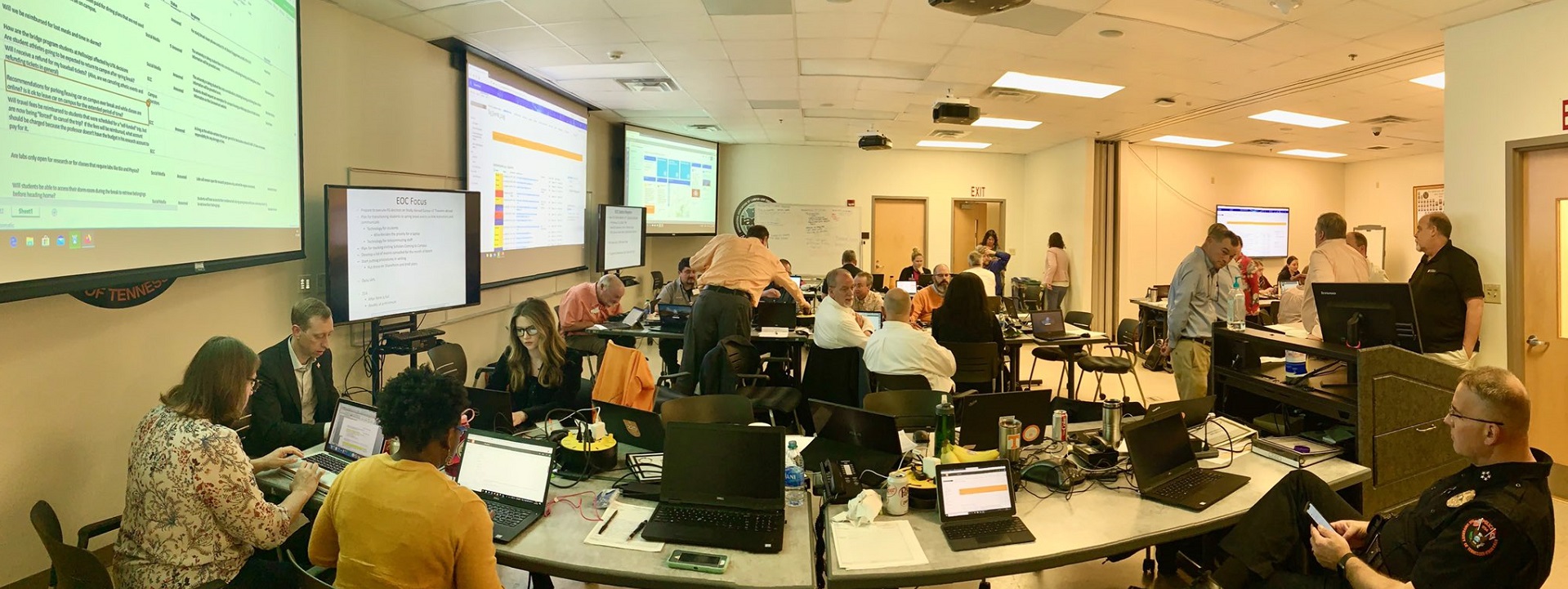
During today’s sessions of the IEEE E&H Committee and our own we will prepare draft proposals relevant to the safety and sustainability agenda of the USA education facility industry.  Use the login credentials at the upper right of our home page.


Brown University Electrical Design Criteria | Information Technology Resources Policy


Posted December 20, 2025

The University of Michigan has supported the voice of the United States education facility industry since 1993 — the second longest tenure of any voice in the United States.  That voice has survived several organizational changes but remains intact and will continue its Safer-Simpler-Lower Cost-Longer Lasting priorities on Code Panel 3 in the 2029 Edition.

Today, during our customary “Open Door” teleconference we will examine the technical concepts under the purview of Code Panel 3; among them:

Article 206 Signaling Circuits

Article 300 General Requirements for Wiring Methods and Materials

Article 335 Instrumentation Tray Cable

Article 590 Temporary Installations

Chapter 7 Large sections of limited energy cabling for signaling and information technology

Chapter 9 Conductor Properties Tables 11A & B, Tables 12A&B

Public Input on the 2029 Edition will be received until April 9, 2026.

Related:
  • Since the lifespan of educational buildings make the building core and shell susceptible to multiple changes not typically associated with commercial buildings, additional pathways should be placed in areas where the core and shell components of the facility are likely to re-main for extended periods of time
  • It is recommended that all areas of an educational building have wireless coverage unless prohibited

Campus Electric Bulk Distribution

Today we will also cut through these transcripts:

2026 Code Panel 6 Public Input Report

2026 Code Panel 6 Public Comment Report

College and university campuses distribute electric energy in tranches of 10 to 250 megawatts; typically at voltages above 1000 VAC and are generally regarded as load-side services (or regulated utility customers). Two fairly stable sections of the National Electrical Code set the standard of care for these systems — Part III of Article 110 and Article 495.

We will examine them during today’s High Voltage Electric Service colloquium.

FREE ACCESS: 2023 National Electrical Code

We collaborate closely with the IEEE Education & Healthcare Facilities Committee which meets online 4 times per month in European and American time zones.  Ahead of the August 2024 public comment deadline we will examine transcripts of technical action on this topic:

2026 National Electrical Code Workspace

Hegemon Cuyahoga & County Dublin

Financial Presentations & Webcasts

First Quarter 2026 Earnings Release | May 5, 2026


Here we shift our perspective 120 degrees to understand the point of view of the Producer interest in the American national standards system (See ANSI Essential Requirements).  The title of this post draws from the location of US and European headquarters.  We list proposals by a successful electrical manufacturer for discussion during today’s colloquium:

2026 National Electrical Code

CMP-1: short circuit current ratings, connections with copper cladded aluminum conductors, maintenance to be provided by OEM, field markings

CMP-2: reconditioned equipment, receptacles in accessory buildings, GFCI & AFCI protection, outlet placement generally, outlets for outdoor HVAC equipment(1)

(1) Here we would argue that if a pad mount HVAC unit needs service with tools that need AC power once every 5-10 years then the dedicated branch circuit is not needed.  Many campuses have on-site, full-time staff that can service outdoor pad mounted HVAC equipment without needing a nearby outlet.  One crew — two electricians — will run about $2500 per day to do anything on campus.

CMP-3: No proposals

CMP-4: solar voltaic systems (1)

(1) Seems reasonable – spillover outdoor night time lighting effect upon solar panel charging should be identified.

CMP-5: Administrative changes only

CMP-6: No proposals

CMP-7: Distinction between “repair” and “servicing”

CMP-8: Reconditioned equipment

CMP-9: Reconditioned equipment

CMP-10: Short circuit ratings, service disconnect, disconnect for meters, transformer secondary conductor, secondary conductor taps, surge protective devices, disconnecting means generally, spliced and tap conductors, more metering safety, 1200 ampere threshold for arc reduction technology, reconditioned surge equipment shall not be permitted, switchboard short circuit ratings

CMP-11: Lorem

CMP-12: Lorem

CMP-13: Lorem

Lorem ipsum

Critical Operations Power Systems

Disaster 500


The original University of Michigan codes and standards enterprise advocated actively in Article 708 Critical Operations Power Systems (COPS) of the National Electrical Code (NEC) because of the elevated likelihood that the education facility industry managed assets that were likely candidates for designation critical operations areas by emergency management authorities.

Because the NEC is incorporated by reference into most state and local electrical safety laws, it saw the possibility that some colleges and universities — particularly large research universities with independent power plants, telecommunications systems and large hospitals  — would be on the receiving end of an unfunded mandate.   Many education facilities are identified by the Federal Emergency Management Association as community storm shelters, for example.

As managers of publicly owned assets, University of Michigan Plant Operations had no objection to rising to the challenge of using publicly owned education facilities for emergency preparedness and disaster recovery operations; only that meeting the power system reliability requirements to the emergency management command centers would likely cost more than anyone imagined — especially at the University Hospital and the Public Safety Department facilities.  Budgets would have to be prepared to make critical operations power systems (COPS) resistant to fire and flood damages; for example.

Collaboration with the Institute of Electrical and Electronic Engineers Industrial Applications Society began shortly after the release of the 2007 NEC.  Engineering studies were undertaken, papers were published (see links below) and the inspiration for the IEEE Education & Healthcare Facilities Committee developed to provide a gathering place for power, telecommunication and energy professionals to discover and promulgate leading practice.   That committee is now formally a part of IEEE and collaborates with IAS/PES JTCC assigned the task of harmonizing NFPA and IEEE electrical safety and sustainability consensus documents (codes, standards, guidelines and recommended practices.

Transcripts of 2026 Revision:

Public Input Report CMP-13

Public Comment Report CMP-13


The transcript of NEC Code Making Panel 13 — the committee that revises COPS Article 708 every three years — is linked below:

NEC CMP-13 First Draft Balloting

NEC CMP-13 Second Draft Balloting

The 2023 Edition of the National Electrical Code does not contain revisions that affect #TotalCostofOwnership — only refinement of wiring installation practices when COPS are built integral to an existing building that will likely raise cost.  There are several dissenting comments to this effect and they all dissent because of cost.   Familiar battles over overcurrent coordination persist.

Our papers and proposals regarding Article 708 track a concern for power system reliability — and the lack of power  — as an inherent safety hazard.   These proposals are routinely rejected by incumbent stakeholders on NEC technical panels who do not agree that lack of power is a safety hazard.  Even if lack of power is not a safety hazard, reliability requirements do not belong in an electrical wiring installation code developed largely by electricians and fire safety inspectors.  The IEEE Education & Healthcare Facilities Committee (IEEE E&H) maintains a database on campus power outages; similar to the database used by the IEEE 1366 committees that develop reliability indices to enlighten public utility reliability regulations.

Public input on the 2026 revision to the NEC will be received until September 7th.  We have reserved a workspace for our priorities in the link below:

2026 National Electrical Code Workspace

Colleagues: Robert Arno, Neal Dowling, Jim Harvey


LEARN MORE:

IEEE | Critical Operations Power Systems: Improving Risk Assessment in Emergency Facilities with Reliability Engineering

Consuting-Specifying Engineer | Risk Assessments for Critical Operations Power Systems

Electrical Construction & Maintenance | Critical Operations Power Systems

International City County Management Association | Critical Operations Power Systems: Success of the Imagination

Facilities Manager | Critical Operations Power Systems: The Generator in Your Backyard

Healthcare Facilities Code

“The Doctor”  1891 Sir Luke Fildes

The NFPA 99 Healthcare Facilities Code committee develops a distinct consensus document (i.e. “regulatory product”) that is distinct from National Electrical Code Article 517; though there are overlaps and gaps that are the natural consequence of changing technology and regulations.  It is worthwhile reviewing the scope of each committee:

NFPA 99 Scope: This Committee shall have primary responsibility for documents that contain criteria for safeguarding patients and health care personnel in the delivery of health care services within health care facilities: a) from fire, explosion, electrical, and related hazards resulting either from the use of anesthetic agents, medical gas equipment, electrical apparatus, and high frequency electricity, or from internal or external incidents that disrupt normal patient care; b) from fire and explosion hazards; c) in connection with the use of hyperbaric and hypobaric facilities for medical purposes; d) through performance, maintenance and testing criteria for electrical systems, both normal and essential; and e) through performance, maintenance and testing, and installation criteria: (1) for vacuum systems for medical or surgical purposes, and (2) for medical gas systems; and f) through performance, maintenance and testing of plumbing, heating, cooling , and ventilating in health care facilities.

NFPA 70 Article 517 Scope:  The provisions of this article shall apply to electrical construction and installation criteria in healthcare facilities that provide services to human beings.  The requirements in Parts II and III not only apply to single-function buildings but are also intended to be individually applied to their respective forms of occupancy within a multi-function building (e.g. a doctor’s examining room located within a limited care facility would be required to meet the provisions of 517.10)   Informational Note: For information concerning performance, maintenance, and testing criteria, refer to the appropriate health care facilities documents.

In short, NFPA 70 Article 517 is intended to focus only on electrical safety issues though electrotechnology complexity and integration in healthcare settings (security, telecommunications, wireless medical devices, fire safety, environmental air control, etc.) usually results in conceptual overlap with other regulatory products such as NFPA 101 (Life Safety Code) and the International Building Code.

Several issues were recently debated by the Article 517 technical committee during the 2023 National Electrical Code Second Draft meetings

  • The conditions under which reconditioned electrical equipment be installed in healthcare settings; contingent on listing and re-certification specifics.
  • Relaxation of the design rules for feeder and branch circuit sizing through the application of demand factors.
  • Application of ground fault circuit interrupters.
  • “Rightsizing” feeder and branch circuit power chains (Demand factors in Section 517.22)
  • Patient care space categories
  • Independence of power sources (517.30)

There are, of course, many others, not the least of which involves emergency management.  For over 20 years our concern has been for the interdependency of water and electrical power supply to university hospitals given that many of them are part of district energy systems.

We need to “touch” this code at least once a month because of its interdependence on other consensus products by other standards developing organizations.  To do this we refer NFPA 99 standards action to the IEEE Education & Healthcare Facilities Committee which meets online four times monthly in European and American time zones.

The transcript of NEC Article 517 Public Input for the 2023 revision of NFPA 70 is linked below.  (You may have to register your interest by setting up a free-access account):

Code-Making Panel 15 (NEC-P15) Public Input Report

Code-Making Panel 15 (NEC-P15) Public Comment Report

Technical committees will meet in June to endorse the 2023 National Electrical Code.

Public consultation on the Second Draft closes May 31st. Landing page for selected sections of the 2024 revision  of NFPA 99 are linked below:

Electrical Systems (HEA-ELS)

Fundamentals (HEA-FUN)

Health Care Emergency Management and Security (HEA-HES)

Second Draft Comments are linked below:

Electrical Systems (HEA-ELS)

Fundamentals (HEA-FUN)

Health Care Emergency Management and Security (HEA-HES)

NITMAM closing date: March 28, 2023

We break down NFPA 70 and NFPA 99 together and keep them on the standing agenda of both our Power and Health colloquia; open to everyone.  See our CALENDAR for the next online meeting.

"The trained nurse has become one of the great blessings of humanity, taking a place beside the physician and the priest" - William Osler"While we try to teach our children all about life, our children teach us what life is all about" - Angela Schwindt "The true art of pediatrics lies not only in curing diseases but also in preventing them" - Abraham JacobiGermany

Issues: [12-18, [15-97] and [16-101]

Contact: Mike Anthony, Jim Harvey, Robert Arno, Josh Elvove, Joe DeRosier, Larry Spielvogel

NFPA Staff Liaison: Jonathan Hart

Archive / NFPA 99

Delta Upsilon Fraternity House (1331 Hill Street)

Chartered in 1876, and having outgrown its home by the early 1900s, its alumni hired Detroit architect Albert Kahn for his earliest surviving non-industrial, non-commercial commissions.  Kahn created a handsome 2½-story Tudor Revival building with half-timbered stucco exterior, slate roof, prominent gables.  It pioneered the shift of fraternities to Hill Street, inspiring many others to follow.  The house has been continuously occupied by the fraternity since completion—the oldest such in Ann Arbor. It earned National Register of Historic Places listing in 1995.

Cultural Resource Properties

Public Input on the 2029 Edition will be received until January 6, 2027
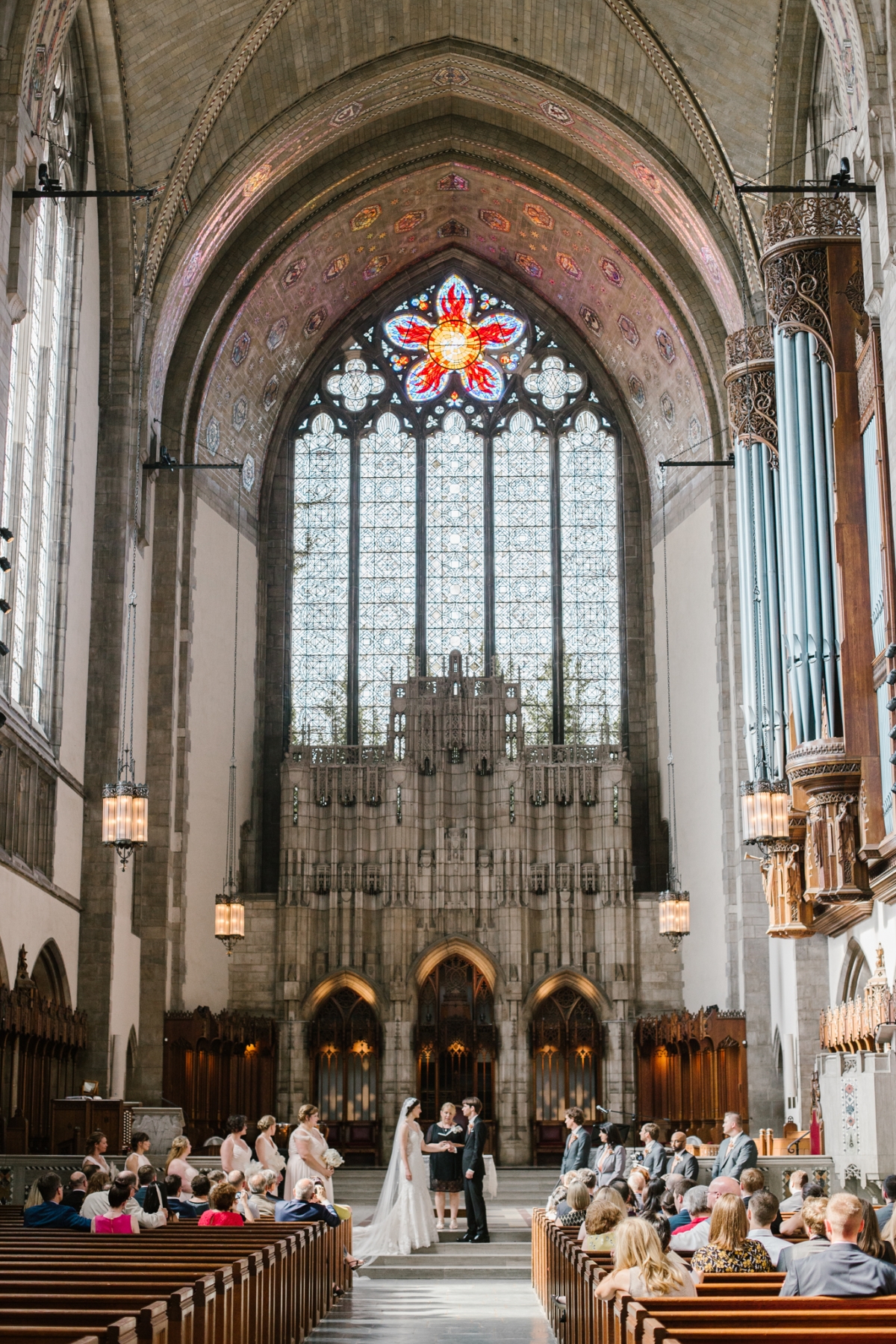
Comments on the Second Draft of NFPA 909 — Cultural Resource Property Protection — will be received until 3 October 2024

University of Chicago


Books cannot be killed by fire.  People die, but books never die

No man and no force can put thought in a concentration camp forever

— Franklin Roosevelt


Many education communities build and maintain cultural resource properties whose safety and sustainability objectives are informed by local adaptations of consensus products developed by the International Code Council (ICC) and the National Fire Protection Association (NFPA).   We need to understand the ICC and NFPA product suites as a pair.   For most real assets in the education industry  they move “roughly” in tandem even though they are produced by different organizations for a different set of customers.  Sometimes the out-of-step condition between NFPA and ICC permits subject matter experts on technical committees to make the best possible decisions regarding the safety and sustainability agenda of the interest group they represent; but not always.

Occupancy classification is always a first consideration and both the NFPA and the ICC have a claim to some part of this occupancy concept*.   In the ICC suite we find code requirements for many “cultural places of worship” tracking in the following sections of the International Building Code (IBC):

Section 303 Assembly Group A-3

Section 305 Educational Group E

Section 308 Institutional Group I

Note that Sections 305 and 308 recognize the accessory and multi-functional nature of occupancy types in the education industry – i.e child care and adult care function can marge and be an accessory to a place of worship.  The general rule in the IBC is that accessory religious educational rooms and religious auditoriums with occupant loads of less than 100 per room or space are not considered separate occupancies.    Other standards developers are guided by this rule.
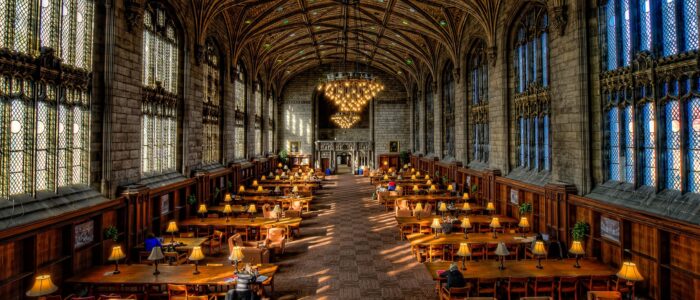
"The only thing you absolutely have to know is the location of the library" - Albert Einstein

Close coupled to the IBC for this occupancy class is NFPA 909 Code for the Protection of Cultural Resource Properties – Museums, Libraries, and Places of WorshipFrom the document prospectus:

This code describes principles and practices of protection for cultural resource properties (including, but not limited to, museums, libraries, and places of worship), their contents, and collections, against conditions or physical situations with the potential to cause damage or loss.

• This code covers ongoing operations and rehabilitation and acknowledges the need to preserve culturally significant and character-defining building features and sensitive, often irreplaceable, collections and to provide continuity of operations.

• Principles and practices for life safety in cultural resource properties are outside the scope of this code. Where this code includes provisions for maintaining means of egress and controlling occupant load, it is to facilitate the evacuation of items of cultural significance, allow access for damage limitation teams in an emergency, and prevent damage to collections through overcrowding or as an unintended consequence of an emergency evacuation.

• Library and museum collections that are privately owned and not open to the public shall not be required to meet the requirements of this code.

"The only thing you absolutely have to know is the location of the library" - Albert Einstein

Since we are hard upon release of the 2021 Edition of NFPA 909 let us take a backward look at the current (2017) version of NFPA 909 Code for the Protection of Cultural Resource Properties – Museums, Libraries, and Places of Worship.  Chapter 14 covers “Museums, Libraries and their Collections”.   Chapter 15 covers “Places of Worship”
Free Access Edition NFPA 909

The 2025 Edition is now open for public input.  Let us pick through proposals for the 2021 Edition to inform our approach to its improvement by referencing the technical committee transcripts linked below:

Public Input Report: January 12, 2023

N.B. We find committee response (accepted in principle) to Standards Michigan proposal to articulate conditions in which places of worship and libraries are used as community disaster relief support facilities.  We consider this a modest “code win”.

Circling back to the ICC suite we find elevated interest in hardening community owned facilities to tornadoes, hurricane and floods and other storm related risk in the structural engineering chapters of the International Building Code.
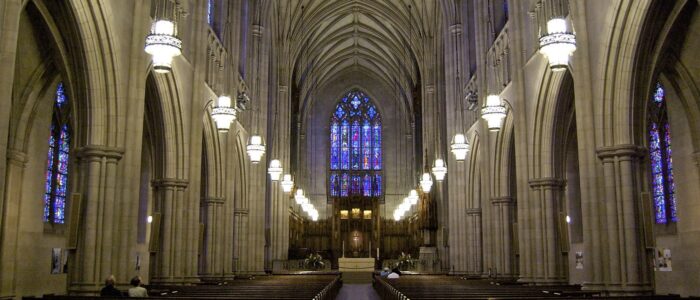
"This We'll Defend."

NFPA 909: Code for the Protection of Cultural Resource Properties – Museums, Libraries, and Places of Worship | 2021 Edition

Leadership and facility managers for enterprises of this type are encouraged to contribute obtain their own (free) NFPA public participation account in order to directly participate in the 2025 revision of NFPA 909 by logging in here: https://www.nfpa.org/login.

Public consultation on the First Draft of the 2025 Edition closes January 4, 2024.

This document is also a standing item on our periodic Prometheus, Lively and Fine Arts teleconference.  See our CALENDAR for the next online meeting; open to everyone.

Issue: [15-258]

Category: Fire Safety, Public Safety

Colleagues: Mike Anthony, Josh Elvove, Joe DeRosier

*See NFPA 101 Life Safety Code

Labeling of Hazardous Art Materials Act

Property Loss Prevention


LEARN MORE:

Guidelines for the Security of Rare Books, Manuscripts, and Other Special Collections, Association of College & Research Libraries, American Library Association, 50 East Huron Street, Chicago, IL 60611-2795.

“A Legal Primer on Managing Museum Collections,” Malaro, Marie, second edition 1998

“Risk and Insurance Management Manual for Libraries,” Mary Breighner and William Payton, edited by Jeanne Drewes, ALA 2005 ISBN 0-8389-8325-1.

Wisconsin Historic Building Code, Madison, WI:Wisconsin Administrative Code.

 

Life Safety Code

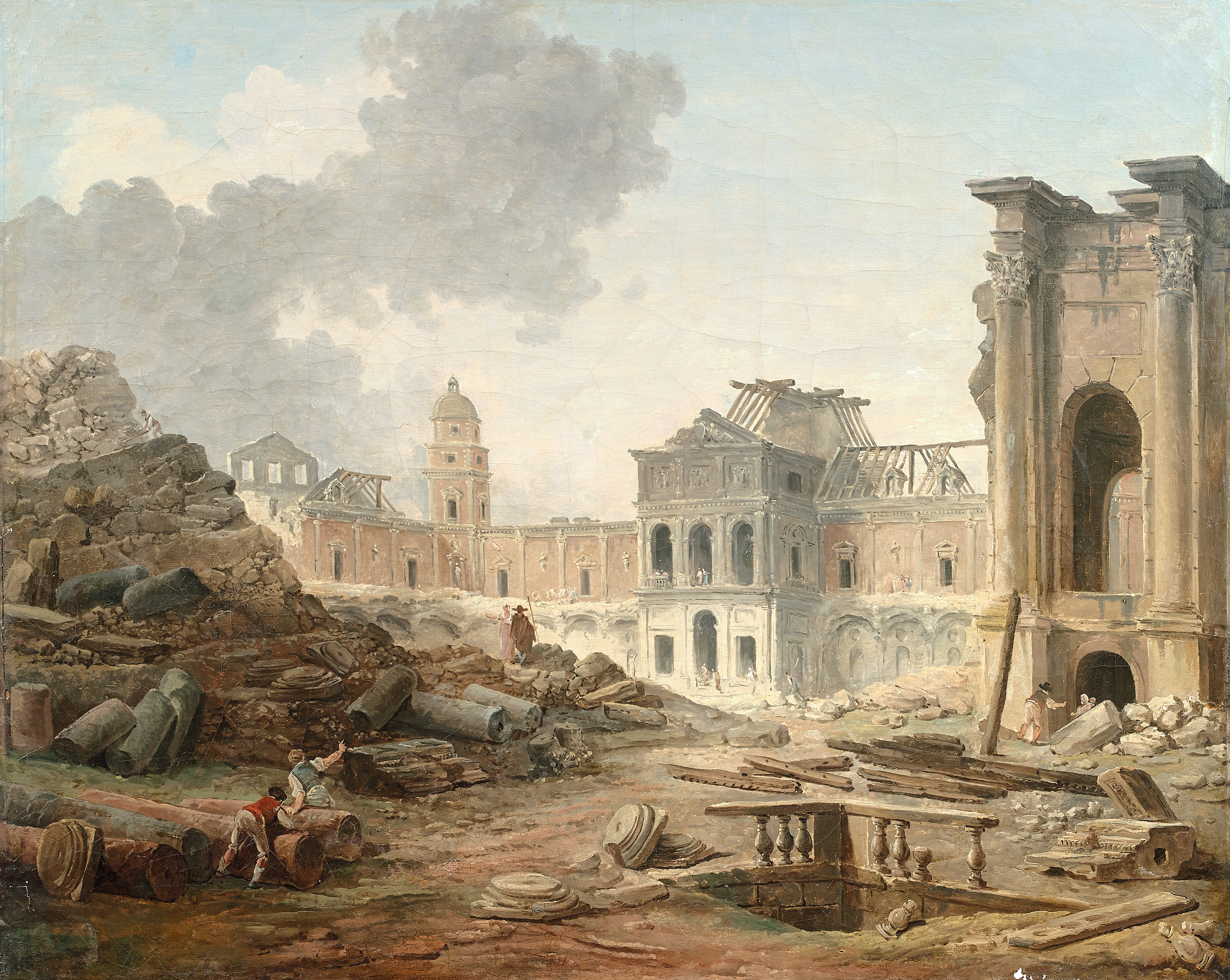
Today at the usual hour we sort through the NFPA stack for fire safety system aspects during renovation, alteration, or rehabilitation of buildings.  Two sections come to mind:

Chapter 43 (NFPA 101): Building Rehabilitation


NFPA 241: Safeguarding Construction, Alteration, and Demolition Operations
Use the login credentials at the upper right of our home page.

Educational and Day-Care Occupancies (July 23, 2025 Second Draft Transcript)

The Life Safety Code addresses those construction, protection, and occupancy features necessary to minimize danger to life from the effects of fire, including smoke, heat, and toxic gases created during a fire.   It is widely incorporated by reference into public safety statutes; typically coupled with the consensus products of the International Code Council.   It is a mighty document — one of the NFPA’s leading titles — so we deal with it in pieces; consulting it for decisions to be made for the following:

(1) Determination of the occupancy classification in Chapters 12 through 42.

(2) Determination of whether a building or structure is new or existing.

(3) Determination of the occupant load.

(4) Determination of the hazard of contents.

There are emergent issues — such as active shooter response, integration of life and fire safety systems on the internet of small things — and recurrent issues such as excessive rehabilitation and conformity criteria and the ever-expanding requirements for sprinklers and portable fire extinguishers with which to reckon.  It is never easy telling a safety professional paid to make a market for his product or service that it is impossible to be alive and safe.  It is even harder telling the dean of a department how much it will cost to bring the square-footage under his stewardship up to the current code.

The 2021 edition is the current edition and is accessible below:

NFPA 101 Life Safety Code Free Public Access

Public input on the 2027 Revision will be received until June 4, 2024.  Public comment on the Second Draft 2027 Revision will be received until March 31, 2026.


Since the Life Safety Code is one of the most “living” of living documents — the International Building Code and the National Electric Code also move continuously — we can start anywhere and anytime and still make meaningful contributions to it.   We have been advocating in this document since the 2003 edition in which we submitted proposals for changes such as:

• A student residence facility life safety crosswalk between NFPA 101 and the International Building Code

• Refinements to Chapters 14 and 15 covering education facilities (with particular attention to door technologies)

• Identification of an ingress path for rescue and recovery personnel toward electric service equipment installations.

• Risk-informed requirement for installation of grab bars in bathing areas

• Modification of the 90-minute emergency lighting requirements rule for small buildings and for fixed interval testing

• Modification of emergency illumination fixed interval testing

• Table 7.3.1 Occupant Load revisions

• Harmonization of egress path width with European building codes

There are others.  It is typically difficult to make changes to stabilized standard though some of the concepts were integrated by the committee into other parts of the NFPA 101 in unexpected, though productive, ways.  Example transcripts of proposed 2023 revisions to the education facility chapter is linked below:

Chapter 14 Public Input Report: New Educational Occupancies

Educational and Day Care Occupancies: Second Draft Public Comments with Responses Report

Since NFPA 101 is so vast in its implications we list a few of the sections we track, and can drill into further, according to client interest:

Chapter 3: Definitions

Chapter 7: Means of Egress

Chapter 12: New Assembly Occupancies

Chapter 13: Existing Assembly Occupancies

Chapter 16 Public Input Report: New Day-Care Facilities

Chapter 17 Public Input Report: Existing Day Care Facilities

Chapter 18 Public Input Report: New Health Care Facilities

Chapter 19 Public Input Report: Existing Health Care Facilities

Chapter 28: Public Input Report: New Hotels and Dormitories

Chapter 29: Public Input Report: Existing Hotels and Dormitories

Chapter 43: Building Rehabilitation

Annex A: Explanatory Material

As always we encourage front-line staff, facility managers, subject matter experts and trade associations to participate directly in the NFPA code development process (CLICK HERE to get started)

NFPA 101 is a cross-cutting title so we maintain it on the agenda of our several colloquia —Housing, Prometheus, Security and Pathways colloquia.  See our CALENDAR for the next online meeting; open to everyone.


Issue: [18-90]

Category: Fire Safety, Public Safety

Colleagues: Mike Anthony, Josh Elvove, Joe DeRosier, Marcelo Hirschler

More

ARCHIVE / Life Safety Code 2003 – 2018


Fire and Life Safety in Stadiums

Power-Limited Circuits

Today at the usual hour we review best practice literature for the design, construction and operation of Power-Limited Circuits in healthcare facilities.  With our previous tenure on Code Panel 15 of the National Electrical Code (which covers healthcare facilities, primarily) and our recent appointment by IEEE to Code Panel 3 (which covers power limited circuits in all occupancy classes) we set ourselves up to respond to the proposals that will shape the 2029 NEC.   Use the login credentials at the upper right of our home page.

vbvbvbvbvb

If one imagines that three-phase hospital power distribution systems as “arteries” then power limited circuits can be imagined as the “capillaries” that drive hundreds of end use clinical equipment and devices. The analogy captures the hierarchical, physiological structure of hospital electrical systems—much like the human circulatory system—where power flows from high-capacity trunks to precision, low-risk endpoints.


Three-Phase Systems: The Arteries and Veins

Three-phase hospital power distribution systems function as the arteries and veins: they are the robust, high-volume “vascular” network. Incoming utility power (or on-site generators) arrives as three-phase medium voltage, stepped down through transformers and switchgear into the Essential Electrical System (EES). This backbone—normal power, life-safety, critical, and equipment branches—delivers bulk kilowatts across the facility to major loads: HVAC, lighting, elevators, imaging suites, and operating-room receptacles. Like arteries, these feeders carry large currents over long distances with minimal loss; like veins, they return current safely while maintaining redundancy and selective coordination to keep the “body” (hospital) alive during outages.

Power-Limited Circuits: The Capillaries

Power-limited circuits (NEC Article 725/724 Class 2 and Class 3) are the capillaries. They are the countless, tiny, energy-restricted final branches that directly “perfuse” end-use clinical devices. These circuits are deliberately power-limited—typically ≤30 V and ≤100 VA—to prevent fire, shock, or interference in patient-care spaces. They supply nurse-call systems, bedside monitors, infusion-pump controls, alarm signaling, data links, and low-voltage sensors. Just as capillaries exchange oxygen and nutrients cell-by-cell without flooding tissue, power-limited circuits deliver only the precise, safe wattage needed by sensitive electronics while isolating them from the high-energy main distribution. Their thin insulation, separation rules, and inherent current-limiting transformers mirror the delicate walls of capillaries.

The comparison illuminates why hospitals cannot rely solely on heavy three-phase feeders: without these microscopic “capillaries,” clinical devices would either lack power or be exposed to dangerous fault energies. The analogy shows how the entire system maintains life—bulk transport for infrastructure, micro-delivery for patient care—while enforcing safety through progressive limitation. In essence, the capillaries make the circulatory system functional at the point of use.

Lightning Protection Systems

2026 Public Input Report | 2026 Public Comment Report

FEMA National Risk Index: Lightning

“Benjamin Franklin Drawing Electricity from the Sky” 1816 Benjamin West


Benjamin Franklin conducted his famous experiment with lightning on June 10, 1752.

He used a kite and a key to demonstrate that lightning was a form of electricity.

This experiment marked an important milestone in understanding the nature of electricity

and laid the foundation for the development of lightning rods and other lightning protection systems.


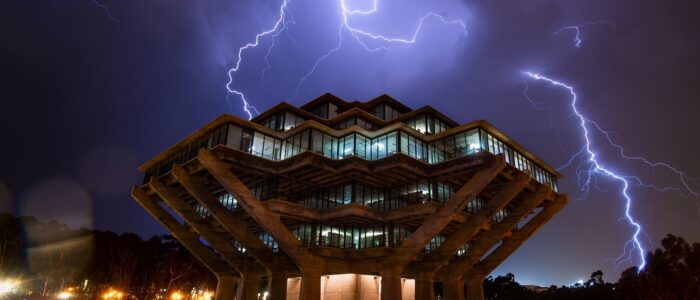
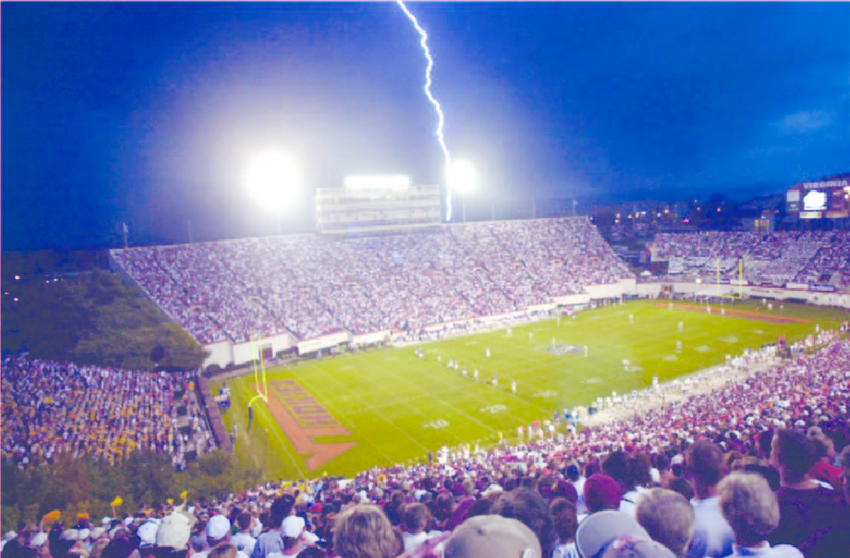
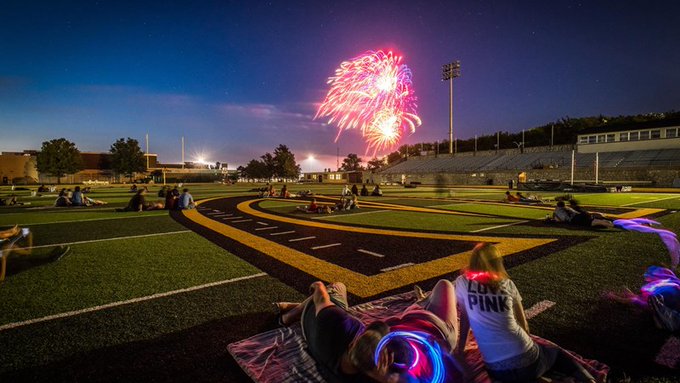
Seasonal extreme weather patterns in the United States, resulting in damages to education facilities and delays in outdoor athletic events — track meets; lacrosse games, swimming pool closures and the like — inspire a revisit of the relevant standards for the systems that contribute to safety from injury and physical damage to buildings: NFPA 780 Standard for the Installation of Lightning Protection Systems

FREE ACCESS

To paraphrase the NFPA 780 prospectus:

  • This document shall cover traditional lightning protection system installation requirements for the following:
       (1) Ordinary structures

       (2) Miscellaneous structures and special occupancies
       (3) Heavy-duty stacks
       (4) Structures containing flammable vapors, flammable gases, or liquids with flammable vapors
       (5) Structures housing explosive materials
       (6) Wind turbines
       (7) Watercraft
       (8) Airfield lighting circuits
       (9) Solar arrays
  • This document shall address lightning protection of the structure but not the equipment or installation requirements for electric generating, transmission, and distribution systems except as given in Chapter 9 and Chapter 12.

(Electric generating facilities whose primary purpose is to generate electric power are excluded from this standard with regard to generation, transmission, and distribution of power.  Most electrical utilities have standards covering the protection of their facilities and equipment. Installations not directly related to those areas and structures housing such installations can be protected against lightning by the provisions of this standard.)

  • This document shall not cover lightning protection system installation requirements for early streamer emission systems or charge dissipation systems.

“Down conductors” must be at least #2 AWG copper (0 AWG aluminum) for Class I materials in structures less than 75-ft in height

“Down conductors: must be at least 00 AWG copper (0000 AWG aluminum) for Class II Materials in structures greater than 75-ft in height.

Related grounding and bonding  requirements appears in Chapters 2 and Chapter 3 of NFPA 70 National Electrical Code.  This standard does not establish evacuation criteria.  

University of Michigan | Washtenaw County (Photo by Kai Petainen)

The current edition is dated 2023 and, from the transcripts, you can observe concern about solar power and early emission streamer technologies tracking through the committee decision making.  Education communities have significant activity in wide-open spaces; hence our attention to technical specifics.

2023 Public Input Report

2023 Public Comment Report

Public input on the 2026 revision is receivable until 1 June 2023.

We always encourage our colleagues to key in their own ideas into the NFPA public input facility (CLICK HERE).   We maintain NFPA 780 on our Power colloquia which collaborates with IEEE four times monthly in European and American time zones.  See our CALENDAR for the next online meeting; open to everyone.

Lightning flash density – 12 hourly averages over the year (NASA OTD/LIS) This shows that lightning is much more frequent in summer than in winter, and from noon to midnight compared to midnight to noon.

Issue: [14-105]

Category: Electrical, Telecommunication, Public Safety, Risk Management

Colleagues: Mike Anthony, Jim Harvey, Kane Howard


More

Installing lightning protection system for your facility in 3 Steps (Surge Protection)

IEEE Education & Healthcare Facility Electrotechnology

Readings: The “30-30” Rule for Outdoor Athletic Events Lightning Hazard

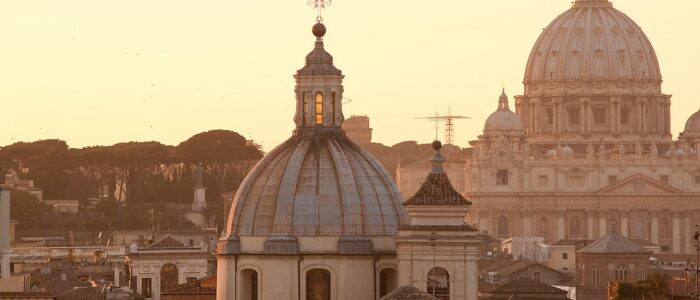
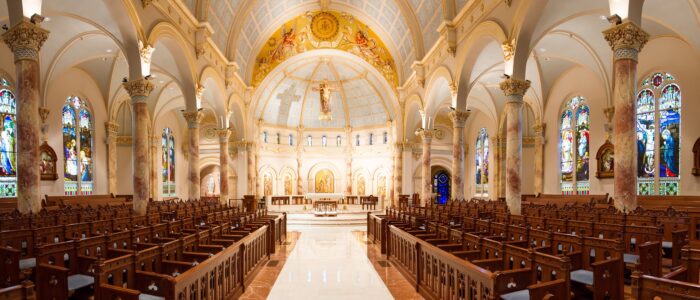
Churches and chapels are more susceptible to lightning damage due to their height and design. Consider:

Height: Taller structures are more likely to be struck by lightning because they are closer to the cloud base where lightning originates.

Location: If a church or chapel is situated in an area with frequent thunderstorms, it will have a higher likelihood of being struck by lightning.

Construction Materials: The materials used in the construction of the building can affect its vulnerability. Metal structures, for instance, can conduct lightning strikes more readily than non-metallic materials.

Proximity to Other Structures: If the church or chapel is located near other taller structures like trees, utility poles, or buildings, it could increase the chances of lightning seeking a path through these objects before reaching the building.

Lightning Protection Systems: Installing lightning rods and other lightning protection systems can help to divert lightning strikes away from the structure, reducing the risk of damage.

Maintenance: Regular maintenance of lightning protection systems is essential to ensure their effectiveness. Neglecting maintenance could result in increased susceptibility to lightning damage.

Historical Significance: Older buildings might lack modern lightning protection systems, making them more vulnerable to lightning strikes.

The risk can be mitigated by proper design, installation of lightning protection systems, and regular maintenance. 

Virginia Tech

Layout mode
Predefined Skins
Custom Colors
Choose your skin color
Patterns Background
Images Background
Standards Michigan
error: Content is protected !!
Skip to content