CLICK ON IMAGE


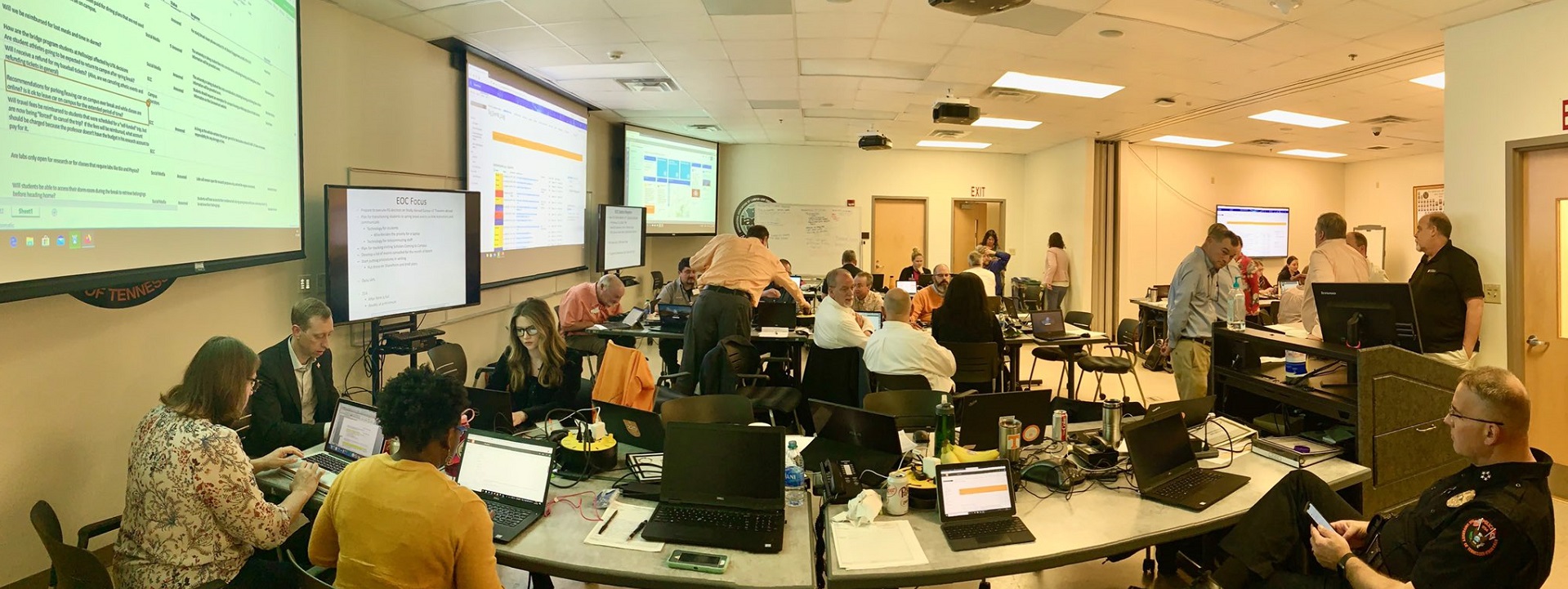
First Draft Meeting Minutes | January 13, 2026
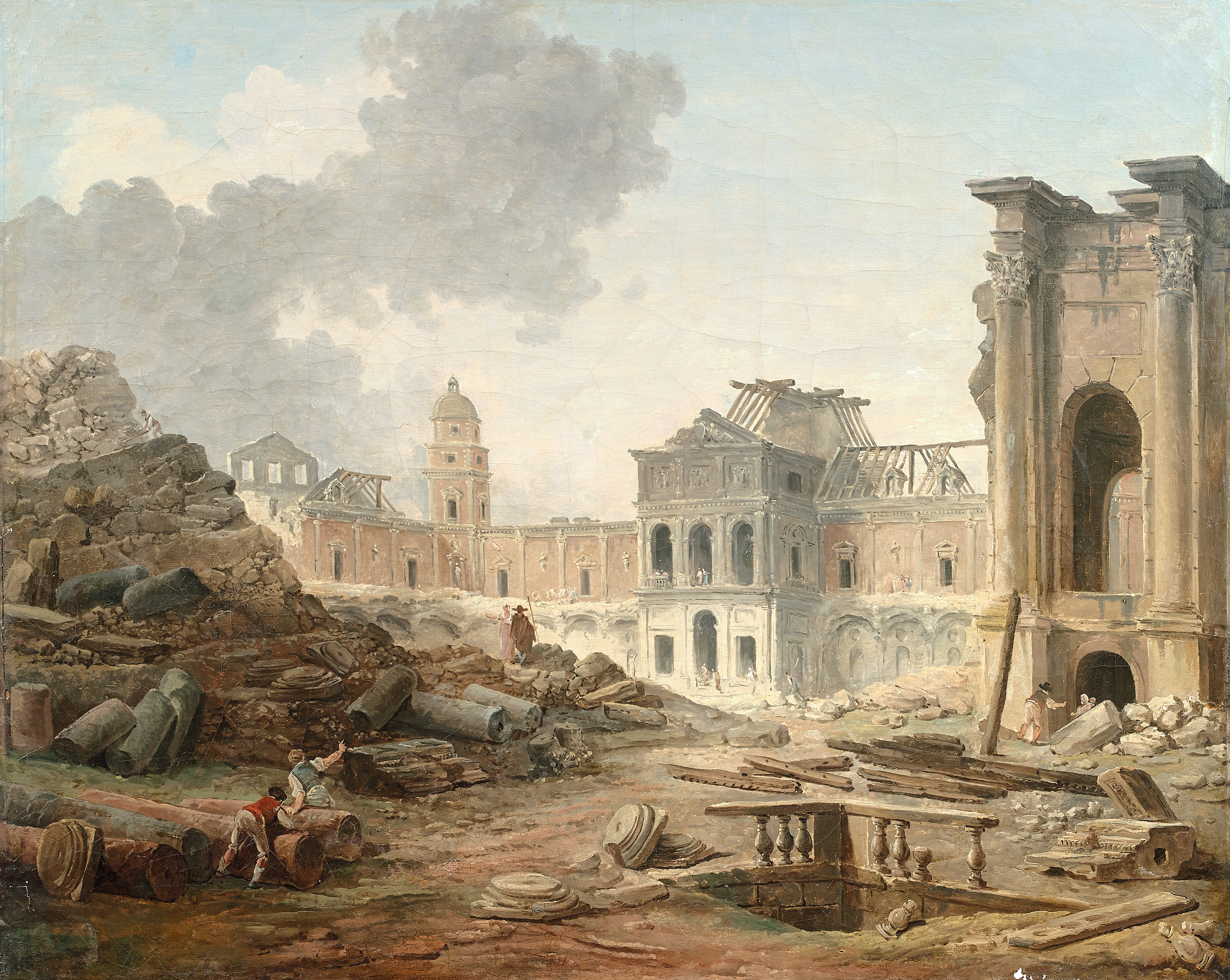
Château de Meudon

We have advocated education community risk management concepts since 2007; primarily in NFPA Standard 1300 — Standard on Community Risk Assessment and Community Risk Reduction Plan Development (formerly NFPA 1600). The content of this title is close-coupled with FEMA’s National Incident Management System.
Recently the National Fire Protection Association Standards Council moved to consolidate its community risk management titles as described below.
“NFPA 1660 is in a custom cycle due to the Emergency Response and Responder Safety Document Consolidation Plan (consolidation plan) as approved by the NFPA Standards Council. As part of the consolidation plan, NFPA 1660 (combining Standards NFPA 1600, NFPA 1616, and NFPA 1620) is open for public input with a closing date of November 13, 2020.”
Thus, NFPA 1600 is being sunsetted as a separate consensus product, its substance rolled into the new NFPA 1660. CLICK HERE for the new landing page for NFPA 1660.
Two links below provide a sense of the back-and-forth in the technical committee meetings:
1600_F2018_EMB_AAA_FD_PIResponses
Discussion about school and university security are noteworthy.
As described on its title page, this product will be reconfigured as NFPA 1660 Standard on Community Risk Assessment, Pre-Incident Planning, Mass Evacuation, Sheltering, and Re-entry Programs. The title suggests that NFPA 1660 is being developed to meet market need for conformance and teaching tools. You may track movement in the concepts in the links below; many of them administrative:
Emergency Management and Business Continuity
Mass Evacuation and Sheltering
NFPA 1660 will likely require one or two more revision cycles to stabilize
Public consultation on the Second Draft (NITMAM) closes September 9th. You may submit public input directly to NFPA by CLICKING HERE. We will have hosted several Security colloquia ahead of this deadline during which we will drill into technical and policy specifics.
University of Tennessee
We maintain this title on our periodic Security, Disaster and Risk colloquia during which time our thoughts on the economic burden of the expanding constellation of risk management standards will be known. Thoughts that we are reluctant to write. See our CALENDAR for the next online meeting; open to everyone.
Issue: [13-58] and [18-151]
Category: Security, Risk
Colleagues: Mike Anthony, Robert G. Arno, Jim Harvey, Richard Robben
MORE >> Disaster Resiliency and NFPA Codes and Standards

Vereenigde Oostindische Compagnie | Dutch East India Company
FM Global is one of several organizations that produce technical and business documents that set the standard of care for risk management in education facilities. These standards — Property Loss Prevention Data Sheets — contribute to the reduction in the risk of property loss due to fire, weather conditions, and failure of electrical or mechanical equipment. They incorporate nearly 200 years of property loss experience, research and engineering results, as well as input from consensus standards committees, equipment manufacturers and others.
In July FM Global updated its standard FM 2510 Flood Abatement Equipment which should interest flood barrier manufacturers, standard authorities, industrial and commercial facilities looking to protect their buildings from riverline flooding conditions.
The following updates were proposed and mostly adopted:
This standard also contains test requirements for the performance of flood barriers, flood mitigation pumps, backwater valves, and waterproofing products for building penetrations, as well as an evaluation of the components comprising these products to assure reliability in the barrier’s performance.
While there are a number of noteworthy colleges and universities that have grown near rivers and lakes — twenty-five of which are listed HERE — severe weather and system failures present flooding risks to them all.
Another Data Sheet — I-40 Floods — was updated in October. Both Data Sheets are available for download at the link below:
FM GLOBAL PROPERTY LOSS PREVENTION DATA SHEETS
You will need to set up (free) access credentials.
You may contact FM Global directly: Josephine Mahnken, (781) 255-4813, josephine.mahnken@fmapprovals.com, 1151 Boston-Providence Turnpike, Norwood, MA 02062
Our “door” is open every day at 11 AM Eastern time to discuss any consensus document that sets the standard of care for the emergent #SmartCampus. Additionally, we dedicate one session per month to Management and Water standards. See our CALENDAR for the next online teleconference. Use the login credentials at the upper right of our home page.
Issue: [Various]
Category: Risk Management, Facility Asset Management
Colleagues: Mike Anthony, Jack Janveja, Richard Robben
This content is accessible to paid subscribers. To view it please enter your password below or send mike@standardsmichigan.com a request for subscription details.

“The Starry Night” | Vincent van Gogh
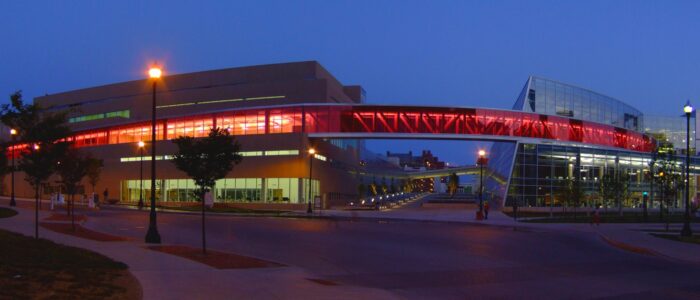
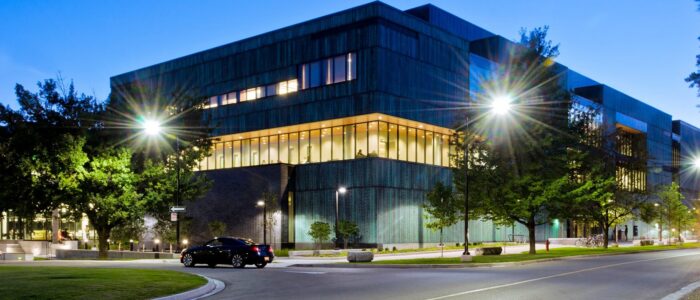
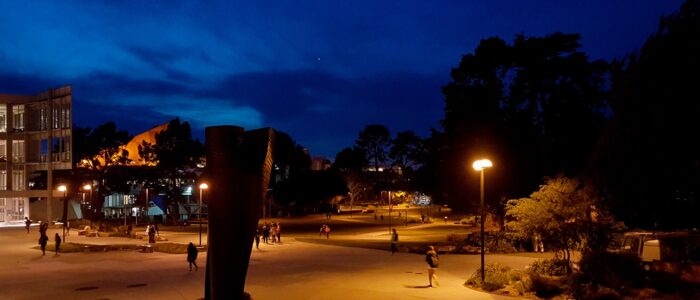
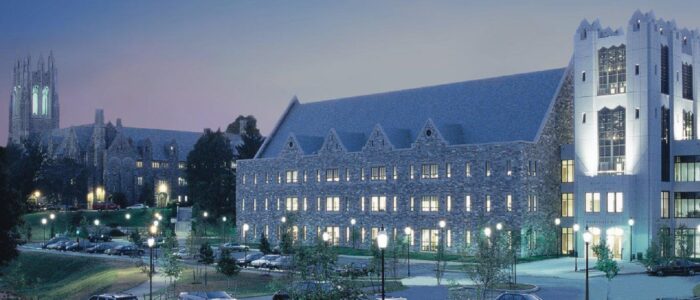
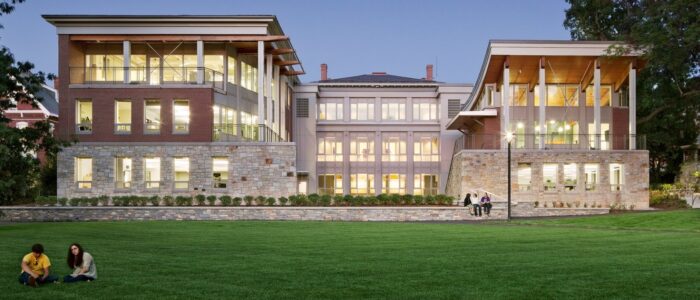
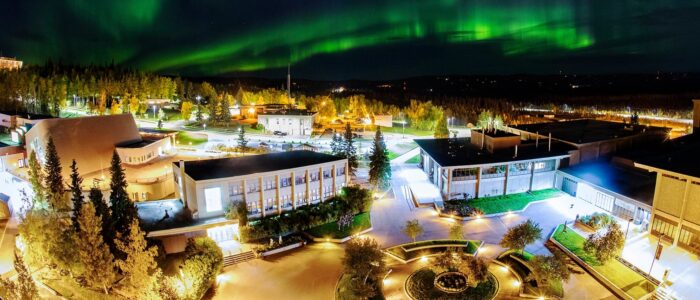
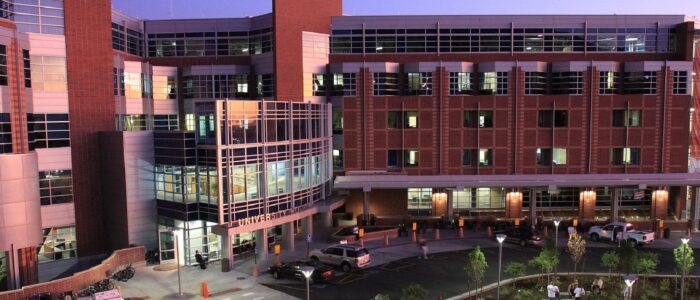
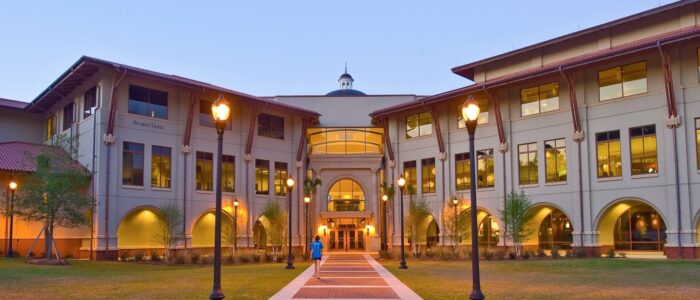
The IEEE Education & Healthcare Facilities Committee has completed a chapter on recommended practice for designing, building, operating and maintaining campus exterior lighting systems in the forthcoming IEEE 3001.9 Recommended Practice for the Design of Power Systems for Supplying Commercial and Industrial Lighting Systems; a new IEEE Standards Association title inspired by, and derived from, the legacy “IEEE Red Book“. The entire IEEE Color Book suite is in the process of being replaced by the IEEE 3000 Standards Collection™ which offers faster-moving and more scaleable, guidance to campus power system designers.
Campus exterior lighting systems generally run in the 100 to 10,000 fixture range and are, arguably, the most visible characteristic of public safety infrastructure. Some major research universities have exterior lighting systems that are larger and more complex than cooperative and municipal power company lighting systems which are regulated by public service commissions.
While there has been considerable expertise in developing illumination concepts by the National Electrical Manufacturers Association, Illumination Engineering Society, the American Society of Heating and Refrigeration Engineers, the International Electrotechnical Commission and the International Commission on Illumination, none of them contribute to leading practice discovery for the actual power chain for these large scale systems on a college campus. The standard of care has been borrowed, somewhat anecdotally, from public utility community lighting system practice. These concepts need to be revisited as the emergent #SmartCampus takes shape.
Electrical power professionals who service the education and university-affiliated healthcare facility industry should communicate directly with Mike Anthony (maanthon@umich.edu) or Jim Harvey (jharvey@umich.edu). This project is also on the standing agenda of the IEEE E&H committee which meets online 4 times monthly — every other Tuesday — in European and American time zones. Login credentials are available on its draft agenda page.

Issue: [15-199]
Category: Electrical, Public Safety, Architectural, #SmartCampus, Space Planning, Risk Management
Contact: Mike Anthony, Kane Howard, Jim Harvey, Dev Paul, Steven Townsend, Kane Howard
LEARN MORE:
“We see that the Pacific theater presents significantly longer distances than any theater we operated in the recent past, and that’s going to present some pretty significant fuel/logistic supply chain risk,” said DAD Roberto Guerrero.https://t.co/ncdcEwP6d3
— Air Force Energy (@AFEnergy) May 15, 2023
How many pounds of stuffing can a C-5 carry? Asking for a friend… #HappyThanksgiving @TeamCharleston @Travis60AMW pic.twitter.com/kKkBIEC5py
— Air Force Energy (@AFEnergy) November 23, 2021
2024 International Fire Code | Free Access
Crosswalk: NFPA Fire Code and ICC International Fire Code
Not to worry, I have a permit. pic.twitter.com/SUp9ztTH2g
— Emily Laudin (@EmilyLaudin) August 4, 2024
2024 GROUP A PROPOSED CHANGES TO THE I-CODES based on Committee Action Hearings October 2024
2024 GROUP A PROPOSED CHANGES TO THE I-CODES
2024/2025/2026 ICC CODE DEVELOPMENT SCHEDULE
ICC BCAC | Comments to be presented at October Hearings
Noteworthy Proposals:
IFC 1010.27 Locking arrangements, PDF page 252
IFC 1020.2 Corridor Fire Resistance Ratings. PDF page 356
IFC 915 More Carbon Monoxide Detection Systems, PDF page 1156
IBC 917 Mass notification for Group E occupancies, PDF page 1176
IFC 5701 More Process Hazard Analysis, PDF page 1571
The transcript (Complete Monograph) of Committee Actions should be available by September 5th.
Committee Action Hearings on Proposed Changes: October 23-31 Long Beach, California
_Mauritshuis_171.jpg)
“A Square with Imaginary Buildings” | Hendrik van Steenwijck (1614)

“Waking Effectiveness of Alarms for Adults Who Are Hard of Hearing” 2007 Victoria University, Australia
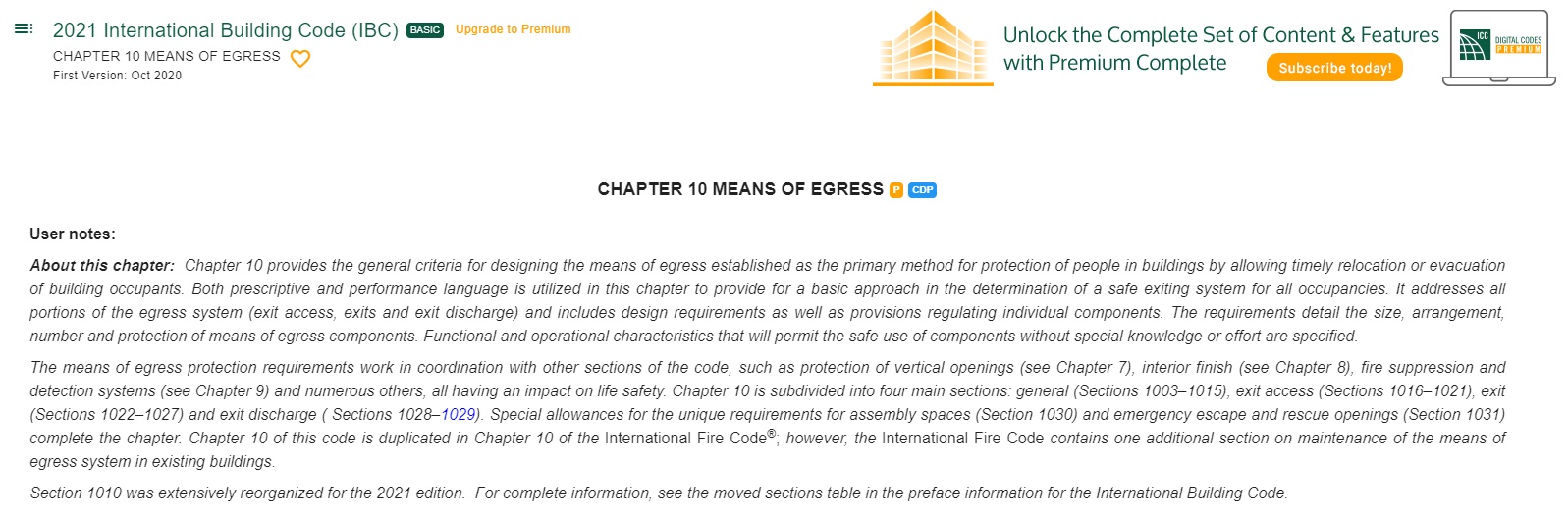
Health Facilities: Navigating IBC and NFPA differences
Posted February 14, 2023
Free access to the latest edition of the IFC is linked below:
Following the ICC Group A revision cycle public consultation on the 2024 International Fire Code will begin. The ICC will announce the development schedule sometime in 2022.
We limit our resources simply tracking the proposals that run through Group E (Educational) and Group I (Institutional) occupancies in the Group A suite with closer attention to the state they are adopted whole cloth or with local exceptions. In many cases, IFC adoption by state and local authorities is delayed by one or more previous code revisions. This delay in adoption may be necessary in order for jurisdictions to evaluate the impact of changes upon the region under their authority.
Public safety budgets historically support the local and state fire marshal and his or her staff. The revenue stream of many trade associations originates from membership, conference attendance, training and certification enterprises that service the public sector stakeholder. Manufacturer sponsorship of trade association conferences is noteworthy.
Unless there is an idea, or proposed regulation that has run off the rails (either in terms of rigor or cost increase) — we place fire safety in the middle of our ranking of priorities. With gathering pace, we find many fires safety goals being met with electrotechnologies where we place our highest priority.
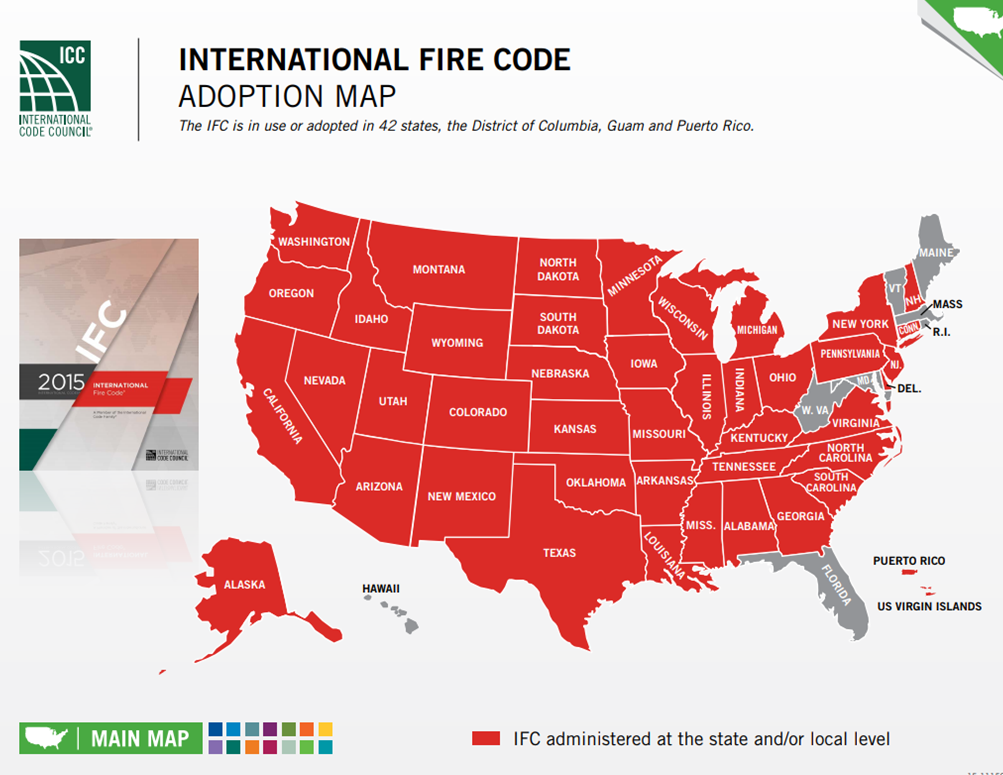
Click on image for more information. The map is updated by expert agencies frequently so we recommend a web search for an update.
Significant code changes rarely happen within a 3-year cycle so it is wise to follow ideas as they travel through the agendas of technical committees through several cycles as administered by the Fire Code Action Committee.
The ICC posts the transcripts of public proposals, technical committee responses to public proposals, public response to the technical committee response and the final balloting in a fair and reasonable fashion as can be seen in the transcripts linked below:
2021 International Fire Code Proposed Changes
2021 International Fire Code Public Comment Agenda
A search on the terms “classroom” or “school” in any of the documents above offers granular insight into the trend of current thinking. We find fire extinguishers placement a perennial concern across several standards suites. You will note the careful consideration of proposals for use of the mass notification systems, now integrated into fire alarm systems and their deployment in active shooter situations.
The transcripts reveal detailed understanding and subtlety.

“The Country School” | Winslow Homer
There are many issues affecting the safety and sustainability of the education facility industry. We add value to the industry because of our cross-cutting perspective on the hundreds of “silos”created by the competition (and sometimes cooperation) among accredited, consortia and open-source standards developers. We have the door open every day at 11 AM Eastern time to enlighten understanding of them all. We also host a breakout teleconference every month to drill into the specifics of standards action on fire safety for the real assets of school districts, colleges and universities. See our CALENDAR for the next online meeting.
Finally, we persist in encouraging education industry facility managers (especially those with operations and maintenance data) to participate in the ICC code development process. You may do so by CLICKING HERE.
The ICC Group B Code Meetings will be hosted soon and open to the public:
The Group B tranche is largely focused on energy, structural, residential and existing building concepts but all of the titles cross-reference the IFC in some way so it is wise to follow how the concepts re-arrange and cross-reference themselves with each cycle.
Issue: [16-169]
Category: Architectural, Facility Asset Management, Space Planning
Colleagues: Mike Anthony, Casey Grant, Joshua Evolve, Marcelo Hirschler
More
2021/2022 ICC CODE DEVELOPMENT SCHEDULE
FINAL ACTION RESULTS ON THE 2018 PROPOSED CHANGES TO THE INTERNATIONAL CODES – GROUP A
2018 GROUP A PROPOSED CHANGES TO THE I-CODES COLUMBUS COMMITTEE ACTION HEARINGS
2018 GROUP A PUBLIC COMMENT AGENDA | INTERNATIONAL BUILDING CODE
2018 GROUP A PUBLIC COMMENT AGENDA | INTERNATIONAL FIRE CODE
2018 REPORT OF THE COMMITTEE ACTION HEARINGS ON THE 2018 EDITIONS OF THE GROUP A INTERNATIONAL CODES
The recent tragedy inspires a need to review relevant safety standards. Today, a very brief examination and discussion about whether there is an enforceable standard solution that already exists, or is there an affordable solution to remediate a gap. Just a very cursory review today during our Open Office Hour.
2025 Annual Security Report and Annual Fire Safety Report

New update alert! The 2022 update to the Trademark Assignment Dataset is now available online. Find 1.29 million trademark assignments, involving 2.28 million unique trademark properties issued by the USPTO between March 1952 and January 2023: https://t.co/njrDAbSpwB pic.twitter.com/GkAXrHoQ9T
— USPTO (@uspto) July 13, 2023
Standards Michigan Group, LLC
455 East Eisenhower Parkway, Suite 300
Ann Arbor, MI 48108 USA
888-748-3670
 |
 |
|
 |
 |
|
 |
 |