One of the first activities upon waking is interacting with water. Approximately 25% of households in the state of Michigan rely on private well water as their primary drinking water source. This figure comes from the Michigan Department of Environment, Great Lakes, and Energy (EGLE), which estimates nearly 1.12 million households use private wells out of a total of roughly 4.1–4.6 million households statewide (based on U.S. Census data and population estimates of about 10 million residents, with an average household size of 2.5).
Other sources, such as Michigan State University Extension and the Michigan Water Stewardship Program, report slightly higher figures of 44–45% for overall groundwater reliance (including public systems drawing from aquifers), but the specific share for private household wells aligns with the 25% estimate from EGLE. Rural and southeastern areas of the state have the highest concentrations.
Michigan State was recently named a “dream school” in the nation, a university that’s not focused on prestige, but on value, access and outcomes. pic.twitter.com/ZMnO5szPMd
January 1st is Polar Bear Plunge Day in the Great Lakes. February should just be renamed ‘We Survived New Year’s Insanity, Now We Freeze Quietly’ Month’. It is also popular among the young in other “watery” universities around the world.
Cold shower? Ice swimming? ‘In 2014, researchers at Radboud University in the Netherlands investigated one of Hof’s bolder statements: that his regime can be used to control the immune system.’ @radboudumc@newscientist@Radboud_Unihttps://t.co/I9nqlJbUQQ
— Radboudumc wetenschap (@radboudumc_weet) April 22, 2021
Increased adrenaline rush: Cold water swimming can produce a surge of adrenaline in the body, which can make you feel more energized and alert.
Improved mood: Cold water swimming has been associated with an increased release of endorphins, which can elevate your mood and reduce stress levels.
Improved immune function: Cold water swimming has been shown to improve immune function, possibly due to the stress response induced by the cold water.
Sense of accomplishment: Many people find ice swimming to be a challenging and rewarding experience, providing a sense of accomplishment and pride.
Social bonding: Ice swimming can be a social activity, with groups of people coming together to share the experience and support each other.
Hazards:
Hypothermia: Prolonged exposure to cold water can cause hypothermia, which can be life-threatening if left untreated.
Cold shock response: Entering cold water can cause an involuntary gasp reflex, which can lead to drowning if it occurs while the head is underwater.
Heart problems: Cold water swimming can put a strain on the heart and increase the risk of heart attack or stroke in people with underlying cardiovascular disease.
Frostbite: Exposed skin can become frostbitten in cold water, particularly in extremities such as the fingers and toes.
Injury from slipping or falling: Ice swimming can be hazardous if proper safety precautions are not taken, such as wearing appropriate footwear and using a rope or ladder to enter and exit the water.
Most people step into morning shower and pour their first drink take as read the water and energy standards that assure safety and reliability. Today at the usual hour we refresh our understanding of the relatively stable stack of standards that are treated as given. With links to the Alice Parker invention of home heating. Use the login credentials at the upper right of our home page.
ASSE 1016/1017 mixing valves to prevent scalds, and temperature guidelines balancing burn risks (max ~120°F at fixtures) against Legionella growth (storage ≥140°F).
Today we slice horizontally through several vertical catalogs that interact, cross reference and are fairly dynamic in their best practice discovery and promulgation.
Plumbing and sanitation systems in educational settlements – especially those with healthcare and research enterprises are intricately linked, ensuring clean water supply, waste removal, and public health. Plumbing systems deliver potable water to dormitories, academic buildings, dining halls, and recreational facilities through a network of pipes, pumps, and valves. (Kitchens). These systems source water from municipal supplies or campus wells, often treated to meet safety standards (Backflow Prevention). Hot water heaters and pressure regulators maintain consistent supply for showers, sinks, and laboratories.
Sanitation systems, conversely, manage wastewater and sewage. They collect used water from toilets, sinks, and showers, channeling it through drainage pipes to campus treatment facilities or municipal sewer systems. Advanced campuses may employ on-site wastewater treatment plants, using processes like sedimentation and biological treatment to reduce environmental impact. Regular maintenance, including pipe cleaning and septic tank pumping, prevents blockages and contamination.
The interaction requires precise coordination. Plumbing systems must avoid cross-contamination with sanitation lines, using backflow preventers and proper pipe insulation.
Sanitation systems rely on plumbing’s water flow to transport waste efficiently. On large campuses, high demand during peak hours challenges both systems, necessitating robust infrastructure. Sustainable practices, like low-flow fixtures and greywater recycling, enhance efficiency, reduce costs, and align with campus environmental goals, ensuring a hygienic and functional environment.
Join us today at 11 AM when we sort through the settled science and unsettled standards of care. Use the login credentials at the upper right of our home page.
Danny S. Parker | Philip Fairey | James D. Lutz, PE
ABSTRACT. The WVU campus in Morgantown, located in north central WV is identified to have elevated heat flows by low-temperature geothermal play fairway analysis of the Appalachian basin. Along with the elevated subsurface heat flows, WVU also has surface demand necessary to develop a deep direct-use geothermal system in the eastern United States. West Virginia University is currently using a steam-based water heating system. This study focuses on converting the current heating system to a geothermal deep-direct-use district heating system.
A comprehensive evaluation of the current heating system is being conducted to determine the university’s heating energy demand. Energy demand is calculated for the whole campus based on the equipment survey and readings from the steam meters. Based on the steam meter readings, the approximate hot water usage of the whole campus is in the range of 10,000-12,000 GPM (gallons per minute). For buildings where there are no existing data or steam meters available, the energy usage is estimated using e-Quest. The tool e-Quest (Quick Energy Simulation Tool) is available through the U.S. Department of Energy and can provide monthly building energy usage data for comparison purposes.
The study includes an in-depth analysis of existing heating and cooling equipment, such as air handling units (AHUs) and heat exchangers, to determine their compatibility with hot water systems. The potential for retrofitting these systems to enhance energy efficiency, reduce operational costs, and contribute to the university’s sustainability goals is evaluated. This retrofit requires significant infrastructure changes, including installing new pumps, pipes, and heat exchangers. A detailed study for retrofitting was conducted on one of the buildings, which includes air handling units, pumps, valves, and expansion tanks.
The total retrofitting cost was found to be approximately $130,000. A preliminary hot water distribution model using Aspen HYSYS is developed, incorporating key system components like heat pumps and geothermal plate heat exchangers with a hot water distribution temperature of 180℉. Similarly, Aspen HYSYS models are developed to study and compare the normal hot water distribution model.
Florida’s campus coffee scene picks up influences from Gulf of America nations. Hot options are popular in winter, though iced drinks never fully disappear.
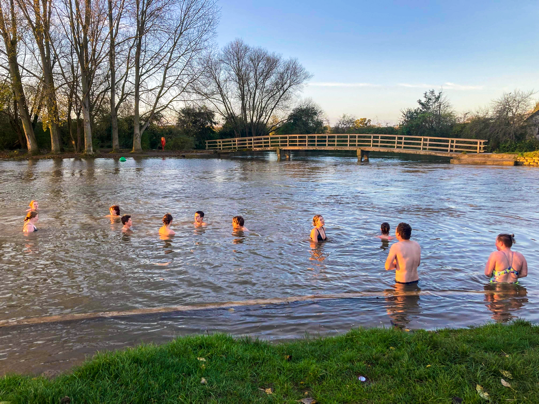
“Port Meadow is absolutely beautiful and a wonderful place to swim. We often swim in a different spot from other open water swimming groups in order to create a more relaxed environment – especially for our beginners. We do special beginners swims on Saturdays, to ease new members into the practise slowly and very carefully.
Safety is paramount, so I’ll walk them in to the water and they can immerse themselves as much as they want. We never allow anyone to jump or dive into cold water – the shock can cause a swimmer to gulp for air and subsequently ingest water; it’s always a gentle process.” — Ellie
This content is accessible to paid subscribers. To view it please enter your password below or send mike@standardsmichigan.com a request for subscription details.
Water is essential for sanitation and hygiene — and proper sanitation is essential for protecting water sources from contamination and ensuring access to safe drinking water. Access to safe water and sanitation is crucial for preventing the spread of waterborne diseases, which can be transmitted through contaminated water sources or poor sanitation practices. Lack of access to safe water and sanitation can lead to a range of health problems, including diarrheal diseases, cholera, typhoid, and hepatitis A.
On the other hand, poor sanitation practices, such as open defecation, can contaminate water sources, making them unsafe for drinking, bathing, or cooking. This contamination can lead to the spread of diseases and illness, particularly in developing countries where access to clean water and sanitation facilities may be limited.
We track the catalog of the following ANSI accredited standards developers that necessarily require mastery of building premise water systems:
American Society of Heating, Refrigerating and Air-Conditioning Engineers: ASHRAE develops standards related to heating, ventilation, air conditioning, refrigeration systems — and more recently, standards that claim jurisdiction over building sites.
American Society of Mechanical Engineers: ASME develops standards related to boilers, pressure vessels, and piping systems.
American Water Works Association: AWWA is a standards development organization that publishes a wide range of standards related to water supply, treatment, distribution, and storage.
ASTM International: ASTM develops and publishes voluntary consensus standards for various industries, including water-related standards. They cover topics such as water quality, water sampling, and water treatment.
National Fire Protection Association: NFPA develops fire safety standards, and some of their standards are related to water, such as those covering fire sprinkler systems and water supplies for firefighting within and outside buildings. We deal with the specific problems of sprinkler water system safety during our Prometheus colloquia.
National Sanitation Foundation International (NSF International): NSF International develops standards and conducts testing and certification for various products related to public health and safety, including standards for water treatment systems and products.
Underwriters Laboratories (UL): UL is a safety consulting and certification company that develops standards for various industries. They have standards related to water treatment systems, plumbing products, and fire protection systems.
* The evolution of building interior water systems has undergone significant changes over time to meet the evolving needs of society. Initially, water systems were rudimentary, primarily consisting of manually operated pumps and gravity-fed distribution systems. Water was manually fetched from wells or nearby sources, and indoor plumbing was virtually nonexistent.
The Industrial Revolution brought advancements in plumbing technology. The introduction of pressurized water systems and cast-iron pipes allowed for the centralized distribution of water within buildings. Separate pipes for hot and cold water became common, enabling more convenient access to water for various purposes. Additionally, the development of flush toilets and sewage systems improved sanitation and hygiene standards.
In the mid-20th century, the advent of plastic pipes, such as PVC (polyvinyl chloride) and CPVC (chlorinated polyvinyl chloride), revolutionized plumbing systems. These pipes offered durability, flexibility, and ease of installation, allowing for faster and more cost-effective construction.
The latter part of the 20th century witnessed a growing focus on water conservation and environmental sustainability. Low-flow fixtures, such as toilets, faucets, and showerheads, were introduced to reduce water consumption without compromising functionality. Greywater recycling systems emerged, allowing the reuse of water from sinks, showers, and laundry for non-potable purposes like irrigation.
With the advancement of digital technology, smart water systems have emerged in recent years. These systems integrate sensors, meters, and automated controls to monitor and manage water usage, detect leaks, and optimize water distribution within buildings. Smart technologies provide real-time data, enabling better water management, energy efficiency, and cost savings.
The future of building interior water systems is likely to focus on further improving efficiency, sustainability, and water quality. Innovations may include enhanced water purification techniques, decentralized water treatment systems, and increased integration of smart technologies to create more intelligent and sustainable water systems.
The first mover in building interior water supply systems can be traced back to the ancient civilizations of Mesopotamia, Egypt, and the Indus Valley. However, one of the earliest known examples of sophisticated indoor plumbing systems can be attributed to the ancient Romans.
The Romans were pioneers in constructing elaborate water supply and distribution networks within their cities. They developed aqueducts to transport water from distant sources to urban centers, allowing for a centralized water supply. The water was then distributed through a network of lead or clay pipes to public fountains, baths, and private residences.
One notable example of Roman plumbing ingenuity is the city of Pompeii, which was buried by the eruption of Mount Vesuvius in 79 AD. The excavation of Pompeii revealed a well-preserved plumbing system that included indoor plumbing in some houses. These systems featured piped water, private bathrooms with flushing toilets, and even hot and cold water systems.
The Romans also invented the concept of the cloaca maxima, an ancient sewer system that collected and transported wastewater away from the city to nearby bodies of water. This early recognition of the importance of sanitation and wastewater management was a significant advancement in public health.
While the Romans were not the only ancient civilization to develop indoor plumbing systems, their engineering prowess and widespread implementation of water supply and sanitation infrastructure make them a key player in the history of building interior water systems.
This content is accessible to paid subscribers. To view it please enter your password below or send mike@standardsmichigan.com a request for subscription details.
New update alert! The 2022 update to the Trademark Assignment Dataset is now available online. Find 1.29 million trademark assignments, involving 2.28 million unique trademark properties issued by the USPTO between March 1952 and January 2023: https://t.co/njrDAbSpwBpic.twitter.com/GkAXrHoQ9T