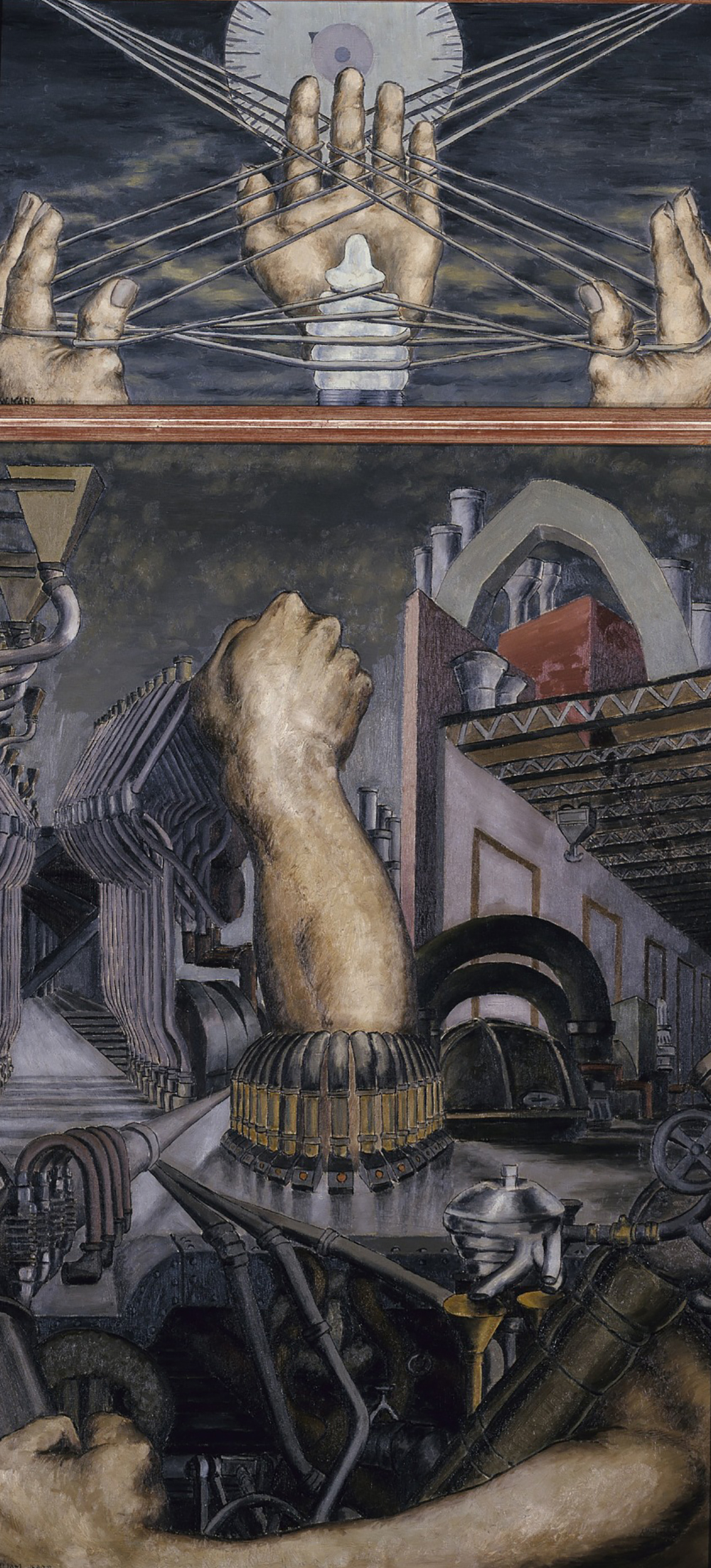
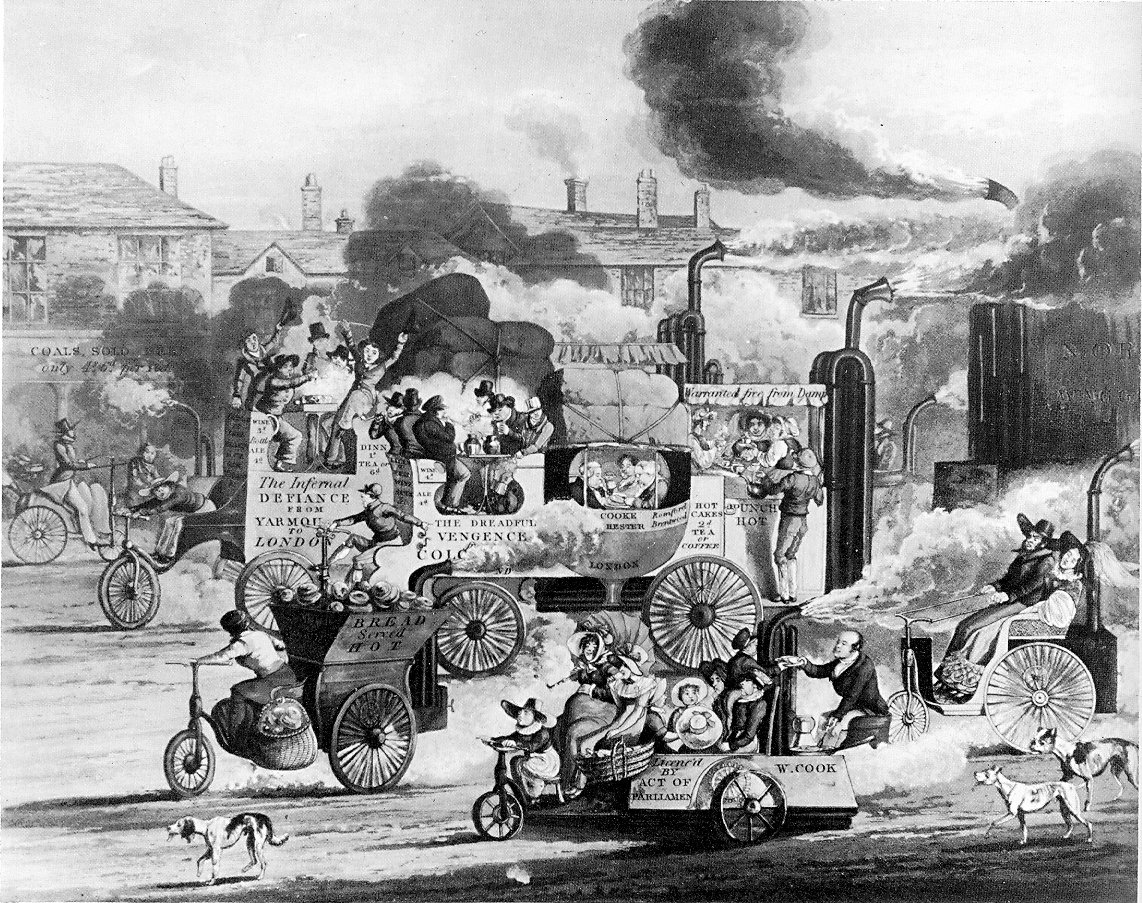
“Electric Production and Direction” 1933 / William Karp / Smithsonian American Art Museum
We collaborate with the IEEE Education & Healthcare Facilities Committee in assisting the US Army Corps of Engineers in gathering power system data from education communities that will inform statistical solutions for enhancing power system reliability for the Homeland.
We maintain status information about this project — and all projects that enhance the reliability of education community power reliability — on the standing agenda of our periodic Power, Risk and Security colloquia. See our CALENDAR for the next online meeting; open to everyone
Issue: [19-156]
Category: Power, Data, Security
Colleagues: Mike Anthony, Robert G. Arno, Mark Bunal, Jim Harvey, Jerry Jimenez, Paul Kempf. Richard Robben
We have been following an international conversation on the safe and effective application of reconditioned electrical equipment (RCEE) for the better part of ten years now. Threads of the conversation originating in consensus documents developed by the International Electrotechnical Commission, the CSA Group, the National Association of Electrical Equipment and Medical Imaging Manufacturers (NEMA) and others. The safe and practical application of reconditioned electrical equipment — though not necessarily economical — is debated in detail in the National Electrical Code (NEC); a document in which we have advocated for the education facilities industry since 1993.
Not all electrical equipment is suitable for reconditioning but enough of it can such that specification of RCEE significantly lowers #TotalCostofOwnership for the $300 billion education facilities industry in the United States; the primary goal of Standards Michigan and its 50-state affiliates. According to the National Electrical Manufacturers Association, the following RCEE is suitable:
Industrial and commercial panel boards
Low and medium voltage power circuit breakers
Low and medium voltage replaceable link fuses
Low voltage switchgear
Manual and magnetic controllers
Medium voltage switchgear
Metallic conduit, tubing, raceways and fittings
Motor control centers
Motors
Switchboards
Uninterruptible Power Supply Equipment
The length of this list is a topic upon which good minds disagree; especially internationally. Whether or not the largest non-residential building construction market in the United States (with new construction running at a clip of $80 billion annually) takes advantage of developments in technology that help manufacturers effectively “re-cycle” the largest components of a building power chain is a discussion for another day. The IEEE Education & Healthcare Facilities Committee drills down into details of this nature and is now soliciting comment on the proposed actions of IEEE SCC-18; the IEEE committee which, by charter, is aligned with user-interests in the US standards system. As we explain in our ABOUT, the general public — and even many industry insiders — are not aware of the economic consequences to all industries when regulatory products are written only by incumbent interests.
Suffice to say that even if the US education facilities industry does not apply RCEE to reduce the cost of a new building (by about 1 percent) its competitors internationally will and are.
The 2020 NEC is nearing the completion of its revision cycle. A milestone was completed in early November when all of the 20-0dd technical committees in San Diego. Dozens of breakout task groups are forming to sort through public response to proposed changes to the 2017 NEC which will become the 2020 NEC this time next year. Proposals regarding RCEE landed on the agenda of nearly all 20-odd NEC technical committees. Standards Michigan has tenure in Code Making Panel 1, the committee with oversight about how all other technical committees determine the safe and practical application of RCEE.
Cutting to the chase then, linked below is the first of several transcripts that track CMP-1 debate:
Admittedly, very technical stuff. Few will pay attention to these specifics until something bad happens (perhaps six years from now) so, to avoid something bad happening, we pay attention to it now. We always collaborate with IEEE JTC/PES/IAS and IEEE E&H Committee which meets online twice every month.
Issue: [16-102]
Category: Electrical, #SmartCampus
Colleagues: Mike Anthony, Robert G. Arno, Neal Dowling, James R. Harvey, Richard Robben
The CSA America Standards organization has launched a new best practice title — CSA T150 Connected & Automated Vehicle Code — that may, at the very least, guide the safety and sustainability agenda of many large research universities that have transportation service units. Many governments direct research funding toward transportation so this product may inform the practicality of academic research.
Project Need: To support innovation and deployment in the field of connected and autonomous vehicles by providing infrastructure requirements for the installation and safe operations of CAVs and corresponding infrastructure in the North American context.
Stakeholders: This proposed Code is being developed at the request of industry and manufacturers. It will provide the industry with the technical requirements and standards of safe operation of CAVs. This will meet the strategic needs of the following key interests:
(a) Ensuring that the latest innovative/technology/safety features are available for users,
(b) Addressing needs of regulators by providing suitable requirements;
(c) Supporting certification bodies.
The connected and automated vehicle (CAV) code specifies infrastructure requirements for CAVs operating or intended to operate in both on-road and off-road environments in order to address public safety, security, and privacy challenges. The code includes, but is not limited to, physical and digital infrastructure. Consideration is given to cybersecurity, interoperability, data management, data privacy, data integrity, human aspects, and accessibility. The CAV code is intended to primarily address issues related to public safety, security, and privacy in conjunction with detailed knowledge of the legal, regulatory, and technological landscape, and ensuring compliance with all relevant and applicable law. The CAV code is not intended as a design specification nor as an instruction manual for untrained persons.
This is an ambitious undertaking and certain to inspire competition among competitor conformance and certification organizations. Accordingly, we will follow the developmental path of the proposed “Code”. We encourage direct participation in the CSA Group’s standards development program by students, faculty and staff in the education industry.
Standards Michigan will continue to be a resource for education facility managers, academic researchers and any other final fiduciary (user-interest) in the public or private sector who need cross-cutting perspective. This title appears on the standing agenda of our periodic Mobility colloquia. See our CALENDAR for the next online meeting; open to everyone.
Photo Credit: Center for Digital Education
Issue: [19-146]
Category: Transportation & Parking
Colleagues: Mike Anthony, Paul Green, Jack Janveja, Richard Robben
Abstract: With the rapid deployment of smart technologies and the growing complexity in our modern society, there is a huge demand for coordination in day-to-day operation of the critical infrastructure networks. The coordination between water and electricity networks particularly stands out and is urgently demanding as (i) water system is one of the most energy-intensive critical infrastructure, and (ii) water unavailability, if experienced, swiftly translates into a health, safety, and national security concern. This paper proposes a comprehensive day-ahead optimization framework for joint operation of the interdependent power and water systems. Different from the conventional paradigms where the power and water systems are independently and individually operated by their respective operators, the proposed optimization framework integrates the Optimal Power Flow (OPF) models in power grids with innovative models of the water distribution systems. The nonlinear hydraulic operating constraints in the proposed optimization models are linearized, resulting into a mixed-integer linear programming (MILP) model formulation. The proposed framework is applied to three 15-node water distribution systems, operated within the IEEE 9-bus test system. The simulation results demonstrate a significant cost saving that will be achieved when the proposed approach is applied for joint operation of power and water networks.
Decentralized, Democratized, and Decarbonized Future Electric Power Distribution Grids: A Survey on the Paradigm Shift From the Conventional Power System to Micro Grid Structures
Abstract: In fire emergencies, timely communication with on-site coordinators and accurate localization of first responders facilitates effective task assignment and resource allocation in harsh, low-visibility environments. Building information modeling (BIM) is widely accepted in the architecture, engineering, and construction industries as a central repository of building information. It could provide both the geometric building data and semantic information; however, the convenient linkage and integration with indoor location technologies for emergency purposes have not been addressed according to the authors’ knowledge.
A stand-alone BIM-based indoor location (BIMIL) framework and portal were designed and tested to enable the automatic extraction, transformation, and visualization of BIM-related data for public safety purposes in this study. Based on current information technology, this research reduces the gap in cross-application by supporting indoor location to overcome the primary shortcoming of existing indoor building models. Eliminating the need for specific software and skill in data processing, this portal will support on-site coordinators’ importation of BIM files, allowing them to convert those files into processed and visualized indoor information containing key yet simplified geometric building data and essential emergency-related information such as fire rating hours, egresses, and hazardous materials. Additionally, the indoor location data can be integrated into a generalized 3D building model to support decision-making activities and management tasks in the field.
This content is accessible to paid subscribers. To view it please enter your password below or send mike@standardsmichigan.com a request for subscription details.
This content is accessible to paid subscribers. To view it please enter your password below or send mike@standardsmichigan.com a request for subscription details.
New update alert! The 2022 update to the Trademark Assignment Dataset is now available online. Find 1.29 million trademark assignments, involving 2.28 million unique trademark properties issued by the USPTO between March 1952 and January 2023: https://t.co/njrDAbSpwBpic.twitter.com/GkAXrHoQ9T