Tag Archives: Spring

Loading
loading..

Rain & Lightning

The thunderbolt steers all things.
—Heraclitus, c. 500 BC
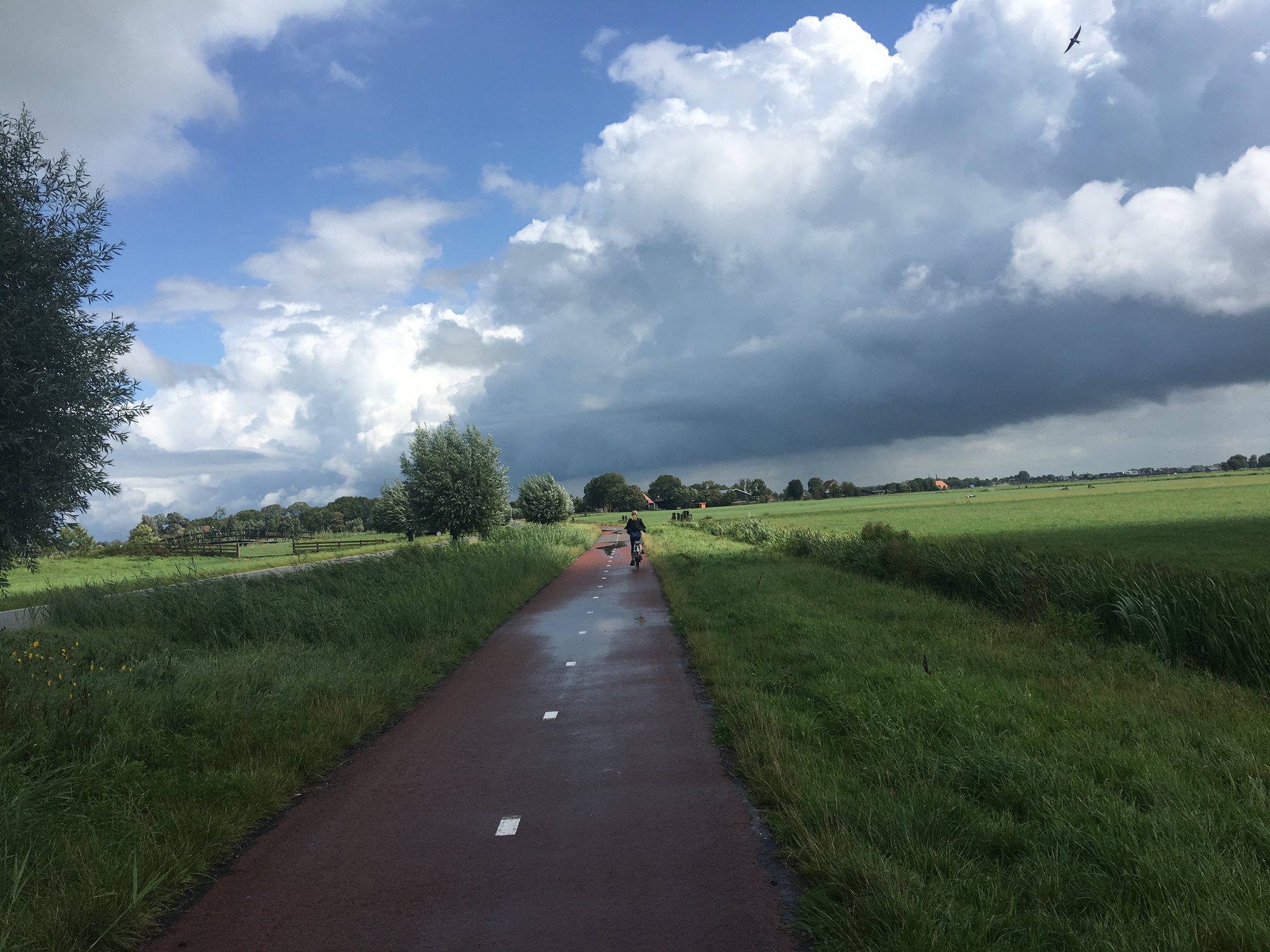
After the rain. Personal photograph taken by Mike Anthony biking with his niece in Wirdum, The Netherlands

Today at 15:00 UTC we examine the technical literature about rainwater management in schools, colleges and universities — underfoot and on the roof.  Lightning protection standards will also be reviewed; given the exposure of outdoor athletic activity and exterior luminaires.

We draw from previous standardization work in titles involving water, roofing systems and flood management — i.e. a cross-cutting view of the relevant standard developer catalogs.   Among them:

American Society of Civil Engineers

American Society of Plumbing Engineers

ASHRAE International

ASTM International

Construction Specifications Institute (Division 7 Thermal and Moisture Protection)

Environmental Protection Agency | Clean Water Act Section 402

Federal Emergency Management Agency

FM Global

Sustainable Sites Initiative

IAPMO Group (Mechanical and Plumbing codes)

Institute of Electrical and Electronic Engineers

Heat Tracing Standards

International Code Council

Chapter 15 Roof Assemblies and Rooftop Structures

Why, When, What and Where Lightning Protection is Required

National Fire Protection Association

National Electrical Code: Article 250.16 Lightning Protection Systems

Lightning Protection

Underwriters Laboratories: Lightning Protection

Underground Stormwater Detention Vaults

United States Department of Agriculture: Storm Rainfall Depth and Distribution

Risk Assessment of Rooftop-Mounted Solar PV Systems

Readings: The “30-30” Rule for Outdoor Athletic Events Lightning Hazard

As always, our daily colloquia are open to everyone.  Use the login credentials at the upper right of our home page.
“Rainbow Connection”
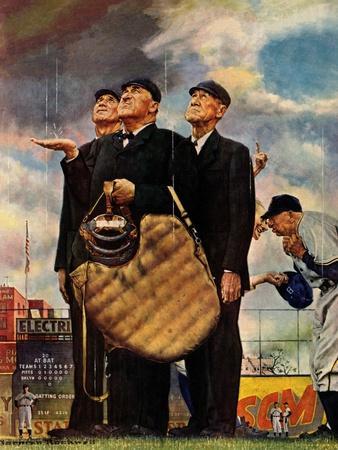
Norman Rockwell Posters & Wall Art - Shop Norman Rockwell Prints, Canvas, Framed Artwork, & Wall Décor | Allposters

“Tough Call” | Norman Rockwell 1949

The “lightning effect” seen in carnival tricks typically relies on a scientific principle known as the Lichtenberg figure or Lichtenberg figure. This phenomenon occurs when a high-voltage electrical discharge passes through an insulating material, such as wood or acrylic, leaving behind branching patterns resembling lightning bolts.

The process involves the creation of a temporary electric field within the material, which polarizes its molecules. As the discharge propagates through the material, it causes localized breakdowns, creating branching paths along the way. These branching patterns are the characteristic Lichtenberg figures.

In the carnival trick, a high-voltage generator is used to create an electrical discharge on a piece of insulating material, such as acrylic. When a person touches the material or a conductive object placed on it, the discharge follows the path of least resistance, leaving behind the branching patterns. This effect is often used for entertainment purposes due to its visually striking appearance, resembling miniature lightning bolts frozen in the material. However, it’s crucial to handle such demonstrations with caution due to the potential hazards associated with high-voltage electricity.


Lightning Protection Systems

2026 Public Input Report | 2026 Public Comment Report

FEMA National Risk Index: Lightning

“Benjamin Franklin Drawing Electricity from the Sky” 1816 Benjamin West


Benjamin Franklin conducted his famous experiment with lightning on June 10, 1752.

He used a kite and a key to demonstrate that lightning was a form of electricity.

This experiment marked an important milestone in understanding the nature of electricity

and laid the foundation for the development of lightning rods and other lightning protection systems.


Seasonal extreme weather patterns in the United States, resulting in damages to education facilities and delays in outdoor athletic events — track meets; lacrosse games, swimming pool closures and the like — inspire a revisit of the relevant standards for the systems that contribute to safety from injury and physical damage to buildings: NFPA 780 Standard for the Installation of Lightning Protection Systems

FREE ACCESS

To paraphrase the NFPA 780 prospectus:

  • This document shall cover traditional lightning protection system installation requirements for the following:
       (1) Ordinary structures

       (2) Miscellaneous structures and special occupancies
       (3) Heavy-duty stacks
       (4) Structures containing flammable vapors, flammable gases, or liquids with flammable vapors
       (5) Structures housing explosive materials
       (6) Wind turbines
       (7) Watercraft
       (8) Airfield lighting circuits
       (9) Solar arrays
  • This document shall address lightning protection of the structure but not the equipment or installation requirements for electric generating, transmission, and distribution systems except as given in Chapter 9 and Chapter 12.

(Electric generating facilities whose primary purpose is to generate electric power are excluded from this standard with regard to generation, transmission, and distribution of power.  Most electrical utilities have standards covering the protection of their facilities and equipment. Installations not directly related to those areas and structures housing such installations can be protected against lightning by the provisions of this standard.)

  • This document shall not cover lightning protection system installation requirements for early streamer emission systems or charge dissipation systems.

“Down conductors” must be at least #2 AWG copper (0 AWG aluminum) for Class I materials in structures less than 75-ft in height

“Down conductors: must be at least 00 AWG copper (0000 AWG aluminum) for Class II Materials in structures greater than 75-ft in height.

Related grounding and bonding  requirements appears in Chapters 2 and Chapter 3 of NFPA 70 National Electrical Code.  This standard does not establish evacuation criteria.  

University of Michigan | Washtenaw County (Photo by Kai Petainen)

The current edition is dated 2023 and, from the transcripts, you can observe concern about solar power and early emission streamer technologies tracking through the committee decision making.  Education communities have significant activity in wide-open spaces; hence our attention to technical specifics.

2023 Public Input Report

2023 Public Comment Report

Public input on the 2026 revision is receivable until 1 June 2023.

We always encourage our colleagues to key in their own ideas into the NFPA public input facility (CLICK HERE).   We maintain NFPA 780 on our Power colloquia which collaborates with IEEE four times monthly in European and American time zones.  See our CALENDAR for the next online meeting; open to everyone.

Lightning flash density – 12 hourly averages over the year (NASA OTD/LIS) This shows that lightning is much more frequent in summer than in winter, and from noon to midnight compared to midnight to noon.

Issue: [14-105]

Category: Electrical, Telecommunication, Public Safety, Risk Management

Colleagues: Mike Anthony, Jim Harvey, Kane Howard


More

Installing lightning protection system for your facility in 3 Steps (Surge Protection)

IEEE Education & Healthcare Facility Electrotechnology

Readings: The “30-30” Rule for Outdoor Athletic Events Lightning Hazard

Churches and chapels are more susceptible to lightning damage due to their height and design. Consider:

Height: Taller structures are more likely to be struck by lightning because they are closer to the cloud base where lightning originates.

Location: If a church or chapel is situated in an area with frequent thunderstorms, it will have a higher likelihood of being struck by lightning.

Construction Materials: The materials used in the construction of the building can affect its vulnerability. Metal structures, for instance, can conduct lightning strikes more readily than non-metallic materials.

Proximity to Other Structures: If the church or chapel is located near other taller structures like trees, utility poles, or buildings, it could increase the chances of lightning seeking a path through these objects before reaching the building.

Lightning Protection Systems: Installing lightning rods and other lightning protection systems can help to divert lightning strikes away from the structure, reducing the risk of damage.

Maintenance: Regular maintenance of lightning protection systems is essential to ensure their effectiveness. Neglecting maintenance could result in increased susceptibility to lightning damage.

Historical Significance: Older buildings might lack modern lightning protection systems, making them more vulnerable to lightning strikes.

The risk can be mitigated by proper design, installation of lightning protection systems, and regular maintenance. 

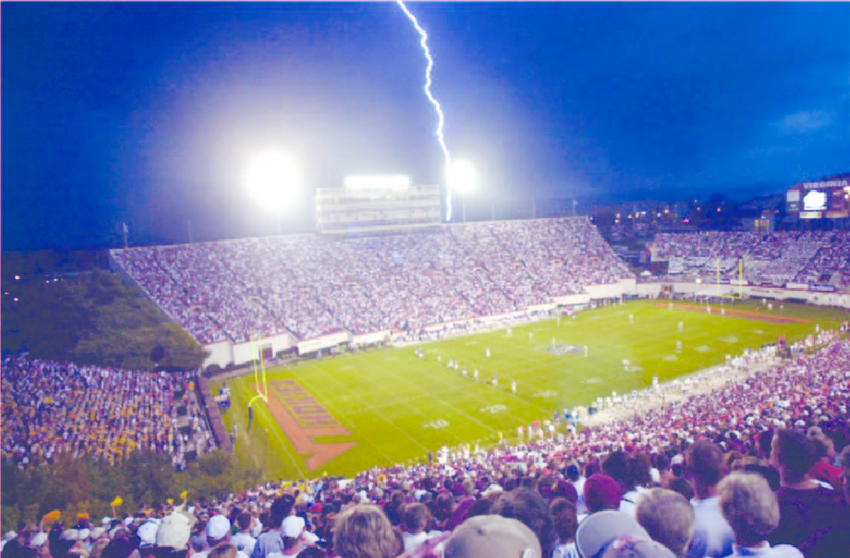
Virginia Tech

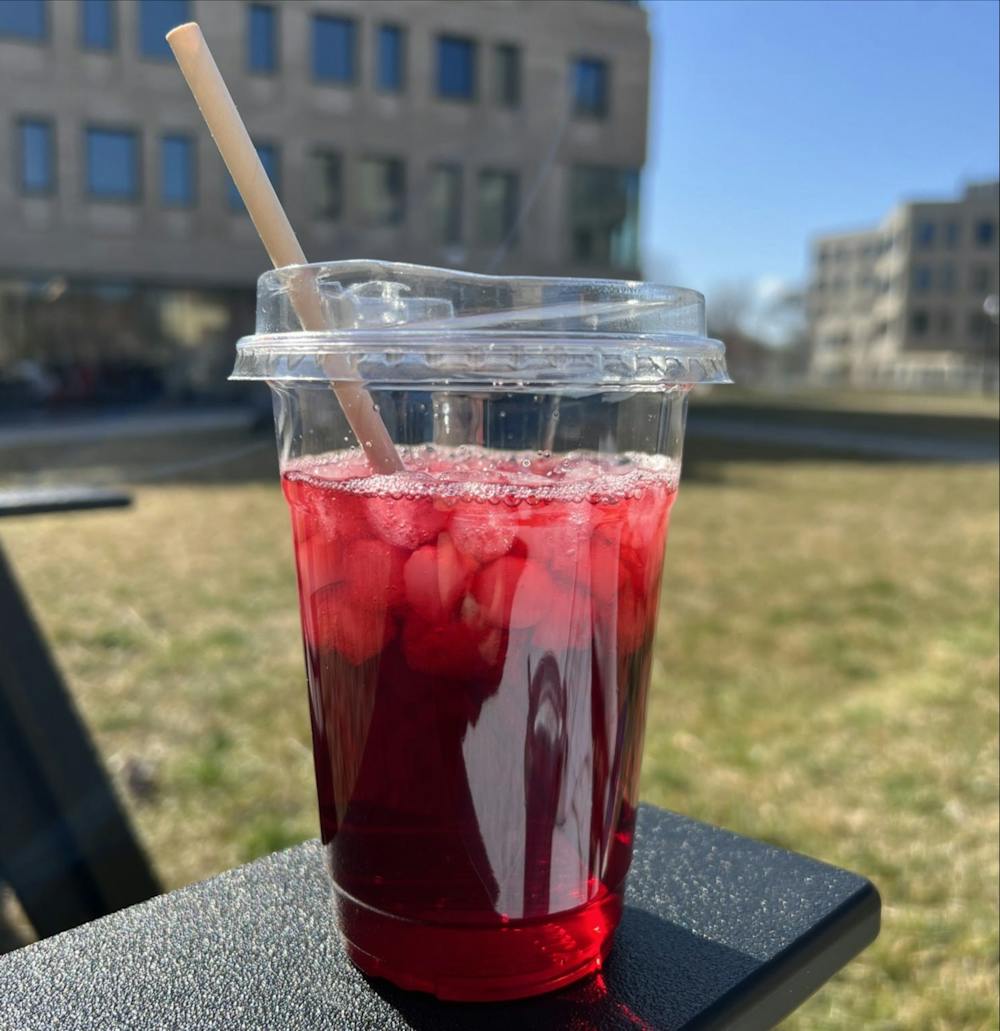
Strawberry Iced Latte

Cal Poly: University Budget 2024-2025 *

Facilities Management & Development | $1.2B Student Housing Expansion

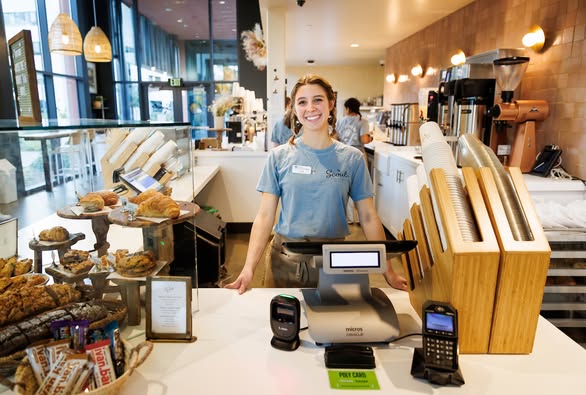
Animal science student and barista Lola Coetzee is on the opening shift at Scout Coffee. Photo by Joe Johnston/University Photographer/Cal Poly 11-20-24

Scout Coffee

College of Agriculture, Food and Environmental Sciences 

Do you remember the Shire, Mr. Frodo? It’ll be spring soon. And the orchards will be in blossom. And the birds will be nesting in the hazel thicket. And they’ll be sowing the summer barley in the lower fields… and eating the first of the strawberries with cream. Do you remember the taste of strawberries?” — Sam Gamgee (J.R.R. Tolkien (from ‘The Return of the King’ 1955)


* Why is the Net Position number so elusive in college and university financial statements?  Short answer: So goes the nature of non-profit organizations.  More.

Cherry Blossom Tea Latte

Collegiate Gothic: Cope and Stewardson Architects

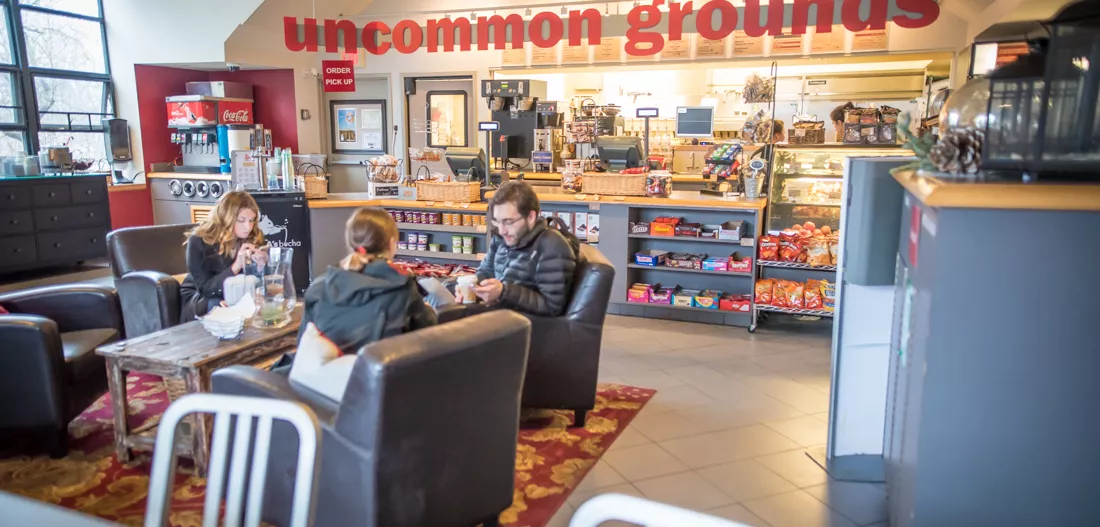
A delicate, floral spring and summer drink featuring the subtle cherry-like aroma and slight saltiness of sakura (cherry blossoms).  Made with steeped sakura tea or a flavored base, combined with steamed or frothed milk, and often sweetened or enhanced with syrup or powder for color and flavor. It’s lighter and more tea-forward than a coffee-based latte. Available hot or with ice at the UnCommon Grounds Cafe in the Neuberger Centennial Campus Center

“Asparagus Officinalis” Soup

Standards Indiana

Indiana


Spring Drinks

Standards New Jersey | Princeton University Investment Company

coffee club spring drink dom media.jpg

“Some of my favorite places to spend my dining points are at the Coffee Club’s two locations on campus. I frequently trek down to the modern New College West (NCW) storefront that overlooks Poe Field before an afternoon of studying. I also love the quaint café at Campus Club, with its homey vibe and frequent musical performances. Typically, I go for the basic, predictable iced vanilla latte. However, Coffee Club seasonally experiments with its menu and releases temporary items that reflect the weather, holidays, or mood of the campus….” Isabella Dail


President of Princeton University: 19021910
President of the United States: 1913 1921

Woodrow Wilson’s tenure as U.S. President (1913–1921) significantly weakened the constitutional republic designed by the Founders. As a Princeton professor and political scientist, Wilson openly rejected the Founders’ system of separated powers, limited government, and federalism. He viewed the Constitution as outdated and inefficient for the modern age, preferring rule by expert administrators in a powerful central state.

In office he advanced this vision through:

• The Federal Reserve Act (1913) – centralizing monetary power
• The 16th Amendment income tax – funding vast federal expansion
• Espionage and Sedition Acts – suppressing free speech
• Racial segregation of the federal workforce
• Aggressive push for the League of Nations, undermining American sovereignty

These changes shifted power from Congress and the states to the executive branch and unelected bureaucracy, creating the foundations of today’s administrative state. Wilson’s academic background made this outcome predictable: college progressives of his era distrusted “inefficient” constitutional restraints and placed faith in enlightened elites. His presidency proved that such intellectual contempt for the Founders’ republic inevitably leads to concentrated power and eroded liberties.

Furthermore, Wilson was an enthusiastic “eugenicist” supporting compulsory sterilization legislation aimed at preventing reproduction of people considered to be genetically inferior; including African-Americans whom he discouraged entering Princeton.  Ironically, President Barack Obama was one of Wilson’s intellectual disciples — promoting activist federal government, expert-led reform, internationalism and the elevation of race into all public discourse.

University of Chicago Law School Lecturer: 1992-2004
President of the United States: 2009 – 2017

Nourriture de printemps

University of Vermont | Chittenden County

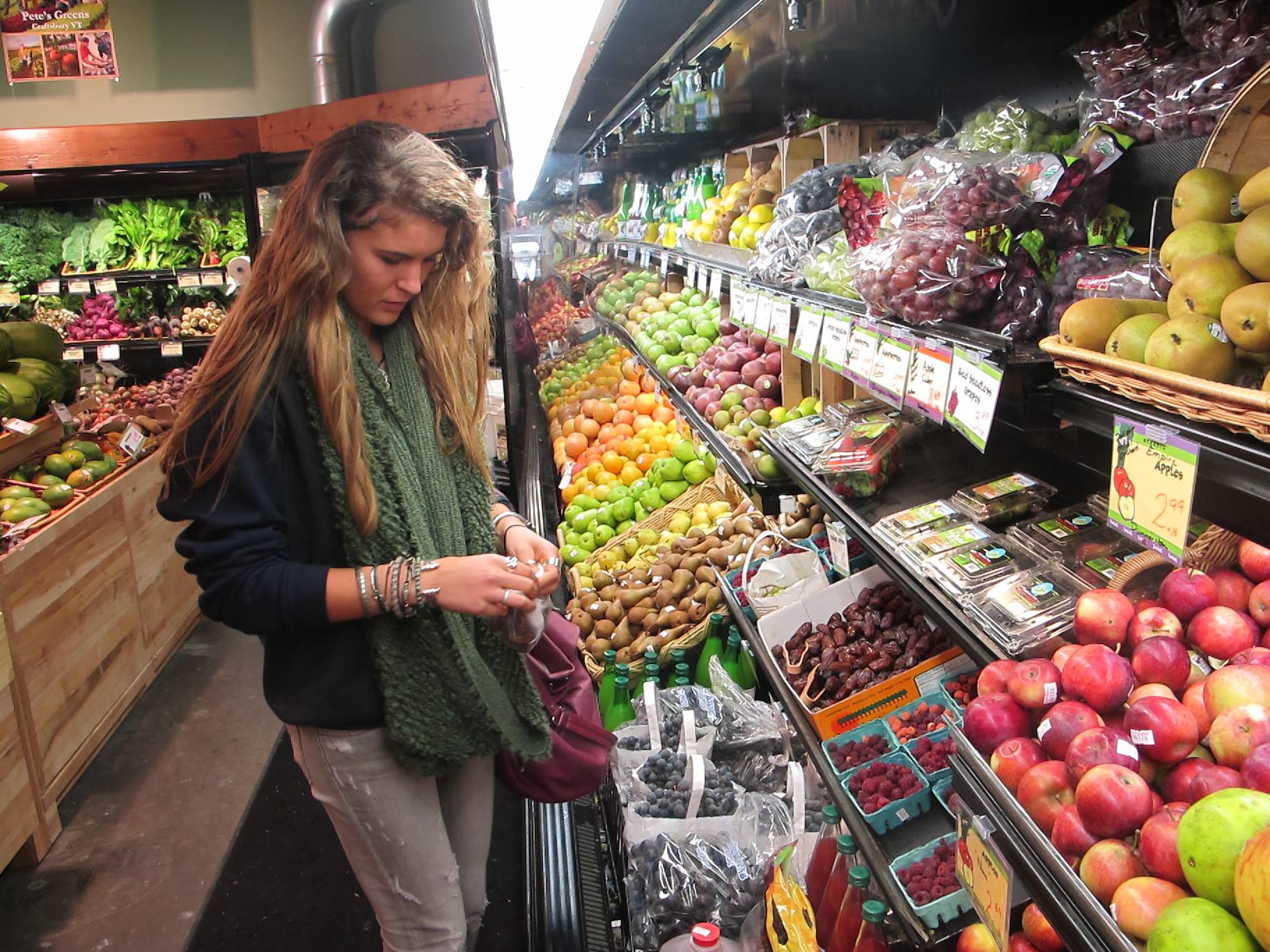
Today we break down the catalog for food safety in education communities; with primary attention to consultations from private standard developing organizations and federal agencies charged with food safety.  We do so with sensitivity to animals and plants and sustainability of the global food supply chain.   Many schools are the communal cafeterias for the communities that own and operate them and run at commercial scale.

We prepare responses to public consultations released by standards developing organizations which, in many cases, have significant conformance enterprises.  Core titles are published by the ANSI accredited organizations listed below:

3-A Sanitary Standards

Catalog

ASHRAE International

The ASHRAE catalog is the most cross-cutting and fastest moving catalog in the land.   If you claim ownership of the United States energy domain you pretty much capture everything related campus safety and sustainability.  Best to deal with it on a day-by-day basis as we usually do according to daily topics shown on our CALENDAR.

Association for Packaging and Processing Technologies

American Society of Agricultural and Biological Engineers

Institute of Electrical and Electronic Engineers

National Electrical Safety Code   (Our particular interest lies in the safety and reliability of off-campus agricultural and research facilities that receive power from regulated utilities)

Kitchen Safety and Security System for Children

TupperwareEarth: Bringing Intelligent User Assistance to the “Internet of Kitchen Things”

Designing an IoT based Kitchen Monitoring and Automation System for Gas and Fire Detection

Re-Inventing the Food Supply Chain with IoT: A Data-Driven Solution to Reduce Food Loss

International Code Council

Commercial Kitchens

International Building Code Assembly Group A-2

International Building Code Group U Section 312 Agricultural Buildings

International Building Code Moderate Hazard Factory Industrial Group F-1 (Food Processing)

Who Gets Rich From School Lunch

National Fire Protection Association

Kitchen Wiring

National Electrical Code Article 210 (Branch Circuits)

National Electrical Code Article 547 (Agricultural Buildings)

Standard for the Installation of Air-Conditioning and Ventilating Systems

Public Input Report for the 2024 Revision

Standard for Ventilation Control and Fire Protection of Commercial Cooking Operations

Public Input Report for the 2024 Revision

NSF International

Food Equipment

Commercial Warewashing Equipment

Commercial Refrigerators and Freezers

Commercial Cooking, Rethermalization and Powered Hot Food Holding and Transport Equipment

Commercial Powered Food Preparation Equipment

US Federal Government:

US Department of Agriculture

Food & Drug Administration (HACCP)

State Governments:

Lorem ipsum @StandardsState

Global:

International Organization for Standardization

International Electrotechnical Commission

Codex Alimentarius

Food safety and sustainability standards populate are of the largest domains we track so if we need a break0-out session, let’s do it.  Use the login credentials at the upper right of our home page.

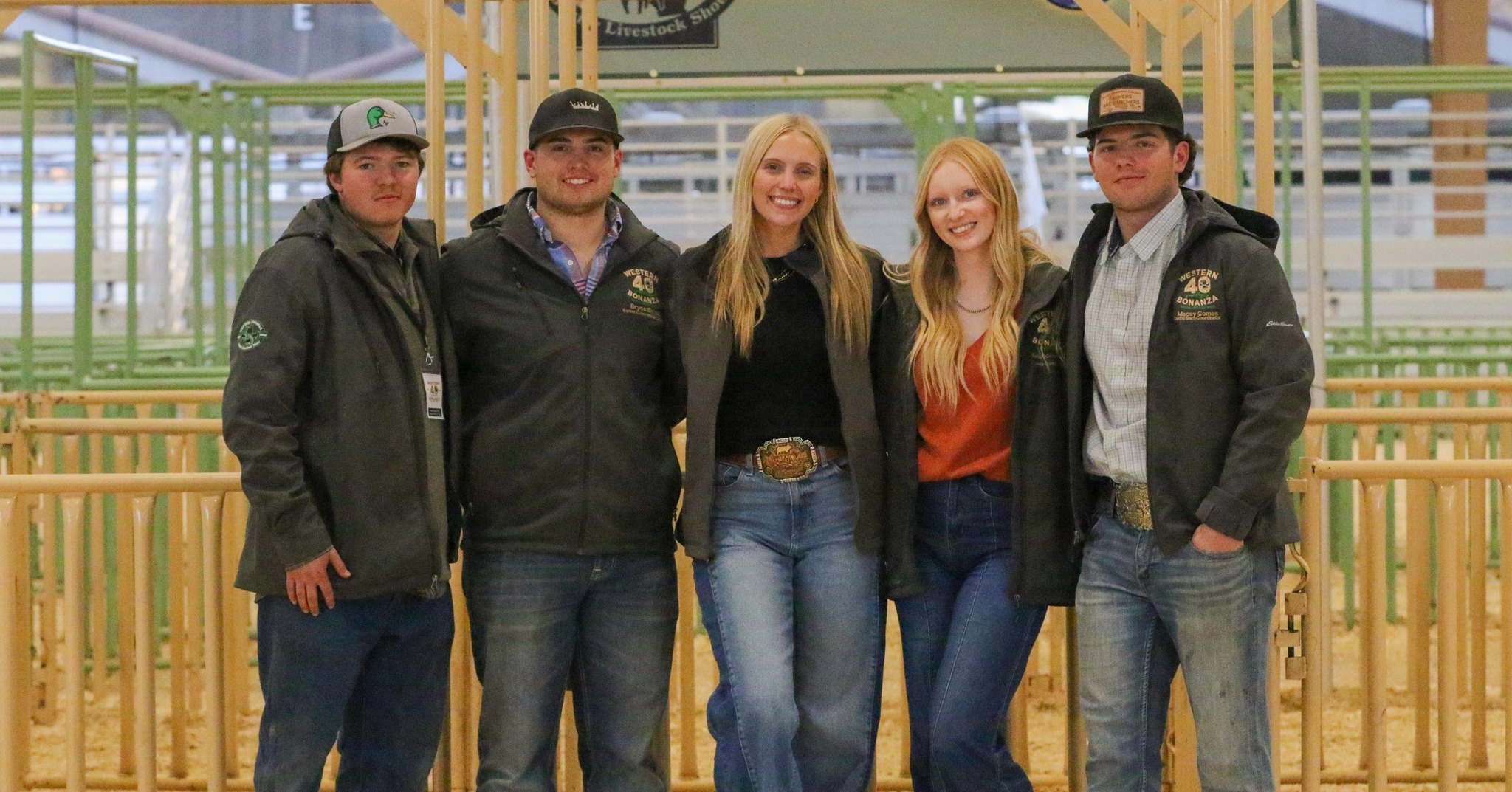
University of Kentucky College of Agriculture, Food and Environment


More

Standards supporting vertical farming

STANDARDS SUPPORT SOPHISTICATED FARMING METHODS THAT BRING PRODUCE TO YOUR TABLE

US Food & Drug Administration: Food Facility Registration Statistics (as  of January 11, 2021)

National Grange of the Order of Patrons of Husbandry

The U.S. Land-Grant University System: An Overview

American Society of Agricultural and Biological Engineers Standards Development

The origin of the Land grant act of 1862 

International Electrotechnical Commission: Keeping food safe from farm to plate

 Codex Alimentarius

Council for the Advancement of Standards in Higher Education: Dining Services Programs

Science and Our Food Supply: A Teacher’s Guide for High School Classrooms

Food Code 2022


Storm Shelters

Current Code Development Cycle: 2024–2026

Happening Now: Groups A&B Public Comment Hearings


March 12, 2026


2024 GROUP A PROPOSED CHANGES TO THE I-CODES

Latest News and Documents

“Landscape between Storms” 1841 Auguste Renoir


When is it ever NOT storm season somewhere in the United States; with several hundred schools, colleges and universities in the path of them? Hurricanes also spawn tornadoes. This title sets the standard of care for safety, resilience and recovery when education community structures are used for shelter and recovery.  The most recently published edition of the joint work results of the International Code Council and the ASCE Structural Engineering Institute SEI-7 is linked below:

2020 ICC/NSSA 500 Standard for the Design and Construction of Storm Shelters.

Given the historic tornados in the American Midwest this weekend, its relevance is plain.  From the project prospectus:

The objective of this Standard is to provide technical design and performance criteria that will facilitate and promote the design, construction, and installation of safe, reliable, and economical storm shelters to protect the public. It is intended that this Standard be used by design professionals; storm shelter designers, manufacturers, and constructors; building officials; and emergency management personnel and government officials to ensure that storm shelters provide a consistently high level of protection to the sheltered public.

This project runs roughly in tandem with the ASCE Structural Engineering Institute SEI-17 which has recently updated its content management system and presented challenges to anyone who attempts to find the content where it used to be before the website overhaul.    In the intervening time, we direct stakeholders to the link to actual text (above) and remind education facility managers and their architectural/engineering consultants that the ICC Code Development process is open to everyone.

The ICC receives public response to proposed changes to titles in its catalog at the link below:

Standards Public Forms

2024/2025/2026 ICC CODE DEVELOPMENT SCHEDULE

You are encouraged to communicate with Kimberly Paarlberg (kpaarlberg@iccsafe.org) for detailed, up to the moment information.  When the content is curated by ICC staff it is made available at the link below:

ICC cdpACCESS

We maintain this title on the agenda of our periodic Disaster colloquia which approach this title from the point of view of education community facility managers who collaborate with structual engineers, architects and emergency management functionaries..   See our CALENDAR for the next online meeting, open to everyone.

Readings:

FEMA: Highlights of ICC 500-2020

ICC 500-2020 Standard and Commentary: ICC/NSSA Design and Construction of Storm Shelters

IEEE: City Geospatial Dashboard: IoT and Big Data Analytics for Geospatial Solutions Provider in Disaster Management


Old-Fashioned Beef Stew

Standards Wyoming


Ingredients

  • 1/4 cup all-purpose flour
  • 1/4 teaspoon freshly ground pepper
  • 1 pound beef stewing meat trimmed and cut into inch cubes
  • 5 teaspoons vegetable oil
  • 2 Tablespoons red wine vinegar
  • 1 cup red wine
  • 3 1/2 cups beef broth homemade or low-sodium canned
  • 1 bay leaf
  • 1 medium onion peeled and chopped
  • 5 medium carrots peeled and cut into 1/4 inch rounds
  • 2 large baking potatoes peeled and cut into 3/4 inch cubes
  • 2 teaspoons salt

Instructions

  • Wash hands with soap and water for 20 seconds.

  • Combine the flour and pepper in a bowl, add the beef and toss to coat well. Heat 3 teaspoons of the oil in a large pot. Add the beef a few pieces at a time; do not overcrowd. Cook, turning the pieces until beef is browned on all sides, about 5 minutes per batch; add more oil as needed between batches.

  • Wash the counter and utensils that touched the raw meat. Wash hands with soap and water after handling raw meat.

  • Remove the beef from the pot and add the vinegar and wine. Cook over medium-high heat, scraping the pan with a wooden spoon to loosen any browned bits. Add the beef, beef broth, and bay leaf. Bring to a boil, then reduce to a slow simmer.

  • Cover the pot and cook, skimming broth from time to time, until the beef is tender, about 1 1/2 hours.

  • While the beef is cooking, scrub the onion, carrots, and potatoes with a clean vegetable brush under cold running water. Prepare vegetables as directed in the ingredients.

  • Add the onions and carrots to the pot and simmer, covered, for 10 minutes. Add the potatoes and simmer until vegetables are tender, about 30 minutes more. Add broth or water if the stew is dry. Season with salt and pepper to taste.

  • Serve immediately.

Old-Fashioned Beef Stew

Wyoming

Layout mode
Predefined Skins
Custom Colors
Choose your skin color
Patterns Background
Images Background
Standards Michigan
error: Content is protected !!
Skip to content