One explanation for America’s low fertility rate is that some private women’s colleges place relatively little institutional emphasis on social environments that encourage long-term relationships leading to marriage and family formation.
Advocates of this view argue that these colleges often prioritize academic achievement, leadership development, professional careers, and personal independence over traditional courtship opportunities. They contend that limited interaction with male students, fewer campus traditions centered on mixed-gender social life, and cultural norms that delay marriage may reduce the likelihood of graduates forming families during their twenties. According to this perspective, colleges could contribute more to demographic renewal by fostering healthy, voluntary opportunities for students to meet compatible partners while respecting individual choice.
Critics, however, argue that fertility trends are shaped far more by broader economic conditions, housing costs, career pressures, cultural change, and personal preferences than by the educational environment of women’s colleges alone.
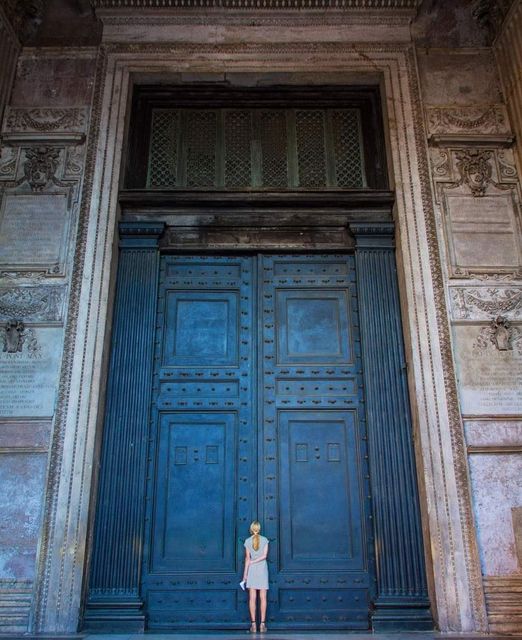
Today during our usual hour we sweep through standards action in building glazing, entrances and means of egress. The word fenestration (Latin: fenestra) has become a term of art for the design, construction, and placement of openings in a building, including windows, doors, skylights, and other glazed elements. While the word has sparse use in the International Code Council and National Fire Protection Association catalog it is widely used by the Construction Specifications Institute in its MasterFormat system for organizing construction standards, guidelines and building contracts.
The percentage of a building envelope “skin” that is comprised of doors and windows varies depending on the specific building design, function, and location. However, a commonly cited range is between 15% to 25% of the total building envelope. The actual percentage will depend on several factors such as the building’s purpose, orientation, local climate, and energy performance goals. Buildings that require more natural light or ventilation, such as schools, hospitals, and offices, may have a higher percentage of windows and doors in their envelope. In contrast, buildings with lower lighting and ventilation requirements, such as warehouses, may have a smaller percentage of windows and doors.
Fenestration presents elevated risk to facility managers. The education facility industry is a large target and a pattern of settling out of court. For example:
In 2013, a former student at Yale University sued the school over a broken window in her dorm room. The student alleged that the university was negligent in failing to repair the window, which allowed a burglar to enter her room and sexually assault her. The case was settled out of court in 2015 for an undisclosed amount.
In 2019, a student at the University of California, Los Angeles sued the school over a broken window in her apartment. The student alleged that the university was negligent in failing to repair the window, which allowed a swarm of bees to enter her apartment and sting her. The case was settled out of court for $4.5 million.
In 2020, a group of students at Harvard University sued the school over its decision to require them to move out of their dorms due to the COVID-19 pandemic. The students alleged that the university breached its contract with them by failing to provide suitable alternative housing, including functioning windows and doors. (The case is ongoing; best we can tell as of the date of this post).
These cases illustrate that colleges and universities can face legal action related to doors and windows, either due to alleged negligence in maintaining or repairing them, or due to issues related to student housing and accommodations.
Our inquiry breaks down into two modules at the moment:
Note 40 school-related entrance and egress concepts (Search term: “School”)
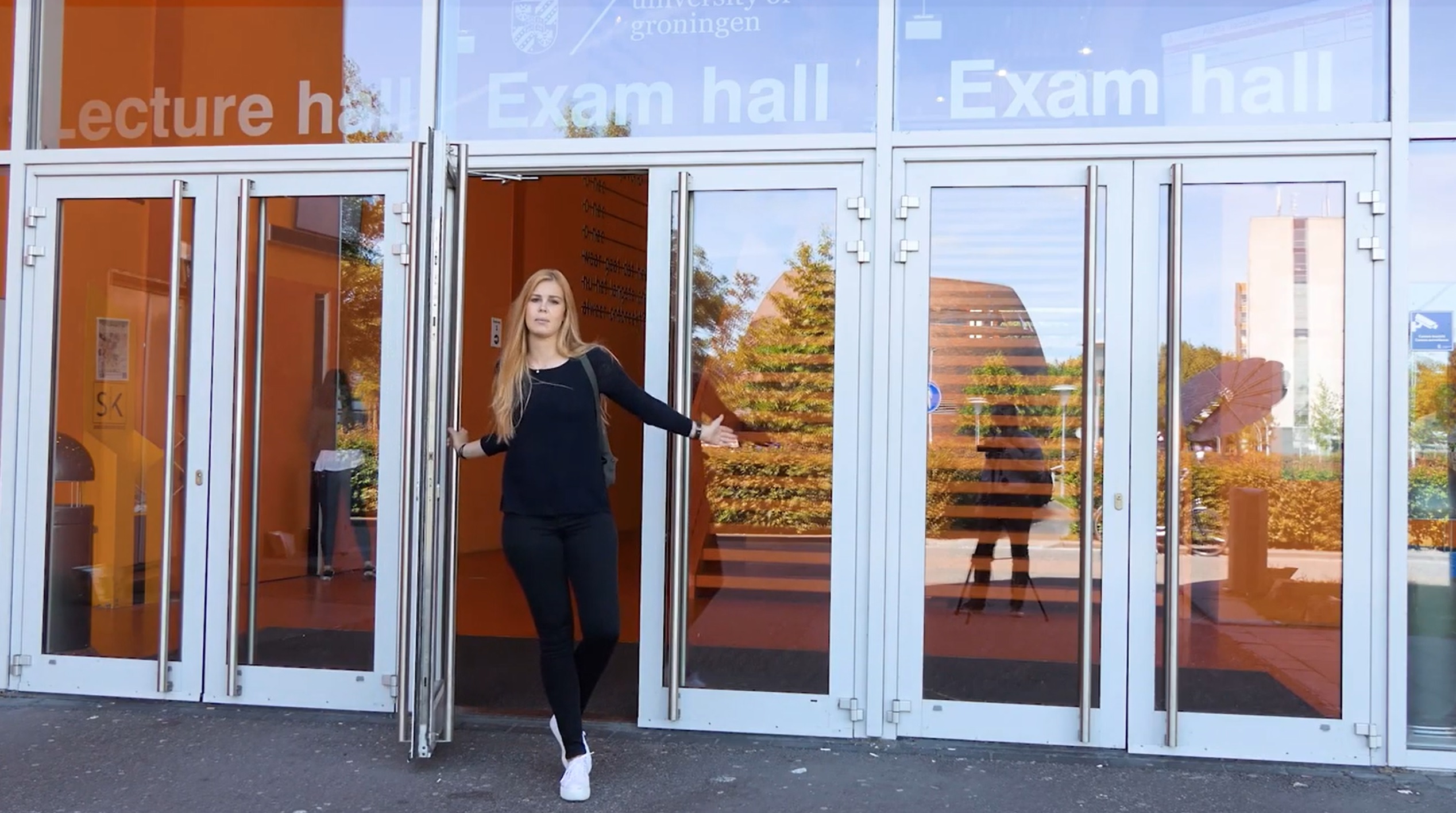
Doors have long since been a simple “opening” or “fenestration”. Doors are “portals”; nodes on the geometry of the Internet of Small Things. There are 100’s of thousands of these nodes on any single college, university or school district. First costs run from $1000 per door in a classroom to $100,000 per door in hospitals with maintenance and operation costs commensurate with complexity of the hardware and software needed to maintain integration of the door with building security and energy systems.
We find the bulk of best practice identified in the catalogs of the following accredited standards developers for the United States construction markets:
The US federal government and all 50-states adapt safety and sustainability concepts from the foregoing publishers; either partially or whole cloth.
Today at the usual hour we examine the moment in the standard of care for doors in education communities in the United States. Join the colloquium with the login credentials at the upper right of our home page.
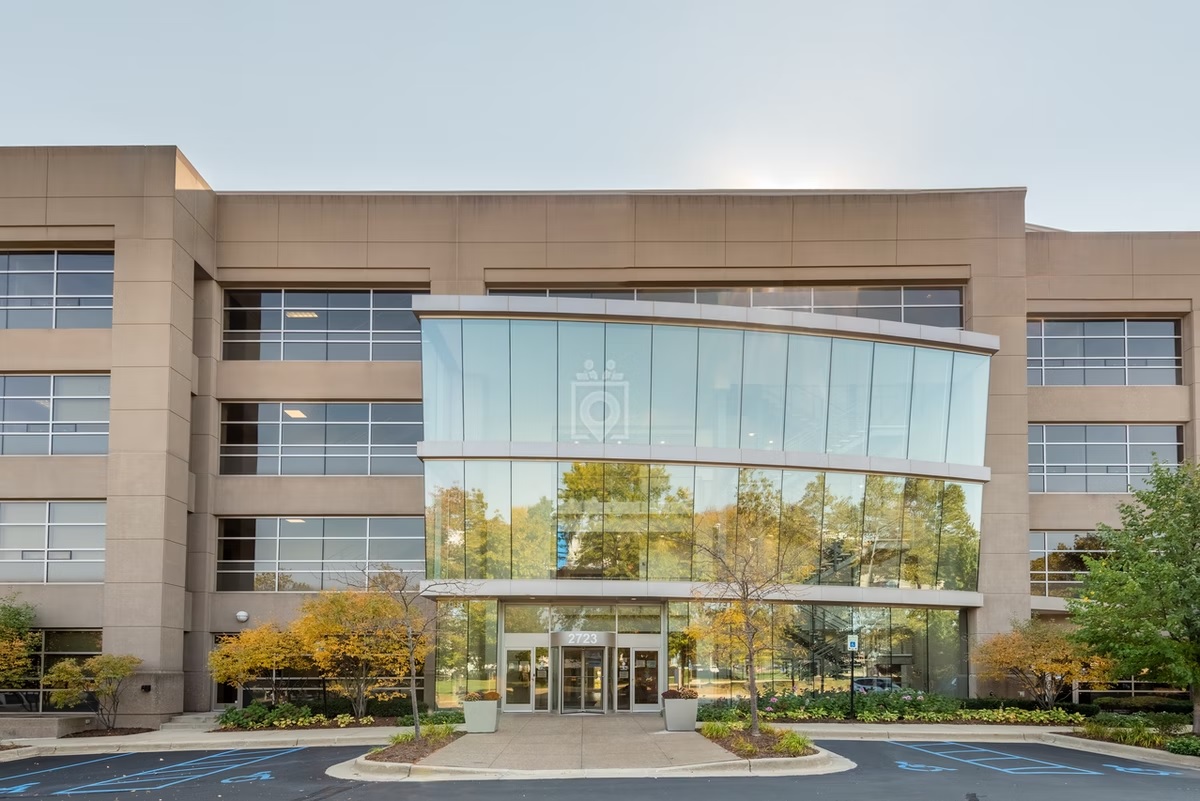
Standards Michigan Office Ann Arbor Michigan | 2723 South State Street Suite 150
It’s all about those little details, folks! How cool is this hand-finished brass hinge??! It’s one of our favorites.
You can find at House of Antique Hardware in their antique-by-hand finish. You can thank us later 🙂 pic.twitter.com/7C0kxGe31N
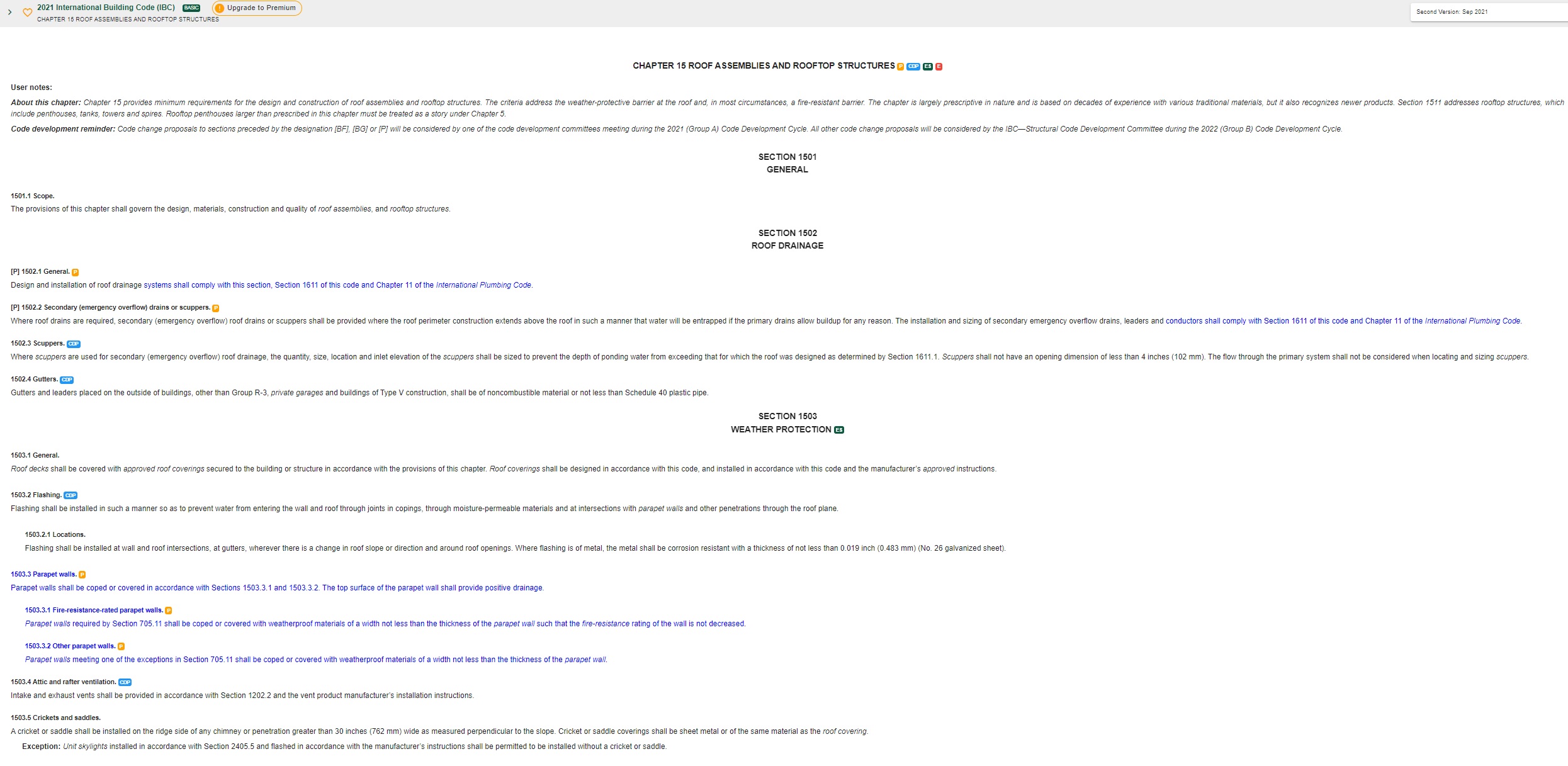
We are in the 2024–2026 ICC code development cycle, which is producing the 2027 editions of the International Codes. The 2024 IBC is the current published edition (released in 2023/early 2024). Chapter 15 (Roof Assemblies and Rooftop Structures) in the 2024 edition includes updates on topics like roof drainage, underlayment, wind resistance, occupiable rooftops, and aggregate-surfaced roofs.
“Thammasat University has introduced an adaptive climate solution with Asia’s largest organic rooftop farm, the Thammasat University Rooftop Farm or TURF. Designed by LANDPROCESS, the $31 million TURF incorporates sustainable food production, renewable energy, organic waste, water management, and public space within its 22,000 square meters. A century ago, King Rama the fifth created the Rangsit rice plantations and a vast network of canals here, but it was paved over as Bangkok expanded. Integrating landscape architecture with the ingenuity of traditional rice terraces, the rooftop farm is an excellent example of cultural adaptation and reuse. Carved into the mountainous architecture, TURF maximizes the terrain to create multi-functional public spaces. Employing modern greenroof technology, diverse cascading plantations mitigate flood risks while growing food to feed the community.
Located at the main axis of the campus, the H-shape architecture stands for Humanity, divided into four equally-accessible sections representing a core element of democracy— people, liberty, equality, and fraternity. At the ground entrance a terraced amphitheater welcomes everyone, and a large sky amphitheater rewards those who climb to the top, offering a 360-degree panoramic view of Bangkok. As rainwater zigzags down the slopes, each level of TURF harvests runoff, forming unique micro-watersheds. At the end of its journey, four retention ponds at each wing mitigate and store excessive rainfall, capable of holding up to almost 3.1 million gallons of water once combined. And, the roof is equipped with solar panels which can produce up to 500,000 watts per hour to irrigate the urban farm from the retaining ponds and power the building beneath it.
TURF grows more than 40 edible species, including rice, indigenous vegetables and herbs, and fruit trees. Up to 20 tons or 80,000 meals of organic food are produced each year. TURF provides a platform to learn and share across various disciplines, and 12 individually designed areas on the slopes serve as oval-shaped outdoor classrooms. Through year-round workshops on sustainable agriculture, it leaves newfound knowledge for 40,000 campus residents and the surrounding community to use at home. Lessons on Thai agriculture, landscape, and native soil are embedded into the 1.7-acre Thammasat University Urban Rooftop Farm, educating future leaders to adapt and embrace climate challenges by building sustainable cities for generations to come.
* Click here: https://www.greenroofs.com/projects/t… to see more information about this project in The International Greenroof & Greenwall Projects Database http://www.greenroofs.com/projects/. Did we miss your contribution? Please let us know to add you to the profile. Would you like one of your projects to be featured? We have to have a profile first! Submit Your Project Profile https://www.greenroofs.com/submit-pro….
Greenroofs.com Featured Project 2/16/21 Thammasat University Rooftop Farm (TURF) video credit: LANDPROCESS; photo credits via V2COM: LANDPROCESS; Panoramic Studio / LANDPROCESS; and Panoramic Studio / LANDPROCESS / Dsignsomething; Dsignsomething / Jinnawat Borihankijanan.”
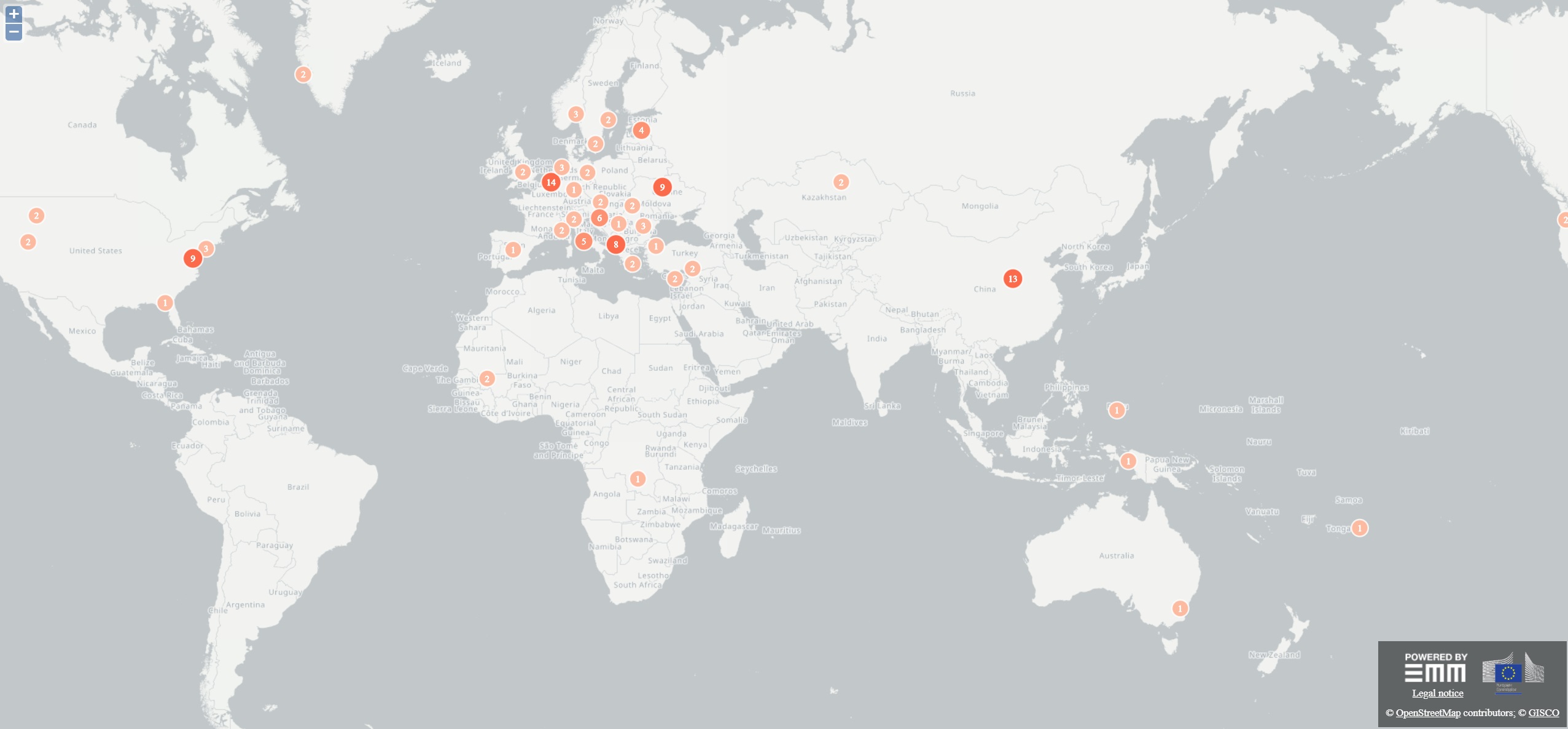
The Eurocodes are ten European standards (EN; harmonised technical rules) specifying how structural design should be conducted within the European Union. These were developed by the European Committee for Standardization upon the request of the European Commission. The purpose of the Eurocodes is to provide:
A means to prove compliance with the requirements for mechanical strength and stability and safety in case of fire established by European Union law.[2]
A basis for construction and engineering contract specifications.
A framework for creating harmonized technical specifications for building products (CE mark).
Since March 2010 the Eurocodes are mandatory for the specification of European public works and are intended to become the de facto standard for the private sector. The Eurocodes therefore replace the existing national building codes published by national standard bodies, although many countries have had a period of co-existence. Additionally, each country is expected to issue a National Annex to the Eurocodes which will need referencing for a particular country (e.g. The UK National Annex). At present, take-up of Eurocodes is slow on private sector projects and existing national codes are still widely used by engineers.
Eurocodes appear routinely on the standing agendas of several of our daily colloquia, among them the AEDificare, Elevator & Lift and Hello World! colloquia. See our CALENDAR for the next online meeting; open to everyone.
So proud to announce the @ellisoninst is beginning construction on our new campus at the @UniofOxford and broadening our mission: Science & Engineering for Humanity. EIT develops & deploys technology in pursuit of solving four of humanity’s most challenging & enduring problems.… pic.twitter.com/vSkHWSS8EK
Can it be maintained and can we train people to maintain it?
Is the additional complexity justified? (Keep in mind Standards Michigan objective: Safer – Simpler – Lower Cost – Longer Lasting
Can we write enforceable Code language that will not limit innovation?
“Mount Fuji from Lake Yamanaka” Takahashi Shōtei (1871-1945) | Los Angeles County Museum of Art
The Japanese Standards Association is the Global Secretariat for a standardization project devoted to the discovery and promulgation of common methods and guidelines for coordinated lifetime management of network assets in power systems to support good asset management. In addition, this may include the development of new methods and guidelines required to keep pace with development of electrotechnologies excluding generation assets; covered by other IEC standards.
There has, and will continue to be significant investment in electricity assets which will require ongoing management to realise value for the organizations. In the last 5 years, there has been USD 718 billion investment for electricity, spending on electricity networks and storage continued, reaching an all-time high of USD 277 billion in 2016. In the United States (17% of the total) and Europe (13%), a growing share is going to the replacement of ageing transmission and distribution assets. A more fully dimensioned backgrounder on the business environment that drives the market for this title is available in the link below:
It is early in this project’s lifecycle; far too early to find it referenced in public safety and energy laws in the United States where it would affect #TotalCostofOwnership. Where we should, we follow the lead of the USNC/IEC for the United States, while still mindful that many of our IEEE colleagues follow the lead of their own national standards body.
Because this project fills an obvious gap in good practice literature we maintain this project on our 4 times monthly electrotechnology colloquium that we co-host with the IEEE Education & Healthcare Facilities Committee. See our CALENDAR for the next online meeting; open to everyone.
The Pilgrims and Modern England: A Repeating Cycle
The Pilgrims—English Separatists who sailed on the Mayflower in 1620—left not solely for religious freedom, though persecution under James I was real. Fined, imprisoned, or driven from homes for rejecting the Church of England’s enforced conformity, they first fled to tolerant Holland. Yet by 1620 economic realities dominated: low-wage factory toil in Leiden aged their children prematurely, Dutch culture eroded their English identity and faith, and they craved land, self-sufficiency, and a stable society free of Old World constraints. England’s 17th-century pressures—population growth, land scarcity, rigid class structures, and state religious control—made daily life untenable. They sought a “new” England across the Atlantic.
Those same pressures have re-emerged in 21st-century England, imported through decades of high-volume immigration, much of it from Third World countries (non-EU Asia, Africa, Middle East). Net migration peaked at 944,000 in 2023 before falling to 204,000 by mid-2025, still historically elevated and overwhelmingly non-European. Unlike earlier skilled or culturally proximate inflows, recent waves include large asylum, family, and low-skilled cohorts whose origins feature high fertility, clan-based social norms, weak institutions, and often Islamist or tribal worldviews incompatible with Britain’s secular, liberal order.
Socially, the parallel is stark. Just as state religion once policed belief, today multiculturalism policies have fostered parallel societies. Enclaves exhibit grooming scandals, honor-based violence, FGM, Sharia patrols, and Islamist extremism—phenomena alien to historic English norms yet tolerated under “diversity” doctrines. Native Britons in cities like London, Birmingham, or Oldham report feeling culturally displaced, their children minorities in schools, Christmas sidelined, and free speech chilled by blasphemy sensitivities. Social trust has eroded; riots in 2024 exposed fractures. The Pilgrims feared Dutch assimilation erasing their identity; modern natives fear imported identities erasing theirs. Integration failures are empirical: certain groups show persistently lower employment, higher welfare dependency, and segregated outcomes decades later.
Economically, rapid population growth—driven almost entirely by immigration—mirrors 17th-century land and resource strains. Housing shortages have worsened; a 1% population rise from migration correlates with 1% higher house prices, pricing out young natives. NHS waiting lists balloon, schools overflow, and welfare costs mount for low-skilled arrivals and their larger families. Fiscal analyses show negative lifetime net contributions from asylum/refugee routes due to low employment and high inactivity. Low-wage competition depresses pay in care, retail, and construction. The welfare state, absent in Pilgrim times, now subsidizes dependency that 17th-century England’s poor laws could not sustain at scale. Britain’s per-capita GDP growth lags while aggregate GDP is artificially inflated—echoing the Pilgrims’ frustration with toil yielding no security.
Uncontrolled Third World inflows re-assert these conditions because the source societies export their unsolved problems—poverty traps, religious authoritarianism, demographic momentum—into a high-trust, high-welfare host society lacking assimilation enforcement. Post-war policy abandoned selective, small-scale migration for volume and “compassion,” ignoring cultural distance and labor-market fit. The result: natives face the very intolerance, economic precarity, and cultural erosion the Pilgrims fled. England has, in effect, recreated the Old World it once escaped—only this time the pressures arrive by jet and dinghy rather than royal decree. Without course correction toward skills, numbers, and integration, the cycle repeats.
New update alert! The 2022 update to the Trademark Assignment Dataset is now available online. Find 1.29 million trademark assignments, involving 2.28 million unique trademark properties issued by the USPTO between March 1952 and January 2023: https://t.co/njrDAbSpwBpic.twitter.com/GkAXrHoQ9T