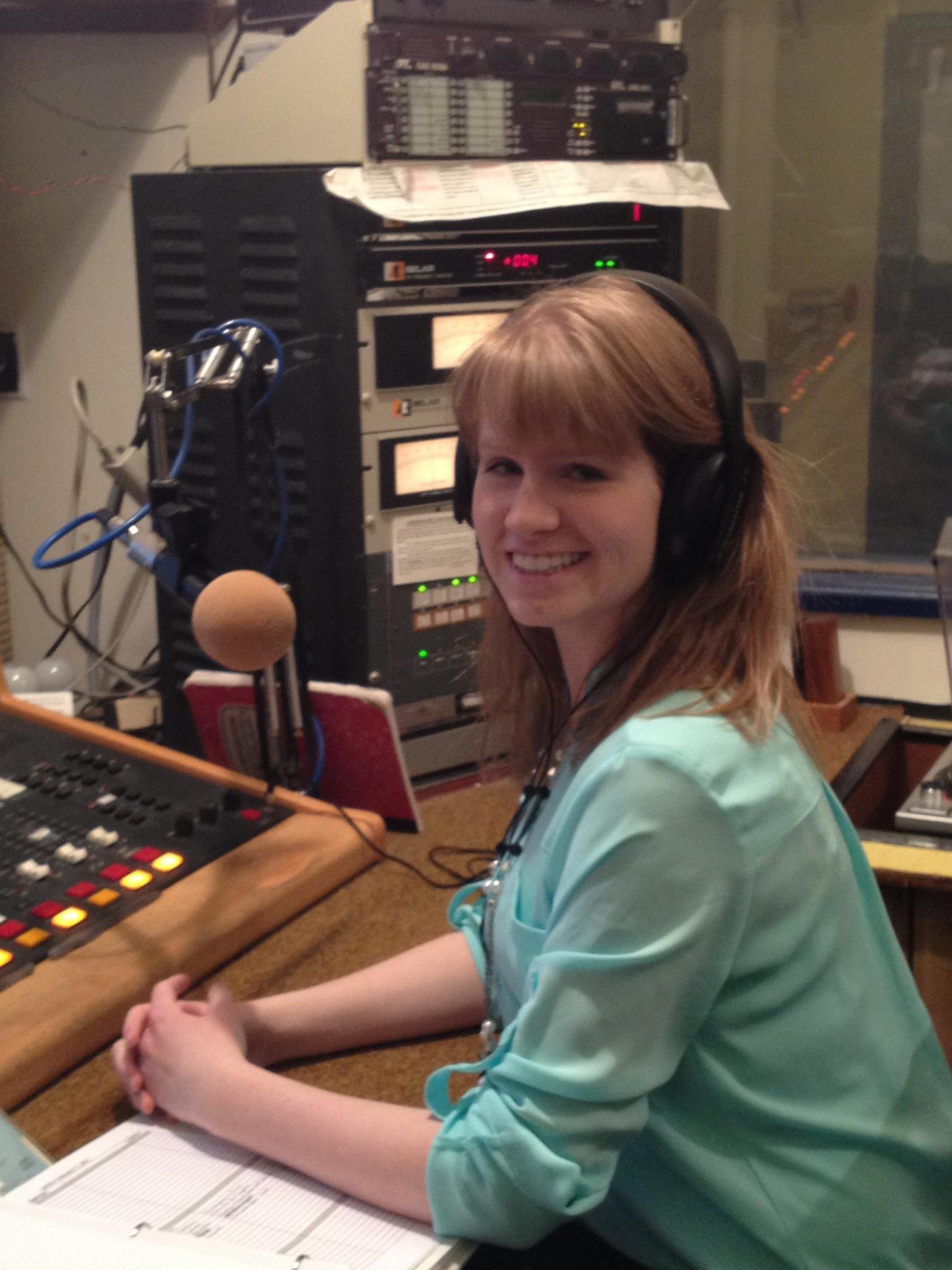
56565




Something for the Suggestion Box: None of these four distinguished Michigan graduates have a University of Michigan campus building bearing his name:
Thomas Weller (Nobel Laureate)
Frank Murphy (US Supreme Court Justice)
Kelly Johnson (Aeronautical Engineer of World War II aircraft),
Claude Shannon (Pioneer of Superintelligence now transforming the world)
Eunice Royster Harper worked at the University of Michigan for 41 years, retiring as Vice-President of Student Affairs.

Regents Communication: Naming Approval
* Eunice Royster Harper’s Ed.D., University of Pennsylvania (degree attested by U-M; year, program and doctoral work not yet identified).
Bill Ackman: Anti-Semitism at Harvard

Harvard Black Students Association: “Harvard is ‘Ours’ Now”
Dr. Claudine Gay Doctoral Dissertation
“Taking charge: Black electoral success and the redefinition of American politics”


Related:
Direct Current Buildings and Smart Grid
Today at the usual hour we examine the case studies undertaken by Department of Energy to explore the feasibility of buildings powered by entirely by direct current. Use the login credentials at the upper right of our home page.
Energy Design and Scoping Tool for DC Distribution Systems
DC POWER FOR BUILDINGS | CORE STANDARDS
IEC 60364 — Low-Voltage Electrical Installations
IEC 60364-1 — Fundamental Principles, Assessment of General Characteristics, Definitions
IEC 60364-5-52 — Selection and Erection of Electrical Equipment | Wiring Systems
IEC 60364-5-53 — Protection, Isolation, Switching, Control and Monitoring
IEC 60364-5-54 — Earthing Arrangements and Protective Conductors
IEC 60364-5-55 — Other Equipment | Generating Sets and Related Equipment
IEC 60364-8-82 — Prosumer’s Low-Voltage Electrical Installations
NFPA 70 — National Electrical Code
Article 250 — Grounding and Bonding
Article 690 — Solar Photovoltaic Systems
Article 705 — Interconnected Electric Power Production Sources
Article 706 — Energy Storage Systems
Article 712 — Direct Current Microgrids
Article 720 — Circuits and Equipment Operating at Less Than 50 Volts
Today at the usual hour we review best practice literature for the design, construction and operation of Power-Limited Circuits in healthcare facilities. With our previous tenure on Code Panel 15 of the National Electrical Code (which covers healthcare facilities, primarily) and our recent appointment by IEEE to Code Panel 3 (which covers power limited circuits in all occupancy classes) we set ourselves up to respond to the proposals that will shape the 2029 NEC. Use the login credentials at the upper right of our home page.
vbvbvbvbvb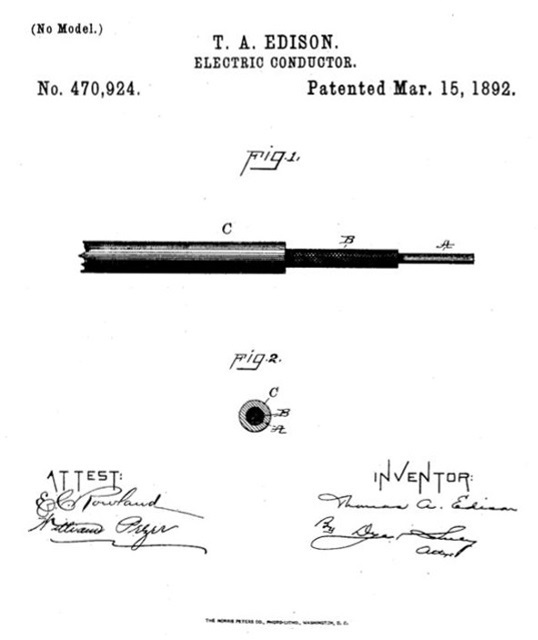
If one imagines that three-phase hospital power distribution systems as “arteries” then power limited circuits can be imagined as the “capillaries” that drive hundreds of end use clinical equipment and devices. The analogy captures the hierarchical, physiological structure of hospital electrical systems—much like the human circulatory system—where power flows from high-capacity trunks to precision, low-risk endpoints.
Three-phase hospital power distribution systems function as the arteries and veins: they are the robust, high-volume “vascular” network. Incoming utility power (or on-site generators) arrives as three-phase medium voltage, stepped down through transformers and switchgear into the Essential Electrical System (EES). This backbone—normal power, life-safety, critical, and equipment branches—delivers bulk kilowatts across the facility to major loads: HVAC, lighting, elevators, imaging suites, and operating-room receptacles. Like arteries, these feeders carry large currents over long distances with minimal loss; like veins, they return current safely while maintaining redundancy and selective coordination to keep the “body” (hospital) alive during outages.
Power-limited circuits (NEC Article 725/724 Class 2 and Class 3) are the capillaries. They are the countless, tiny, energy-restricted final branches that directly “perfuse” end-use clinical devices. These circuits are deliberately power-limited—typically ≤30 V and ≤100 VA—to prevent fire, shock, or interference in patient-care spaces. They supply nurse-call systems, bedside monitors, infusion-pump controls, alarm signaling, data links, and low-voltage sensors. Just as capillaries exchange oxygen and nutrients cell-by-cell without flooding tissue, power-limited circuits deliver only the precise, safe wattage needed by sensitive electronics while isolating them from the high-energy main distribution. Their thin insulation, separation rules, and inherent current-limiting transformers mirror the delicate walls of capillaries.
INCITS Announces Publication of INCITS/ISO/IEC 14882:2024[2025] – C++

“Succession” | 1935 Wassily Kandinsky
Python and C++ often work together rather than compete. Python provides an accessible, expressive language for developing applications, experiments and artificial-intelligence workflows, while C++ supplies speed and close control of computing resources. Many Python libraries therefore present a convenient Python interface while performing demanding calculations in compiled C or C++ code underneath. AI frameworks such as PyTorch follow this pattern extensively.
Developers can also connect the languages directly: Python can call C++ libraries, and C++ programs can embed Python. The result combines Python’s rapid development and enormous software ecosystem with C++ performance, making the partnership especially important in scientific computing and artificial intelligence.
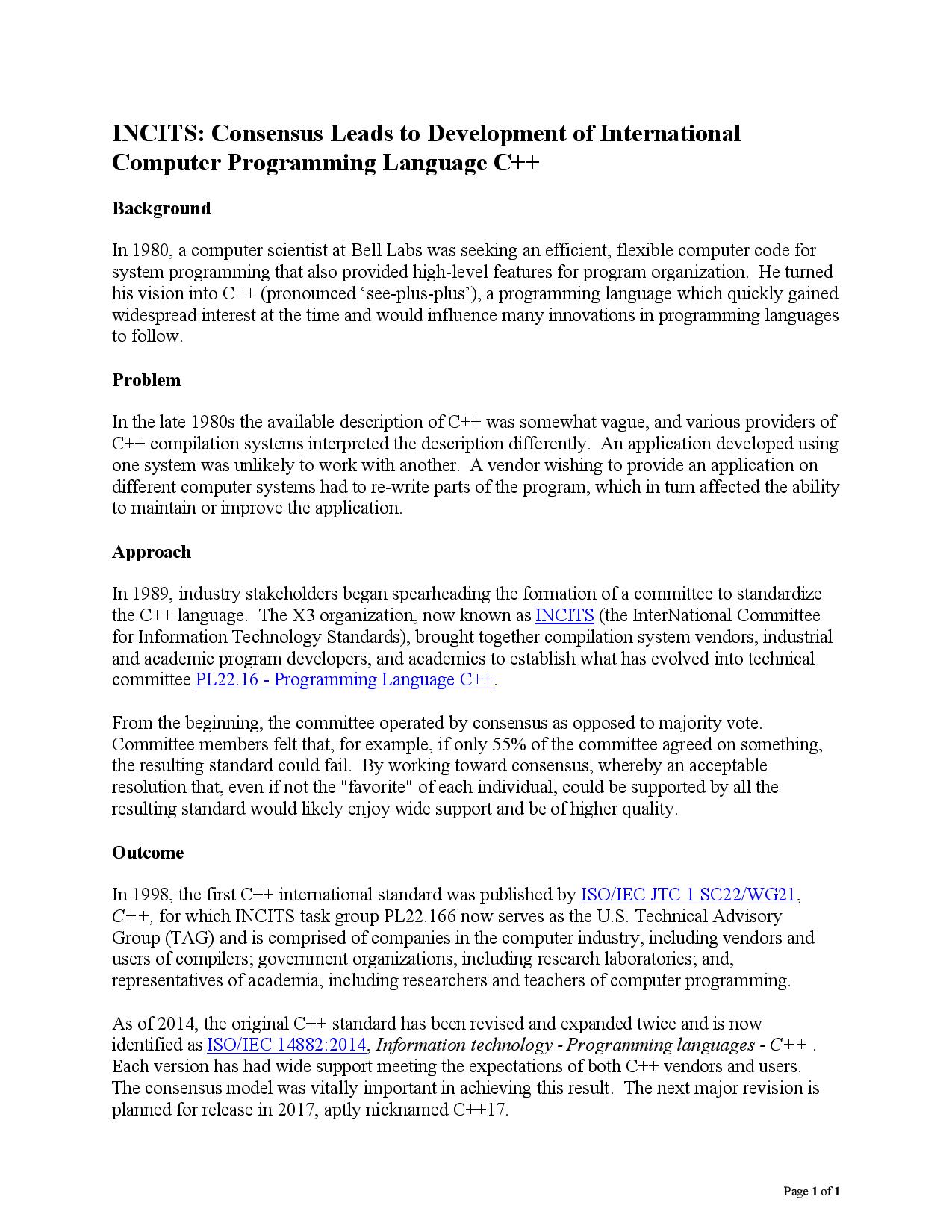
* CLICK HERE to access ANSI Committee on Education Case Study Catalog
Standards Nebraska | Statement of Net Position: $5.191B (Page 26)

WRITTEN BY Kalani Simpson PUBLISHED May 25, 2021
Ingredients:
Directions:
(Note: This soup freezes well.) Matzo balls were prepared according to the recipe on the back of the box of matzo meal (Manischewitz).
b
Celebrating a decade of leadership!
Today marks the 10th anniversary of Chancellor Jeffrey P. Gold’s remarkable journey with UNMC. Thank you, @jeffreypgold, for your unwavering commitment to excellence and your visionary guidance to the UNMC community. https://t.co/jgGhyMH55r pic.twitter.com/fPxvyMsnz2
— University of Nebraska Medical Center (@unmc) February 1, 2024

Getting a dog during college can be an exciting thought for many students who are leaving home and are experiencing their first taste of true freedom; However, many young adults fail to consider the responsibilities and obligations that come with owning a dog while in school.

Apart from the necessity as companions for students with disabilities; consider the following:
Pros:
They can lead to decreased stress.
Dogs have the incredible ability to make you feel more relaxed and less stressed. A study actually found that when people took care of dogs for just three months, they showed significant drops in blood pressure and reactivity to stress. There’s no better feeling than coming home after a long day to your furry best friend who’s thrilled to see you.
They help motivate you to exercise.
Daily exercise is an essential part of a dog’s well-being and absolutely cannot be neglected. However, this requirement becomes mutually beneficial because it also ensures that you’re getting outside daily, intaking sunlight, and getting your own exercise. Even if you’re having a rough day and don’t feel like doing much, your dog will make sure that you go outside and get moving.
They make great companions if you live alone.
Dogs can be fantastic companions for students who choose to live alone. Living by yourself can be lonely. Your pet can serve as a companion to keep you occupied, as well as a solid guard dog when needed (or you can at least let them think they are).
Cons:
They require a time and patience.
If you’re thinking about getting a dog in college, be prepared to commit tons of time and attention to them. Training sessions will be vitally important in ensuring that your dog is potty-trained, can behave on a leash, and can be trusted around other dogs. You’ll also have to make time for vet appointments, play time, and letting them out on a consistent basis.
They can be expensive.
Dogs can be extremely expensive. Between vet bills, food, toys, and general dog supplies, the costs can quickly add up. Assessing your financial situation beforehand and determining whether or not now is the right time for you to get a dog, is absolutely essential.
They can cut into your social life; although can expand your social life with a starting point for common conversation with other dog lovers.
Like it or not, having a dog will cut into your social time with your friends. Staying out until 4 am on the weekends or being away from your house for 12 hours at a time is no longer feasible when your pet is waiting for you at home. Plan to make arrangements to fit your dog’s needs, which may mean missing out on social activities from time to time.
Readings
University of Michigan: Animals on Campus
North Central Michigan College

“Nipper” RCA Victor
It sure looks 👀 different around @EastCarolina and CET this week. ➡️https://t.co/pPRZ35XhMw pic.twitter.com/niXow6C8rI
— ECU Engr&Technology (@ECUCET) March 5, 2024

New update alert! The 2022 update to the Trademark Assignment Dataset is now available online. Find 1.29 million trademark assignments, involving 2.28 million unique trademark properties issued by the USPTO between March 1952 and January 2023: https://t.co/njrDAbSpwB pic.twitter.com/GkAXrHoQ9T
— USPTO (@uspto) July 13, 2023
Standards Michigan Group, LLC
455 East Eisenhower Parkway, Suite 300
Ann Arbor, MI 48108 USA
888-748-3670
 |
 |
|
 |
 |
|
 |
 |