


Category Archives: Lively Arts / Media
- Home
- Archive by category "Lively Arts / Media" (Page 4)

loading...

Evensong “Melody in F”
Evensong services are typically held in cathedrals, collegiate chapels, and large parish churches, where choral music plays a prominent role. These services often feature the singing of psalms, choral anthems, hymns, and other sacred music. The Evensong tradition holds a significant place in Western civilization due to its historical and cultural importance. It has provided a space for prayer, reflection, and worship for centuries, connecting individuals with their faith and providing a sense of spiritual solace.
The beauty and solemnity of the music performed during Evensong services have also contributed to the development of Western sacred music, with composers creating choral works specifically for these occasions.
History of Western Civilization Told Through the Acoustics of its Worship Spaces

Finian’s Rainbow
“Finian’s Rainbow” is a musical (written by E.Y. Harburg – University of Michigan 1918) that tells the story of an Irishman named Finian McLonergan who comes to the United States with his daughter Sharon to bury a pot of gold stolen from a leprechaun. Finian believes that if he buries the gold in the soil of Fort Knox, it will grow and multiply, allowing him to live a life of luxury.
However, the town they settle in, Rainbow Valley, is owned by a racist senator named Billboard Rawkins, who wants to evict the sharecroppers living on the land. With the help of a local activist named Woody, Sharon and the sharecroppers team up to stop Rawkins’ eviction plans.
Meanwhile, Og, the leprechaun whose gold Finian stole, comes to America to get his gold back. Og meets and falls in love with Susan, the mute daughter of the sharecropper Woody, and realizes that he wants to stay in America with her.
The story deals with themes of racism, prejudice, and the American dream, and features memorable like “Old Devil Moon,” “How Are Things in Glocca Morra?” and “If This Isn’t Love.”

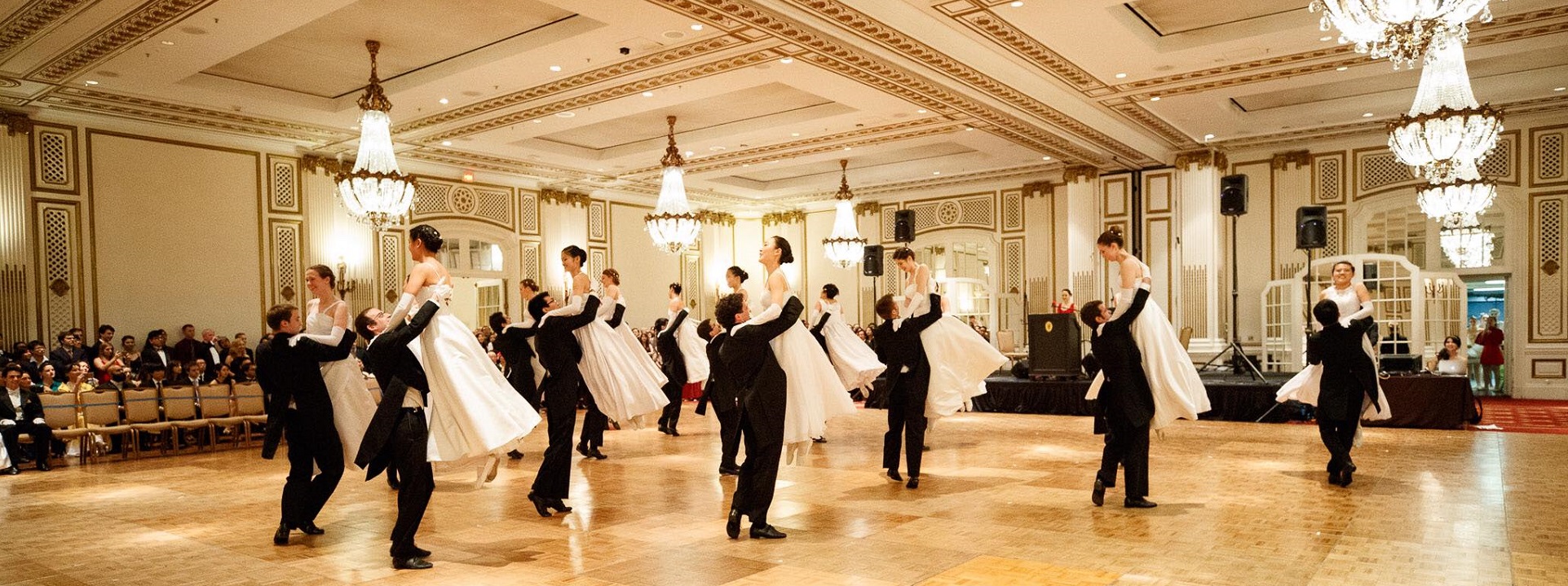

Audio/video, information & communication technology

Performance in the Bolshoi Theatre Theateraufführung im Moskauer Bolschoi-Theater (Chromolithographie)
Even before the pandemic, massive open online curriculum, continued growth of consumer demand for “content” and the expansion of college and universities cultural and entertainment activity, drove our interest in the technologies that make it possible to produce and deliver “content” from facilities that are safe and sustainable.
As covered in our other Lively colloquia there are about 20 accredited standards developers that claim some part of this domain, or expanding their charter to meet the demand for best practice titles. To repeat: “Standards are the seed corn for compliance revenue. They fertilize the land for litigation.” These generally well-meaning organizations only invest in the administration of best practice discovery and promulgation if they see demand for conformance revenue in their future.
Education communities in every nation are also conformance organizations.
Cultural content discovery, creation and delivery depends heavily on electrotechnology.
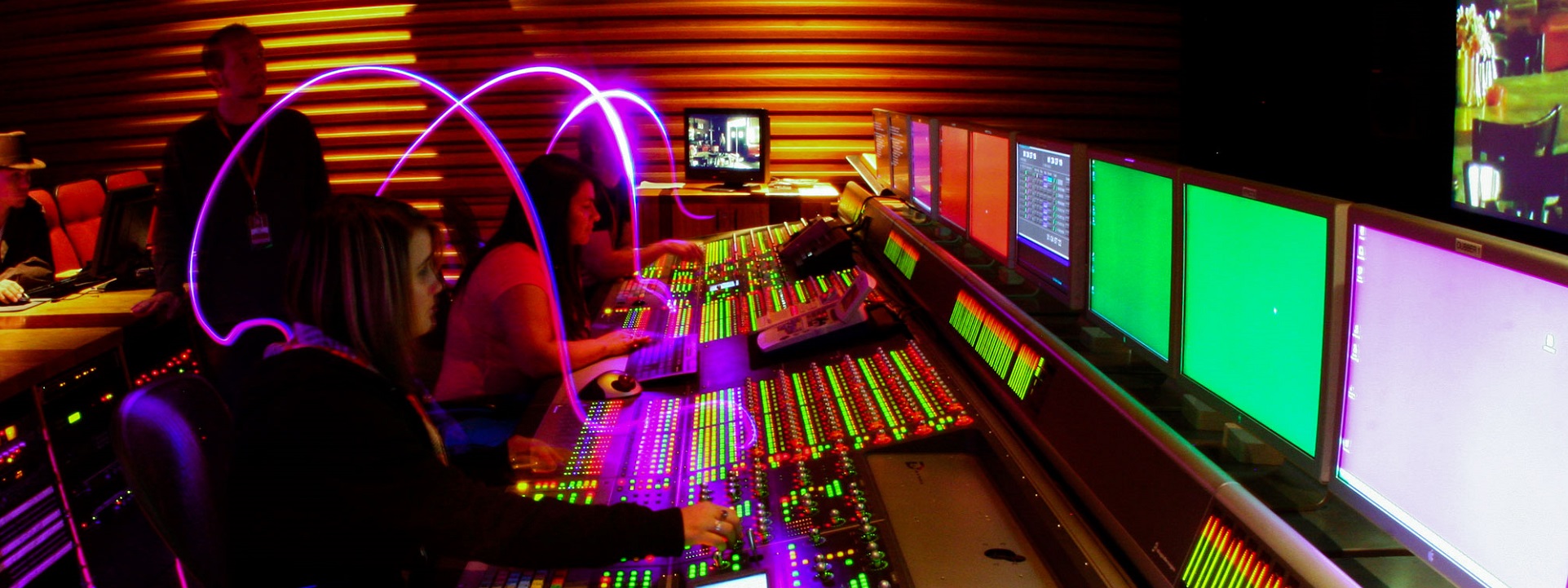
The parent committee of the highest level of electrotechnology standardization in this domain world is International Electrotechnical Commission Technical Committee TC 108: Safety of electronic equipment within the field of audio/video, information technology and communication technology. Safety first. A committee with a similar sounding title, but a different scope is IEC TC 100 Audio, video and multimedia systems and equipment — the subject of a separate post*.
To paraphrase the IEC TC 108 Committee Scope Statement:
Horizontal safety function: Methods of measuring touch current and protective conductor current. This includes, for various types of equipment, methods of measurement of touch current with regard to physiological effects and of protective conductor current for installation purposes. The methods of measurement consider both normal conditions and certain fault conditions. Safety of equipment electrically connected to a telecommunication network
Group safety function:Audio, video and similar electronic apparatus – Safety requirements Audio/video, information and communication technology equipment and safety of remote power feeding.

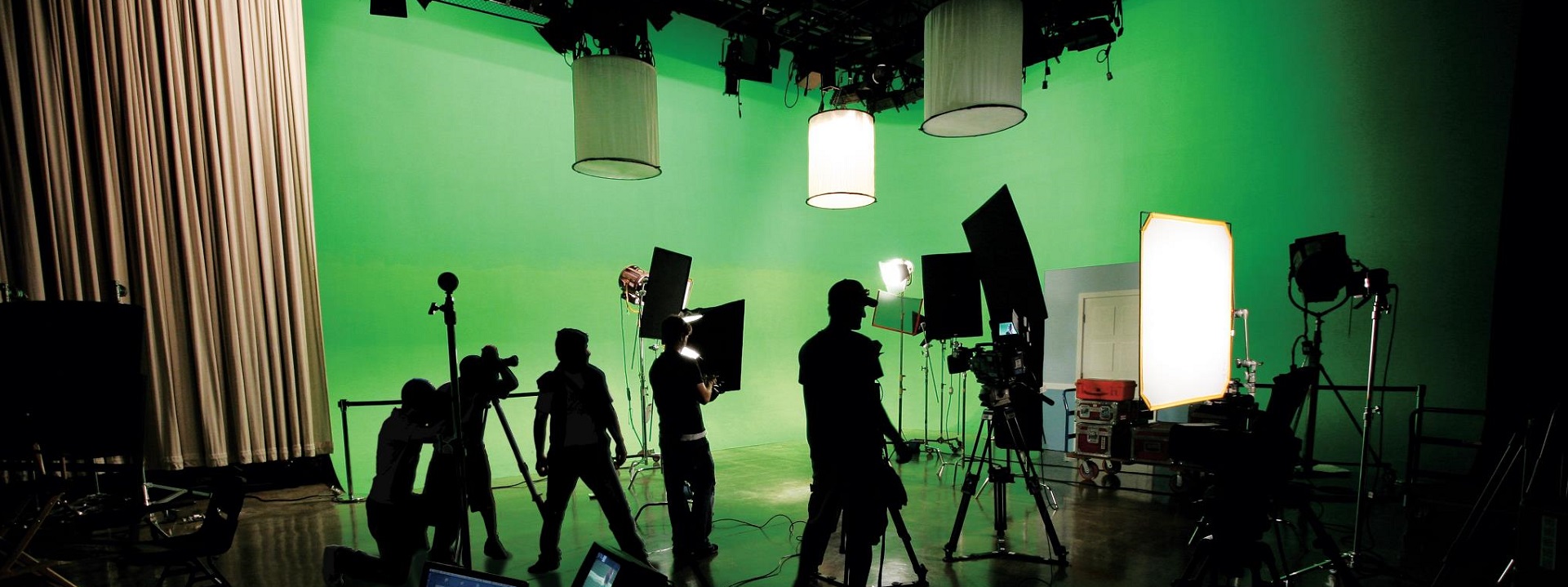
Vancouver Film School
According to its Strategic Business Plan, the need for standardization in this technology shows up in unexpected places such as 3-dimensional printing and wearable smart devices; both of which are of interest to faculty, students and the staff that supports the physical infrastructure.
The home page for the IEC public commenting facility is linked below:
We generally refer action in global electrotechnology standards to any one of several IEEE Societies and collaborate with the IEEE Education & Healthcare Facilities Committee (IEEE E&H). We also track and participate in the standards action of several trade associations that service some part of this space; all of whom are sensitive to the international electrotechnology standards action. Colleges and universities with federally funded facilities may need to be attentive to Trade Agreement Act matters when acquiring equipment of this nature.
As of this posting there are no Committee Draft Vote (CDV) documents released by TC 108 seeking public comment but we include it in our periodic scan of best practice literature. We generally refer to the tracking facility available with the IEEE E&H hosted on a University of Michigan server for educational purposes. IEEE E&H meets 4 times monthly European and American time zones.
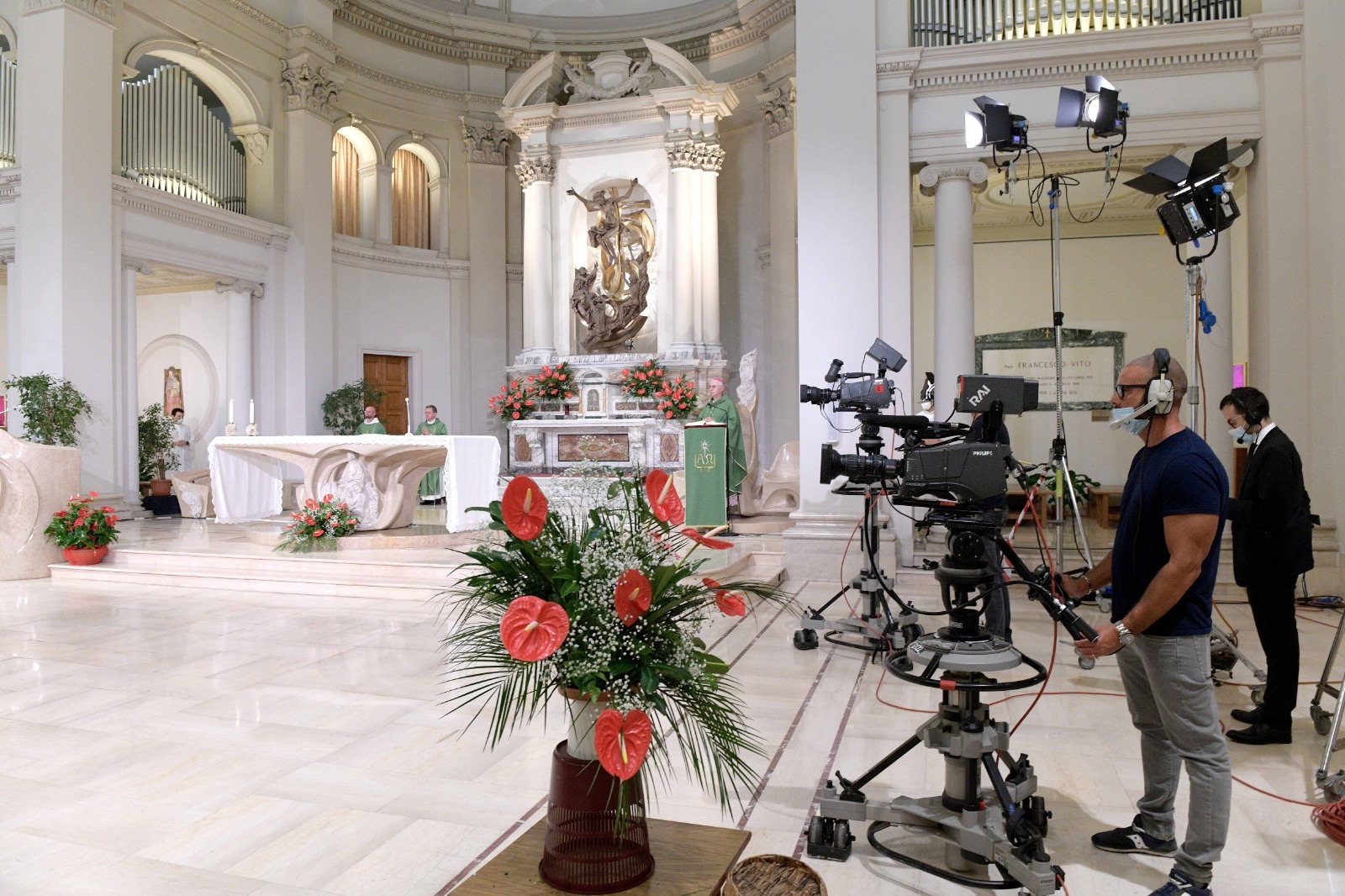
Università Cattolica del Sacro Cuore
We always encourage subject matter experts with front line experience planning, designing building, operating and maintaining these growing and complicated spaces. We recommend US-based experts contact Tony Zertuche, Director, International Policy and General Secretary, USNC/IEC (tzertuche@ansi.org).
United States National Committee of the International Electrotechnical Commission (USNC/IEC)
We renew our understanding of electrotechnology standards for Lively Arts at least once a month. See our CALENDAR. The IEEE Education & Healthcare Facilities Committee meets online every other Tuesday in both Central European time American time zones. Its meeting dates and login credentials are available on its home page.
Issue: [Various]
Category: Electrical, Infotech, Global, Lively Arts
Colleagues: Mike Anthony, Jim Harvey, Giuseppe Parise
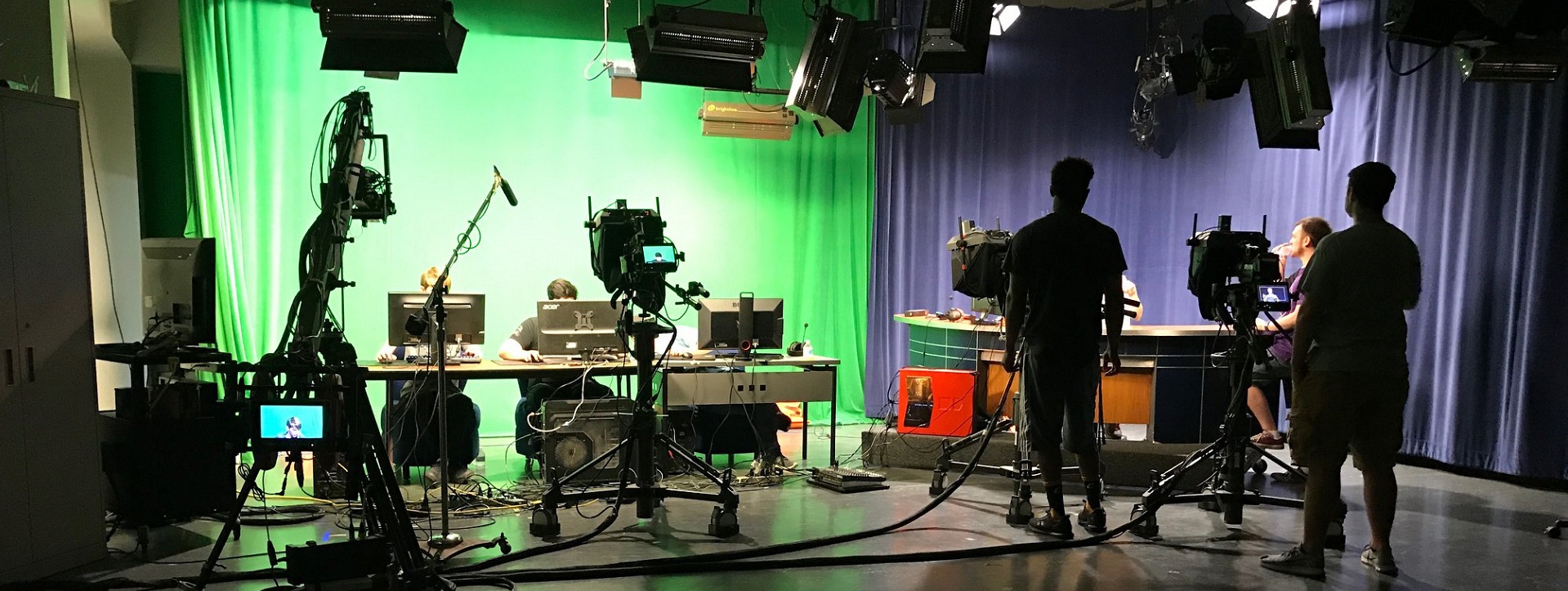
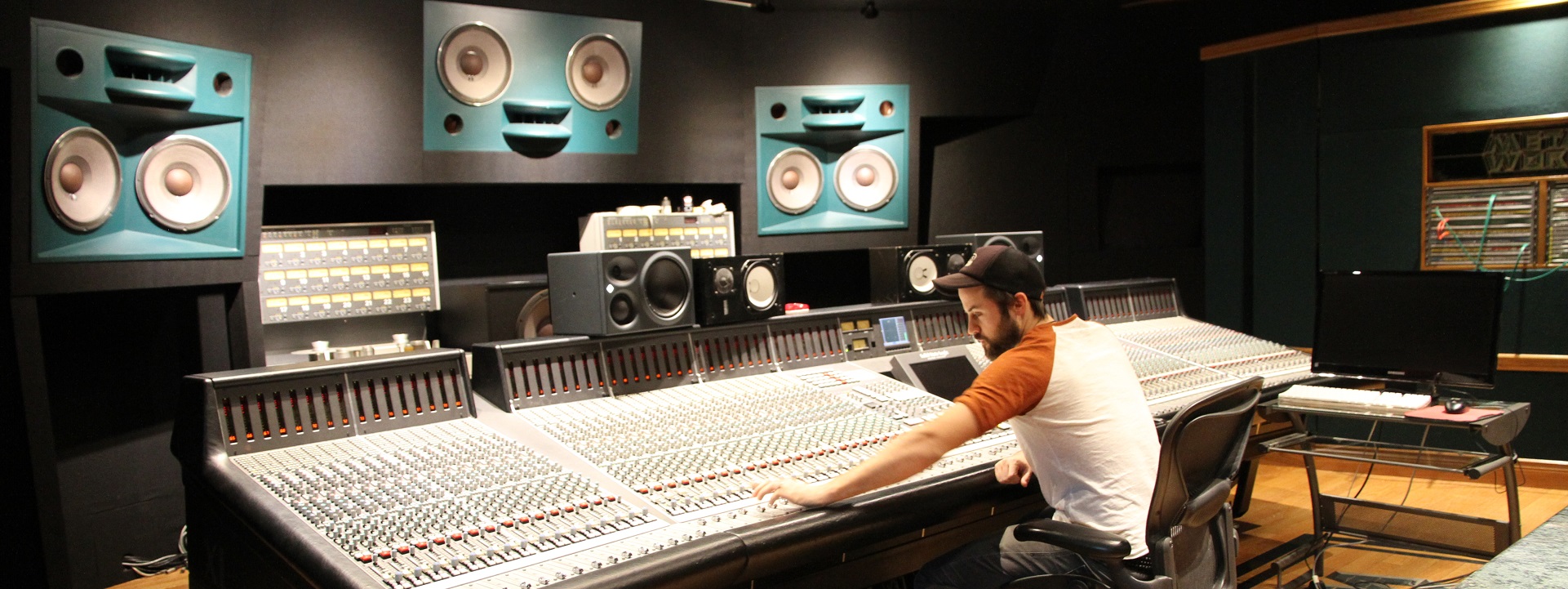
* Related work runs through ISO Technical Committee 36 .



Cinematography
“Non c’è fine. Non c’è inizio.
C’è solo l’infinita passione della vita. “
–Federico Fellini
Education communities provide a locus for lively art production, enjoyment and instruction. It is both a consumer and producer; with the expansion of massive open online curricula drawing from the visual arts of cinematography.
The International Organization for Standardization administers leading practice discovery and promulgation of the standards in these enterprises through Technical Committee 36. From the ISO/TC 36 prospectus:
Standardization of definitions, dimensions, methods of measurement and test, and performance characteristics relating to materials and apparatus used in silent and sound motion picture photography; in sound recording and reproduction related thereto; in the installation and characteristics of projection and sound reproduction equipment; in laboratory work; and in standards relating to sound and picture films used in television.
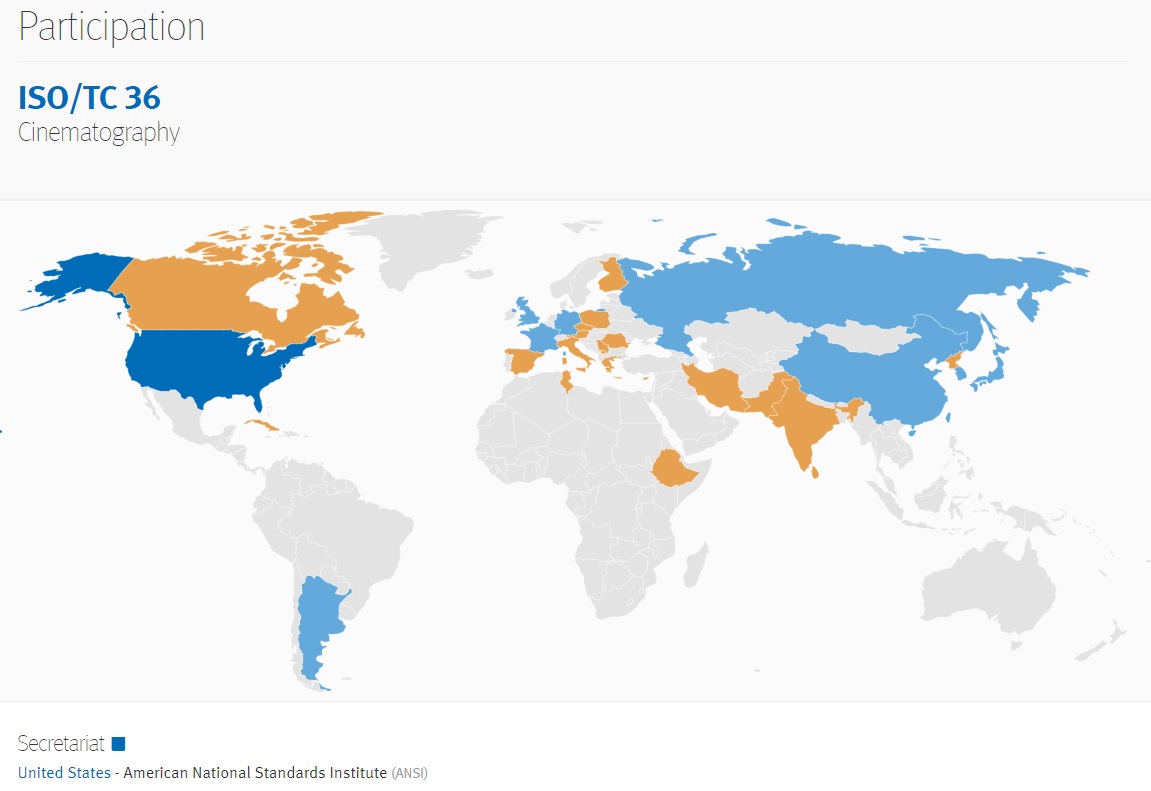
The American National Standards Institute is the ISO TC/36 Secretariat and the Society of Motion Picture and Television Engineers (SMPTE) is the US Technical Advisory Group Administrator (US TAG). We find SCTE present in safety and sustainability standards settings forums in many facility types in the education industry. It provides expertise to the Institute of Electrical and Electronic Engineers, the National Fire Protection Association, and the International Code Council, among others.
As commenting opportunities that are relevant to the US education industry present themselves, we will identify them here. As data from the US Bureau of Labor Statistics indicates, the demand for skill in this discipline is accelerating; with the education industry itself as a large consumer. We encourage students, faculty and staff to communicate directly with Mr. Thomas Bause Mason at SCTE, 3 Barker Avenue, Fifth Floor, White Plains, ny 10601, Phone: (914) 761-1100, Email: tbausemason@smpte.org. Educational institutions in other nations should contact their national representative to ISO TC/36
We sweep through all international standards that affect the education industry every nation. The time and date of our next teleconference on international standards is shown on our CALENDAR.
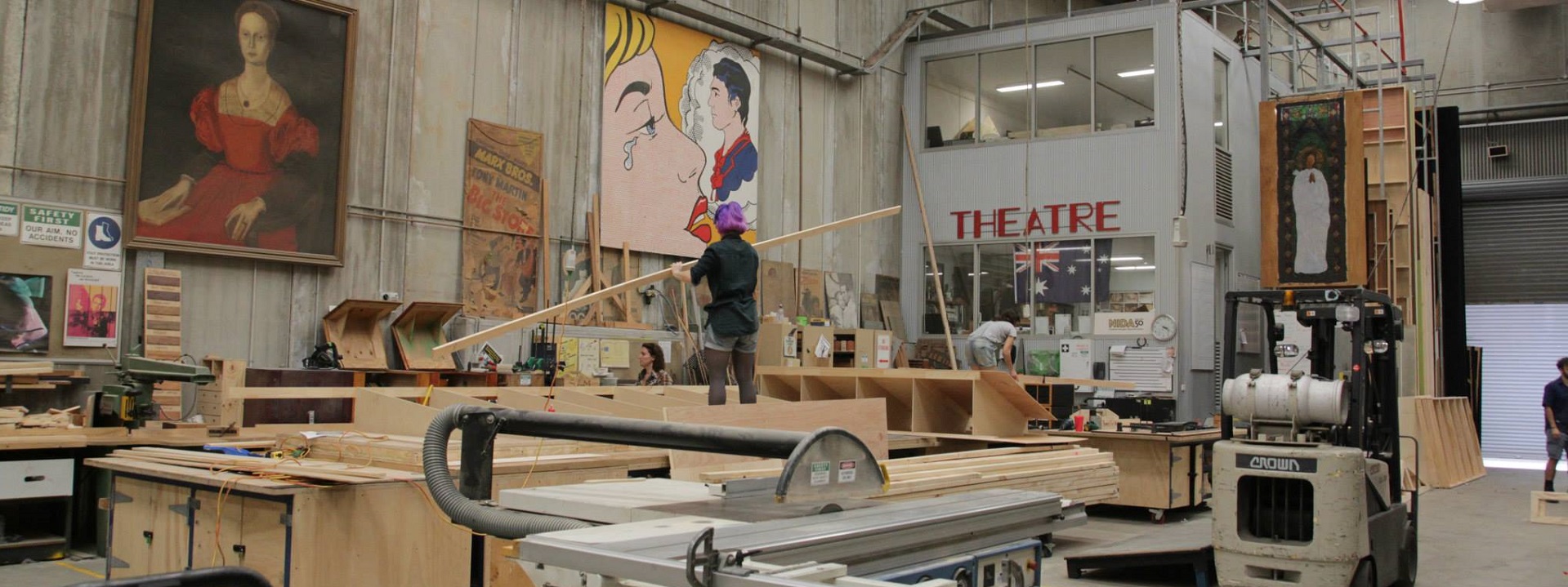
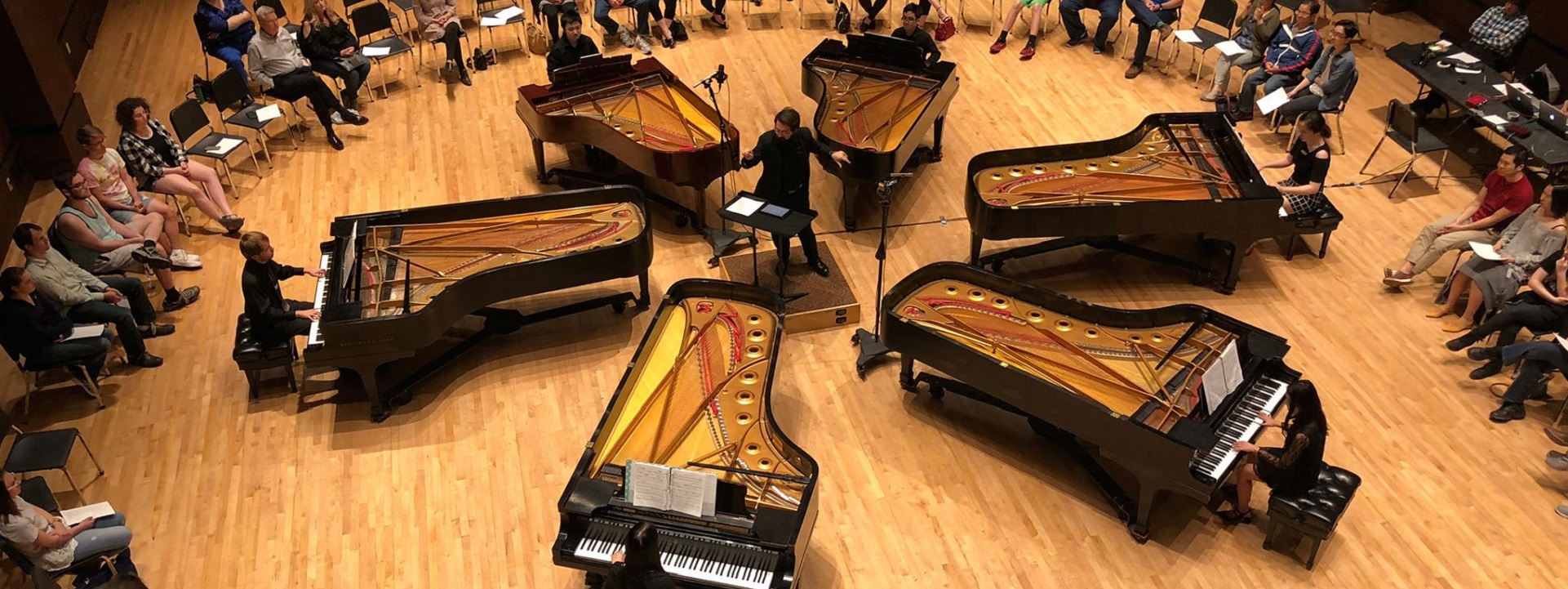
Category: Academics, Arts & Entertainment Facilities, Electrical, Telecommunication
Contact: Mike Anthony, Sanne Clare Anthony, Jim Harvey, Richard Robben

Lively 500
The term “lively arts” is attributed to American writer and poet James Thurber. It was popularized in the mid-20th century as a way to describe various forms of performing arts, such as theater, dance, music, and other creative expressions.

Curtain for the Lviv Theatre of Opera and Ballet
“What art is, in reality, is this missing link, not the links which exist.
It’s not what you see that is art; art is the gap”
— Marcel Duchamp
Today we refresh our understanding of the literature that guides the safety and sustainability goals of lively art events in educational settlements. Consortia have evolved quickly in recent years, leading and lagging changes in the content creation and delivery domain. With this evolution a professional discipline has emerged that requires training and certification in the electrotechnologies that contribute to “event safety”; among them:
Cornell University Legal Information Institute: Schenck v. United States (1919)
“The most stringent protection of free speech would not protect a man in falsely shouting fire in a theatre and causing a panic.” — Justice Oliver Wendell Holmes
OSHA General Duty Clause: 29 U.S. Code § 654 – Duties of employers and employees

Standard 62.1: This standard establishes minimum ventilation rates and indoor air quality requirements for commercial buildings, including theaters and auditoriums.
Standard 55: This standard specifies thermal comfort conditions for occupants in indoor environments, which can have an impact on air quality.
Audio Visual and Experience Association
Entertainment Services and Technology Association
Set design model for Giuseppe Verdi’s Otello, created for a Paris production in 1895@GallicaBnF
print(“Lively Arts”)https://t.co/93JWrmLwPh pic.twitter.com/RRxuzmGT4r— Standards Michigan (@StandardsMich) December 10, 2021
The Johnny Carson School of Theatre & Film commits to the philosophy that students of the lively arts must be provided w/ practical skills for employment in industry &
educational settings.https://t.co/DRe7qWJKgW@NebCarsonSchool
Print(“Lively”) #StandardsNebraska pic.twitter.com/7K8zfXYlZj— Standards Michigan (@StandardsMich) February 4, 2022
International Code Council
International Building Code: Section 303.2 Assembly Group A-1
Illumination Engineering Society
RP-16-17 Lighting for Theatrical Productions: This standard provides guidance on the design and implementation of lighting systems for theatrical productions. It includes information on the use of color, light direction, and light intensity to create different moods and effects.
RP-30-15 Recommended Practice for the Design of Theatres and Auditoriums: This standard provides guidance on the design of theaters and auditoriums, including lighting systems. It covers topics such as seating layout, stage design, and acoustics, as well as lighting design considerations.
DG-24-19 Design Guide for Color and Illumination: This guide provides information on the use of color in lighting design, including color temperature, color rendering, and color mixing. It is relevant to theater lighting design as well as other applications.
Institute of Electrical and Electronic Engineers
Research on Safety Integrity Level Assessment for Stage Machinery of Temporary Performance Site
Necessity of Establishing the Stage Technical Standards for Outdoor Live Performance Theater
Comparison of Technical Systems between Outdoor Live Performance Stage and Indoor Theater Stage
National Center for Spectator Sports Safety and Security
National Fire Protection Association
Life Safety Code
National Electrical Code
Articles 518-540: Arenas, Lecture Halls & Theaters
Society of Motion Picture Technology Engineers
Professional Lighting and Sound Association
Dance and Athletic Floor Product Standards: ASTM F2118, EN 14904, DIN 18032-2
Incumbent standards-setting organizations such as ASHRAE, ASTM, ICC, IEEE, NFPA have also discovered, integrated and promulgated event safety and sustainability concepts into their catalog of best practice titles; many already incorporated by reference into public safety law. We explore relevant research on crowd management and spectator safety.
“Art is anything you can get away with” — Marshall McLuhan
More
International Code Council (N.B. Changes to its Code Development Process)
International Building Code: Entertainment Occupancies
Section 410: Stages, Platforms and Technical Production Areas
National Electrical Code: Articles 518 – 540
Code-Making Panel 15 (NEC-P15): Public Input Report 10/1/2020
Code-Making Panel 15 (NEC-P15): Public Comment Report 11/18/2021
ASHRAE 62.1 Ventilation for Acceptable Indoor Air Quality
Princeton University: Set Design & Construction
Building the Virtual Stage: A System for Enabling Mixed Reality Theatre
University of California: Special Effects Safety and Loss Prevention
University of San Francisco Special Effects Safety
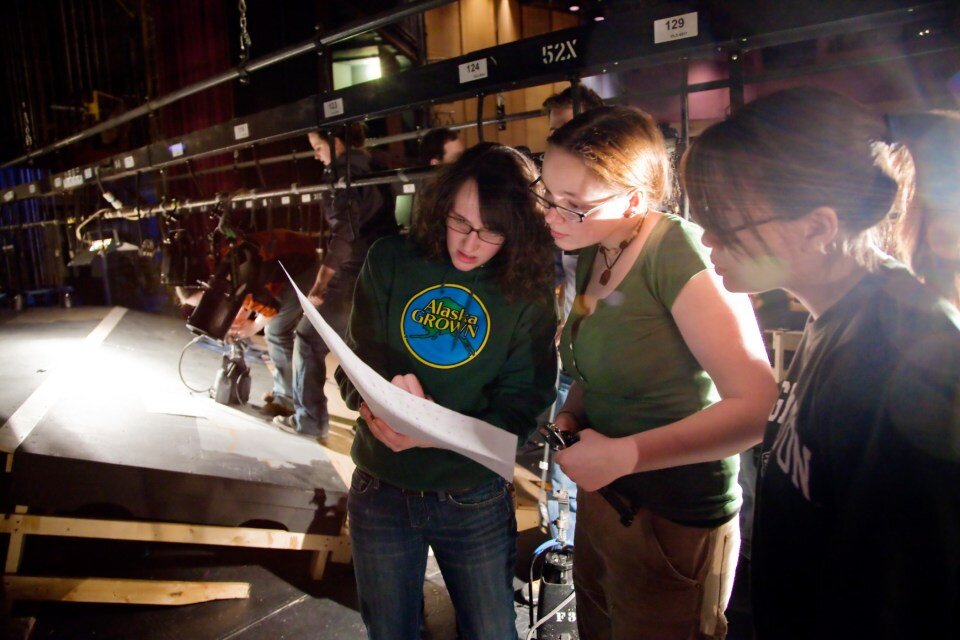

Acoustics
Hearing is one of the most crucial means of survival in the animal world and speech is one of the most distinctive characteristics of human development and culture. Accordingly, the science of acoustics spreads across many facets of human society—music, medicine, architecture, industrial production and more recently in off-site instructional facilities. Join us today at 15:00 UTC when we review the best practice catalogs of the peak standards-setting organizations for titles relevant to education communities.
American National Standards Institute ANSI S12.18 – Determination of Occupational Noise Exposure and Estimation of Noise-Induced Hearing Impairment: This standard provides guidance on how to measure and assess occupational noise exposure.
ASTM International
Committee on Building and Environmental Acoustics
Entertainment Services and Technology Association
International Code Council: Guideline for Acoustics
Institute of Electrical and Electronic Engineers
Standard for Acoustic Emissions from Transformers
Standard for Wind Turbine Acoustic Noise Measurement
International Electrotechnical Commission: TC 20 Electroacoustics
International Standardization Organization: TC/43 Acoustics
National Fire Protection Association: National Fire Alarm and Signaling Code
Underwriters Laboratories
Classified Acoustical Performance Summary (Ceiling tiles)
Readings:
National Bureau of Standards: Standards on Noise Measurements, Rating Schemes and Definitions
United States Department of Labor: Occupational Noise Exposure
IEEE: Design and Implementation of an Adaptive and Effective Audio System for Classroom
Why Acoustics Matter So Much in Medical Facilities

New update alert! The 2022 update to the Trademark Assignment Dataset is now available online. Find 1.29 million trademark assignments, involving 2.28 million unique trademark properties issued by the USPTO between March 1952 and January 2023: https://t.co/njrDAbSpwB pic.twitter.com/GkAXrHoQ9T
— USPTO (@uspto) July 13, 2023
Welcome
Standards Michigan Group, LLC
455 East Eisenhower Parkway, Suite 300
Ann Arbor, MI 48108 USA
888-748-3670
DIRECTIONS
 |
 |
|
 |
 |
|
 |
 |
Layout mode
Predefined Skins
Custom Colors
Choose your skin color
Patterns Background
Images Background
error: Content is protected !!
Skip to content