
Category Archives: Food/Kitchen/Farm/Agriculture

Loading
loading...

Farm Electrical Power

Many land grant colleges and universities are stewards of agricultural facilities that require reliable electrical power that is safe and sustainable for livestock well off the core campus distribution grid. Today we examine the 2026 National Electrical Code safe electric service rules with an eye toward the close date of April 6th for public input on the 2029 NEC.

2029 National Electrical Code


Updated: September 3, 2024

ACTION ITEMS:

Article 547: Agricultural Buildings

Public Input with Responses from CMP-7 (Start at PDF Page 187)

Public Input with Responses from CMP-2 Article 220 Part V: Farm Load Calculations (Start at PDF Page 28)

Related: National Electrical Safety Code (Higher Voltage Distribution Wiring from Merchant Utility to Off-Campus Agricultural Outbuildings)

Sunday, Animal, Farm, Agri august

Many land grant colleges and universities are stewards of agricultural facilities that require reliable electrical power that is safe and sustainable for livestock and animal habitat for sporting.

FREE ACCESS: 2023 National Electrical Code

The premise wiring rules for hazardous university owned buildings have been relatively stable.  Electrical professionals are guided by:

  1. Farm Load Calculations of Part V of Article 220,
  2. Corrosion mitigation with appropriate specification of power chain wiring
  3. Stray voltage and the equipotential plane
  4. Interactivity with regulated utility power sources.

Public response to the First Draft of the 2026 National Electrical Code will be received until August 28, 2024.  We coordinate our approach to the entire NFPA electrical suite with the IEEE Education & Healthcare Facilities Committee which meets 4 times monthly.  We typically refer to previous transcripts of technical committee actions to inform any changes (improvements) that we propose, if any.

2026 National Electrical Code Workspace

We maintain this issue on the standing agenda of our Power and Nourriture (Food) colloquia.  Feel free to join us with the login credentials at the upper right of our home page.


More:

2028 National Electrical Safety Code

Stray Voltage: Sources and Solutions

University of Nebraska: G87-845 Electrical Systems for Agricultural Buildings (Recommended Practices)

Cornell University Agricultural Safety and Health Program

Mike Holt

Fred Hartwell

National Safety Council  (22 deaths by electrocution on farms per 100,000 in 2017)

National Agricultural  Safety Database


International Fire Code

2024 International Fire Code | Free Access

Crosswalk: NFPA Fire Code and ICC International Fire Code

2024 GROUP A PROPOSED CHANGES TO THE I-CODES based on Committee Action Hearings October 2024

2024 GROUP A PROPOSED CHANGES TO THE I-CODES

2024/2025/2026 ICC CODE DEVELOPMENT SCHEDULE

ICC BCAC | Comments to be presented at October Hearings

Noteworthy Proposals:

IFC 1010.27 Locking arrangements, PDF page 252

IFC 1020.2 Corridor Fire Resistance Ratings. PDF page 356

IFC 915 More Carbon Monoxide Detection Systems, PDF page 1156

IBC 917 Mass notification for Group E occupancies, PDF page 1176

IFC 5701 More Process Hazard Analysis, PDF page 1571

The transcript (Complete Monograph) of Committee Actions should be available by September 5th.

Committee Action Hearings on Proposed Changes: October 23-31 Long Beach, California

“A Square with Imaginary Buildings” | Hendrik van Steenwijck (1614)

LIVE: I-Code Group B Public Comment Hearings

Higher Education Laboratories

“Waking Effectiveness of Alarms for Adults Who Are Hard of Hearing” 2007  Victoria University, Australia

Health Facilities: Navigating IBC and NFPA differences


Posted February 14, 2023

Free access to the latest edition of the IFC is linked below:

2021 International Fire Code

Following the ICC Group A revision cycle public consultation on the 2024 International Fire Code will begin.  The ICC will announce the development schedule sometime in 2022.

We limit our resources simply tracking the proposals that run through Group E (Educational) and Group I (Institutional) occupancies in the Group A suite with closer attention to the state they are adopted whole cloth or with local exceptions.  In many cases, IFC adoption by state and local authorities is delayed by one or more previous code revisions.  This delay in adoption may be necessary in order for jurisdictions to evaluate the impact of changes upon the region under their authority.

Public safety budgets historically support the local and state fire marshal and his or her staff.   The revenue stream of many trade associations originates from membership, conference attendance, training and certification enterprises that service the public sector stakeholder.   Manufacturer sponsorship of trade association conferences is noteworthy.

Unless there is an idea, or proposed regulation that has run off the rails (either in terms of rigor or cost increase) — we place fire safety in the middle of our ranking of priorities.  With gathering pace, we find many fires safety goals being met with electrotechnologies where we place our highest priority.

Click on image for more information. The map is updated by expert agencies frequently so we recommend a web search for an update.

Significant code changes rarely happen within a 3-year cycle so it is wise to follow ideas as they travel through the agendas of technical committees through several cycles as administered by the Fire Code Action Committee.

The ICC posts the transcripts of public proposals, technical committee responses to public proposals, public response to the technical committee response and the final balloting in a fair and reasonable fashion as can be seen in the transcripts linked below:

2021 International Fire Code Proposed Changes

2021 International Fire Code Public Comment Agenda 

A search on the terms “classroom” or “school” in any of the documents above offers granular insight into the trend of current thinking.   We find fire extinguishers placement a perennial concern across several standards suites.   You will note the careful consideration of proposals for use of the mass notification systems, now integrated into fire alarm systems and their deployment in active shooter situations.

The transcripts reveal detailed understanding and subtlety.

“The Country School” | Winslow Homer

There are many issues affecting the safety and sustainability of the education facility industry.  We add value to the industry because of our cross-cutting perspective on the hundreds of “silos”created by the competition (and sometimes cooperation) among accredited, consortia and open-source standards developers.  We have the door open every day at 11 AM Eastern time to enlighten understanding of them all.  We also host a breakout teleconference every month to drill into the specifics of standards action on fire safety for the real assets of school districts, colleges and universities.  See our CALENDAR for the next online meeting.

Finally, we persist in encouraging education industry facility managers (especially those with operations and maintenance data) to participate in the ICC code development process.  You may do so by CLICKING HERE.

The ICC Group B Code Meetings will be hosted soon and open to the public:   

International Code Council 2022 Group B Public Comment Agenda (September 14-21 Kentucky International Convention Center)

The Group B tranche is largely focused on energy, structural, residential and existing building concepts but all of the titles cross-reference the IFC in some way so it is wise to follow how the concepts re-arrange and cross-reference themselves with each cycle.


Issue: [16-169]

Category: Architectural, Facility Asset Management, Space Planning

Colleagues: Mike Anthony,  Casey Grant, Joshua Evolve, Marcelo Hirschler


More

2021/2022 ICC CODE DEVELOPMENT SCHEDULE

FINAL ACTION RESULTS ON THE 2018 PROPOSED CHANGES TO THE INTERNATIONAL CODES – GROUP A

2018 GROUP A PROPOSED CHANGES TO THE I-CODES COLUMBUS COMMITTEE ACTION HEARINGS

2018 GROUP A PUBLIC COMMENT AGENDA | INTERNATIONAL BUILDING CODE

2018 GROUP A PUBLIC COMMENT AGENDA | INTERNATIONAL FIRE CODE

2018 REPORT OF THE COMMITTEE ACTION HEARINGS ON THE 2018 EDITIONS OF THE GROUP A INTERNATIONAL CODES


https://standardsmichigan.com/category/kitchen/

Kitchens 300

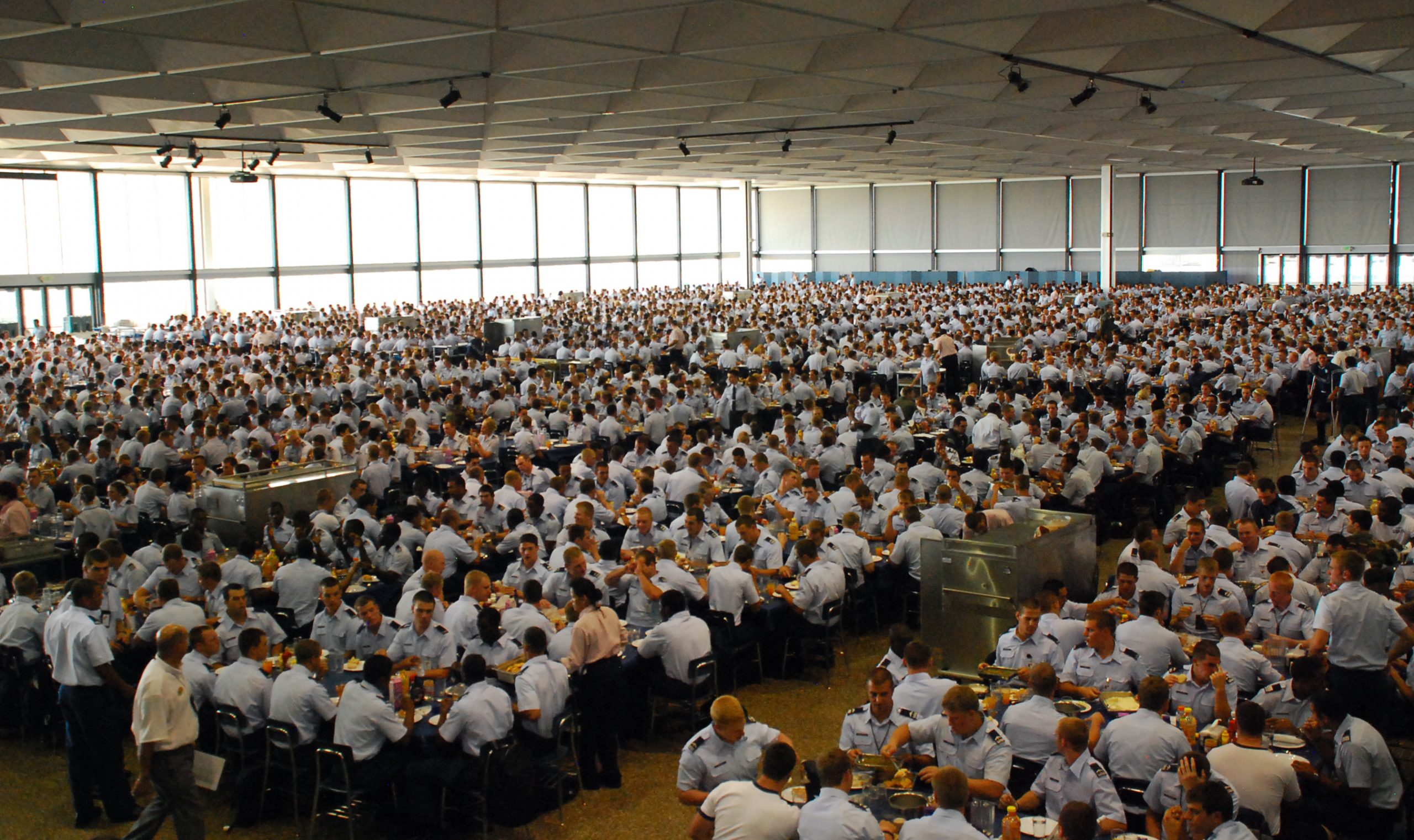
United States Air Force Military Academy

Commercial kitchens in school cafeterias and college dormitories are designed to meet strict health and safety standards, accommodate high-volume food production, and provide nutritious meals to students in an efficient and organized manner.  Some common features:

  • Industrial-grade cooking equipment: This may include commercial ovens, grills, ranges, fryers, steamers, and other specialized cooking equipment designed for high-volume cooking.
  • Food preparation areas: These may include spacious prep tables, cutting boards, sinks, and other food preparation stations for washing, chopping, and assembling ingredients.
  • Walk-in refrigerators and freezers: These are used for storing large quantities of perishable food items at appropriate temperatures to maintain freshness and safety.
  • Food storage facilities: These may include shelves, racks, and cabinets for storing dry goods, canned goods, and other non-perishable food items.
  • Dishwashing area: This may include commercial dishwashers capable of handling a large number of dishes and utensils efficiently.
  • Serving stations: These may include counters, warming stations, and other facilities for serving food to students.
  • Ventilation and exhaust systems: These are essential for maintaining a clean and safe kitchen environment by properly removing smoke, steam, and odors generated during cooking.
  • Safety features: These may include fire suppression systems, emergency exits, and other safety measures to ensure compliance with local health and safety regulations.

Owing to the complexity of the domain, starting 2023 we will break down the standards for education community safety and sustainability into two separate colloquia:

Kitchens 100 will deal primarily safety — fire, shock hazard, sanitation, floors, etc.

Kitchens 300 will deal with sustainability criteria in large commercial kitchens common in school cafeterias, dormitories, sports venues and hospitals.

Williams P. Clements Jr. University Hospital

Owing to the complexity of the domain, starting 2023 we will break down the standards for education community safety and sustainability into two separate colloquia:

Kitchens 100 will deal primarily safety — fire, shock hazard, sanitation, floors, etc.

Kitchens 300 will deal with sustainability criteria in large commercial kitchens common in school cafeterias, dormitories, sports venues and hospitals.

Relevant catalogs:

3-A Sanitary Standards

American Gas Association

AGA Response to The Atlantic Article about Natural Gas Cooking

ASHRAE International

Ventilation for Commercial Cooking Operations

ASTM International

Institute of Electrical and Electronic Engineers

Noteworthy Research:

Design Application of Smart Kitchen for Aging Based on Interactive Behavior Analysis

IAPMO International

Prefabricated Gravity Grease Interceptors

International Code Council

International Building Code Sections 303 Commercial Kitchens

National Fire Protection Association

National Electrical Code

Standard for the Installation of Air-Conditioning and Ventilating Systems

NSF International

The Association for Packaging and Processing Technologies

We will also review federal and state-level regulatory action.   Open to everyone.  Use the login credentials at the upper right of our home page.

Related:

Kitchen Flooring Standards

Food 500


Kitchen Exhaust


God walks among the pots and pans.

— Saint Teresa of Ávila c.1582


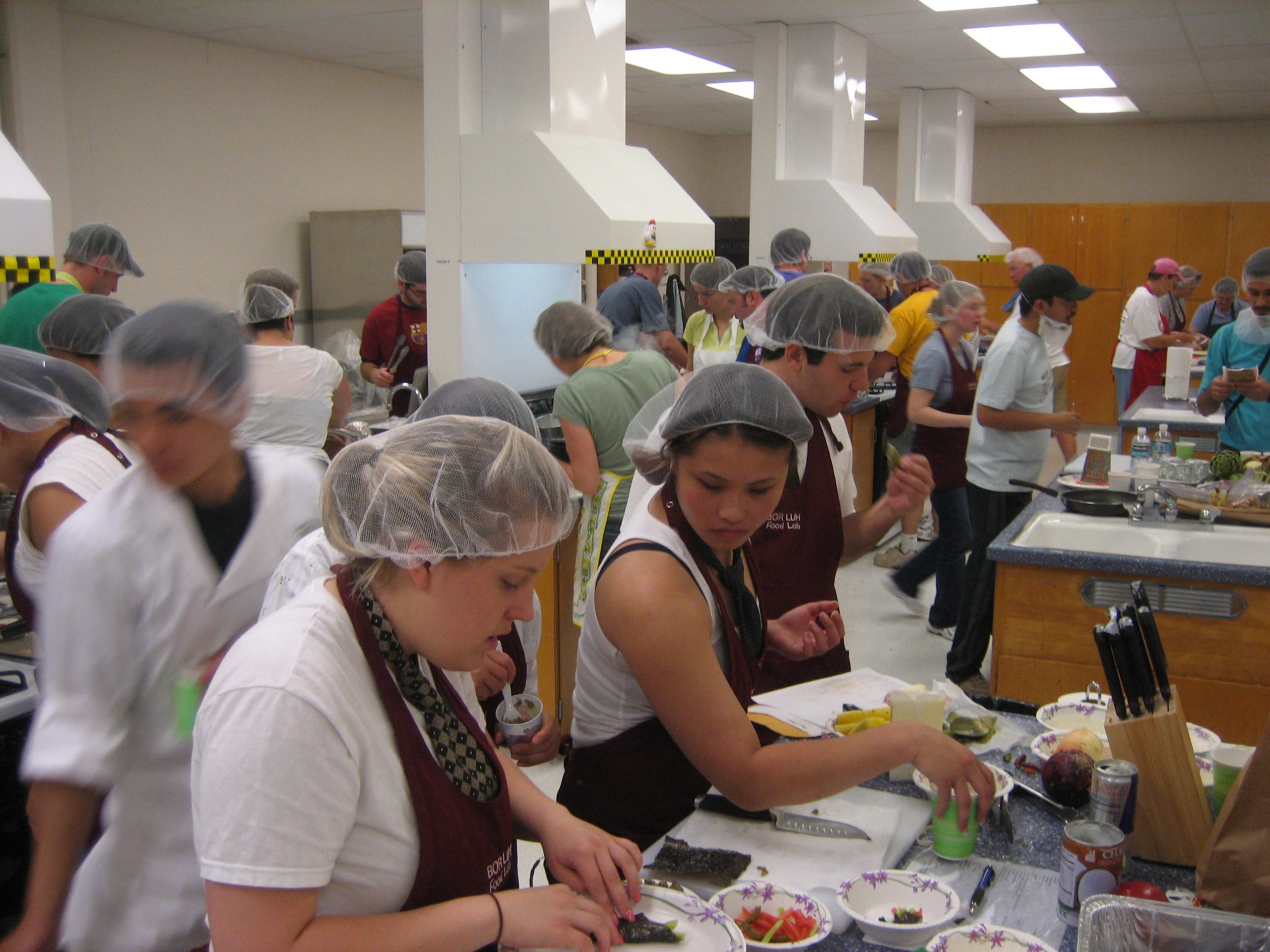
One of the concentrated risk aggregations in any school district, college, university and technical school, athletic venues and university-affiliated healthcare systems, rests in the food preparation units.  On a typical large research university there are hundreds of kitchens in dormitories, student unions, athletic venues, hospitals and — to a surprising degree — kitchen facilities are showing up in classroom buildings.  Kitchens that used to be located on the periphery of campus and run by private industry are now moving into instructional spaces and operated by private food service vendors. 

Food preparation facilities present safety challenges that are on the same scale as district energy plants, athletic concession units, media production facilities and hospital operating rooms.   There are 20 accredited standards setting organizations administering leading practice discovery in this space.  Some of them concerned with fire safety; others concerned with energy conservation in kitchens, still others concerned with sanitation.    The International Kitchen Exhaust Cleaning Association is one of the first names in this space and maintains an accessible standards development home page; linked below:

IKCEA Standards

The IKECA catalog of titles establish a standard of care for cleaning activity that fills gaps in related ASHRAE, ASME, ICC and NFPA titles.  For example:

IKECA I10 Standard for the Methodology for Inspection of Commercial Kitchen Exhaust Systems

IKECA C10 Standard for the Methodology for Cleaning Commercial Kitchen Exhaust Systems

Hazards posed by un-maintained exhaust systems are covered in the NFPA Report: Structure Fires in Eating and Drinking Establishments

Princeton University Teaching Kitchen

We encourage subject matter experts in food enterprises in the education industry to communicate directly with John Dixon at IKCEA (jdixon@fernley.com) or Elizabeth Franks, (215) 320-3876, information@ikeca.org, International Kitchen Exhaust Cleaning Association, 100 North 20th Street, Suite 400, Philadelphia, PA 19103.   

We are happy to get specific about how the IKECA suite contributes to lower education community cost during our Food  teleconferences.  See our CALENDAR for the next online meeting; open to everyone.

Issue: [18-24]

Category: Facility Asset Management

Colleagues:  Larry Spielvogel, Richard Robben


LEARN MORE:

Dormitories, Fraternities, Sororities and Barracks

Keele University “Look When You Cook”

Commercial Kitchen Ventilation

Traps, Interceptors and Separators

Workspace / IKCEA


Ventilation for Commercial Cooking Operations

Kitchen cooking ranks high as the causes of fire hazard in the built environment. ASHRAE 154 provides design criteria for the performance of commercial cooking ventilation systems.  Education communities have hundreds of food preparation enterprises in school districts, residence halls, hospitals and athletic venues. It is not intended to circumvent any safety, health or environmental requirement; however we find a fair amount of drama regarding the competing requirements of fire safety and sustainability among subject matter experts.  The stabilized version is dated 2022.

“Dutch Kitchen” / Artist Unknown

A noteworthy title in the ASHRAE standards catalog is ASHRAE 154 Ventilation for Commercial Cooking Operations.  Food preparation enterprises in school districts, residence halls, hospitals and athletic venues and central features in education communities.   Access to the 2022 edition is linked below:

FREE ACCESS ASHRAE 154

The purpose of ASHRAE 154 is to provide design criteria for the performance of commercial cooking ventilation systems.  It covers kitchen hoods, exhaust systems and replacement air systems,   It is not intended to circumvent any safety, health or environmental requirement; however we find a fair amount of drama between partisans of air movement controls and energy conservation interests.  Fire safety and the sustainability advocates are well funded voices.

There are no open consultations at the moment; but you may track release of any at the link below:

Public Review Draft Standards / Online Comment Database

Titles in the ASHRAE catalog move swiftly; many of them consultations lasting less than 45 days.

Interior environmental air safety is a concern that cuts across many professional disciplines.  Accordingly, we maintain this title on the standing agendas of several colloquia — Mechanical Engineering, Energy and Housing.  Starting 2022 we will break out this the subject of a separate, dedicated colloquium   See our CALENDAR for the next online meeting; open to everyone.

Issue: [14-92]

Category: Mechanical, Electrical, Energy, Facility Asset Management

Colleagues:  David Conrad, Richard Robben, Larry Spielvogel

Kitchen cooking ranks high as the causes of fire hazard in the built environment. ASHRAE 154 provides design criteria for the performance of commercial cooking ventilation systems.  Education communities have hundreds of food preparation enterprises in school districts, residence halls, hospitals and athletic venues. It is not intended to circumvent any safety, health or environmental requirement; however we find a fair amount of drama regarding the competing requirements of fire safety and sustainability among subject matter experts.  The stabilized version is dated 2022.

Layout mode
Predefined Skins
Custom Colors
Choose your skin color
Patterns Background
Images Background
Standards Michigan
error: Content is protected !!
Skip to content