Tag Archives: September

Loading
loading..

Structures

9-11 Commission

Today we examine best practice literature for education building structures developed by accredited and consortia standards developers such as ASCE, ACI, AISC, ASTM, AWS, CRSI, ICC, NFPA and IEEE.   The US education industry among the top three largest building construction markets; with annual new and renovated building construction running close to $100 billion annually.

We limit our coverage to low-risk regions in the US, such as areas with minimal seismic activity, low risk of flooding and moderate weather conditions.  Another huge topic which we will likely break up into separate modules in the fullness of time.  For now, we sweep through the basics:

Foundation

  1. Site Analysis:
    • Conduct soil testing to determine its bearing capacity and composition.
    • Ensure the site is properly graded and drained to prevent water accumulation.
  2. Foundation Type:
    • Slab-on-Grade: Common in residential buildings. A concrete slab is poured directly on the ground.
    • Basement: Provides additional living space and storage, common in residential buildings.
  3. Design and Preparation:
    • Use rebar reinforcement to strengthen the concrete.
    • Install vapor barriers to prevent moisture from seeping through the foundation.
    • Properly compact the soil to prevent settling and shifting.
  4. Concrete Pouring:
    • Use high-quality concrete mix suitable for the local climate.
    • Ensure proper curing of the concrete to achieve maximum strength.
    • Use expansion joints to accommodate temperature changes and prevent cracking.
  5. Waterproofing and Insulation:
    • Apply waterproofing membranes or coatings to protect the foundation from water damage.
    • Insulate the foundation to improve energy efficiency and prevent frost heave in colder climates.

Ironwork

  1. Materials:
    • Use high-quality steel that meets industry standards (e.g., ASTM specifications).
    • Ensure the steel is properly treated to resist corrosion, especially in humid or coastal areas.
  2. Design:
    • Follow structural engineering guidelines and building codes for the specific type of building.
    • Use appropriate load calculations to determine the size and placement of steel beams, columns, and reinforcements.
  3. Fabrication and Assembly:
  4. Erection:
    • Use proper lifting equipment and techniques to safely erect steel structures.
    • Align and level steel components accurately before final fastening.
    • Use bolted connections where possible for ease of assembly and future maintenance.
  5. Inspection and Quality Control:
    • Conduct regular inspections throughout the construction process to ensure compliance with design specifications and building codes.
    • Perform non-destructive testing (e.g., ultrasonic testing) on critical welds and connections.
  6. Protective Coatings:
    • Apply protective coatings (e.g., galvanization, epoxy paint) to steel components to prevent corrosion.
    • Maintain the protective coatings over the lifespan of the building.

Use the login credentials at the upper right of our home page.


Related:

Category Archive

Post 9-11 Standards

Following the September 11, 2001 attacks on the World Trade Center, U.S. standards developers — the International Code Council (ICC) and the National Fire Protection Association (NFPA) topmost among them — responded with revisions to technical standards based on thirty findings of the National Institute of Standards and Technology (NIST). These changes aimed to enhance structural integrity, fire safety, and evacuation procedures in high-rise buildings.

Increased Structural Robustness: Codes were updated to improve resistance to progressive collapse, where the failure of one structural element spreads to others. This included increasing the minimum thickness of steel beams and columns and adding more connections between structural elements.

Concrete Reinforcement: Structures like One World Trade Center adopted reinforced concrete cores and thicker structural elements to withstand extreme events.

Fire SafetyEnhanced Fire Resistance: Higher standards for fire-resistant materials were introduced, including mandates for fire sprinklers and smoke alarms in high-rise buildings.

Fire Protection Systems: Improved requirements for active fire protection systems, such as sprinklers, to mitigate fire spread.

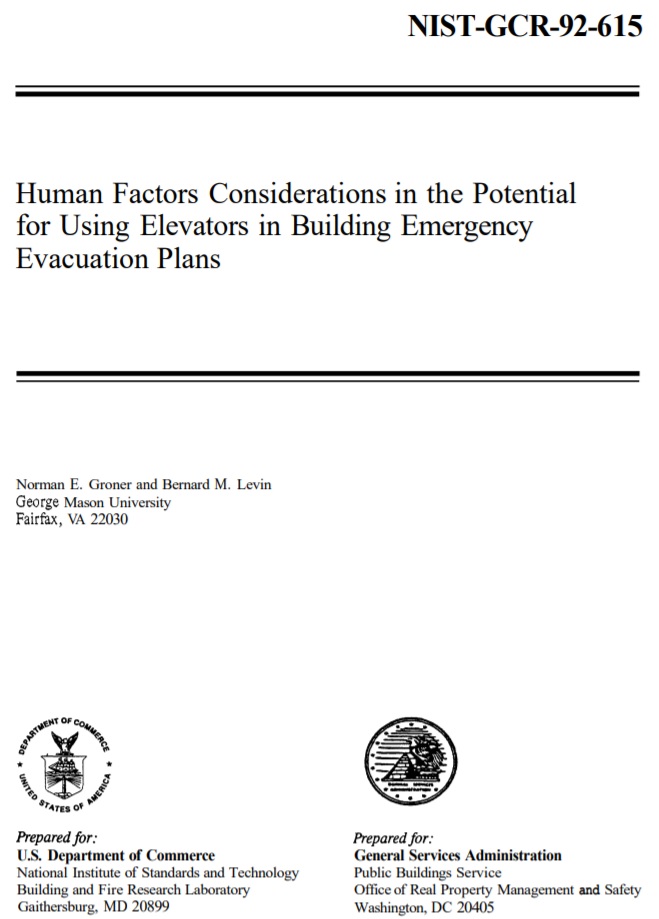
Egress and EvacuationElevator Requirements: Elevators are now required in high-rise buildings over 120 feet tall to aid firefighters in accessing upper floors without climbing stairs with heavy equipment.

Additional Stairways: High-rises over 420 feet must include an extra stairway to ensure multiple egress paths.

Exit Path Markings: Self-luminous or photoluminescent exit path markings were mandated to guide occupants to exits during low-visibility emergencies, applied to both new and existing high-rise buildings.

Increased Exit Spacing: Exit enclosures must be spaced farther apart to prevent a single event, like a fire, from blocking multiple exits.

Emergency Communication and PreparednessImproved Communication Systems: Codes now require better communication systems for emergency responders to coordinate during crises, addressing the breakdown in communication during 9/11.

Evacuation Procedures: Elevators can now be used for evacuation in some fire scenarios, a shift from the traditional reliance on stairs, improving evacuation efficiency.

Blast-Resistant Features: Designs for high-profile buildings, like One World Trade Center, incorporated blast-resistant bases (e.g., a 185-foot concrete base) to protect against street-level attacks.

Changes were debated to balance safety with construction costs, with some measures (like exit markings) having minimal cost but significant benefits.  Not all proposals were adopted due to cost concerns or feasibility, but they spurred further structural design advancements.  These changes reflect a shift toward designing buildings to withstand extreme, unpredictable events like terrorist attacks, beyond traditional natural disaster scenarios.

Our work in the NFPA catalog | Our work in the ICC catalog | Our work in the ASCE catalog

What Are People Wearing?

“What you wear is how you present yourself to the world, especially today,

when human contacts are so quick. Fashion is instant language.”

Miuccia Prada

May Ball


University of Cambridge Estates Division

First Day of School

Donegan Acoustics

Today we take a cross cutting review of all the literature (codes, standards, guidelines, laws)  that informs safe and sustainability occupancy load, means of egress, illumination, ambient air, plumbing, electric, communication and acoustics in classrooms.

1. Building Codes

  • International Building Code (IBC): Adopted by most states, it provides guidelines for the design and construction of buildings, including schools.
  • International Existing Building Code (IEBC): Provides standards for the renovation and repair of existing school buildings.
  • State and Local Building Codes: Many states and municipalities have additional or modified codes that must be followed.

2. Fire and Life Safety Codes

  • National Fire Protection Association (NFPA) Codes:
    • NFPA 101: Life Safety Code – Sets requirements for egress, fire protection, and emergency planning.
    • NFPA 13: Installation of Sprinkler Systems – Specifies standards for automatic fire sprinkler systems.
    • NFPA 72: National Fire Alarm and Signaling Code – Covers fire alarm system installation and maintenance.
    • NFPA 70: National Electrical Code (NEC) – Outlines electrical wiring standards to prevent fire hazards.

3. Accessibility Standards

  • Americans with Disabilities Act (ADA):
    • ADA Standards for Accessible Design – Ensures that school facilities are accessible to individuals with disabilities.
  • Architectural Barriers Act (ABA): Requires accessibility in buildings constructed with federal funds.

4. Environmental and Health Standards

Thermal Environmental Conditions for Human Occupancy

  • Environmental Protection Agency (EPA) Regulations:
    • EPA Lead and Asbestos Regulations: Governs the handling of lead and asbestos in school buildings.
    • EPA’s Indoor Air Quality Tools for Schools: Provides guidelines to manage air quality.

5. Structural Standards

  • American Society of Civil Engineers (ASCE):
    • ASCE 7: Minimum Design Loads and Associated Criteria for Buildings and Other Structures.
  • American Concrete Institute (ACI):
    • ACI 318: Building Code Requirements for Structural Concrete.

6. Plumbing and Mechanical Codes

  • International Plumbing Code (IPC): Provides guidelines for plumbing system design and installation.
  • International Mechanical Code (IMC): Sets standards for heating, ventilation, and air conditioning (HVAC) systems.

7. Electrical Standards

  • Institute of Electrical and Electronics Engineers (IEEE) Standards: Includes various electrical safety and installation standards relevant to school facilities.

8. Educational Specifications and Guidelines

  • Council of Educational Facility Planners International (CEFPI) Guidelines: Provides best practices for school design that promote effective learning environments.
  • State-Specific Educational Specifications: Many states have their own guidelines for the design of educational facilities to meet state-specific educational needs.

9. Safety and Security Standards

  • Crime Prevention Through Environmental Design (CPTED) Guidelines: Suggests design strategies to enhance security in school environments.
  • School Safety and Security Standards (state-specific): Some states have additional requirements for school security measures.

10. Sustainable Design Standards

  • LEED (Leadership in Energy and Environmental Design) for Schools: Provides a framework for building green and energy-efficient schools.
  • Green Building Initiative (GBI) Standards: Focuses on sustainable and energy-efficient building practices.

11. Maintenance Standards

  • International Property Maintenance Code (IPMC): Provides guidelines for the maintenance of buildings, ensuring they remain safe and functional over time.

12. Other Relevant Standards

  • Federal Emergency Management Agency (FEMA) Guidelines: Provides standards for building schools in disaster-prone areas (e.g., tornadoes, earthquakes).
  • Occupational Safety and Health Administration (OSHA) Standards: Ensures workplace safety, including in schools, covering areas like chemical safety, electrical safety, and more.

Local Considerations

  • Local Zoning Laws and Ordinances: Schools must also comply with local land use regulations, which may affect building placement, size, and use.

Classroom Acoustics


Evensong “Last Rose of Summer”

Wisconsin

How to Make the Three Most Popular Milk Coffees

Coffs Harbour

Cowardice Is Killing The West

Australia

Gallery: School Uniforms

Traditionally favored by private and parochial institutions, school uniforms are being adopted by US public schools in increasing numbers. According to a 2020 report, the percentage of public schools that required school uniforms jumped from 12% in the 1999-2000 school year to 20% in the 2017-18 school year. School uniforms were most frequently required by elementary schools (23%), followed by middle (18%), and high schools (10%). (Encyclopedia Britannica)

PRO

School uniforms may deter crime and increase student safety.
School uniforms keep students focused on their education, not their clothes.
School uniforms create a level playing field among students, reducing peer pressure and bullying.
Wearing uniforms enhances school pride, unity, and community spirit.
School uniforms may improve attendance and discipline.
Uniform policies save valuable class time because they are easier to enforce than a standard dress code.
School uniforms prevent the display of gang colors and insignia.
School uniforms make getting ready for school easier, which can improve punctuality.
School uniforms can save parents money.
Most parents and educators support mandatory school uniforms.
Students’ legal right to free expression remains intact even with mandatory school uniforms.
Students dressed in uniform are better perceived by teachers and peers.
Students can express their individuality in school uniforms by introducing variations and adding accessories.


CON

School uniforms restrict students’ freedom of expression.
School uniforms promote conformity over individuality.
School uniforms do not stop bullying and may increase violent attacks.
School uniforms do not improve attendance, academic preparedness, or exam results.
The key findings used to tout the benefits of uniforms are questionable.
School uniforms emphasize the socio-economic divisions they are supposed to eliminate.
Students oppose school uniforms.
Uniforms may have a detrimental effect on students’ self-image.
Focusing on uniforms takes attention away from finding genuine solutions to problems in education.
The push for school uniforms is driven by commercial interests rather than educational ones.
Parents should be free to choose their children’s clothes without government interference.
School uniforms in public schools undermine the promise of a free education by imposing an extra expense on families.
School uniforms may delay the transition into adulthood.

Northville (Michigan) Christian School Dress Code

Parkway Christian School Dress Code | Sterling Heights Michigan

Style

Pomegranates: How and When to Pick

Standards Utah | Extension Service

The pomegranate is a significant symbol in Jewish tradition, particularly during Rosh Hashanah, the Jewish New Year. Its symbolism is rooted in both its physical characteristics and its cultural and spiritual associations.

Abundance and Fertility: Pomegranates are filled with numerous seeds, which symbolize abundance, fertility, and prosperity. During Rosh Hashanah, a time of renewal and hope for a sweet and bountiful year, eating pomegranates reflects the wish for a year filled with blessings and plenty.

Mitzvot and Righteousness: Jewish tradition often associates the pomegranate’s many seeds—traditionally said to number 613—with the 613 commandments (mitzvot) in the Torah. Consuming pomegranates during Rosh Hashanah expresses the hope that one’s life will be filled with good deeds and adherence to these commandments in the coming year.

Renewal and New Beginnings: Rosh Hashanah marks the start of the Jewish year, a time for introspection, repentance, and setting intentions for personal growth. The pomegranate, as a fruit that ripens around this season in the Mediterranean region, symbolizes renewal and the potential for a fresh start.

Connection to the Land of Israel: Pomegranates are one of the seven species (Shivat Haminim) mentioned in the Torah as special products of the Land of Israel (Deuteronomy 8:8). Their inclusion in Rosh Hashanah celebrations reinforces the connection to the land and its blessings, evoking gratitude and a sense of rootedness in Jewish heritage.

Hope and Sweetness: On Rosh Hashanah, it is customary to eat sweet foods to symbolize the hope for a sweet year. While pomegranates have a tart-sweet flavor, they are often included in the festive meal or ritual foods, accompanied by a blessing such as: “May it be Your will, O Lord our God, that our merits be as numerous as the seeds of a pomegranate.”

During Rosh Hashanah, pomegranates may be eaten fresh, incorporated into dishes, or displayed as part of the festive table. Some communities recite a specific blessing or prayer when eating the pomegranate, emphasizing its symbolic meaning. The fruit’s vibrant red color and seed-filled interior make it a powerful visual and spiritual emblem for the holiday’s themes of hope, abundance, and spiritual growth. This symbolism aligns with the broader themes of Rosh Hashanah: reflection, renewal, and the aspiration for a year filled with goodness and divine favor.

“Mainely” Potato Salad & Wild Blueberry Pie

Standards Maine

Wild Blueberry Pie


Layout mode
Predefined Skins
Custom Colors
Choose your skin color
Patterns Background
Images Background
Standards Michigan
error: Content is protected !!
Skip to content