Tag Archives: D2

Loading
loading..

Illumination 300

IEEE Education & Healthcare Facilities Committee

Outdoor Sport Illumination Technical Issues & Representative Calculation

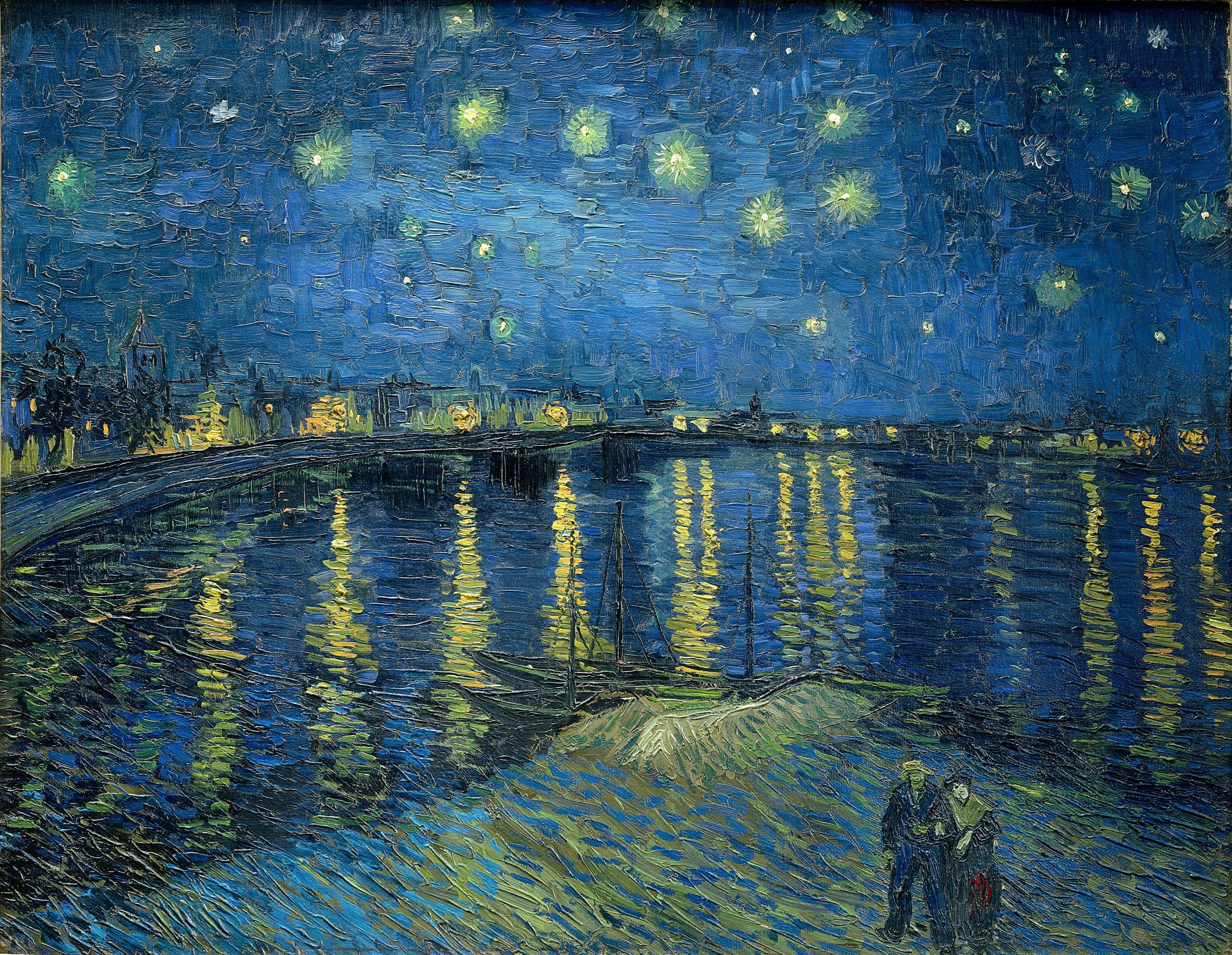
“Starry Night Over the Rhône” 1888 Vincent van Gogh

Today we refresh our understanding of the moment in illumination technologies for outdoor lighting systems— related but different from our exploration of building interior illumination systems in Illumination 200.  Later in 2023 we will roll out Illumination 500 which explores litigation related to public illumination technology.  As cities-within-cities the shared perimeter of a campus with the host municipality has proven rich in legal controversy and action.

Illumination technology was the original inspiration for the electric utility industry; providing night-time security and transforming every sector of every economy on earth.  Lighting load remains the largest component of any building’s electric load — about 35 percent– making it a large target for energy regulations.

Our inquiry begins with selections from the following documents…

International Electrotechnical Commission TC 34 Lighting

IEC 60364 Electrical Installations in Buildings

2023 National Electrical Safety Code

IEEE P3001.9 – Recommended Practice for the Design of Power Systems Supplying Lighting Systems in Commercial and Industrial Facilities

Institution of Engineering and Technology: Recommendations for Energy-efficient Exterior Lighting Systems

2023 National Electrical Code: Article 410  (While the bulk of the NEC concerns indoor wiring fire hazards, there are passages that inform outdoor lighting wiring safety)

2019 ASHRAE 90.1: Chapter 9 Lighting

Illumination Engineering Society: Various titles

ISO/TC 274 Light and lighting

Salt Water River Project: Outdoor Lighting Standards

US DOE-EERE Building Energy Codes Program

…and about 20 other accredited, consortia or ad hoc standards developers and publishers aligned principally with vertical incumbents.  Illumination was the original inspiration (i.e. the first “killer app”) for the electrical power industry in every nation.  Its best practice literature reflects a fast-moving, shape-changing domain.

Click in today with the login credentials at the upper right of our home page.

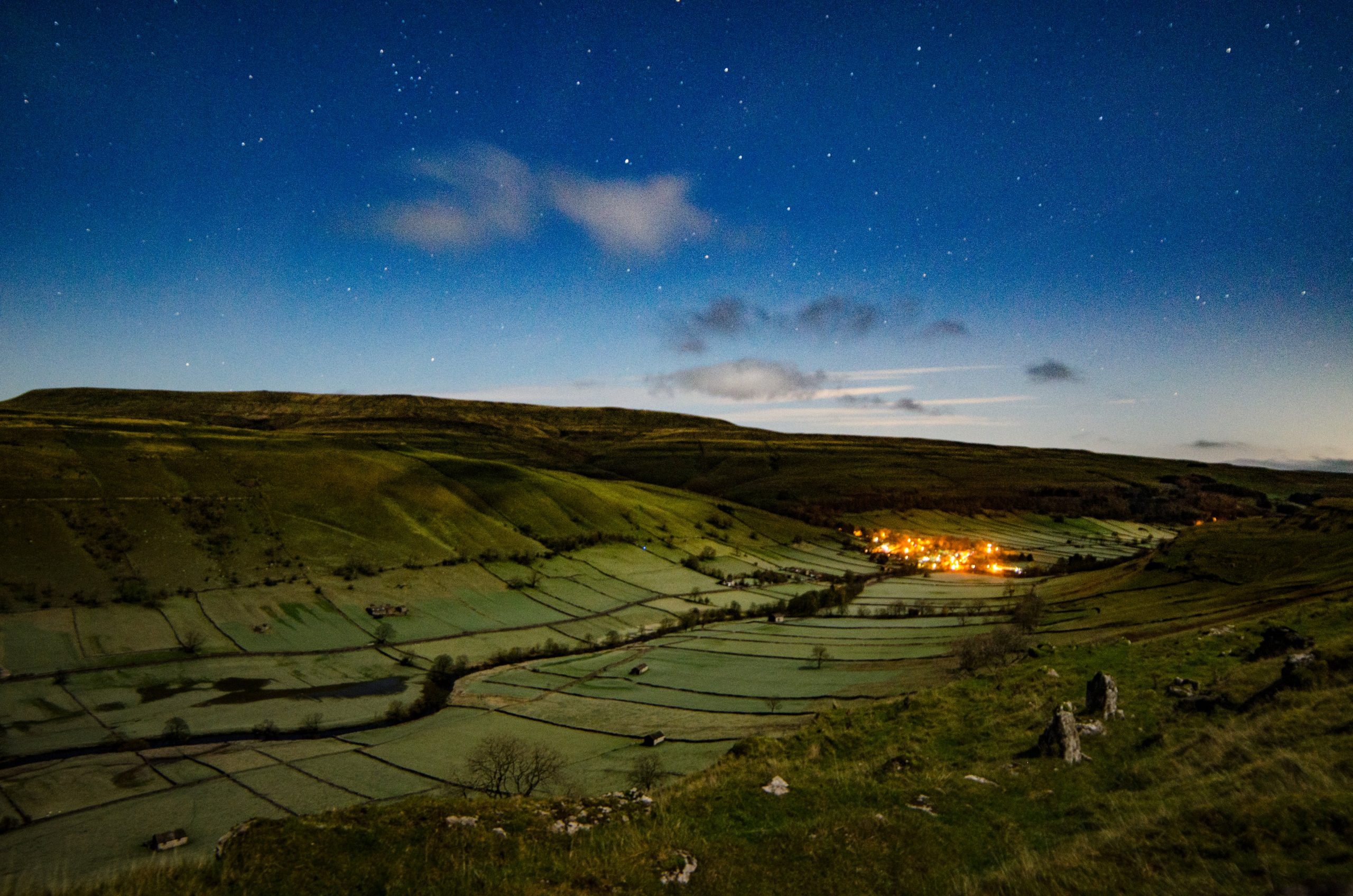
Upper Wharfedale Primary Federation School District Yorkshire Dales

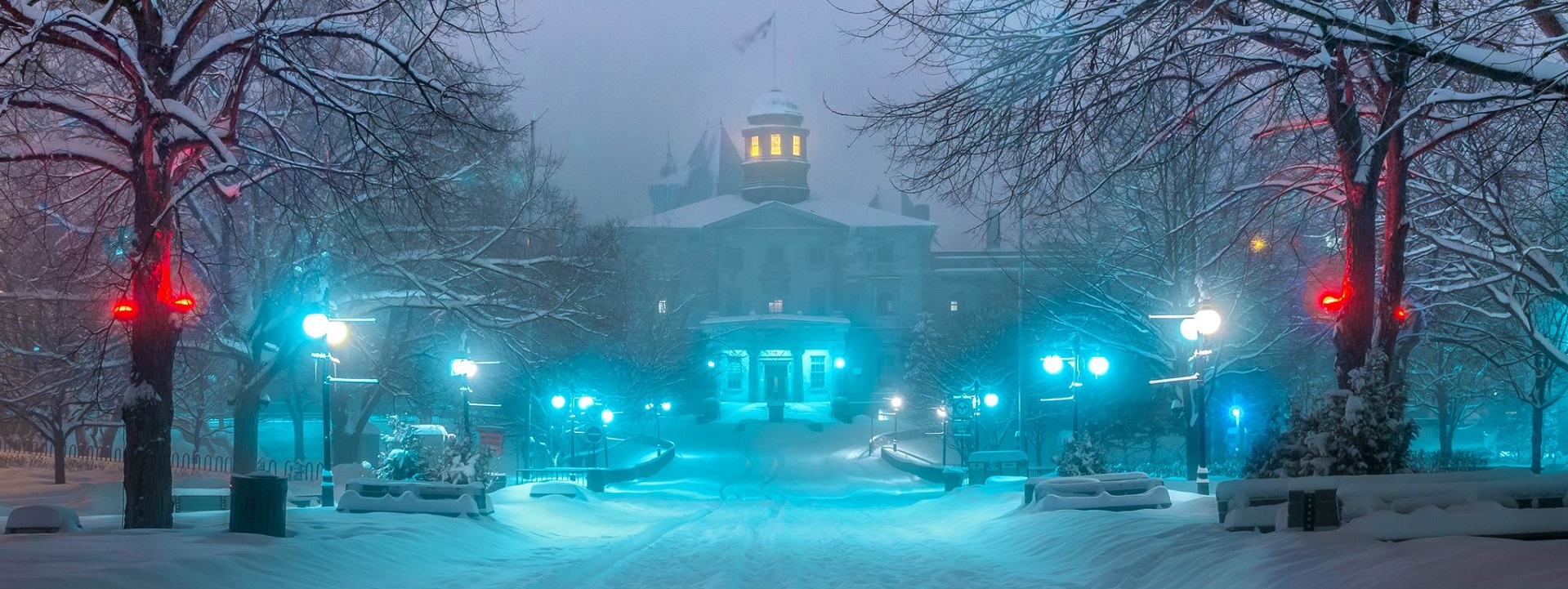
McGill University: Before electricity, streets were filled with gas lights

Outdoor lighting systems can be owned and maintained by different entities depending on the context and location. Here are some examples of ownership regimes for outdoor lighting systems:

  1. Public ownership: In this case, outdoor lighting systems are owned and maintained by the local government or municipal authority. The lighting may be installed in public spaces such as parks, streets, and other outdoor areas for the safety and convenience of the public.
  2. Private ownership: Outdoor lighting systems may be owned by private individuals or organizations. For example, a business owner may install outdoor lighting for security or aesthetic reasons, or a homeowner may install outdoor lighting in their garden or yard.
  3. Co-owned: Outdoor lighting systems may be owned jointly by multiple entities. For example, a residential community may jointly own and maintain outdoor lighting in their shared spaces such as parking areas, community parks, or recreational facilities.
  4. Utility ownership: Outdoor lighting systems may be owned and maintained by utility companies such as electric or energy companies. These companies may install and maintain street lights or other lighting systems for the public good.
  5. Third-party ownership: In some cases, a third-party entity may own and maintain outdoor lighting systems on behalf of a public or private entity. For example, a lighting contractor may install and maintain lighting in a public park on behalf of a local government.

The ownership regime of an outdoor lighting system can have implications for issues such as installation, maintenance, and cost-sharing. It is important to consider ownership when designing and implementing outdoor lighting systems to ensure their long-term effectiveness and sustainability.

More

International Commission on Illumination

National Electrical Manufacturers Association

National Electrical Contractors Association

Representative Specifications

Sam Houston State University | Division 26500 Interior and Exterior Lighting

University of Delaware | Division 265100 Interior Lighting

Cal Poly University San Luis Obispo | Division 265100 Interior Lighting

Relevant Research

Enhancing the Sustainability of Outdoor Floodlighting for Cultural Heritage Buildings

The Performance and Impact of LED Floodlights in an Outdoor Electrical Substation During Misty Weather Conditions

Replacement of HPS Luminaires with LED Luminaires for the Lighting Requirements of an Outdoor Electrical Substation


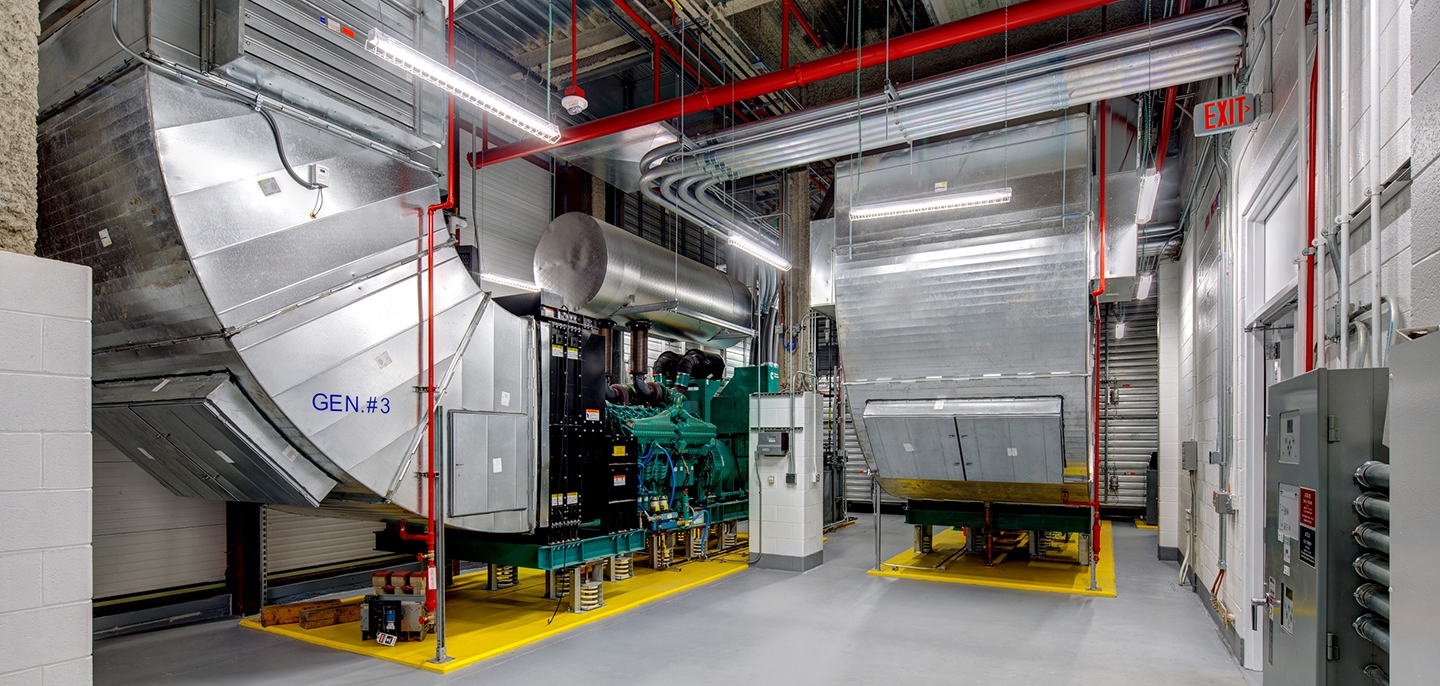
Emergency and Standby Power Systems

Sporty weather season in the United States inspires a revisit of best practice for designing, building and maintaining the systems that provide limited electricity when the primary source fails. We have been active in the development of this and related titles for decades and have presented several proposals to the technical committee. Public input for the 2028 Revision will be received until June 4, 2025.

Electrical building, World’s Columbian Exposition, Chicago (1892)

FREE ACCESS to the 2022 Edition of NFPA 110 Standard for Emergency and Standby Power Systems

The scope of NFPA 110 and NFPA 111 are close coupled  and summarized below:

NFPA 110 Standard for Emergency and Standby Power Systems. This standard contains requirements covering the performance of emergency and standby power systems providing an alternate source of electrical power to loads in buildings and facilities in the event that the primary power source fails.

NFPA 111 Stored Electrical Energy for Emergency and Standby Power Systems. This standard shall cover performance requirements for stored electrical energy systems providing an alternate source of electrical power in buildings and facilities in the event that the normal electrical power source fails.

FIRST DRAFT AGENDA | August 2022

Public comment on the First Draft of the 2025 Edition will be received until May 31, 2023.  

We have advocated in this standard since 1996 and still use the original University of Michigan Workspace; though those workspaces must be upgraded to the new Google Sites during 2021.  We provide a link to the Standards Michigan Workspace and invite you to join any of our electrical colloquia which are hosted jointly with the IEEE Education & Healthcare Facilities Committee four times per month in European and American time zones.  See our CALENDAR for the next online meeting; open to everyone.

Issue: [96-04]

Category: Electrical, Risk

Contact: Mike Anthony, Robert Arno, Neal Dowling, Jim Harvey, Robert Schuerger, Mike Hiler

More

ITM of Emergency Power Systems

Planning for Higher Education Journal: Revisiting the Campus Power Dilemma: A Case Study

Tom is a long-time colleague and friend so Mike happily posts his content:

454c656374726f746563686e6f6c6f6779

Infotech 200

INCITS: InterNational Committee for Information Technology StandardsExecutive Board

Today we break down the literature for building, maintaining and supporting the computing infrastructure of education communities.  We use the term “infotech” gingerly to explain action for a  broad span of technologies that encompass enterprise servers and software, wireless and wired networks, campus phone networks, and desktop computers that provide administrative services and career tech video production.   The private sector has moved at light speed to respond to the circumstances of the pandemic; so have vertical incumbents evolving their business models to seek conformance revenue in this plasma-hot domain.

In 2023 we began breaking down the topic accordingly:

Infotech 100: Survey of the principal standards developing organizations whose catalogs are incorporated by reference into federal and state legislation.  Revision cycles.

Infotech 200: Campus computing facilities for research and education

Infotech 300: Communication networks, wired and unwired at the demarcation point; crucial for defining the responsibilities and boundaries between the service provider and the customer.

Infotech 400:  System, middleware and software — Python, Fortran 2018, Apache, Julia, C++ and others

Infotech 300

We collaborate closely with the IEEE Education and Healthcare Electrotechnology Committee.  Use the login credentials at the upper right of our home page.


Internet of Small Things

Freely Available ICT Standards

Outdoor Deicing & Snow Melting

Electrical Safety

“Snow at Argenteuil” | Claude Monet (1875)

Today our focus turns to outdoor electric deicing and snow melting wiring systems identified as suitable for the environment and installed in accordance with the manufacturer’s instructions.  They work silently to keep snow load from caving in roofs and icicles falling from gutters onto pedestrian pathways.

While the voltage and ampere requirement of the product itself is a known characteristic, the characteristic 0f the wiring pathway — voltage, ampere, grounding, short circuit, disconnect and control — is relatively more complicated and worthy of our attention.   Articles 426-427 of the National Electrical Code is the relevant part of the NEC

Free Access 2023 National Electrical Code

Insight into the ideas running through technical committee deliberations is provided by a review of Panel 17 transcripts:

2023 NEC Panel 17 Public Input Report (633 pages)

2023 NEC Panel 17 Public Comment Report (190 pages)

We hold Articles 427 in the middle of our priority ranking for the 2023 NEC.   We find that the more difficult issues for this technology is the determination of which trade specifies these systems — architectural, electrical, or mechanical; covered in previous posts.   Instead, most of our time will be spent getting IEEE consensus products in step with it, specifically ANSI/IEEE 515 and IEEE 844/CSA 293.

Comments on the Second Draft of the 2026 NEC will be received until April 18th.

454c656374726f746563686e6f6c6f6779

We collaborate with the IEEE Education & Healthcare Facility Committee which meets online 4 times per month in European and American time zones.  Since a great deal of the technical basis for the NEC originates with the IEEE we will also collaborate with IEEE Standards Coordinating Committee 18 whose members are charged by the IEEE Standards Association to coordinate NFPA and IEEE consensus products.

https://websites.umich.edu/~jensenl/visuals/album/lawquad/https://standardsmichigan.com/indiana/

Issue: [19-151]

Category: Electrical, Energy

Colleagues: Mike Anthony, Jim Harvey, Kane Howard, Jose Meijer


LEARN MORE:

IEEE Standard for the Testing, Design, Installation, and Maintenance of Electrical Resistance Heat Tracing for Commercial Applications

844.2/CSA C293.2-2017 – IEEE/CSA Standard for Skin Effect Trace Heating of Pipelines, Vessels, Equipment, and Structures–Application Guide for Design, Installation, Testing, Commissioning, and Maintenance


Microgrids

We were doing microgrids before microgrids were cool.  We did not call our school boiler plants or campus district energy systems “microgrids” until the EPACT flooded the electrical power industry with a new cadre of policy makers, regulators and litigators and we were forced into a vocabulary upgrade.

National Electrical Code Article 705 Interconnected Power Sources: Second Draft Transcript

We resume our engagement (and advocacy) for a few concepts which have tracked in the NFPA and IEEE standards development catalogs since the early 1990’s:

  1. Nudge development of the National Electrical Code to recognize that loss of electrical power presents (i.e. reliability, availability) a greater hazard, and more frequent hazard, than wiring fire hazard.
  2. The application of stand-alone AC to DC inverters in the 100 – 1000 watt range to convert DC power from an automobile to households.  A portable vehicle to home 120 VAC outlet strip is effectively a “microgrid” and costs less than $100 not including the extension cords.  
  3. Expansion of the hybrid vehicle fittings with a built-in inverter to provide power to households in the 1000-2000 watt range.  In contemporary parlance this arrangement is now referred to as “vehicle to home” (different than vehicle to grid)
  4. Relaxation of NEC prohibitions against the sharing of residential backup generators and electric storage equipment between two or more separate houses.  This can reduce cost significantly.  Earthing, ground fault, disconnect, overcurrent protection can easily be solved if the vertical incumbents we describe in our ABOUT stop voting against us in the National Electrical Code
  5. Stepping up the backup power systems that maintain the needed power for neighborhood internet access.  Not all students and faculty live on campus.  
  6. Policy makers and regulators should think in terms of setting standards for 10-day, 30-day and 90-day survivability contingencies to limit civil unrest.
  7. Preservation of contingencies with a judicious combination of absorption and electric chillers no matter what the electric rate.  During a major regional contingency power is priceless. 
  8. Promote a “cultural change” among specifiers and university design guideline writers to permit use of aluminum wiring which cost 1/3 less than copper wiring.   Use of aluminum wiring for backup “swing feeders” at medium voltage reduces the cost of an additional contingency by 2/3rds.
  9. Reduce National Electrical Code circuit sizing rules so that distribution transformers within buildings can be reduced, thereby reducing material, heat waste and the reduction of wet-stacking in backup generators which reduces reliability.

National Electrical Definitions

This should be enough for an hour.  We continue the conversation 4 times monthly with the IEEE Education & Healthcare Facilities Committee.  Feel free to join us today with the login credentials at the upper right of our home page.

University of Delaware Vehicle to Grid Research

P2030.12/D1.4, Jun 2022 – IEEE Draft Guide for the Design of Microgrid Protection Systems

A Review on Microgrids’ Challenges & Perspectives

Long-term experience of DC-microgrid operation

P2030.10/D12, Apr 2021 – IEEE Approved Draft Standard for DC Microgrids for Rural and Remote Electricity Access Applications

Hierarchical Network Management of Industrial DC-Microgrids

Grid-Connected Microgrid Battery Energy Storage Systems


Overview of Technical Specifications for Grid-Connected Microgrid Battery Energy Storage Systems

A. Rahman Khalid, et. al

Abstract:  Increasing distributed topology design implementations, uncertainties due to solar photovoltaic systems generation intermittencies, and decreasing battery costs, have shifted the direction towards integration of battery energy storage systems (BESSs) with photovoltaic systems to form renewable microgrids (MGs). Specific benefits include, but are not limited to, seamless switching and islanding operations during outages and ancillary grid services. The evolution of battery chemistries and other components has also further enhanced practicality; however, developing these multifaceted MGs involves complexity in the design process. Consequently, stakeholders rely on connection standards and operational requirements to guarantee reliable and safe grid-connected operations.

This paper presents a technical overview of battery system architecture variations, benchmark requirements, integration challenges, guidelines for BESS design and interconnection, grid codes and standards, power conversion topologies, and operational grid services. In addition, a comprehensive review of the control strategies for battery equalization, energy management systems, communication, control of multiple BESSs, as well as a discussion on protection blinding and intentional islanding using BESSs is also provided. Finally, a discussion of the islanded and black start operation results for time-based analysis and standard validation of a 3MW/9MWh BESS in a grid-connected MG at the Florida International University (FIU) Engineering Campus is presented.

Pathways 100

Today we break down the literature for exterior and interior pathways in education communities.   We limit the term “pathway” to refer to human pathways (as in egress and ingress paths); not wiring or piping pathways.   Maximum distance of travel from within a building and along an egress path toward safety is a core topic in building safety literature.  Starting 2023 we will break down coverage of subject catalogs and bibliographies:

Pathways 100: Survey of all titles for both the exterior and interior environments

Pathways 200: Review of codes, standards and guidelines for building interiors

Related recent research:

Hallways and stairways lighting system cost reduction

The research on circadian rhythm parameters testing of lighting quality in classrooms

Research and discussion on classroom blackboard lighting

Pathways 300: Review of codes, standards and guidelines campus environment outside the buildings; all seasons

Pathways 500: Review of noteworthy litigation.   Campus pathways are rich in possibilities for legal actions so we will refresh our understanding of the landmark decisions.

This breakdown is “somewhat” inspired by recent action by ASHRAE International to expand the scope of ASHRAE 90.1 to heating and cooling environments outside buildings.   The new title of ASHRAE 901. includes the word “Site”, which is another way of saying “the world” outside buildings.   Standards Michigan commented on the consequences of doing this in the proposal stages in 2020-2021.


The topic involves titles from many standards setting organizations; among them:

American National Standards Institute

C136-series for street lighting

International Code Council (accessible and useable ingress and egress entrances, paths and exits)

International Building Code: Chapter 10 Means of Egress

ICC A117 Accessibility Meeting Agenda December 15 2022 (Pathways)

ICC A117.1 2023 Meeting Calendar Accessible and Useable Buildings

Modifications for A117.1 12-1-2022 meeting

A117.1 11-17-2022 Agenda 20

A117.1 7-28-2022 Minutes 12

IFC §909.21.6 Proposal FS118-21 Pressurization systems for elevator pathways (now being discussed during the ICC Group A Committee Action Hearings in September)

American Society of Civil Engineers (roads, sidewalks)

American Society of Mechanical Engineers

ASME A17.1-2019: Safety Code for Elevators and Escalators

Elevators & Lifts

Institute of Electrical and Electronic Engineers (wayfinding along unofficial footpaths using the internet of small things)

Education & Healthcare Facility Electrotechnology

A BIM-Based Coordination Support System for Emergency Response

Computer Vision Method in Means of Egress Obstruction Detection

Recommended Practice for the Design of Power Systems Supplying Lighting Systems in Commercial and Industrial Facilities

Wayfinding: Current Research


National Electrical Manufacturers Association

National Fire Protection Association (fire protection for interior premises, fire truck routes, electric signage, security)

2021 NFPA 101 Life Safety Code

Chapter 3 Means of Egress

Chapter 12-13 Assembly Occupancies

Chapter 14-15 Educational Occupancies

Chapter 18-19 Health Care Occupancies

2022 Standard for Emergency and Standby Power Systems

Chapter 5 – Emergency Power Supply: Energy Sources, Converters and Accessories

ASTM International Committee C09 on Concrete and Concrete Aggregates

Standard Terminology Relating to Concrete and Concrete Aggregates

…And about 20 others.

We might venture onto the minefield of sensitivities about signage: too much, too many, too big, too small?  There are signs everywhere in academia.

Many titles in the foregoing list are inspired by legal requirements of the Americans with Disabilities Act administered by the US Department of Justice

As usual, we’ll only have time to identify the titles and concepts in motion and set up a separate markup session.   Open to everyone; use the login credentials at the upper right of our home page.

Texas Tech


MORE:

International Building Code §3104 Pedestrian Walkways and Tunnels 

2023 National Electrical Code Article 420 — Luminaires, Lampholders, and Lamps

2023 National Electrical Code Article 600 – Electric Signs and Outline Lighting

2023 National Electrical Code Article 620 — Elevators, Dumbwaiters, Escalators, Moving Walks, Lifts and Chairlifts

Bibliography

Shaping the Sidewalk Experience

The 8 Principles of Sidewalks

Federal Highway Administration University Course on Bicycle and Pedestrian Transportation

“The Via Appia: A Case Study in the Political Geography of Imperialism” Hannah Friedman.  This article, published in the Journal of Historical Geography in 2011, examines the Appian Way as a product of Roman imperialism and a reflection of Roman attitudes toward the landscape and its inhabitants. The author draws on both textual and archaeological evidence to explore the road’s impact on the regions it passed through.

“The Appian Way: The Road that Built the Roman Empire” by Richard Talbert – Cambridge University Press 2012.  A a comprehensive study of the Appian Way and its significance to the Roman Empire. The author draws on a wide range of archaeological and historical evidence to explore the road’s construction, use, and legacy.


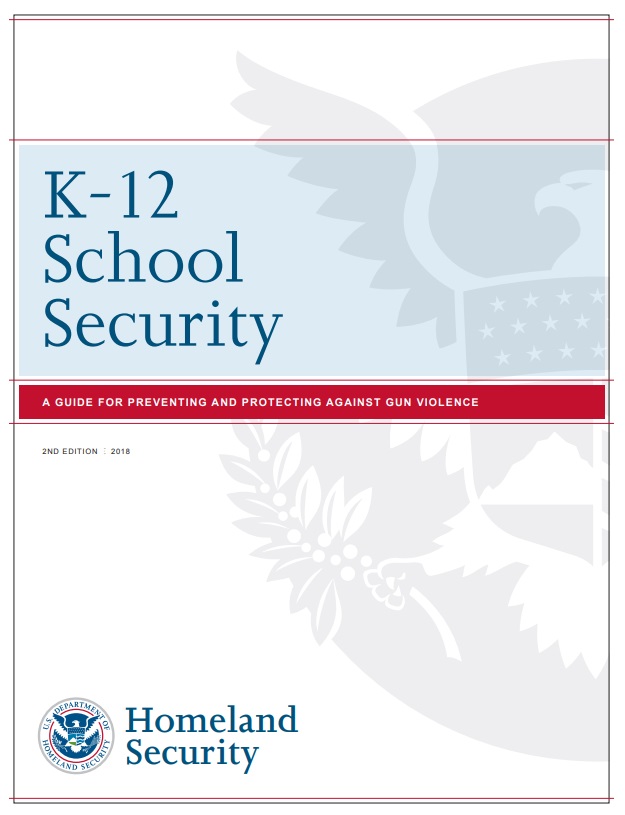
K-12 School Security

CLICK ON IMAGE (Note that the link may move around quite a bit)


Clery Act

Solar (Winter)

Sie strahlt vor Freude über ihre Auszeichnung – TH-Alumna Melanie Klaus. Für ihre Bachelorarbeit im Bereich Erneuerbare Energien wurde sie vom Solarenergieförderverein Bayern geehrt. In ihrer Bachelorarbeit im Studiengang Elektro- und Informationstechnik untersuchte sie das Zusammenspiel von Wind- und Solarenergie und den Nutzen, der sich hieraus für die regenerative Energieerzeugung erzielen lässt. Untersucht wurde also die Nutzung der natürlichen Kombination von Wind und Sonne für die Energieerzeugung. Um die Rentabilität dieser Einspeisekombination zu ermitteln, hat Melanie Klaus ein Software-Tool entwickelt, welches zur Planung und Simulation abgestimmter Photovoltaik-Wind-Kombinationen dient und bereits für die Errichtung einer Photovoltaik-Anlage zu einem Windpark eingesetzt wird.

Starting 2023 we separated our coverage of solar energy standards from our standing Electrical and Energy colloquia and placed emphasis on seasonal life cycle returns.   We start with the following titles

IEC TC 82 Solar photovoltaic energy systems

Underwriters Laboratories 1703 PV Module Certification

ASTM E772 Standard Terminology of Solar Energy Conversion

IEEE 1562 Guide for Array and Battery Sizing in Stand-Alone Photovoltaic Systems

NEMA Solar Photovoltaic Council

NECA 412 Standard for Installing and Maintaining Photovoltaic Power Systems

NFPA 70 Articles 690-691

NFPA 70 Articles 705 & 855

International Code Council Section 1607 Photovoltaic panels or modules

ASHRAE International: 90.1 Building Energy Code & 189.1 Green Energy Code

Time permitting: Example design specification and construction contract.

"Education is simply the soul of a society as it passes from one generation to another" - G.K. Chesterton

Other standards developers and publishers are also present in this domain but this list is where we will start given that we only have an hour.   Join us today at 16:00 with the login credentials at the upper right of our home page.

Readings:

What are the hidden costs of solar panels?

Do We Have Enough Silver, Copper, And Other Materials To Keep Up With The Growth Of Solar?

Mining Raw Materials for Solar Panels: Problems and Solutions

Grid-Connected Microgrid Battery Energy Storage Systems

Claude

This content is accessible to paid subscribers. To view it please enter your password below or send mike@standardsmichigan.com a request for subscription details.

Layout mode
Predefined Skins
Custom Colors
Choose your skin color
Patterns Background
Images Background
Standards Michigan
error: Content is protected !!
Skip to content