
“The Fruits of Citizenship: African Americans, Military Service, and the Cause of Cuba Libre”
- Home Page 252



The Year Ahead: 2024
“Chance favors the prepared mind.”
— Louis Pasteur
Welcome. Join us January 2, 2024 at 16:00 UTC. Topics:
- Colleagues
- Corporate information: Security, Fair-Use, Copyright
- Educational Mission
- 2023 Log of comments
- Results
- 2024 Priority catalogs and titles:
–
NFPA 70 2026 National Electrical Code
NFPA 99 2024 Health Care Facilities Code
IEEE C2 2023 National Electrical Safety Code
IEEE 1547 Interconnecting Distributed Resources with Electric Power Systems
2022 IEEE 2800 Standard for Interconnection and Interoperability of Inverter Based Resources Interconnecting with Associated Transmission Electric Power Systems
IEEE 3001.9 Recommended Practice for Industrial Lighting Systems
International Code Council, ASHRAE International, ASME and ASCE catalog titles
(This page to be re-formatted into a separate document)
- Publications and citations
- Status of roll-out to 49 other US states
- Recommendations to Producers and Conformance organizations
- Website and Social Media adjustments and upgrades
- Preference for content, content speed over page and post formatting.
Use the login credentials at the upper right of our home page.

As apologists for active involvement in the US standards system we owe no blind allegiance any educational settlement or the domain occupied by vertical incumbers; rather, we mean that we are actively engaged in providing explanations, justifications for maintaining them as centers of civilization.

Standards Michigan Offices Ann Arbor
Fintech 600

“Poker Game” 1894 | Cassius Marcellus Coolidge
Educational settlements, particularly large colleges and universities, are among the largest assets owned by a government or, in the case of so-called non-government settlements (– i.e. Notre Dame, Harvard, Grand Canyon University, etc.) by non-profit corporations. The “apartness” of these settlements are distinguished by buildings old and new–often hundreds of them–made a coherent operating whole by substantial infrastructure, usually integrated into a host community.
Today we summarize our findings, our involvement over the year past, leaving time to contemplate where our priorities should lie for the year ahead. Finance generally, is a large domain, and not in our wheelhouse, but to fully understand our own work, we need to sustain sensitivity to money flow. Use the login credentials at the upper right of our home page.
Smart

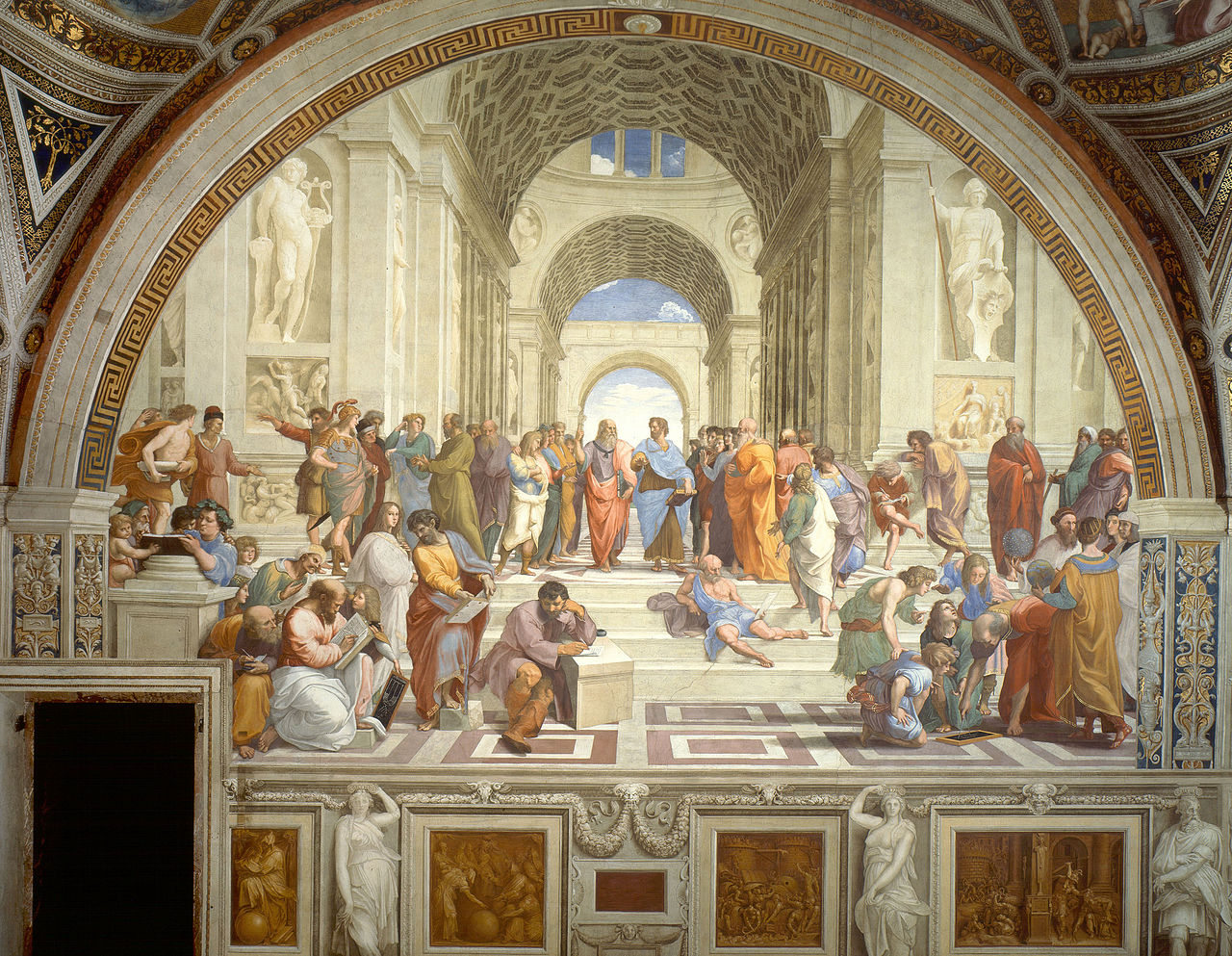
Allegory of Wisdom and Strength
The term “smart” is often associated with certain technologies, particularly within the context of blockchain and cryptocurrency, because it is used to describe specific features or capabilities that go beyond simple transactions or record-keeping. Let’s explore why the term “smart” appears in these contexts:
- Smart Contracts:
- Definition: Smart contracts are self-executing contracts with the terms of the agreement directly written into code. They automatically enforce and execute the terms of a contract when predefined conditions are met.
- Significance: The term “smart” in smart contracts reflects their ability to automate and streamline contract execution. These contracts are encoded with logic, allowing them to execute without the need for intermediaries, such as legal entities or enforcement agencies. Ethereum, a popular blockchain platform, introduced the concept of smart contracts.
- Smart Transactions:
- Definition: In the context of cryptocurrencies and blockchain, the term “smart transactions” may refer to transactions that involve programmable features or conditions.
- Significance: Smart transactions can include features such as multi-signature authentication, time locks, and conditional payments. These features add sophistication and flexibility to transactions, allowing for more complex and customizable financial arrangements.
- Smart Assets:
- Definition: Smart assets refer to digital or tokenized assets that can represent ownership or rights and have programmable features.
- Significance: These assets can have built-in rules and logic, allowing them to interact with smart contracts and other elements of the blockchain ecosystem. For example, a smart asset on a blockchain may have rules governing how it can be transferred or traded.
- Smart Technology Integration:
- Integration with IoT and AI: In broader contexts, the term “smart” is also used when discussing the integration of blockchain with other emerging technologies such as the Internet of Things (IoT) and Artificial Intelligence (AI). This integration enables more intelligent and automated systems.
The term “smart” emphasizes the programmability, automation, and sophistication that these technologies bring to the table. It signifies the ability to embed logic and conditions into transactions, contracts, and assets, leading to more efficient, secure, and versatile applications on blockchain networks.
Today we review titles in catalogs of best practice literature with claims about a component, system or practice of “smartness” evident in advanced features involving connectivity, automation and adaptation. We limit our exploration to the catalogs of the accredited standards developers listed below:
American Society of Civil Engineers
American Society of Mechanical Engineers
ASHRAE International
ASTM International
Institute of Electrical and Electronic Engineers
International Electrotechnical Commission
International Standardization Association
National Fire Protection Association
Underwriters Laboratories
Let’s explore why the term “smart” appears in these contexts; keeping in mind that today’s time will not be spent on artificial intelligence “standards”; if they exist at all. That domain is far from stabilized. Use the login credentials at the upper right of our home page.

Smart Contracts in Blockchain Technology

International Institute of Information Technology, Bhubaneswar
An Overview of Smart Contract and Use Cases in Blockchain Technology
Abstract. In the last decade blockchain technology become mainstream research topic because of its decentralized, peer to peer transaction, distributed consensus, and anonymity properties. The blockchain technology overshadows regulatory problem and technical challenges. A smart contract is a set of programs which are self-verifying, self-executing and tamper resistant. Smart contract with the integration of blockchain technology capable of doing a task in real time with low cost and provide a greater degree of security. This paper firstly, explains the various components and working principle of smart contract. Secondly, identify and analyse the various use cases of smart contract along with the advantage of using smart contract in blockchain application. Lastly, the paper concludes with challenges lie in implementing smart contract the future real-life scenario.
CLICK HERE to order complete paper
Boxing Day
"Boxing Day" 1836 | George Cruikshank was a British caricaturist and book illustrator for Charles Dickens.https://t.co/G0dGE5zSA0https://t.co/UH1Os8NIJI pic.twitter.com/pr9adwGkco
— Standards Michigan (@StandardsMich) December 26, 2023





Governance & Accountability of Organizations

The London School of Economics
A relatively new International Standardization Organization committee is developing a consensus product that sets the broad contours of standardization in the field of governance relating to aspects of direction, control and accountability of organizations. The foremost aim of international standardization is to facilitate the exchange of goods and services through the elimination of technical barriers to trade. We find technical barriers to trade (TBT) a growing discussion in the education facility industry; especially in research universities that deal with highly specialized products in laboratories. We see TBT issues show up purchasing regulations for federally-sponsored projects hosted on federally-sponsored facilities.
The strategic business plan of ISO/TC 309 is linked below:
Executive Summary ISO Technical Committee 309 (ISO/TC 309)
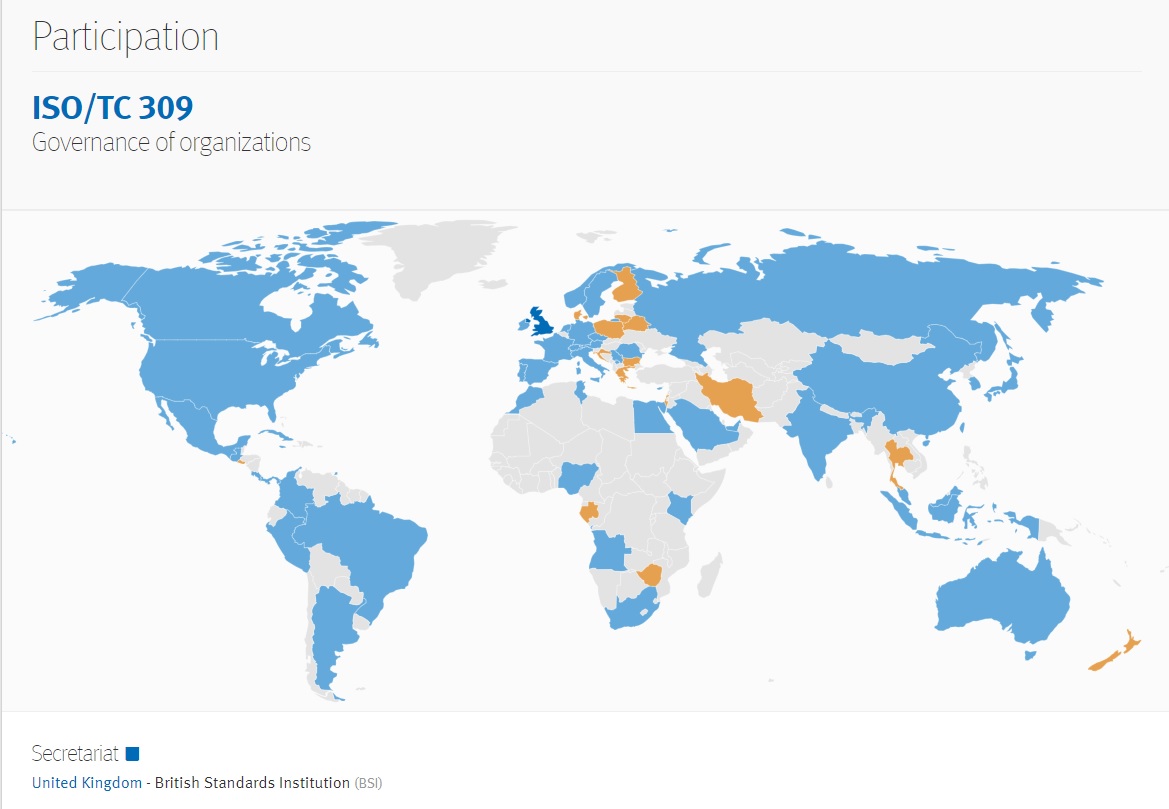
The US organization charged by the American National Standards Institute with administering the US Technical Advisory Group (US TAG) is the InterNational Committee for Information Technology Standards (INCITS). The INCITS committee will operate under the ANSI-accredited procedures for US TAGS. Click here for more information about joining the US TAG or other INCITS committees. Jennifer Garner is listed as the contact person (jgarner@itic.org).
We do not find any public commenting opportunities on this project at the moment — January of every year tends to be a slow time in the standards world — but continue to monitor it through INCITS. We keep this committee’s work products on our International Standards monthly teleconference. See our CALENDAR for the next online meeting; open to everyone.

Issue: [18-157]
Category: Administration & Management, International, Finance, Academics, Public Policy
Colleagues: Mike Anthony, Christine Fischer
Thomas Hobbes was a political philosopher who advocated for **absolute sovereignty** as the only way to ensure peace and security in a commonwealth¹². He believed that people in their natural state were in a constant state of war, and that they needed to surrender their rights and freedoms to a strong ruler who could protect them from violence and chaos³⁴. Therefore, Hobbes wanted **larger** government control, as he viewed government primarily as a device for ensuring collective security¹. He justified this by arguing that people consented to the authority of the sovereign in exchange for their safety⁵..
Thomas Hobbes’s philosophy of government is relevant today because it addresses some of the fundamental questions and challenges that modern societies face, such as:
- How to justify and limit the authority of the state over its citizens?
- How to balance the rights and duties of individuals in a social contract?
- How to deal with the threats of violence, anarchy, and civil war?
- How to promote peace, security, and cooperation among nations?
Hobbes’s answers to these questions may not be the same as ours, but they can stimulate our thinking and help us evaluate our own assumptions and arguments. Hobbes’s Leviathan is widely regarded as one of the most influential works of political philosophy in the history of Western thought, and it has inspired many thinkers and movements across different disciplines and ideologies.
New update alert! The 2022 update to the Trademark Assignment Dataset is now available online. Find 1.29 million trademark assignments, involving 2.28 million unique trademark properties issued by the USPTO between March 1952 and January 2023: https://t.co/njrDAbSpwB pic.twitter.com/GkAXrHoQ9T
— USPTO (@uspto) July 13, 2023
Standards Michigan Group, LLC
455 East Eisenhower Parkway, Suite 300
Ann Arbor, MI 48108 USA
888-748-3670
DIRECTIONS
 |
 |
|
 |
 |
|
 |
 |