Category Archives: @NFPA

Loading
loading...

Modular Office Furniture Wiring

2026 NEC CMP-18 Public Input Report

CMP-18 Second Draft Report

“Office in a Small City” (1953) / Edward Hopper

Modular furniture systems with integral power and telecommunication fittings require attention to power and digital pathways.   “Modular systems furniture” is a generic term for bundles of panels, worksurfaces, shelves, and other items sold by a single manufacturer as a package for furnishing offices.  The modular furniture system environment is characterized by close proximity to electrical energy.   Where there is electrical energy there are concerns for shock and fire safety.

Fire safety considerations appear in NFPA 70 National Electrical Code (NEC)– generally in Articles 210 (Branch Circuits), Article 220 (Branch Circuit, Feeder and Service Load Calculations) — and with more specific safety considerations appearing in Articles 604 (Manufactured Wiring Systems) and Article 605 (Office Furnishings).   The current edition of the National Electrical Code is linked below:

Public Access 2023 National Electrical Code

Over the past 30-odd years modular furniture manufacturers have worked out a lot of the bugs in products; making it easier for furniture contractors to deliver a safer and more effective installation.  What remains are site-specific conditions — such as lighting load, current draw of space heaters and personal air conditioners through the furniture power pathway — that must be reckoned with.   A sample of other considerations:

  • Harmonic heating of the furniture pathway caused by non-linear, harmonic load
  • The risk of double-phasing when circuit breakers are joined with handle ties back at the panelboard and share a neutral
  • Any lighting equipment used with the partitions must have of properly sized cord no more than 9 ft long
  • Modularity in power tap cords (“whips’) between furniture raceways and the first gathering point

There are other safety and sustainability issues related to USB outlets, and data/voice outlets[2] that we will cover in another post and in our collaborations with IEEE SCC-18 and the IEEE Education & Healthcare Facilities Committee (IEEE E&H).

Seneca College / Toronto

We find office wiring a relatively lively “promontary” in safety and sustainability circles.   The transcript of debate among interior wiring experts is always a good place to listen in on the technical discussion; linked below:

Public Input Report – 2023 National Electrical Code Panel 7 

Public Input Report – 2023 National Electrical Code Panel 18

We find manufactured wiring concepts tracking that effects office occupancies for all industries.  Market incumbents continue advocacy for more ground fault and tamper-resistant receptacles in day care and gymnasium.

A more significant debate tracks in Chapter 2 — related to office modular furniture wiring because electrical load calculations determine how designers specify branch circuits for all occupancy classifications present in education communities (which is nearly every occupancy type defined in the International Building Code):

Public Input Report – 2023 National Electrical Code Panel 2

,Standards Michigan, beginning with its inspiration in the original University of Michigan standards advocacy enterprises, has a long and storied engagement with Chapter 2 of the NEC covered here and also academic literature and also in research sponsored by NFPA’s Fire Protection Research Foundation.

We always encourage our workpoint experts in the thousands of electrical and telecommunication units in the education and healthcare facilities industry to participate directly in the NFPA Code Development process (CLICK HERE to join a committee).

Since both the National Electrical Code and the National Electrical Safety Code revision cycles are roughly coincident in 2021 we working on electrical power issues every day, collaborating with the IEEE E&H Committee.   Online meetings are open to everyone.


Issue: [16-102]

Category: Electrical, Interior Furnishings, Telecommunications

Colleagues: Mike Anthony, Jim Harvey, Massimo Mitolo


[1]  Rightsizing electrical power systems in large commercial facilities

[2] Commercial Building Telecommunications Cabling Standard


More


Luminaires, Lampholders, and Lamps

Best wiring safety practice for the illumination of educational settlement occupancies is scattered throughout the National Electrical Code with primary consideration for wiring fire safety:

  • Article 410 – Covers the installation of luminaires (fixtures), lampholders, and lamps, including requirements for wiring, grounding, and support.
  • Article 210 – Covers branch circuit requirements, including those for lighting circuits in dwellings and commercial buildings.
  • Article 220 – Provides guidelines for calculating lighting loads.
  • Article 225 – Addresses outside lighting installations.
  • Article 240 – Covers overcurrent protection for lighting circuits.
  • Article 250 – Deals with grounding and bonding, which is essential for lighting circuits.
  • Article 300 – Covers general wiring methods that apply to lighting circuits.

We have done a fair amount of work on this topic over the years, including writing the chapter on campus outdoor lighting for the soon-to-be-released IEEE 3001.9 Recommended Practice for the Design of Power Systems Supplying Lighting Systems in Commercial and Industrial Facilities.   

For our meeting please refer to the workspace we have set up for the 2026 Revision of the NEC:

2026 National Electrical Code Workspace

We will pick through specifics in the transcripts of Code Making Panels 10 and 18.


International Building Code: Chapter 12 Section 1204 Lighting

Standard for Parking Structures

Tallinna Ülikool | University of Estonia | Parking place art


Parking — the lack of it, the cost of it — has always been a sensitive issue in education communities.  Into the mix add the expansion of electric vehicle charging stations, ride sharing, and micromobility.   Their construction characteristics make them ideal locations for storage enterprises and emergency generators.  NFPA 88A Standard for Parking Structures asserts best practice of a small but important part of it; the construction and protection of, as well as the control of hazards in, open and enclosed parking structures. Things get complicated with other occupancy classes merge with it; especially so when electric vehicle battery fires present another order of magnitude of risk.

The 2023 Edition (recently released) can be read in the link below:

FREE ACCESS: Standard for Parking Structures

Insight into the ideas that are in play can be tracked in the transcripts linked below:

First Draft Meeting Agenda

Second Draft Meeting Agenda

Note the concern for the overlap and space between this title and passages in International Code Council catalog.  We limit our concern for fire safety and more education communities build high rise student accommodation with integral parking structures.   The bibliography is extensive (References Pages 92 – 99):

The 2027 edition of this standard is open for public input until June 4, 2024.  CLICK HERE to get started on your own.

We hold this title on the standing agenda of our Prometheus and Mobility colloquium.  See our CALENDAR for the next online meeting; open to everyone.


Issue: [17-235]

Category: Parking & Transportation, Space Planning, Facility Asset Management

Colleagues: Mike Anthony, Josh Elvove. Joe DeRosier

Gallery: Electric Vehicle Fire Risk

Code ignis MMXXVII

Winter Holiday Fire Facts

NFPA Fire Protection Systems Catalog (Lorem ipsum)

Crosswalk: NFPA Fire Code and ICC International Fire Code

“Prometheus creating Man in the presence of Athena” 1802 Jean-Simon Berthélemy

Free public access to the current edition of NFPA’s parent fire safety document is linked below:

2024 NFPA 1 Fire Code 

We attend to occupancy-specific chapters (listed below) because of their significant presence in education communities.

Chapter 25: Grandstands and Bleachers, Folding and Telescopic Seating, Tents and Membrane Structures (N.B)

Chapter 26: Laboratories Using Chemicals

Chapter 29: Parking Garages

Chapter 32: Motion Picture and Television Production Studio Soundstages and Approved Production Facilities

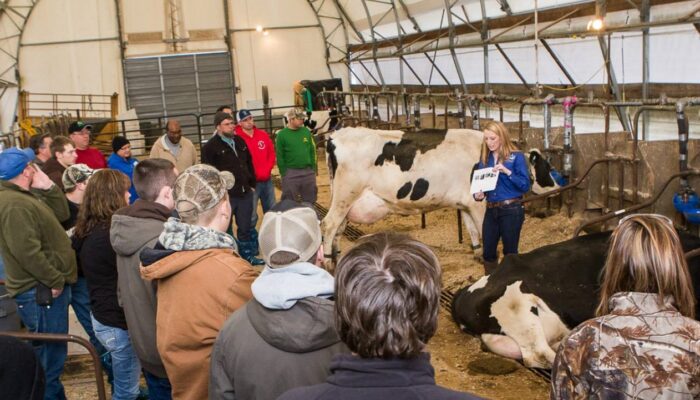
Chapter 35: Animal Housing Facilities

Chapter 36: Telecommunication Facilities and Information Technology Equipment

Chapter 50: Commercial Cooking

Chapter 52: Energy Storage Systems

Some of the chapters reference other titles such as NFPA 45 Standard of Fire Protection for Laboratories Using Chemicals which support risk management in other occupancies.  It is noteworthy that in the 2021 revision cycle of NFPA 1 there are relatively few new concepts regarding education facilities that have been proposed.   You get a sampling of the ideas in play from the transcript of public input for the 2024 edition.

Public Input Report (525 Pages)

Use search terms such as school, college, university, dormitory(ies), laboratory(ies), classroom, children, day-care, student, et cetera for a sense of the ideas in play.

Results of the 2027 First Draft meetings have not yet been posted as on November 9, 2024.  A preview of the ideas in play can be found in the meeting minutes of the several committees linked below:

Fire Code (FCC-AAC): First Draft Meeting Minutes

First Draft: Fundamentals of the Fire Code (FCC-FUN)

Special Equipment, Processes and Hazardous Materials (FCC-HAZ)

Building Systems and Special Occupancies (FCC-OCP)

Public comment on the First Draft of the 2027 revision will be received until April 24, 2025.

We include NFPA 1 on our periodic fire safety colloquia — identified by the mnemonic Prometheus — and march along peak interests.

Campus fire safety is domain relatively well-covered by other organizations such as the Center for Campus Fire Safety and HigherEd Safety so we place NFPA 1 in the middle of our priority tier.   We are more interested in the harmonization of NFPA 1 with a competitor title International Fire Code; published by the International Code Council; to wit:

International Fire Code:   The purpose of this code is to establish the minimum requirements consistent with nationally recognized good practice for proving a reasonable level of life safety and property protection from the hazards of fire, explosion or dangerous conditions in new and existing buildings, structures or premises and to provide a reasonable level of safety to fire fighters and emergency responders during emergency operations

Fire Code: The scope includes, but is not limited to, the following: (1) Inspection of permanent and temporary buildings, processes, equipment, systems, and other fire and related life safety situations (2) Investigation of fires, explosions, hazardous materials incidents, and other related emergency incidents (3) Review of construction plans, drawings, and specifications for life safety systems, fire protection systems, access, water supplies, processes, hazardous materials, and other fire and life safety issues (4) Fire and life safety education of fire brigades, employees, responsible parties, and the general public (5) Existing occupancies and conditions, the design and construction of new buildings, remodeling of existing buildings, and additions to existing buildings (6) Design, installation, alteration, modification, construction, maintenance, repairs, servicing, and testing of fire protection systems and equipment (7) Installation, use, storage, and handling of medical gas systems (8) Access requirements for fire department operations (9) Hazards from outside fires in vegetation, trash, building debris, and other materials (10) Regulation and control of special events including, but not limited to, assemblage of people, exhibits, trade shows, amusement parks, haunted houses, outdoor events, and other similar special temporary and permanent occupancies (11) Interior finish, decorations, furnishings, and other combustibles that contribute to fire spread, fire load, and smoke production (12) Storage, use, processing, handling, and on-site transportation of flammable and combustible gases, liquids, and solids (13) Storage, use, processing, handling, and on-site transportation of hazardous materials (14) Control of emergency operations and scenes (15) Conditions affecting fire fighter safety (16) Arrangement, design, construction, and alteration of new and existing means of egress

Note that both ICC and NFPA parent fire safety documents are developed on coincident 3-year cycles.


Issue: [18-90]

Category: Fire Safety, Public Safety

Colleagues: Mike Anthony,  Joshua W. Elvove, Joe DeRosier, Casey Grant

Interconnected Electric Power Production Sources “Microgrids”

“Landscape with a Farm House and Windmill” (1680) / Jacob Isaaksz van Ruisdael

We have always taken a forward-looking approach to the National Electrical Code (NEC) because there is sufficient supply of NEC instructors and inspectors and not enough subject matter experts driving user-interest ideas into it.  Today we approach the parts of the 2023 NEC that cover wiring safety for microgrid systems; a relatively new term of art that appropriates safety and sustainability concepts that have existed in electrotechnology energy systems for decades.

Turn to Part II of Article 705 Interconnected Electric Power Production Sources:

Free Access 2023 National Electrical Code

You will notice that microgrid wiring safety is a relatively small part of the much larger Article 705 Content.   There were relatively minor changes to the 2017 NEC in Section 705.50  — but a great deal of new content regarding Microgrid Interconnection Devices, load side connections, backfeeding practice and disconnecting means — as can be seen in the transcripts of Code-Making Panel 4 action last cycle:

Code‐Making Panel 4 Public Input Report (692 Pages)

Code-Making Panel 4 Public Comment Report (352 Pages)

Keep in mind that the NEC says nothing (or nearly very little, in its purpose stated in Section 90.2) about microgrid economics or the life cycle cost of any other electrical installation.  It is the claim about economic advantages of microgrids that drive education facility asset management and energy conservation units to conceive, finance, install, operate and — most of all — tell the world about them.

In previous posts we have done our level best to reduce the expectations of business and finance leaders of dramatic net energy savings with microgrids — especially on campuses with district energy systems.  Microgrids do, however, provide a power security advantage during major regional contingencies — but that advantage involves a different set of numbers.

Note also that there is no user-interest from the education facility industry — the largest non-residential building construction market in the the United States — on Panel 4.   This is not the fault of the NFPA, as we explain in our ABOUT.

The 2023 NEC was released late last year.


The 2026 revision cycle is in full swing with public comment on the First Draft receivable until August 24, 2024.  Let’s start formulating our ideas using the 2023 CMP-4 transcripts.   The link below contains a record of work on the 2023 NEC:

2026 National Electrical Code Workspace

We collaborate with the IEEE Education & Healthcare Facility Committee which meets online 4 times per month in European and American time zones.  Since a great deal of the technical basis for the NEC originates with the IEEE we will also collaborate with other IEEE professional societies.

Mike Anthony’s father-in-law and son maintaining the electrical interactive system installed in the windmill that provides electricity to drive a pump that keeps the canal water at an appropriate level on the family farm near Leeuwarden, The Netherlands.

Issue: [19-151]

Category: Electrical, Energy

Colleagues: Mike Anthony, Jim Harvey, Kane Howard, Jose Meijer

Archive / Microgrids


Installation of Air-Conditioning and Ventilating Systems

Design, construction, operation and maintenance of environmental air, piping and drainage systems is one of the largest cost centers in education facilities.  We find subtle tradeoffs between fire safety, energy conservation and indoor air quality goals.   With solid data and enlightened debate which include the user-interest (the final fiduciary in the education facility industry, for example) those tradeoffs are reconciled by technical committees administered by three ANSI-accredited standards developers:

American Society of Heating and Refrigeration Engineers (ASHRAE)

American Society of Mechanical Engineers (ASME)

IAPMO Group (IAPMO)

National Fire Protection Association (NFPA)

Sheet Metal & Air Conditioning Contractors National Association

Today we focus on the leading safety practice of NFPA 90A Standard for the Installation of Air-Conditioning and Ventilating Systems.  From the NFPA 90A prospectus:

[NFPA 90A] shall cover construction, installation, operation, and maintenance of systems for air conditioning and ventilating, including filters, ducts, and related equipment, to protect life and property from fire, smoke, and gases resulting from fire or from conditions having manifestations similar to fire.

[Explanation A.1.1] An air duct system has the potential to convey smoke, hot gases, and flame from area to area and to supply air to aid combustion in the fire area. For these reasons, fire protection of an air duct system is essential to safety to life and the protection of property. However, an air duct system’s fire integrity also enables it to be used as part of a building’s fire protection system. Guidance for the design of smoke-control systems is provided in NFPA 92, Standard for Smoke Control Systems. Pertinent information on maintenance is provided in Annex B. Maintenance of fire dampers, ceiling dampers, smoke dampers, and combination fire/smoke dampers requirements can be found in NFPA 80, Standard for Fire Doors and Other Opening Protectives, and NFPA 105, Standard for Smoke Door Assemblies and Other Opening Protectives.

The original University of Michigan codes and standards advocacy enterprise spoke loud and clear about duct smoke detector application, control signaling and maintenance requirements from the user point of view.   Owing to the re-organization we missed the 2018 revision but we are now recovering from where we left off for the 2021 revision.

The First Draft Report for the 2021 edition is linked below:

First Draft Ballot / Final Results

90A_A2020_AIC_AAA_SD_PCResponses

NFPA 90A is heavily referenced in an interlocking matrix of related fire safety consensus products but it is not very lengthy document.   We include it on the standing agenda of our periodic Mechanical and Prometheus Bound teleconference.  See our CALENDAR for the next online meeting.


Issue: [13-118]

Category: Fire Protection, Mechanical

Colleagues: Mike Anthony, Richard Robben, Larry Spielvogel

:


Branch and Feeder Circuit Design

FREE ACCESS 2026 National Electrical Code

Branch circuits relevant to modular classroom buildings are primarily addressed in Article 120: Branch Circuits (formerly Article 210 in previous editions). This article covers requirements for branch-circuit sizing, overcurrent protection, outlets, and general installation rules for circuits up to 1000 volts AC or 1500 volts DC.  Key sections include:120.19: Conductor sizing and derating.

120.20: Overcurrent protection.
120.21: Receptacle outlets and tamper-resistant requirements.
120.23: Specific rules for appliances and fixed equipment.

For outside branch circuits, see Article 267: Outside Branch Circuits and Feeders over 1000 Volts AC or 1500 Volts DC, Nominal (if applicable to higher voltages).Feeder Circuit RulesFeeder circuits are primarily addressed in Article 121: Feeders (formerly Article 215 in previous editions). This article details feeder conductor sizing, grounding, and disconnecting means for circuits supplying branch circuits or sub-feeders up to 1000 volts AC or 1500 volts DC.Key sections include:121.2: Minimum rating and sizing.

121.3: Overcurrent protection.
121.4: Feeders as branch circuits (when applicable).

Outside feeders are covered in Article 267: Outside Branch Circuits and Feeders over 1000 Volts AC or 1500 Volts DC, Nominal (for higher voltages) or cross-referenced in Article 267 for general outside installations.

For modular school buildings detached from the main building with pre-installed single or three phase wiring systems, designers must choose between a separate service drop from a merchant utility or tapping into an existing source from the nearby school building.

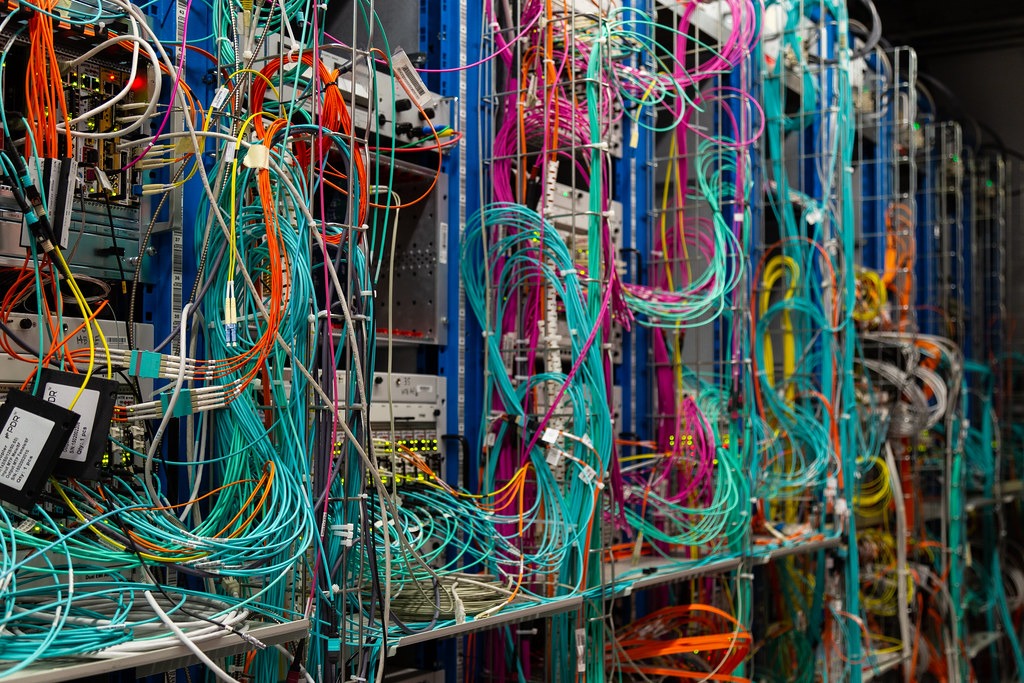
Compact Muon Solenoid / European Organization for Nuclear Research

Modular classroom buildings, often prefabricated and portable, require special attention in electrical power design to ensure safety, compliance, and functionality. The 2026 National Electrical Code (NEC) emphasizes proper sizing of branch circuits (Article 120) and feeders (Article 121) based on load calculations (Article 122), accounting for lighting, HVAC, and technology demands. Designers must consider temporary or relocatable installations, ensuring grounding and bonding comply with Article 250 for safety. Flexible wiring methods, like cord-and-plug connections, may be needed for portability, per Article 400. Modular units often face environmental challenges, requiring weather-resistant materials and equipment (Article 110). Surge protection (Article 285) is critical to safeguard sensitive classroom electronics. Accessibility for maintenance and inspections, per Article 110.26, is vital due to compact designs. Finally, compliance with local codes and coordination with utility connections ensure reliable power delivery for educational environments.


We have tried for several cycles to change the “Type of Occupancy” listing in NEC Table 220.12 to reflect more granular definition for School/university and Sports arena lighting load calculations. We will have another chance in the 2026 NEC. [Public input is due September 10th]

  • Public Input Closing Date: September 7, 2023


4 February 2021


Let’s start marking up the 2023 National Electrical Code, shall we?   We will collaborate with IEEE Standards Coordinating Committee 18 — the committee that follows NFPA electrical safety consensus products and coordinates the response of IEEE electrical power professionals.

A good place to start is with the transcripts of the 2020 revision — AVAILABLE  HERE for free.   We look for proposals that failed for one reason or another; holding fast to our hunch that changes to the ampere load requirements that appear in the prescriptive statements to designers and inspectors of Chapter 2 could changed.   The 2020 transcripts of Code-Making Panel 4 are linked below:

Code‐Making Panel 2 Public Input Report (991 Pages)

Code-Making Panel 2 Public Comment Report (402 Pages)

We have been trying for several NEC revision cycles to change the “Type of Occupancy” tabulations of Table 220.12 to reflect more granular definition in the Volt/Ampere requirement of 33 VA/m2 (3 VA/ft2) for School/university and Sports arena.   Some of the problem in Table 220.12 regarding electrical loads in education facilities lies in its foundation built upon the International Building Code; the remainder of the problem lies with the education facility industry itself; described in detail in our ABOUT.

The good news is that the NFPA Fire Protection Research Foundation (FPRF) recognizes the problem and is acting on it; described in previous posts and in its project portfolio.  Keep in mind that Standards Michigan, the original voice of the user-interest for education facility industry in the global standards system, has to compete with other, competitor stakeholders who make their market in this and in other consensus products accredited by the American National Standards Institute.

Public input for the 2023 National Electrical Code is due September 10th.    We will collaborate with the FPRF and the IEEE Education & Healthcare Facilities Committee, and others, to get informed public input to Code-Making Panel 2 and the NEC Technical Correlating Committee.   See our CALENDAR for our next Electrical & Telecommunication teleconference, open to everyone.

Issue: [19-201]

Category: Electrical

Colleagues: Mike Anthony, Scott Gibb, Jim Harvey, Kane Howard, Paul Kempf, Philip Ling, Jose Meijer


LEARN MORE:

IEEE Industrial Applications Society: The safety and economic benefit of reduced power design densities permitted in the 2014 National Electrical Code (Anthony, Ling, Meijer)


Fire Protection Research Institute | Evaluation of Electrical Feeder and Branch Circuit Loading

Originally posted October 16, 2016

University of Michigan Law School

With thanks to Richard Robben, President of True North Facility Management, the pledges to fund the NFPA Fire Protection Foundation Project: Evaluation of Electrical Feeder and Branch Circuit Loading accumulated to the requisite $24,000 to begin Phase I of two phases of a project originally begun by the University of Michigan to bring the National Electrical Code (NFPA 70) in line with federal energy conservation regulations that incorporate by reference the International Energy Conservation Code.   

NFPA 70 is one of the most widely used standards for electrotechnology in the world.   The University of Michigan began assertive advocacy on behalf of the US education industry in the NFPA suite in 1996 and that advocacy has expanded globally under two different private organizations: See About

Phase I is now completed.   The Phase I Final Report (with public comments) is available in the links below:

REPORT – Branch Circuit Loading Phase1 FINAL

SUMM – Panel Comments – Branch Circuit Loading FINAL2

In October, the project Principal Researcher, Tammy Gammon, provided an update to the NFPA Research Foundation.  Her slides are available in the link below:

NFPA Fire Protection Research Institute | Feeder & Branch Circuit Loading Evaluation | Phase I Update


We wish to thank our colleagues at Notre Dame who helped “get the ball rolling”, our colleagues in the Big Ten & Friends consortia, and forward-thinking manufacturers for their pledges:

Eaton Corporation

MIAPPA | Michigan Association of Physical Plant Administrators

Michigan State University

Ohio State University

University of Iowa

University of Minnesota

University of Nebraska

University of Texas Austin


Issue [13-33]

Contact: Mike Anthony, Jim Harvey, Richard Robben (True North, LLC); Tom Harman (University of Houston Clearwater), Kane Howard (Michigan State University), Paul Kempf (Notre Dame)

Colleagues: Robert G. Arno (Harris Corp), Joe Weber (Emerson), Casey Grant (NFPA), Larry Ayers (Independent Electrical Contractors Association)
Category: Electrical, Energy Conservation


Stationary Energy Storage Systems

Should every campus building generate its own power? Sustainability workgroups are vulnerable to speculative hype about net-zero buildings and microgrids. We remind sustainability trendsniffers that the central feature of a distributed energy resource–the eyesore known as the university steam plant–delivers most of the economic benefit of a microgrid. [Comments on Second Draft due April 29th] #StandardsMassachusetts

“M. van Marum. Tweede vervolg der proefneemingen gedaan met Teyler’s electrizeer-machine, 1795” | An early energy storage device | Massachusetts Institute of Technology Libraries

We have been following the developmental trajectory of a new NFPA regulatory product — NFPA 855 Standard for the Installation of Stationary Energy Storage Systems — a document with ambitions to formalize the fire safety landscape of the central feature of campus microgrids by setting criteria for minimizing the hazards associated with energy storage systems.

The fire safety of electric vehicles and the companion storage units for solar and wind power systems has been elevated in recent years with incidents with high public visibility.  The education industry needs to contribute ideas and data to what we call the emergent #SmartCampus;an electrotechnical transformation — both as a provider of new knowledge and as a user of the new knowledge.

Transcripts of technical deliberation are linked below:

2026 Public Input Report (705 pages) § 2026 Second Draft Meeting Agenda (912 pages)

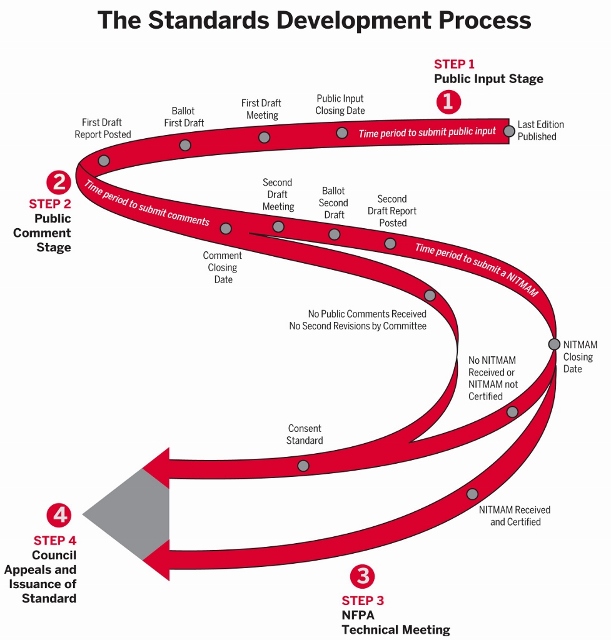
Comment on the 2026 revision received by March 27, 2025 will be heard at the NFPA June 2025 Expo through NFPA’s NITMAM process.

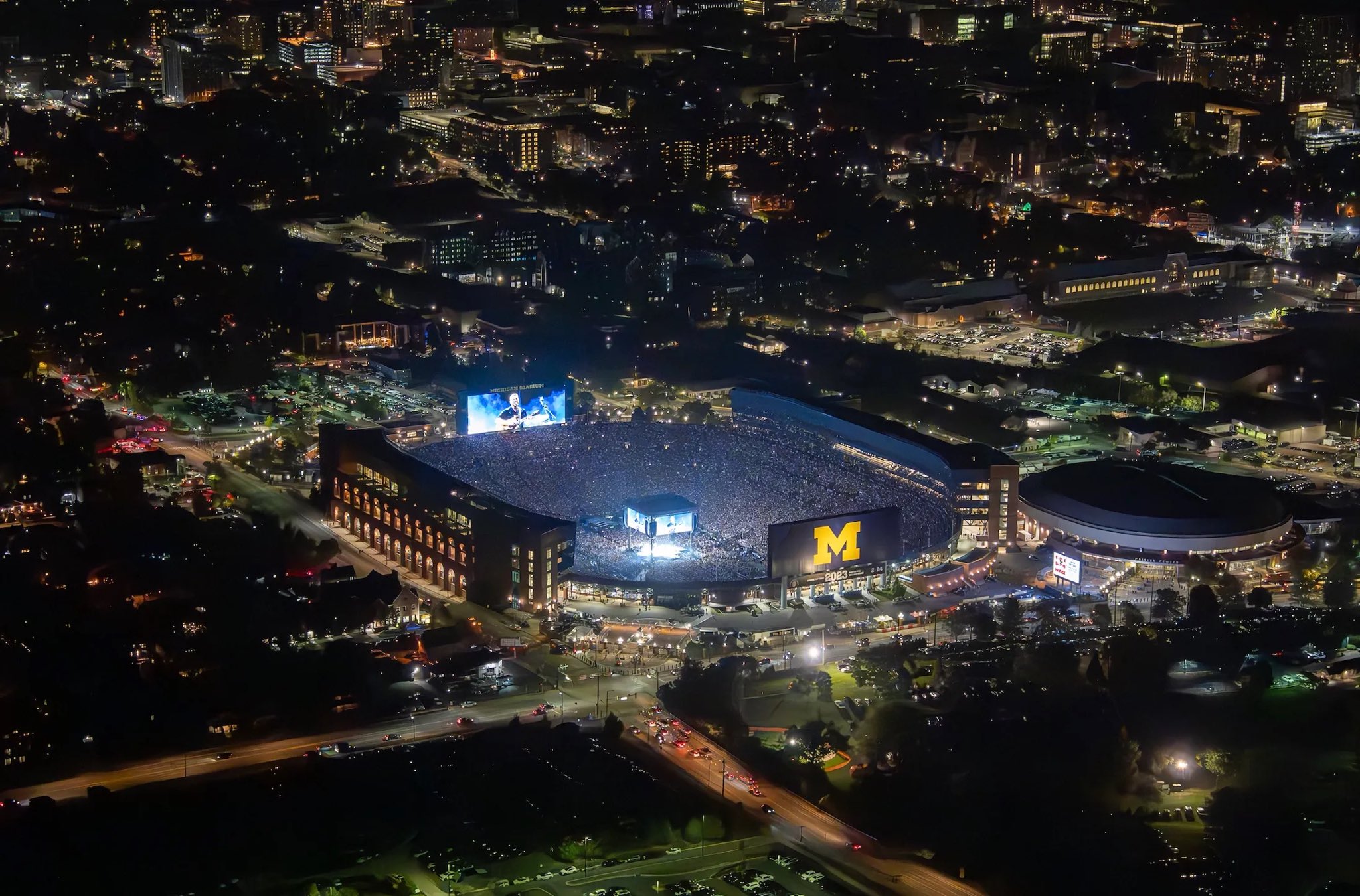
University of Michigan | Average daily electrical load across all Ann Arbor campuses is on the order of 100 megawatts

A fair question to ask: “How is NFPA 855 going to establish the standard of care any better than the standard of care discovered and promulgated in the NFPA 70-series and the often-paired documents NFPA 110 and NFPA 111?”  (As you read the transcript of the proceedings you can see the committee tip-toeing around prospective overlaps and conflicts; never a first choice).

Suffice to say, the NFPA Standards Council has due process requirements for new committee projects and, obviously, that criteria has been met.   Market demand presents an opportunity to assemble a new committee with fresh, with new voices funded by a fresh set of stakeholders who, because they are more accustomed to advocacy in open-source and consortia standards development platforms, might have not been involved in the  more rigorous standards development processes of ANSI accredited standards developing organizations — specifically the NFPA, whose members are usually found at the top of organization charts in state and local jurisdictions.  For example we find UBER — the ride sharing company — on the technical committee.  We find another voice from Tesla Motors.  These companies are centered in an industry that does not have the tradition of leading practice discovery and promulgation that the building industry has had for the better part of two hundred years.

Our interest in this standard lies on both sides of the education industry — i.e. the academic research side and the business side.  For all practical purposes, the most credible, multi-dimensional and effective voice for lowering #TotalCostofOwnership for the emergent smart campus is found in the tenure of Standards Michigan and its collaboration with IEEE Education & Healthcare Facilities Committee (E&H).  You may join us sorting through the technical, economic and legal particulars and day at 11 AM Eastern time.   The IEEE E&H Committee meets online every other Tuesday in European and American time zones; the next meeting on March 26th.  All meetings are open to the public.

University of California San Diego Microgrid

You are encouraged to communicate directly with Brian O’Connor, the NFPA Staff Liaison for specific questions.  We have some of the answers but Brian is likely to have all of them.   CLICK HERE for the NFPA Directory.  Additionally, NFPA will be hosting its Annual Conference & Expo, June 17-20 in San Antonio, Texas; usually an auspicious time for meeting NFPA staff working on this, and other projects.

The prospect of installing of energy storage technologies at every campus building — or groups of buildings, or in regions — is clearly transformational if the education facilities industry somehow manages to find a way to drive the cost of operating and maintaining many energy storage technologies lower than the cost of operating and maintaining a single campus distributed energy resource.  The education facility industry will have to train a new cadre of microgrid technology specialists who must be comfortable working at ampere and voltage ranges on both sides of the decimal point that separates power engineers from control engineers.  And, of course, dynamic utility pricing (set by state regulatory agencies) will continue to be the most significant independent control variable.
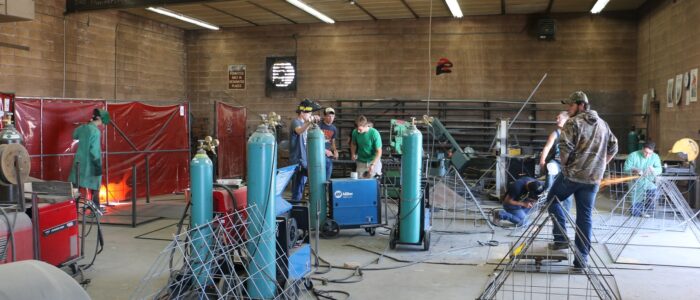
Finding a way to make all this hang together is the legitimate work of the academic research side of the university.   We find that sustainability workgroups (and elected governing bodies) in the education industry are vulnerable to out-sized claims about microgrids and distributed energy resources; both trendy terms of art for the electrotechnical transformation we call the emergent #SmartCampus.

We remind sustainability trendsniffers that the central feature of a distributed energy resource — the eyesore known as the university steam plant — bears most of the characteristics of a microgrid.   In the videoclip linked below a respected voice from Ohio State University provides enlightenment on this point; even as he contributes to the discovery stream with a study unit.

Ohio State University McCracken Power Plant

Issue: [16-131]

Category:  District Energy, Electrical, Energy, Facility Asset Management, Fire Safety, Risk Management, #SmartCampus, US Department of Energy

Colleagues: Mike Anthony, Bill Cantor (wcantor@ieee.org). Mahesh Illindala

Standards MassachusettsStandards Texas, Standards Ohio

*It is noteworthy that (NFPA 70) National Electrical Code-Making Panel 1 has appropriated vehicle-to-grid installations into its scope.


Princeton University Power Plant | Click on image

LEARN MORE:

Related Post: Electrical Safety Research Advisory Committee

Bibiography: Campus Microgrids

Higher Education Facilities Conference: The Rise of University Microgrids


Mahesh Illindala enlightens understanding of what microgrid is, and is not:


Marina & Boatyard Electrical Safety

Rowing at the 2024 Summer Olympics

“The Biglin Brothers Racing| Thomas Eakins (1872)

Rowing competition in the 2024 Olympics inspires a  revisit of NFPA 303: Fire Protection Standard for Marinas and Boatyards.  Apart from athletic competition, many colleges, universities and trade schools with academic programs are responsible for safety of facilities located on fresh and saltwater shorelines.  Other nations refer to best practice discovered and applied in the United States.   Keep in mind that, unlike other nations, the standard of care for electrical safety in the United States is driven primarily by the fire safety community.   This happens because public safety leadership falls upon the local Fire Marshall who has a budget that is widely understand and generally supported.

From the NFPA 303 scope statement:

 This standard applies to the construction and operation of marinas, boatyards, yacht clubs, boat condominiums, docking facilities associated with residential condominiums, multiple-docking facilities at multiple-family residences, and all associated piers, docks, and floats.

This standard also applies to support facilities and structures used for construction, repair, storage, hauling and launching, or fueling of vessels if fire on a pier would pose an immediate threat to these facilities, or if a fire at a referenced facility would pose an immediate threat to a docking facility.

This standard applies to marinas and facilities servicing small recreational and commercial craft, yachts, and other craft of not more than 300 gross tons.

This standard is not intended to apply to a private, noncommercial docking facility constructed or occupied for the use of the owners or residents of the associated single-family dwelling.

No requirement in this standard is to be construed as reducing applicable building, fire, and electrical codes.

The standard of care for facilities owned by educational institutions is not appreciably different from the standard of care for any other Owner except some consideration should be given to the age and training of most of the occupants — students, of course — who are a generally transient population.  Some research projects undertaken on university-owned facilities are also subject to the local adaptions of NFPA 303.  The current version of NFPA 303 is linked below:

FREE ACCESS: NFPA 303


Boathouse Row / Philadelphia

The 2021 Edition is the current edition and the next edition will be the 2025 revision.  Click on the link below to read what new ideas were running through the current edition; mostly electrical that are intended to correlate with National Electrical Code Article 555 and recent electrical safety research*:

Landing Page for the 2028 Edition

NFPA 303 Public Input Report for the 2021 Edition

Public input closing date for the 2025 Edition is June 1, 2023.   

You may submit comment directly to NFPA on this and/or any other NFPA consensus product by CLICKING HERE.  You will need to set up a (free) account.   NFPA 303 document is also on the standing agenda of our 4 times monthly collaboration with the IEEE Education & Healthcare Facilities Committee.  See our CALENDAR for the next online colloquium; open to everyone.

Michigan Technological University

Issue: [16-133]

Category: Electrical, #SmartCampus, Facility Asset Management

Colleagues: Mike Anthony,  Jim Harvey


LEARN MORE:

* Marina Risk Reduction

NFPA 70 National Electrical Code (Article 555)

Examining the Risk of Electric Shock Drowning (ESD) As a Function of Water Conductivity

Layout mode
Predefined Skins
Custom Colors
Choose your skin color
Patterns Background
Images Background
Standards Michigan
error: Content is protected !!
Skip to content