
Alvin Brooks Center for Faith-Justice
- Home Page 136


Mechanical 330
Today’s Handout: Radon, et al (For future dedicated session)
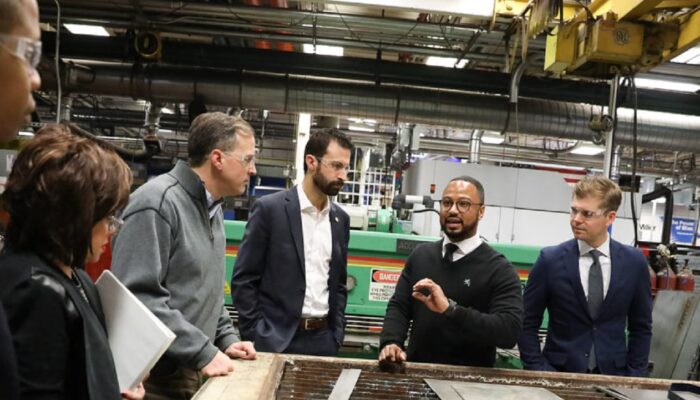
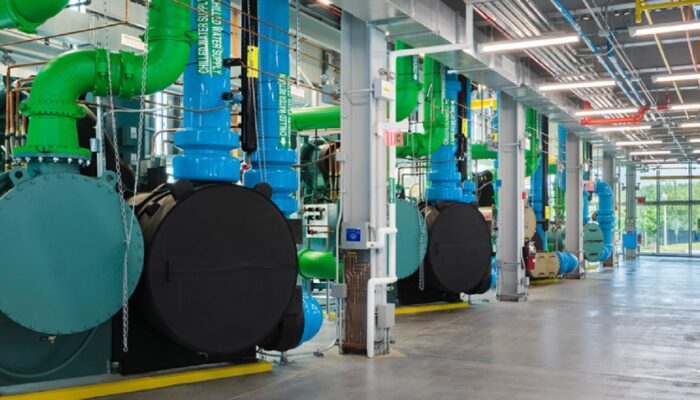
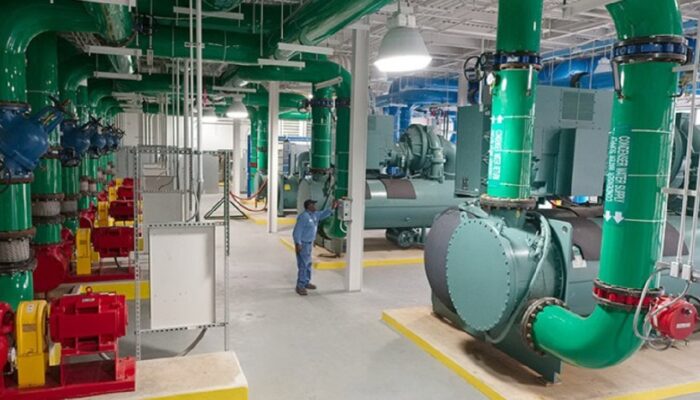
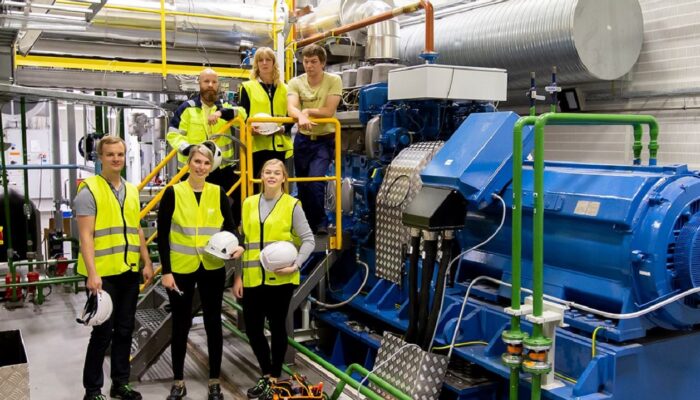
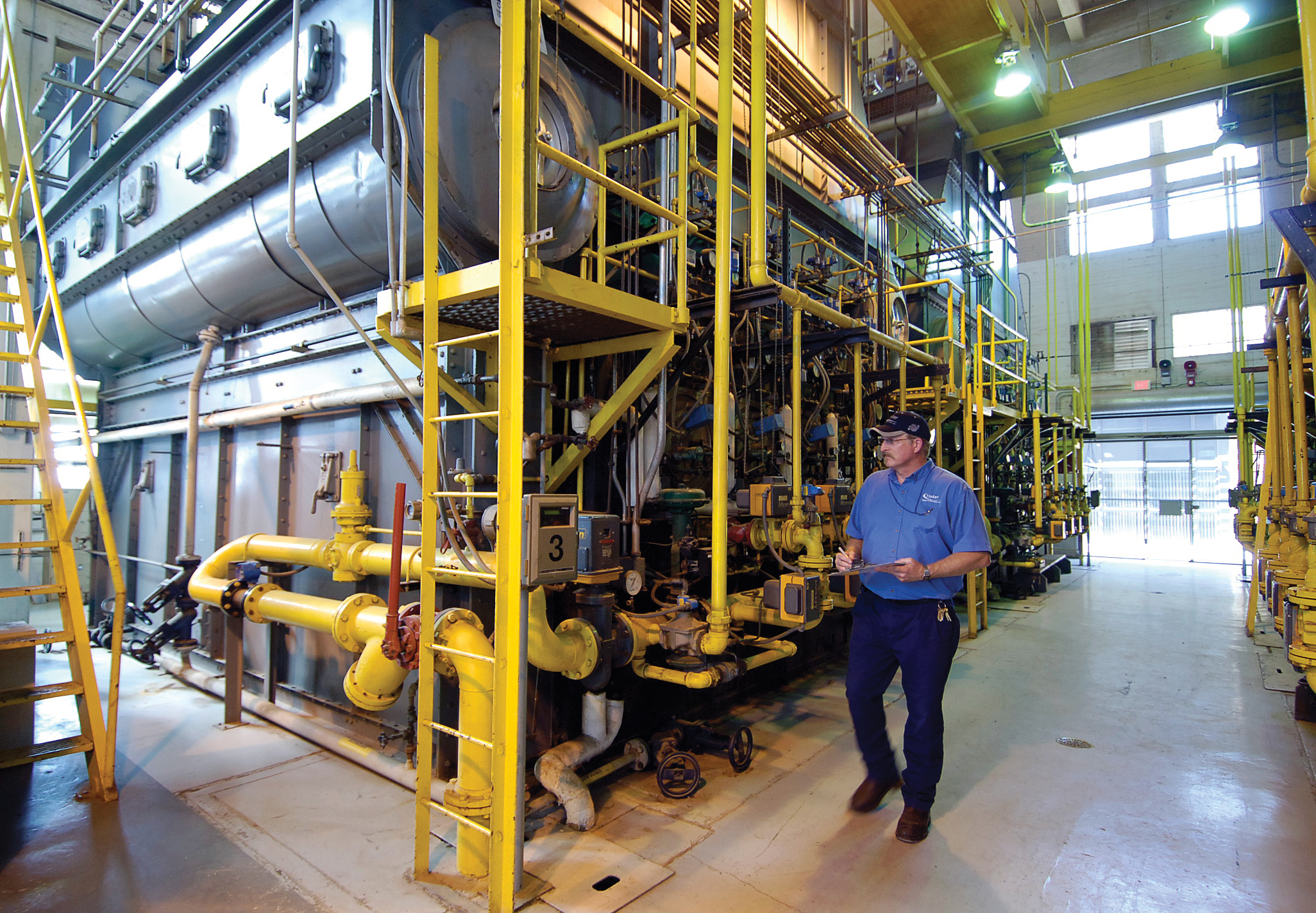
During today’s colloquium we audit the literature that sets the standard of care for mechanical engineering design, construction operations and maintenance of campus district energy systems — typically miles (kilometers) of large underground pipes and wires that characterize a district energy system. Topically, Mechanical 400 deals with energy systems “outside” or “between” buildings; whereas Mechanical 200 deals with energy systems within an individual building envelope.
2024 International Mechanical Code
A campus district energy system is a centralized heating and cooling network that supplies thermal energy to multiple buildings within a defined area, such as a college or university campus. The system generates steam, hot water, or chilled water at a central plant, which is then distributed through an underground network of pipes to individual buildings for space heating, domestic hot water, and air conditioning. By consolidating energy production and distribution, campus district energy systems can achieve significant energy and cost savings compared to individual building systems, as well as reduce greenhouse gas emissions and improve reliability and resiliency of the energy supply.
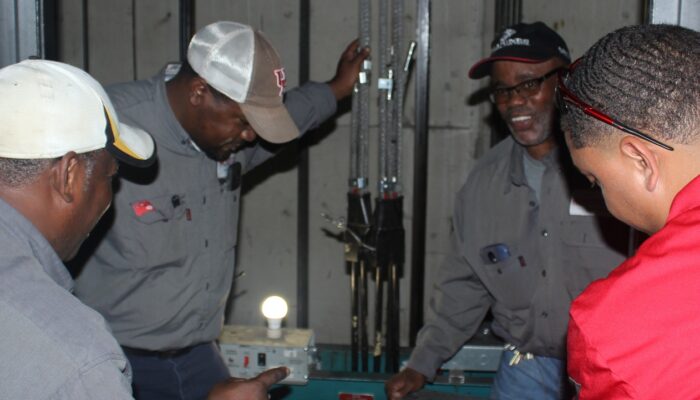
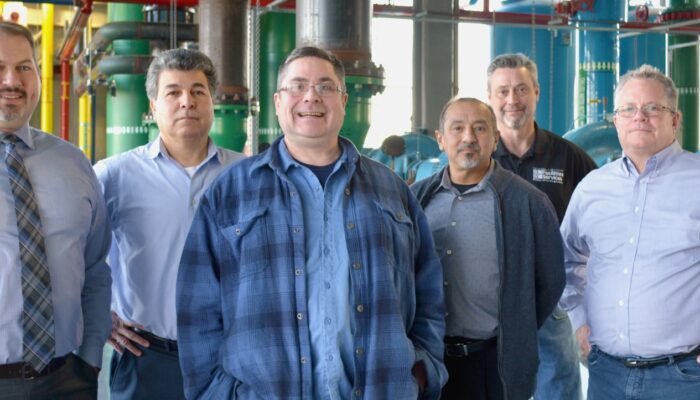
We track standards setting in the bibliographies of the following organizations:
AHRI | Air Conditioning, Heating & Refrigeration Institute
ASHRAE | American Society of Heating & Refrigeration Engineers
ASHRAE Guideline 14: Measurement of Energy and Demand Savings
ASHRAE Guideline 22: Instrumentation for Monitoring Central Chilled Water Plant Efficiency
ASME | American Society of Mechanical Engineers
ASPE | American Association of Plumbing Engineers
ASTM | American Society for Testing & Materials
AWWA | American Water Works Association
AHRI | Air Conditioning, Heating & Refrigeration Institute
IAPMO | International Association of Plumbing and Mechanical Officials
IEC | International Electrotechnical Commission
Institute of Electric and Electronic Engineers
Research on the Implementation Path Analysis of Typical District Energy Internet
Expansion Co-Planning of Integrated Electricity-Heat-Gas Networks in District Energy Systems
Towards a Software Infrastructure for District Energy Management
IMC | International Mechanical Code
IDEA | International District Energy Association
District Energy Best Practices Handbook
District Energy Assessment Tool
IPC | International Plumbing Code
ISEA | International Safety Equipment Association
NFPA | National Fire Protection Association
SMACNA | Sheet Metal Contractors National Association
UL | Underwriters Laboratories
UpTime Institute
(All relevant OSHA Standards)
It is a large domain and virtually none of the organizations listed above deal with district energy systems outside their own (market-making) circle of influence. As best we can we try to pull together the peak priorities for the real asset managers and engineers who are responsible for these system.

* Building services engineers are responsible for the design, installation, operation and monitoring of the technical services in buildings (including mechanical, electrical and public health systems, also known as MEP or HVAC), in order to ensure the safe, comfortable and environmentally friendly operation. Building services engineers work closely with other construction professionals such as architects, structural engineers and quantity surveyors. Building services engineers influence the architectural design of building, in particular facades, in relation to energy efficiency and indoor environment, and can integrate local energy production (e.g. façade-integrated photovoltaics) or community-scale energy facilities (e.g. district heating). Building services engineers therefore play an important role in the design and operation of energy-efficient buildings (including green buildings, passive houses and zero energybuildings. uses. With buildings accounting for about a third of all carbon emissions] and over a half of the global electricity demand, building services engineers play an important role in the move to a low-carbon society, hence mitigate global warming.
More:
Practical Essay on the Stength of Cast Iron and Other Metals Thomas Tredgold (1882)
George Herman Babcock — through his patents of pumps, steam engines, and novel boiler designs with collaborator Stephen Wilcox — raised the standard for safe boiler design & operation.https://t.co/qakAw4jfCn pic.twitter.com/3rCxXHkBfM
— Standards Michigan (@StandardsMich) October 21, 2020

Installation of Air-Conditioning and Ventilating Systems

Design, construction, operation and maintenance of environmental air, piping and drainage systems is one of the largest cost centers in education facilities. We find subtle tradeoffs between fire safety, energy conservation and indoor air quality goals. With solid data and enlightened debate which include the user-interest (the final fiduciary in the education facility industry, for example) those tradeoffs are reconciled by technical committees administered by three ANSI-accredited standards developers:
American Society of Heating and Refrigeration Engineers (ASHRAE)
American Society of Mechanical Engineers (ASME)
National Fire Protection Association (NFPA)
Sheet Metal & Air Conditioning Contractors National Association
Today we focus on the leading safety practice of NFPA 90A Standard for the Installation of Air-Conditioning and Ventilating Systems. From the NFPA 90A prospectus:
[NFPA 90A] shall cover construction, installation, operation, and maintenance of systems for air conditioning and ventilating, including filters, ducts, and related equipment, to protect life and property from fire, smoke, and gases resulting from fire or from conditions having manifestations similar to fire.
[Explanation A.1.1] An air duct system has the potential to convey smoke, hot gases, and flame from area to area and to supply air to aid combustion in the fire area. For these reasons, fire protection of an air duct system is essential to safety to life and the protection of property. However, an air duct system’s fire integrity also enables it to be used as part of a building’s fire protection system. Guidance for the design of smoke-control systems is provided in NFPA 92, Standard for Smoke Control Systems. Pertinent information on maintenance is provided in Annex B. Maintenance of fire dampers, ceiling dampers, smoke dampers, and combination fire/smoke dampers requirements can be found in NFPA 80, Standard for Fire Doors and Other Opening Protectives, and NFPA 105, Standard for Smoke Door Assemblies and Other Opening Protectives.
The original University of Michigan codes and standards advocacy enterprise spoke loud and clear about duct smoke detector application, control signaling and maintenance requirements from the user point of view. Owing to the re-organization we missed the 2018 revision but we are now recovering from where we left off for the 2021 revision.



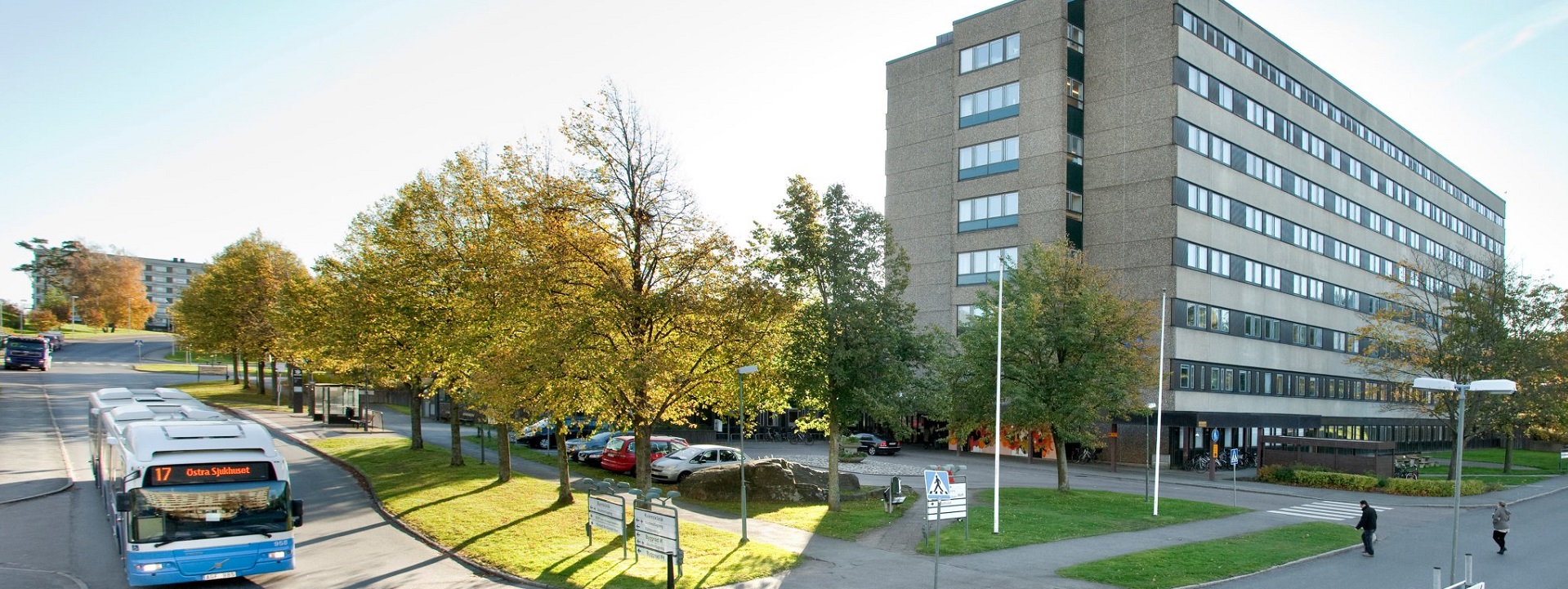
The First Draft Report for the 2021 edition is linked below:
First Draft Ballot / Final Results
90A_A2020_AIC_AAA_SD_PCResponses
NFPA 90A is heavily referenced in an interlocking matrix of related fire safety consensus products but it is not very lengthy document. We include it on the standing agenda of our periodic Mechanical and Prometheus Bound teleconference. See our CALENDAR for the next online meeting.
Issue: [13-118]
Category: Fire Protection, Mechanical
Colleagues: Mike Anthony, Richard Robben, Larry Spielvogel
:

Apple Picking Robot

AI Institute for Transforming Workforce & Decision Support
👀😍#GoBeavs pic.twitter.com/4pVt0nSXsl
— Oregon State University (@OregonState) February 21, 2023

Charlie Kirk (August 12, 2025): “Has U.S. President Donald Trump gone too far?”
The Oxford Union Society is the world’s most prestigious debating society, with an unparalleled reputation for bringing international guests and speakers to Oxford. Since 1823, the Union has been promoting debate and discussion not just in Oxford University, but across the globe.
My remarks at Oxford Union formal debate.
Has Trump gone too far?
The UK is lost, but it can find its way back if it follows America’s lead. pic.twitter.com/BjajLSRXOK
— Charlie Kirk (@charliekirk11) August 12, 2025

Vedika Rastogi | This House Believes Woke Culture Has Gone Too Far – 1/8 | Oxford Union
Alex Jackson | This House Believes Woke Culture Has Gone Too Far – 2/8 | Oxford Union
Toby Young | This House Believes Woke Culture Has Gone Too Far – 3/8 | Oxford Union
Yasmin Benoit | This House Believes Woke Culture Has Gone Too Far – 4/8 | Oxford Union
Tommy Nguyen | This House Believes Woke Culture Has Gone Too Far – 5/8 | Oxford Union
James Lindsay | This House Believes Woke Culture Has Gone Too Far – 6/8 | Oxford Union
Benjamin Butterworth | This House Believes Woke Culture Has Gone Too Far – 8/8 | Oxford Union
Student Loans
This content is accessible to paid subscribers. To view it please enter your password below or send mike@standardsmichigan.com a request for subscription details.

Dance Wyoming
This content is accessible to paid subscribers. To view it please enter your password below or send mike@standardsmichigan.com a request for subscription details.

Technical Barriers to Trade

World According to Marco Polo
We track action in international administrative procedures that affect the safety and sustainability agenda of the education facility industry. From time to time we find product purchasing contracts that contain “boilerplate” requiring conformity to applicable regulations found in the Agreement on Technical Barriers to Trade (TBT). Common examples are found in contracts for the acquisition of information technology and specialty laboratory equipment.
The World Trade Organization TBT Agreement obliges all Parties to maintain an inquiry point that is able to answer questions from interested parties and other WTO Members regarding technical regulations, standards developed by government bodies, and conformity assessment procedures, as well as provide relevant documents. The TBT Agreement also requires that WTO Members notify the WTO of proposed technical regulations and conformity assessment procedures so interested parties can become acquainted with them and have an opportunity to submit written comments.
Technical Barriers to Trade Information Management System
The inquiry point and notification authority for the United States is operated by the National Institute of Standards and Technology an agency within the U.S. Department of Commerce. We provide a link here for the convenience of faculty, specifiers and purchasing professionals.
Notify U.S. Standards Coordination Office USA WTO Enquiry Point

We include the TBT on the agenda of our Hello World! colloquium; open to everyone. See our CALENDAR for the next online meeting.
More

Podcast Production
The term “podcast” is a combination of “iPod,” Apple’s portable media player, and “broadcast.” It originated in the early 2000s when individuals began creating audio content specifically designed for download and playback on portable media players, including the iPod. Over time, the concept has evolved, and podcasts are now a popular and diverse form of digital media covering a wide range of topics, including news, education, entertainment, and more. The key feature of a podcast is its on-demand nature, allowing listeners to access content at their convenience.

University of Alberta Facilities & Operations
Branch and Feeder Circuit Design
FREE ACCESS 2026 National Electrical Code
Branch circuits relevant to modular classroom buildings are primarily addressed in Article 120: Branch Circuits (formerly Article 210 in previous editions). This article covers requirements for branch-circuit sizing, overcurrent protection, outlets, and general installation rules for circuits up to 1000 volts AC or 1500 volts DC. Key sections include:120.19: Conductor sizing and derating.
120.20: Overcurrent protection.
120.21: Receptacle outlets and tamper-resistant requirements.
120.23: Specific rules for appliances and fixed equipment.
For outside branch circuits, see Article 267: Outside Branch Circuits and Feeders over 1000 Volts AC or 1500 Volts DC, Nominal (if applicable to higher voltages).Feeder Circuit RulesFeeder circuits are primarily addressed in Article 121: Feeders (formerly Article 215 in previous editions). This article details feeder conductor sizing, grounding, and disconnecting means for circuits supplying branch circuits or sub-feeders up to 1000 volts AC or 1500 volts DC.Key sections include:121.2: Minimum rating and sizing.
121.3: Overcurrent protection.
121.4: Feeders as branch circuits (when applicable).
Outside feeders are covered in Article 267: Outside Branch Circuits and Feeders over 1000 Volts AC or 1500 Volts DC, Nominal (for higher voltages) or cross-referenced in Article 267 for general outside installations.
For modular school buildings detached from the main building with pre-installed single or three phase wiring systems, designers must choose between a separate service drop from a merchant utility or tapping into an existing source from the nearby school building.
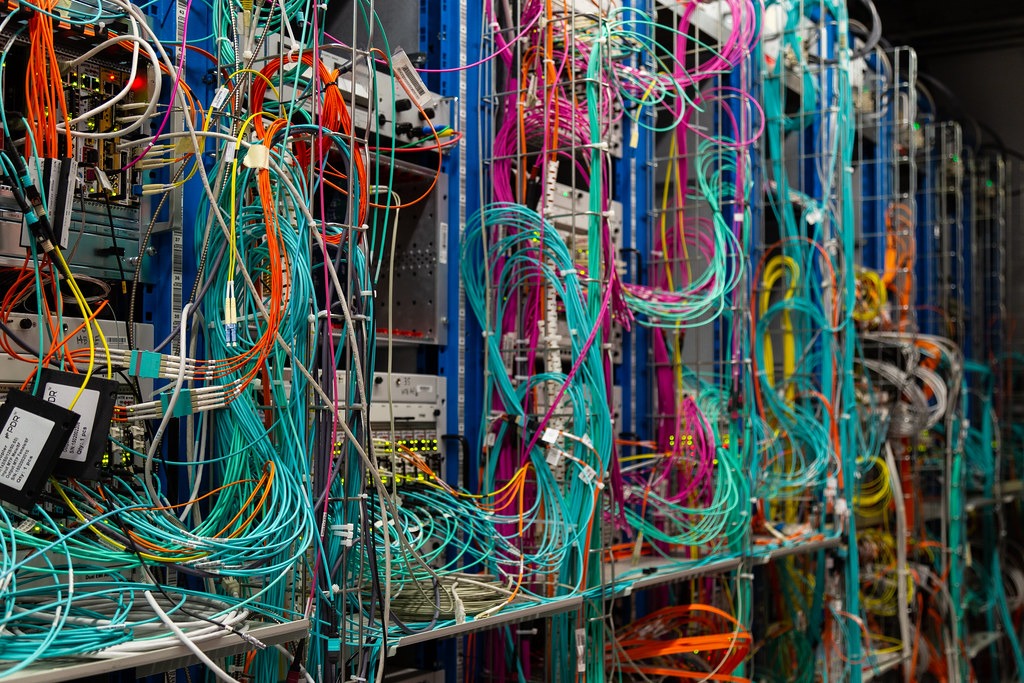
Compact Muon Solenoid / European Organization for Nuclear Research
Modular classroom buildings, often prefabricated and portable, require special attention in electrical power design to ensure safety, compliance, and functionality. The 2026 National Electrical Code (NEC) emphasizes proper sizing of branch circuits (Article 120) and feeders (Article 121) based on load calculations (Article 122), accounting for lighting, HVAC, and technology demands. Designers must consider temporary or relocatable installations, ensuring grounding and bonding comply with Article 250 for safety. Flexible wiring methods, like cord-and-plug connections, may be needed for portability, per Article 400. Modular units often face environmental challenges, requiring weather-resistant materials and equipment (Article 110). Surge protection (Article 285) is critical to safeguard sensitive classroom electronics. Accessibility for maintenance and inspections, per Article 110.26, is vital due to compact designs. Finally, compliance with local codes and coordination with utility connections ensure reliable power delivery for educational environments.
We have tried for several cycles to change the “Type of Occupancy” listing in NEC Table 220.12 to reflect more granular definition for School/university and Sports arena lighting load calculations. We will have another chance in the 2026 NEC. [Public input is due September 10th]
Public Input Closing Date: September 7, 2023
4 February 2021

Let’s start marking up the 2023 National Electrical Code, shall we? We will collaborate with IEEE Standards Coordinating Committee 18 — the committee that follows NFPA electrical safety consensus products and coordinates the response of IEEE electrical power professionals.
A good place to start is with the transcripts of the 2020 revision — AVAILABLE HERE for free. We look for proposals that failed for one reason or another; holding fast to our hunch that changes to the ampere load requirements that appear in the prescriptive statements to designers and inspectors of Chapter 2 could changed. The 2020 transcripts of Code-Making Panel 4 are linked below:
Code‐Making Panel 2 Public Input Report (991 Pages)
Code-Making Panel 2 Public Comment Report (402 Pages)
We have been trying for several NEC revision cycles to change the “Type of Occupancy” tabulations of Table 220.12 to reflect more granular definition in the Volt/Ampere requirement of 33 VA/m2 (3 VA/ft2) for School/university and Sports arena. Some of the problem in Table 220.12 regarding electrical loads in education facilities lies in its foundation built upon the International Building Code; the remainder of the problem lies with the education facility industry itself; described in detail in our ABOUT.
The good news is that the NFPA Fire Protection Research Foundation (FPRF) recognizes the problem and is acting on it; described in previous posts and in its project portfolio. Keep in mind that Standards Michigan, the original voice of the user-interest for education facility industry in the global standards system, has to compete with other, competitor stakeholders who make their market in this and in other consensus products accredited by the American National Standards Institute.
Public input for the 2023 National Electrical Code is due September 10th. We will collaborate with the FPRF and the IEEE Education & Healthcare Facilities Committee, and others, to get informed public input to Code-Making Panel 2 and the NEC Technical Correlating Committee. See our CALENDAR for our next Electrical & Telecommunication teleconference, open to everyone.
Issue: [19-201]
Category: Electrical
Colleagues: Mike Anthony, Scott Gibb, Jim Harvey, Kane Howard, Paul Kempf, Philip Ling, Jose Meijer
LEARN MORE:
IEEE Industrial Applications Society: The safety and economic benefit of reduced power design densities permitted in the 2014 National Electrical Code (Anthony, Ling, Meijer)
New update alert! The 2022 update to the Trademark Assignment Dataset is now available online. Find 1.29 million trademark assignments, involving 2.28 million unique trademark properties issued by the USPTO between March 1952 and January 2023: https://t.co/njrDAbSpwB pic.twitter.com/GkAXrHoQ9T
— USPTO (@uspto) July 13, 2023
Standards Michigan Group, LLC
455 East Eisenhower Parkway, Suite 300
Ann Arbor, MI 48108 USA
888-748-3670
DIRECTIONS
 |
 |
|
 |
 |
|
 |
 |