At the request of IEEE Joint IAS/PES Standards Michigan, Mike Anthony moved to CMP-3 from CMP-15.
Articles Under CMP 3
Article 300 — General Requirements for Wiring Methods and Materials
Article 335 — Instrumentation Tray Cable (in some references for the 2029 cycle)
Article 590 — Temporary Installations (being relocated/renumbered in the 2026 cycle, e.g., potentially to Article 140 in Chapter 1, as temporary wiring is not treated as a special occupancy)
Article 720 — Limited-Energy System Installations (new/general article covering wiring methods for limited-energy systems)
Article 723 — Raceways, Cable Routing Assemblies, and Cable Trays for Limited-Energy Systems (newly created in the 2026 cycle)
Article 725 — Class 2 and Class 3 Remote-Control, Signaling, and Power-Limited Circuits
Article 726 — Class 4 Fault-Managed Power Circuits and Equipment
Article 727 — Instrumentation Tray Cable
Article 728 — Fire-Resistive Cable Systems
Article 760 — Fire Alarm Systems (power-limited and non-power-limited portions)
CMP 3 also handles associated content in: Chapter 9 — Tables, including Tables 11(A) & (B) and Tables 12(A) & (B) (related to conductor properties and other supporting tables for the above topics).
Notes on Changes and Scope CMP 3 focuses on general wiring rules, cable types, raceways/trays for low-energy applications, and signaling/communications-related wiring (distinct from higher-power utilization equipment or special occupancies handled by other panels).
In the 2026 NEC cycle, there has been significant reorganization of Chapter 7 to consolidate limited-energy systems under articles like 720–726 (and related ones), moving away from older structures. This includes new articles for raceways/cable trays specific to limited-energy systems and adjustments to scopes for clarity.
Article 206 (Non-Power-Limited Remote-Control and Signaling Circuits) appears in some 2026-related references as newly designated or relocated material handled in this area. Temporary installations (Article 590) are transitioning out of “special” categories in restructuring efforts.
During today’s sessions of the IEEE E&H Committee and our own we will prepare draft proposals relevant to the safety and sustainability agenda of the USA education facility industry. Use the login credentials at the upper right of our home page.
The University of Michigan has supported the voice of the United States education facility industry since 1993 — the second longest tenure of any voice in the United States. That voice has survived several organizational changes but remains intact and will continue its Safer-Simpler-Lower Cost-Longer Lasting priorities on Code Panel 3 in the 2029 Edition.
Today, during our customary “Open Door” teleconference we will examine the technical concepts under the purview of Code Panel 3; among them:
Article 206 Signaling Circuits
Article 300 General Requirements for Wiring Methods and Materials
Article 335 Instrumentation Tray Cable
Article 590 Temporary Installations
Chapter 7 Large sections of limited energy cabling for signaling and information technology
Since the lifespan of educational buildings make the building core and shell susceptible to multiple changes not typically associated with commercial buildings, additional pathways should be placed in areas where the core and shell components of the facility are likely to re-main for extended periods of time
It is recommended that all areas of an educational building have wireless coverage unless prohibited
IEEE English for Technical Professionals is a 14-hour online learning program designed to provide non-native English speakers with a working knowledge of English techniques and vocabulary that are essential for working in today’s technical workplace.
“It is a trite but true observation, that examples work more forcibly on the mind than precepts: and if this be just in what is odious and blameable, it is more strongly so in what is amiable and praiseworthy. Here emulation most effectually operates upon us, and inspires our imitation in an irresistible manner. A good man therefore is a standing lesson to all his acquaintance, and of far greater use in that narrow circle than a good book.
But as it often happens that the best men are but little known, and consequently cannot extend the usefulness of their examples a great way; the writer may be called in aid to spread their history farther, and to present the amiable pictures to those who have not the happiness of knowing the originals; and so, by communicating such valuable patterns to the world, he may perhaps do a more extensive service to mankind than the person whose life originally afforded the pattern…”
Mike Anthony is ID Number 469 | Proposal period closes 11:59 PM US Pacific Time | May 15
Meeting Notes in red
Loss of electric power and internet service happens more frequently and poses at least an equal — if not greater threat — to public safety. So why does neither the National Electrical Code or the National Electrical Safety Code integrate reliability into their core requirements? Reliability requirements appear in a network of related documents, either referenced, or incorporated by reference; sometimes automatically, sometimes not.
NESC Main Committee Membership: Page xii
Apart from the IEEE as the accredited standards developer, there are no “pure non-government user-interests” on this committee; although ANSI’s Essential Requirements for balance of interests provides highly nuanced interpretation. The Classifications on Page xiii represents due diligence on meeting balance of interest requirements.
In our case, we are one of many large universities that usually own district energy plants that both generate and purchase generate electric power (as sometimes provide var support to utilities when necessary; as during the August 2003 North American outage). For University of Michigan, for example, has about 20 service points at 4.8 – 120 kV. Its Central Power Plant is the largest cogeneration plant on the DTE system.
Contents: Page xxviii | PDF Page 29
Absence of internet service is at least as much a hazard, and more frequent, than downed wires. Is there a standards solution? Consideration of interoperability of internet service power supported on utility poles should track in the next revision.
No mention of any reliability related IEEE reliability standards in the present edition. Why is this?
Section 2: Definitions of Special Terms| PDF Page 46
In the 2023 Handbook, the term “reliability” shows up 34 times.
availability (from Bob Arno’s IEEE 3006-series and IEEE 493 Gold Book revision)
reliability (Bob Arno)
utility (PDF Page 57)
communication | PDF Page 47
list of terms defined in the 2023 National Electrical Code that are new and relevant to this revision: (Article 100 NEC)
municipal broadband network, digital subscriber line, surveillance cameras
wireless communication system
010. Purpose | PDF Page 40
Looks like improvement since last edition. Suggest explicit Informational Note, as in the NEC, using “reliability” and referring to other agencies. “Abnormal events” could be tighter and refer to other standards for abnormal, steady-state events. The clarification of purpose is welcomed although a great deal remains uncovered by other best practice literature; though that can be repaired in this edition.
Legacy of shared circuit path standards. Should provisions be made for municipal surveillance, traffic and vehicle control infrastructure. What would that look like?
011. Scope | Covered PDF Page 40
3. Utility facilities and functions of utilities that either (a) generate energy by conversion from some other form of energy such as, but not limited to, fossil fuel, chemical, electrochemical, nuclear, solar, mechanical, wind or hydraulic or communication signals, or accept energy or communication signals from another entity, or (b) provide that energy or communication signals through a delivery point to another entity.
5. Utility facilities and functions on the line side of the service point supplied by underground or overhead conductors maintained and/or installed under exclusive control of utilities located on public or private property in accordance with legally established easements or rights-of-way, contracts, other agreements (written or by conditions of service), or as authorized by a regulating or controlling body. NOTE: Agreements to locate utility facilities on property may be required where easements are either (a) not obtainable (such as locating utility facilities on existing rights-of-way of railroads or other entities, military bases, federal lands, Native American reservations, lands controlled by a port authority, or other governmental agency), or (b) not necessary (such as locating facilities necessary for requested service to a site).
012. General Rules | Covered PDF Page 42
For all particulars not specified, but within the scope of these rules, as stated in Rule 011A, design, construction, operation, and maintenance should be done in accordance with accepted good practice for the given local conditions known at the time by those responsible for the communication or supply lines and equipment
General purpose clause could use some work since no definition of “accepted good practice”. Refer to IEEE bibliography.
Section 2: Definition of special terms | PDF Page 46
Recommendations elsewhere should track here.
The word “installation” appears 256 times and is generally understood in context by experts. Suggest borrow from NEC to clarify our concern for including co-linear/communication circuits.
conduit. exclusive control, lines, photovoltaic, NEC interactive. qualified
Section 3: Reference
NFPA 70®, National Electrical Code® (NEC®). [Rules 011B4 NOTE, 099C NOTE 1, and 127
IEEE Std 4™-1995, IEEE Standard Techniques for High-Voltage Testing. [Table 410-2 and Table 410-3]
IEEE Std 516™-2009, IEEE Guide for Maintenance Methods on Energized Power-Lines. [Rules 441A4
NOTE 2, 446B1, and 446D3 NOTE, and Table 441-5, Footnote 4]
IEEE Std 1427™-2006, IEEE Guide for Recommended Electrical Clearances and Insulation Levels in
Air-Insulated Electrical Power Substations. [Rule 124A1 NOTE, Table 124-1, 176 NOTE, and 177 NOTE]
IEEE Std 1584™-2002, IEEE Guide for Performing Arc Flash Hazard Calculations. [Table 410-1,
Footnotes 1, 3, 6, and 14]
IEEE Std C62.82.1™-2010, IEEE Standard for Insulation Coordination—Definitions, Principles, and Rules.
[Table 124-1 Footnote 5]
Add references to Gold Book, 1386, etc. IEC since multinationals conform.
Safety Rules for the Installation and Maintenance of Overhead Electric Supply and Communication Line | PDF Page 111
Has anyone confirmed that these tables match NEC Table 495.24 lately? If it helps: there were no meaningful changes in the 2023 NEC in Article 495, the high voltage article
Section 11. Protective arrangements in electric supply stations | PDF Page 77
A safety sign shall be displayed on or beside the door or gate at each entrance. For fenced or walled electric supply stations without roofs, a safety sign shall be displayed on each exterior side of the fenced or wall enclosure. Where the station is entirely enclosed by walls and roof, a safety sign is required only at ground level entrances. Where entrance is gained through sequential doors, the safety sign should be located at the inner door position. (A clarification but no change. See Standards Michigan 2017 proposals)
Recommend that all oil-filled cans be removed and services upgraded through energy regulations with new kVA ratings
Section 12: Installation and maintenance of equipment
093. Grounding conductor and means of connection
Fences The grounding conductor for fences required to be effectively grounded by other parts of this Code shall meet the requirements of Rule 093C5 or shall be steel wire not smaller than Stl WG No. 5.
D. Guarding and protection | PDF Page 67
124. Guarding live parts| PDF Page 85
Propose roofs required for exterior installations
Part 2. Safety Rules for the Installation and Maintenance of Overhead Electric Supply and Communication Line | Page 72
Section 22. Relations between various classes of lines and equipment | Page 80
222. Joint use of structures | Page 82
Where the practice of joint use is mutually agreed upon by the affected utilities, facilities shall be subject to the appropriate grade of construction specified in Section 24. Joint use of structures should be
considered for circuits along highways, roads, streets, and alleys. The choice between joint use of structures and separate lines shall be determined through cooperative consideration with other joint
users of all the factors involved, including the character of circuits, worker safety, the total number and weight of conductors, tree conditions, number and location of branches and service drops, structure
conflicts, availability of right-of-way, etc.
Reliability considerations for sustaining internet service when power supply is absent.
Par2 Section 20 Safety Rules for the Installation and Maintenance of Overhead Electric Supply and Communication Line | PDF Page 111
Has anyone confirmed that these tables match NEC Table 495.24 lately?
Part 3. Safety Rules for the Installation and Maintenance of Underground Electric Supply and Communication Lines | Page 220
Renewable energy for internet access
311. Installation and maintenance
A. Persons responsible for underground facilities shall be able to indicate the location of their facilities.
B. Reasonable advance notice should be given to owners or operators of other proximate facilities that
may be adversely affected by new construction or changes in existing facilities.
C. For emergency installations, supply and communication cables may be laid directly on grade if the
cables do not unreasonably obstruct pedestrian or vehicular traffic and either:
1. The cables are covered, enclosed, or otherwise protected, or
2. The locations of the cables are conspicuous.
Supply cables operating above 600 V shall meet either Rule 230C or 350B.
NOTE: See Rules 014B2 and 230A2d.
Part 4. Work Rules for the Operation of Electric Supply and Communications Lines and Equipment | PDF Page 289
When and why was the term “Work” added to the title of this section?
Core text for the definition of wireless communication system reliability
Appendix E Bibliography| PDF Page 355
Index | PDF Page 398
The word “reliability” appears only three times. Should it track in the NESC or should it track in individual state requirements. So neither the NEC nor the NESC couples closely with power and communication reliability; despite the enormity and speed of research.
Because electrotechnology changes continually, definitions (vocabulary) in its best practice literature changes continually; not unlike any language on earth that adapts to the moment and place.
The changes reflect changes in technology or changes in how the technology works in practice; even how the manufacturers create adaptations to field conditions by combining functions. Any smart electrical component has a digital language embedded in it, for example.
Consider the 2023 National Electrical Code. Apart from many others the NEC will contain a major change to Article 100 (Definitions); the subject of elevated debate over the past three years.
When we refer “language” we must distinguish between formal language, informal language, colloquial language and dialect which may differ the language spoken, language written at the office and language used on the job site. “Terms of art”
Are these terms (or, “terms of art”) best understood in context (upstream articles in Chapters 4 through 8) — or should they be adjudicated by the 14 Principals of Code Making Panel 1? The answer will arrive in the fullness of time. Many changes to the National Electrical Code require more than one cycle to stabilize.
Code Making Panel 1 has always been the heaviest of all NEC panels. As explained n our ABOUT, the University of Michigan held a vote in CMP-1 for 20+ years (11 revision cycles) before moving to the healthcare facilities committee for the IEEE Education & Healthcare Facilities Committee. Standards Michigan continues its involvement on behalf of the US education facility industry — the second largest building construction market. There is no other pure user-interest voice on any technical committee; although in some cases consulting companies are retained for special purposes.
To serve the purpose of making NFPA 70 more “useable” we respect the Standards Council decision to make this change if it contributes to the viability of the NFPA business model. We get to say this because no other trade association comes close to having as enduring and as strong a voice: NFPA stands above all other US-based SDO’s in fairness and consideration of its constituency. The electrical safety community in the United States is a mighty tough crowd.
If the change does not work, or work well enough, nothing should prohibit reversing the trend toward “re-centralizing” — or “de-centralizing” the definitions.
Public comment on the First Draft of the 2026 Edition will be received until August 28, 2024.
Technical Committees meet during the last half of October to respond to public comment on the First Draft of the 2026 National Electrical Code.
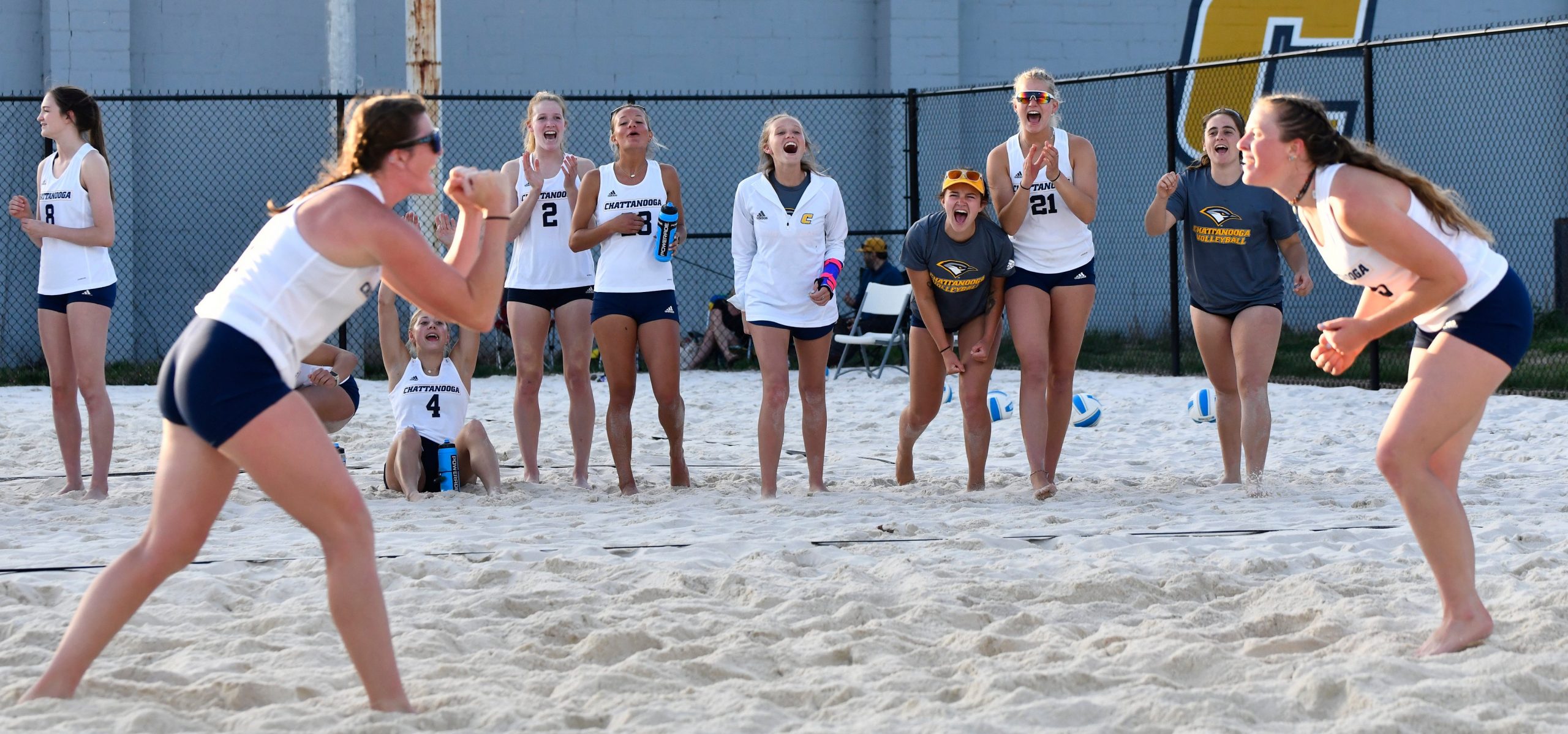
We are consolidating over 10+ years of coverage of sport standards by the season now. This is our first cut breaking the topic into four separate seasons. Join us today at the usual hour when we sort through stabilized literature and the codes and standards open for public consultation
I can confirm that @GreenPlusAnE spent part of his wedding reception discussing entitlement reform. And the new Mrs. Greene is possibly the most elegant Tocqueville scholar in existence. https://t.co/XRfnxJ027G
In non soccer, non portal, non athletic news, our family just grew by one 😀 we gained a future son in law!!! So happy for Madison and Dylan. #weddingplanspic.twitter.com/3DNx0tNr5D
Congrats to my son for graduating with Honors from Eastern Michigan – don’t blink time flies – so so proud of what he’s accomplished & love him to pieces 💙🎉🥳 pic.twitter.com/qAj2ndRVwA
We need a reality dating show called “Average SEC Couples” that’s just 15 Average Joe’s from the South wooing 15 gorgeous women with generational wealth. pic.twitter.com/hhNGYUPw3S
Since I’m making happy announcements, Anne and I are expecting our first grandchild (a grandson we’re told) in February. We’re very proud of and happy for our oldest son Aedan and his wife Addy. Thanks be to God! pic.twitter.com/3xFXGYaes0
💙Last middle school dance💙
Time is flying, but I’ve loved every moment of this phase — shopping for his unique style, the cologne hunts, the late-night talks, and watching him chase what he loves. Keep being authentically you, GT!💥 pic.twitter.com/glH8AHyid4
One week postpartum with the sweetest baby ever. I am blessed beyond measure to have had my 5th successful home birth and a very smooth recovery. God is so good! pic.twitter.com/bWBqAtOUkj
A South African man who recently picked up an abandoned baby in Mpumalanga suburb of Emalahleni is now applying for court permission to adopt the boy and get him a birth certificate
Ten years after our wedding, our triplets have finally arrived… Thank you to everyone who sent us congratulations. These are our most precious treasures. #fblifestylepic.twitter.com/AXKOj7vL7Q
The body of 8-year-old Mystic camper Virginia Hollis was found along the Guadalupe River earlier this week, more than a week after the July 4 floods in Texas.
Yesterday, this angel’s favorite horse followed her casket through the streets to bid her farewell. 😭 pic.twitter.com/T8f8O6n4q3
After 15 years of marriage, the first child is actually twins! 🥳Maybe no one will say it, but we want to share this joy anyway. 🌹 pic.twitter.com/T60zPJZ0tT
He was with me almost every day for 12 years. The best living creature I’ve ever known including humans.
He protected children and loved his job out here.
I hope I can be half the man this dog was to our world. I buried him last evening in his beloved woods.
A heartfelt surprise for her best friend on graduation day.. She didn’t expect it because they hadn’t seen each other in so long, ever since her friend moved to another citypic.twitter.com/3pxswYFVNt
From couple matching to couple chief-ing!!!thrilled and honored to serve as chief residents together at the program that shaped us. Grateful for the journey and excited for what’s ahead! #HUHpic.twitter.com/lClrJpGABW
20th March 2010
A couple – just married – choose to cycle from the church to their reception.
From my book ‘Cambridge – Town & Gown’. pic.twitter.com/Y9zzcUsHh4
We got him moved into the new house! His bride-to-be is helping him decorate and put things away and will be joining him there on their wedding night! Today, only a few tears were shed (out of his sight). We are beyond happy for them! @BrandonLansdownpic.twitter.com/NSNmzg8hyG
Naistenpäivän kunniaksi haluan jakaa, että minulla on onni ja siunaus odottaa omaa tytärtä. Toivon näyttäväni hänelle samanlaista naisen mallia kuin oma äitini on näyttänyt minulle. Nainen voi olla vahva ja lempeä, sitkeä ja kaunis, herkkä ja periksiantamaton. Nainen voi olla… pic.twitter.com/MivsLRh1wJ
Syracuse University. Kissing Bench: This bench on the Quad is steeped in tradition. Legend has it that if a couple kisses on the bench, they will eventually marry. Conversely, if a single person sits there alone, they risk staying single forever.
University of Idaho. Hello Walk and Kissing Rock: While not a bench, this area on campus features a large rock where students have historically kissed. It’s a romantic tradition for couples at the university.
It is so rare for people to see a normal, white family that lefties think it gives ”Third Reich vibes”. This really tells us that we need to make it less rare.
Hot cross buns (Library of Congress) are a traditional Easter treat dating back centuries, symbolizing both the end of Lent and the crucifixion of Jesus. These spiced sweet buns, often containing raisins or currants and marked with a cross on top, are typically eaten on Good Friday.
The cross represents the crucifixion, while the spices symbolize the spices used to embalm Jesus. Sharing hot cross buns fosters community and reflects on the religious significance of Easter, marking a solemn yet celebratory time in Christian tradition.
I found this today. It is a photo of the cherry tree walk in the Harris Garden at Reading University. This is the effect you get when the petals fall. pic.twitter.com/IWGPVaJ2JF
Our Key Stage 1 Easter Bonnet Parade was full of colour, creativity, and big smiles today 🐣🌸 From chicks to chocolate eggs, the children’s designs were egg-stra special! 🐰✨ #EasterBonnetParade#KS1#Easterpic.twitter.com/d6IbhllTLw
— St Peters Church of England Primary School (@st_peters_ce_) March 30, 2026
Our children loved showing off their Easter bonnets to the community on their way back from our Easter service at church today … what a wonderful way to finish our build up to Easter weekend in school #easter#EasterHolidays#RASpic.twitter.com/3OfEyvXAnH
— Runcorn All Saints C of E Primary School (@Runcornallsaint) April 1, 2026
IA 2.1 – Well-being, Care, Support and Guidance Dosbarth Squirrels enjoyed showing off their Easter bonnets during a special Easter parade for parents! 📷📷 The children looked fantastic and were so proud to share their creative designs—da iawn pawb! 📷 pic.twitter.com/siWk2NjLr5
— Gellifaelog Primary School (@GellifaelogPri) March 27, 2026
The children worked hard earlier in the week creating beautiful easter bonnets. We had fun showing them off in our easter bonnet parade today. pic.twitter.com/iScILKCNPR
— St. Serf's Nursery (@stserf_nursery) April 2, 2026
New update alert! The 2022 update to the Trademark Assignment Dataset is now available online. Find 1.29 million trademark assignments, involving 2.28 million unique trademark properties issued by the USPTO between March 1952 and January 2023: https://t.co/njrDAbSpwBpic.twitter.com/GkAXrHoQ9T