
Exploring the impacts of elite youth sports on family life

Loading
loading...

Exploring the impacts of elite youth sports on family life

February 15, 2026
mike@standardsmichigan.com

No Comments

Taylor & Francis Online


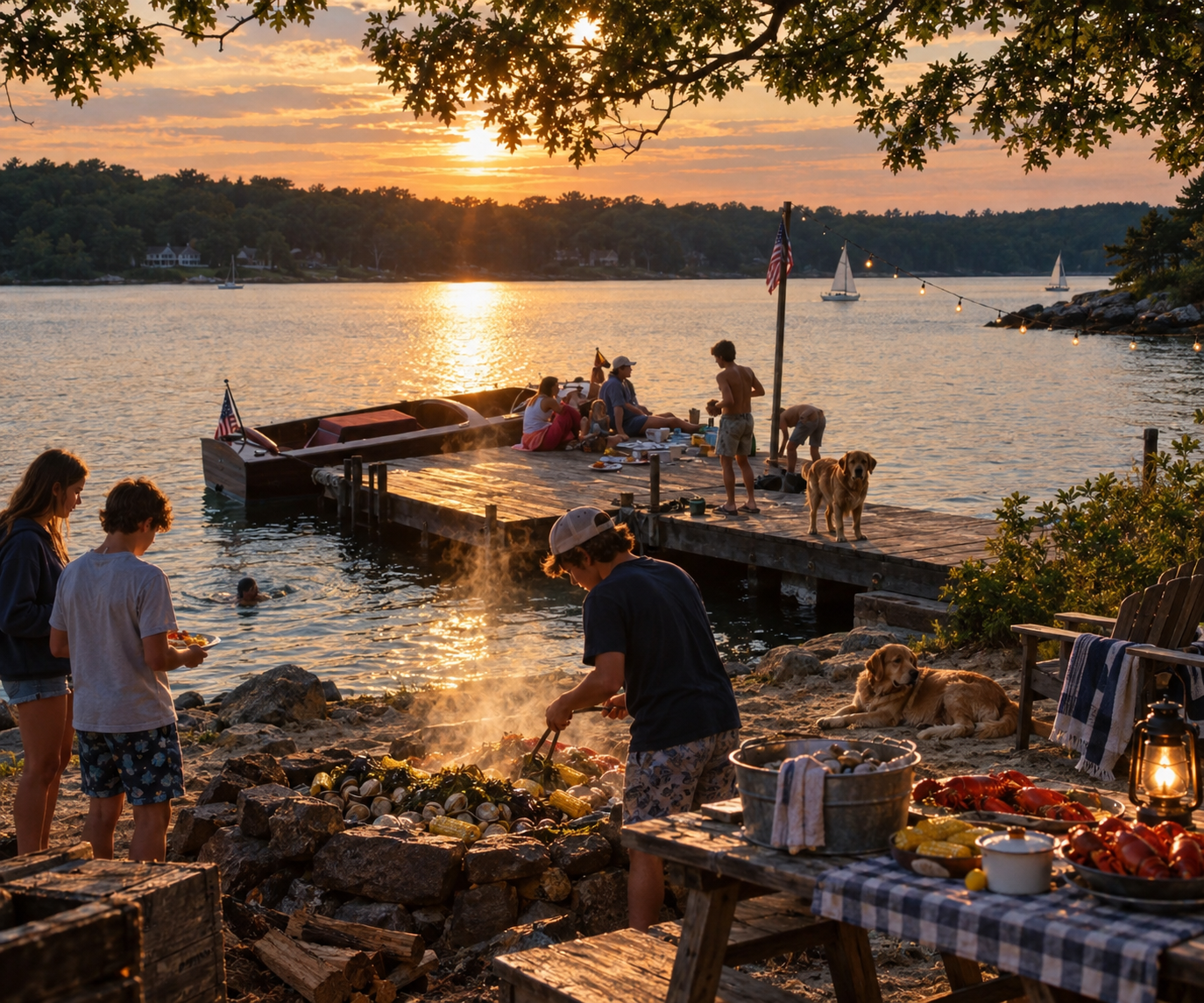
Purpose: This study explored the impacts of elite-level youth sport participation on family life.

Methodology: In-depth semi-structured interviews were conducted with parents of youth athletes (N = 17).

Findings: Parents extensively talked about the temporal demands of elite youth sports and necessity of time management. Three domains were found in parents’ accounts including, children’s time, parents’ time, and family’s time; temporal opportunities and challenges were identified within each domain. Time spent on sports was perceived positively, keeping children out of trouble and from video games/time online; however, it left no time for other activities. Although parents sacrificed their own activities to facilitate their child’s sports participation, they used the practice and tournament time to engage in personal interests, such as reading or exercising. Likewise, family’s time was restricted by youth sport schedules, but parents managed to turn car rides or tournament trips into quality family time.

Practical implications: Findings can be used by youth sport practitioners to enhance children and parents’ experiences.

Research contribution: Findings contribute to the literature by assessing the impacts of elite-level youth sports participation on family life.

Originality: The intricacies of how time-on task relates to parents’ relationship with their child’s sport have been understudied.

Standards Indiana

Sunday Best

February 15, 2026
mike@standardsmichigan.com
,
No Comments

Wearing Their Faith: New Religious Movements, Dress, and Fashion in America

Fashion Spring

Elephant House Coffee

February 13, 2026
mike@standardsmichigan.com

No Comments

Home Page

Vibe Shift: Tyranny of the Easily Offended

Located on George IV Bridge, near the heart of the city’s historic Old Town. It is perhaps best known as one of the places where J.K. Rowling is said to have written parts of the early Harry Potter books.

Launch of Scotland Street Coffee

Scotland

BSI Group | Buildings & Construction

Heavy financial dependence on international (non-citizen) students—who often comprise 20-30%+ of enrollments in Anglosphere universities (e.g., high proportions in Australia, Canada, UK)—shifts institutional priorities toward revenue maximization over preserving or promoting traditional Anglo-Western cultural norms and values.

Administrations adapt campuses to attract and retain large cohorts from Asia, the Middle East, and elsewhere by internationalizing curricula, diluting Western-centric content, emphasizing global/multicultural perspectives, and sometimes de-emphasizing local historical narratives (including Indigenous ones in settler societies like Australia, Canada, US). Socially, large enclaves form where students cluster by nationality, reducing meaningful integration with domestic students and altering campus social norms, events, discourse, and even language use in shared spaces.

Critics argue this erodes the distinctive Anglospheric ethos—rooted in English common law traditions, Enlightenment individualism, free speech norms, and Judeo-Christian/secular heritage—replacing it with a homogenized, market-driven globalism. Indigenous cultures face compounded marginalization as resources prioritize international accommodation over deeper indigenization efforts.

Related:

🐦Homophily Michigan 🐦

Tragedy of the Commons

Nourriture Hiver

February 13, 2026
mike@standardsmichigan.com
, , ,
No Comments

Western Colorado University Center for Cold Climate Food Security

Today we break down the catalog for food safety in education communities; with primary attention to consultations from private standard developing organizations and federal agencies charged with food safety.  We do so with sensitivity to animals and plants and sustainability of the global food supply chain.   Many schools are the communal cafeterias for the communities that own and operate them and run at commercial scale.

We prepare responses to public consultations released by standards developing organizations which, in many cases, have significant conformance enterprises.

ANSI Standards Action | Current Weekly Edition

Note the call for public comment on proposed WTO Agriculture, Sanitary and Phytosanitary (SPS) measures (Page 48)

Core titles are published by the ANSI accredited organizations listed below:

3-A Sanitary Standards

Catalog

ASHRAE International

The ASHRAE catalog is the most cross-cutting and fastest moving catalog in the land.   If you claim ownership of the United States energy domain you pretty much capture everything related campus safety and sustainability.  Best to deal with it on a day-by-day basis as we usually do according to daily topics shown on our CALENDAR.

Association for Packaging and Processing Technologies

American Society of Agricultural and Biological Engineers

Institute of Electrical and Electronic Engineers

National Electrical Safety Code   (Our particular interest lies in the safety and reliability of off-campus agricultural and research facilities that receive power from regulated utilities)

Kitchen Safety and Security System for Children

TupperwareEarth: Bringing Intelligent User Assistance to the “Internet of Kitchen Things”

Designing an IoT based Kitchen Monitoring and Automation System for Gas and Fire Detection

Re-Inventing the Food Supply Chain with IoT: A Data-Driven Solution to Reduce Food Loss

International Code Council

Commercial Kitchens

International Building Code Assembly Group A-2

International Building Code Group U Section 312 Agricultural Buildings

International Building Code Moderate Hazard Factory Industrial Group F-1 (Food Processing)

Who Gets Rich From School Lunch

National Fire Protection Association

Kitchen Wiring

National Electrical Code Article 210 (Branch Circuits)

National Electrical Code Article 547 (Agricultural Buildings)

Standard for the Installation of Air-Conditioning and Ventilating Systems

Public Input Report for the 2024 Revision

Standard for Ventilation Control and Fire Protection of Commercial Cooking Operations

Public Input Report for the 2024 Revision

NSF International

Food Equipment

Commercial Warewashing Equipment

Commercial Refrigerators and Freezers

Commercial Cooking, Rethermalization and Powered Hot Food Holding and Transport Equipment

Commercial Powered Food Preparation Equipment

US Federal Government:

US Department of Agriculture

Food & Drug Administration (HACCP)

State Governments:

Lorem ipsum @StandardsState

Global:

International Organization for Standardization

International Electrotechnical Commission

Codex Alimentarius

Food safety and sustainability standards populate are of the largest domains we track so if we need a break0-out session, let’s do it.  Use the login credentials at the upper right of our home page.

University of Kentucky College of Agriculture, Food and Environment

Agenda / Farm & Table


More

Standards supporting vertical farming

STANDARDS SUPPORT SOPHISTICATED FARMING METHODS THAT BRING PRODUCE TO YOUR TABLE

US Food & Drug Administration: Food Facility Registration Statistics (as  of January 11, 2021)

National Grange of the Order of Patrons of Husbandry

The U.S. Land-Grant University System: An Overview

American Society of Agricultural and Biological Engineers Standards Development

The origin of the Land grant act of 1862 

International Electrotechnical Commission: Keeping food safe from farm to plate

 Codex Alimentarius

Council for the Advancement of Standards in Higher Education: Dining Services Programs

Science and Our Food Supply: A Teacher’s Guide for High School Classrooms

Food Code 2017

Birds of a Feather Flourish Together

February 13, 2026
mike@standardsmichigan.com

No Comments

🐦Homophily Michigan 🐦

Development and Preliminary Validation of the Lovebird Scale

Click image


Graduation, Dating, Engagements, Weddings, Births & Obituaries

Parable of the Wedding Banquet

Weddings

Commercial Cooking Operations

February 13, 2026
mike@standardsmichigan.com
No Comments

Standard for Ventilation Control and Fire Protection of Commercial Cooking Operations

Food Science & Technology | University of California Davis

We’ll be getting down into the weeds today; starting with these transcripts:

First Draft Public Input Report

Second Draft Public Comment Report

Related:

Commercial Kitchens

Ventilation for Commercial Cooking Operations


More than 4,000 cadets gather for lunch inside Mitchell Hall at the U.S. Air Force Academy in Colorado Springs, Colo., Aug. 10, 2009. A staff of 200 food service professionals prepare nearly 13,000 meals per day for cadets throughout the academic year. (U.S. Air Force photo/Ann Patton)

Elevators & Lifts

February 12, 2026
mike@standardsmichigan.com

No Comments

The first elevator in the United States was installed at Harvard University in 1874. It was not a passenger elevator as we typically think of today, but rather a freight elevator used to move heavy items within a building. The installation of this elevator marked an important development in building technology and transportation within multi-story structures. It was based on the design of Elisha Otis, who is famous for inventing the safety elevator with a safety brake system that prevents the elevator from falling if the hoisting cable fails. Otis’ innovation played a pivotal role in making elevators safe and practical for everyday use, leading to their widespread adoption in buildings around the world.

Elevator design by the German engineer Konrad Kyeser (1405)

Education communities are stewards of 100’s of lifts, elevators and moving walks.  At the University of Michigan, there are the better part of 1000 of them; with 19 of them in Michigan Stadium alone.   The cost of building them — on the order of $50,000 to $150,000 per floor depending upon architectural styling — and the highly trained staff needed to operate, maintain and program interoperability software is another cost that requires attention.   All building design and construction disciplines — architectural, mechanical and electrical have a hand in making this technology safe and sustainabile.

We start with international and nationally developed best practice literature and work our way to state level adaptations.  Labor for this technology is heavily regulated.

Its a rarefied and crazy domain for the user-interest.  Expertise is passionate about safety and idiosyncratic but needs to be given the life safety hazard.  Today we review o pull together public consultation notices on relevant codes, standards and regulations today  11 AM/EDT.

Московский государственный университет имени

Elevators 500

More

NFPA 70 Article 620 Elevators, etc.

NEC Article 620 | David Herres

Elevator U

International Building Code Chapter 30: Elevators and Conveying Systems

Inside Higher Ed: Tragedy in an Elevator

Jimlielevators

University of Michigan Elevator Recall Control Wiring Schematic

University of Michigan Elevator Shaft Lighting Schematic


Lifts, escalators & moving walks

February 12, 2026
mike@standardsmichigan.com

No Comments

At the 1853 New York World’s Fair Elisha Otis amazed a crowd when he ordered the only rope holding the platform on which he was standing cut by an axeman. The platform fell only a few inches before coming to a halt; thus proving the safety locking mechanism he had invented will work. These elevators quickly became the type in most common usage and made vertical living possible.

Elisha Graves Otis shows his first elevator in the Crystal Palace, New York City, 1853. — Image by © Bettmann/CORBIS

Most large research universities have 100 – 1000 elevators that are highly regulated, maintained by highly regulated service personnel and inspected by highly trained conformance operatives; thus our primary interest in state-specific regulations.  We have a  secondary interest in innovation in the technology generally.  Many sustainability goals urged in academic circles  — which include greater population density in smaller areas — are challenged by mobility issues.

From the project prospectus:

“…The main feature of these products is that they are an integral part of industrial, residential or public buildings. Consequently, they should be adaptable to the technical and architectural constraints of such buildings. They must also meet the capacity requirements imposed by the intended use of the building. These products are considered as means of transport and therefore represent an essential component of the functional life of the buildings in which they are installed. Contrary to most public means of transport, they are intended for free use and operation by their passengers, which makes the integration of safety an essential concern…”

STRATEGIC BUSINESS PLAN ISO/TC178: Lifts, escalators and moving walks

The Association française de normalisation (AFNOR) is the global Secretariat.  ANSI’s US Technical Advisory Group Administrator is the American Society of Mechanical Engineers.  Stakeholders in US-based education communities are encouraged to communicate directly with ASME;  CLICK HERE.

We maintain the work products of this committee on the standing agendas of our Mechanical, Elevator and Global colloquia; open to everyone.  See our CALENDAR for the next online meeting.

Michigan Stadium — the largest collegiate stadium in the world — has 19 elevators.

Issue: [11-50]

Category: Mechanical, Mobility, Global

Colleagues: Mike Anthony, Larry Spielvogel

Paternoster Lift Challenge

Sicurezza degli ascensori

Elevator Safety Code

February 12, 2026
mike@standardsmichigan.com
No Comments

Today, special attention to managing elevator passengers trapped in elevators during power outages.  Incident management involves the following:

  1. Automatic battery-lowering systems (standard in modern elevators) gently descend the car to the nearest floor and open the doors within minutes.
  2. Backup generators or UPS units keep lights, intercoms, and ventilation running.
  3. Mandatory two-way communication and remote monitoring allow instant contact with 24/7 response teams.
  4. Fire-service phase II keys and firefighter overrides ensure rapid rescue.
  5. Clear emergency instructions and regular maintenance of brakes and overspeed governors prevent falls.

These redundancies, required by ASME A17.1 codes in most jurisdictions, have made prolonged entrapments extremely rare and almost never dangerous.

2026 National Electrical Code Article 620: Elevators, Dumbwaiters, Escalators, Moving Walks, Platform Lifts, and Stairway Chairlifts.

CMP-12 Public Input TranscriptCMP-12 Public Comment Transcript

American School & University: Modernizing Elevator Emergency Communications on School and University Campuses

Elevator,  escalator  and moving walk systems are among the most complicated systems in any urban environment, no less so than on the  #WiseCampus in which many large research universities have 100 to 1000 elevators to safely and economically operate, service and continuously commission.  These systems are regulated heavily at state and local levels of government and have oversight from volunteers that are passionate about their work.

These “movement systems” are absorbed into the Internet of Things transformation.  Lately we have tried to keep pace with the expansion of requirements to include software integration professionals to coordinate the interoperability of elevators, lifts and escalators with building automation systems for fire safety, indoor air quality and disaster management.  Much of work requires understanding of the local adaptations of national building codes.

Some university elevator O&M units use a combination of in-house, manufacturer and standing order contractors to accomplish their safety and sustainability objectives.

In the United States the American Society of Mechanical Engineers is the dominant standards developer of elevator and escalator system best practice titles;  its breakdown of technical committees listed in the link below:

A17 ELEVATORS AND ESCALATORS

STDMi: Elevator Backup Power

C&S Connect: ASME Proposals Available for Public Review

Public consultation on a new standard for electrical inspector qualifications closes May 27th.

ASME A17.7/CSA B44.7 – 20XX, Performance-based code for elevators and escalators (280 pages)

Safety Code for Existing Elevators and Escalators

Guide for Inspection of Elevators, Escalators, and Moving Walks

Guide for Elevator Seismic Design

As always, we encourage facility managers, elevator shop personnel to participate directly in the ASME Codes & Standards development process.   For example, it would be relatively easy for our colleagues in the Phoenix, Arizona region to attend one or more of the technical committee meetings; ideally with operating data and a solid proposal for improving the A17 suite.

University of Wisconsin Stadium Elevator


All ASME standards are on the agenda of our Mechanical, Pathway and Elevator & Lift colloquia.  See our CALENDAR for the next online teleconferences; open to everyone.  Use the login credentials at the upper right of our home page.


Issue: [11-50]

Category: Electrical, Elevators, #WiseCampus

Colleagues: Mike Anthony, Jim Harvey, Richard Robben, Larry Spielvogel


More:

Bibliography: Elevators, Lifts and Moving Walks

ISO/TC 178 Lifts, escalators and moving walks

Human Factors Using Elevators in Emergency Evacuation

Archive / Elevator Safety Code


Layout mode
Predefined Skins
Custom Colors
Choose your skin color
Patterns Background
Images Background
Standards Michigan
error: Content is protected !!
Skip to content