“Education is simply the soul of a society
as it passes from one generation to another”
— G.K. Chesterton
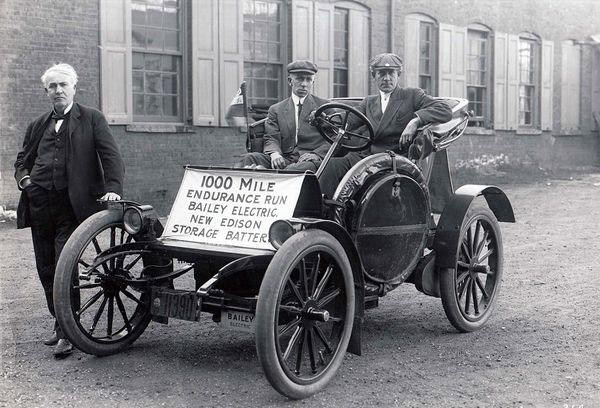
| The IEC was founded by a group of pioneers in the field of electricity and electrotechnology, including prominent figures such as Charles Le Maistre, Lord Kelvin (William Thomson), Emil Rathenau, Charles Steinmetz, and Thomas Edison. These individuals recognized the need for international standardization in the growing field of electrical engineering, as electrical technologies were rapidly advancing and becoming more prevalent around the world. The IEC was established as a non-profit organization with the goal of creating and promoting consensus-based standards that would be recognized and adopted globally. |
The Association of University Technology Managers publishes a variety of open-source documents related to technology transfer and intellectual property management.
AUTM Technology Transfer Practice Manual: This is a comprehensive guide to best practices in technology transfer and intellectual property management, written by AUTM members.
AUTM Better World Report: This is an annual publication that highlights the impact of academic research and technology transfer on society and the economy.
AUTM Public Policy Priorities: This document outlines AUTM’s advocacy priorities related to intellectual property and technology transfer, and provides guidance for members on engaging with policymakers.
AUTM Resource Library: This is a collection of resources related to technology transfer and intellectual property management, including webinars, case studies, and templates.
These open-source documents are freely available on the AUTM website and can be accessed by anyone interested in learning more about technology transfer and intellectual property management.
This content is accessible to paid subscribers. To view it please enter your password below or send mike@standardsmichigan.com a request for subscription details.
“The Bible as Killer App: Reading Scripture in the Digital Age”
Timothy Beal, Case Western University Department of Religious Studies
The Bible was originally written in three languages: Hebrew, Greek, and Aramaic. The Old Testament was mostly written in Hebrew with some portions in Aramaic, while the New Testament was written in Greek. Its influence on mathematics and physics shaped the modern world.
One of the earliest examples of its influence on science can be seen in the work of the ancient Greek mathematician Euclid, whose “Elements” is one of the most important works in the history of mathematics. Euclid’s work was heavily influenced by the Pythagorean school of thought, which had strong ties to the Greek religious traditions of the time.
In the Middle Ages, Christian scholars such as Thomas Aquinas and Roger Bacon began to apply mathematical principles to theology, which helped to establish a new tradition of inquiry that became known as Scholasticism. This tradition, which emphasized the use of reason and logic to explore theological questions, had a profound impact on the development of mathematics and science in Western Europe.
During the Renaissance, Christian thinkers such as Nicolaus Copernicus and Johannes Kepler made important advances in mathematics and astronomy, which were driven in part by their desire to understand the nature of God’s creation. Copernicus’s heliocentric model of the solar system, for example, was based on mathematical calculations that were informed by his theological beliefs.
In more recent times, Christian mathematicians have continued to make significant contributions to the field. For example, the 19th-century mathematician George Boole, who was a devout Anglican, developed a new system of algebra that laid the groundwork for the development of computer science.
Readings:
This content is accessible to paid subscribers. To view it please enter your password below or send mike@standardsmichigan.com a request for subscription details.
Some colleges and universities offer loan programs or financial assistance to graduates to help them purchase a home. These programs are often referred to as “homebuyer assistance programs” or “faculty/staff housing programs.”
One example is the University of California, which offers a Home Loan Program to eligible faculty and staff members. This program provides financing for the purchase of a primary residence, including both first-time homebuyers and those who have owned a home before. The program offers competitive interest rates and a low down payment requirement.
Another example is Columbia University, which has a Homeownership Assistance Program that offers eligible employees forgivable loans of up to $60,000 to use towards the purchase of a home in select neighborhoods around the university’s campuses.
It’s worth noting that these programs are not available at all colleges and universities, and eligibility requirements and loan terms can vary. It’s important for graduates to research and inquire with their alma maters about any available homebuyer assistance programs.
Design and Implementation of a Nursing Robot for Old or Paralyzed Person
Aamir Ahamed- Rubel Ahmed – Md. Iquebal Hossain Patwary – Shafayat Hossain – Sohan Ul Alam
Hasan al Banna
International Islamic University Chittagong Department of Electrical and Electronic Engineering
Abstract: With todays increasing technologies, people also are using robots in different sectors of human life to make life easier. Meanwhile, in the care of patients, robots are used in the medicare system. A nursing robot has the ability to carry out basic nursing care functions as expected by the patients like that a human nurse. But in our country patients do not get proper nursing care, accordingly, older people are suffered a lot. They always forget to take their medicine at the proper time. So, in this paper, it is our main concern about patients or older people to remind taking medicine in time and to provide pure drinking water at any time when the patients desired. We made a framework that is a line follower robot works with IR sensor and Arduino UNO microcontroller. RF receiver receives signals from respective patients. A real-time clock (RTC) is used to supply medicine in due time. IR sensor and Ultrasonic sensor sense the presence of water glass and the level of drinking water.
New update alert! The 2022 update to the Trademark Assignment Dataset is now available online. Find 1.29 million trademark assignments, involving 2.28 million unique trademark properties issued by the USPTO between March 1952 and January 2023: https://t.co/njrDAbSpwB pic.twitter.com/GkAXrHoQ9T
— USPTO (@uspto) July 13, 2023
Standards Michigan Group, LLC
2723 South State Street | Suite 150
Ann Arbor, MI 48104 USA
888-746-3670