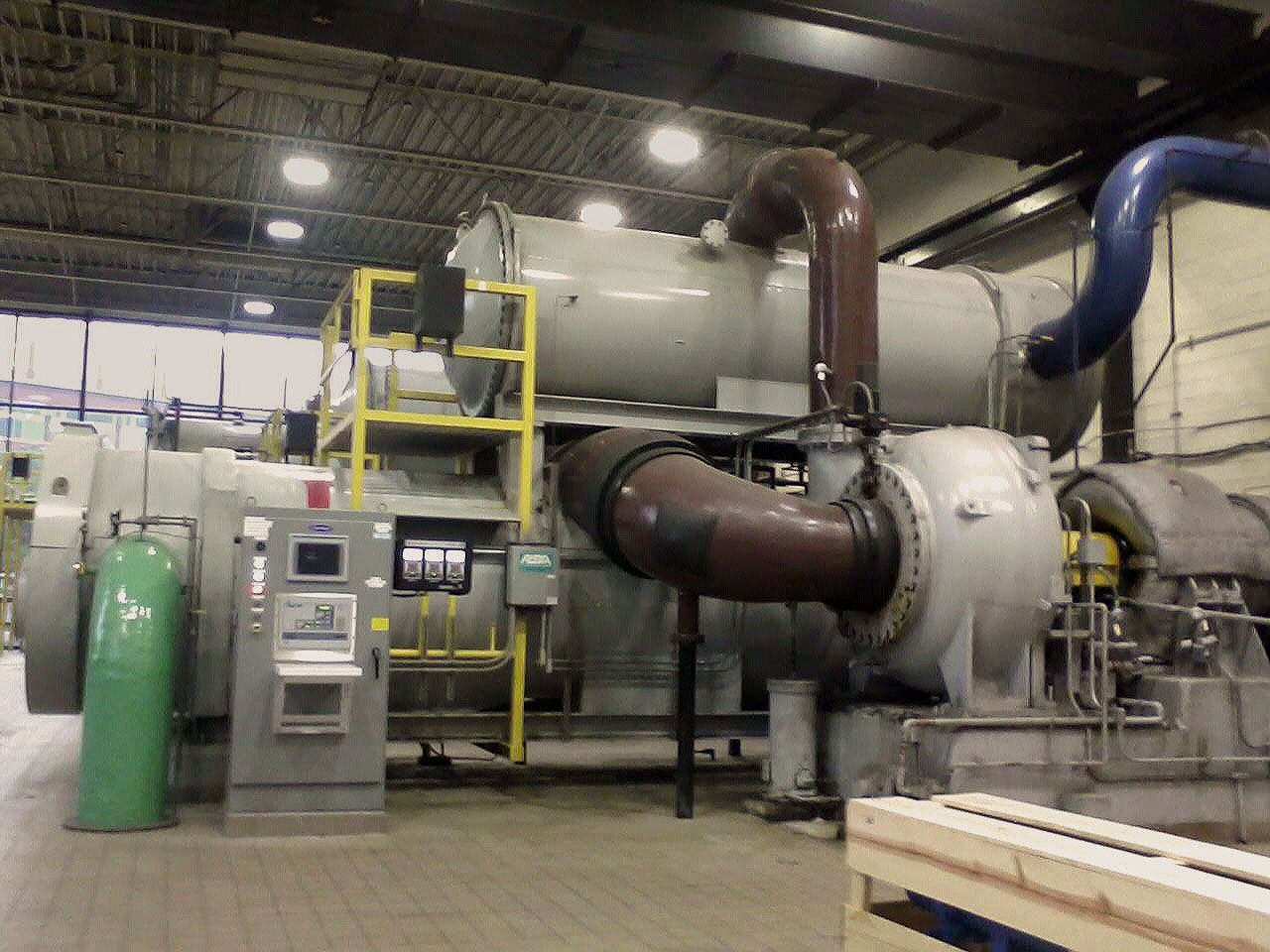
Today at 15:00 UTC we will review the latest in best practice literature for air conditioning systems. Note that we have broken out this topic from the standing Mechanical colloquia. Our approach features interoperability and system considerations. Catalogs on the agenda:
The Air Conditioning Contractors Association of America is an accredited standards developer for the design, maintenance, installation, testing, and performance of indoor environment systems. We find several ACCA best practice titles referenced as in education facility design guidelines and construction contracts. Much of its catalog forms the foundation for the technical curricula in trade schools. Its library is linked below:
As of this posting the ACCA has not released any titles for public comment. We encourage our colleagues to interact directly with the ACCA standards team: Air Conditioning Contractors Association, 2800 Shirlington Rd, Suite 300, Arlington, VA 22206, (703) 575-4477, membership@acca.org.
We maintain the ACCA suite on the standing agenda of our Air Conditioning and Mechanical teleconferences. See our CALENDAR for the next online meeting; open to everyone.
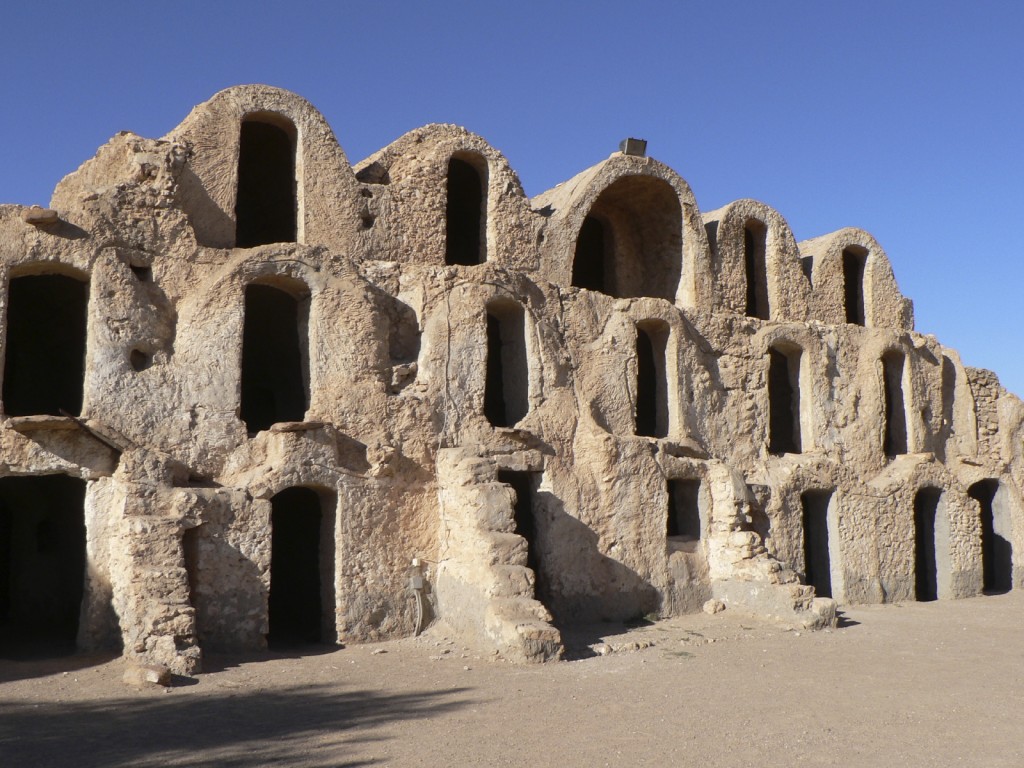
Okay. Can you tell me more about the inspiration for the Cherokee gothic architecture there
Yes. The interesting thing is that “Cherokee Gothic” wasn’t originally the name of a formal architectural movement. Frank Lloyd Wright coined the phrase after visiting OU—apparently in 1946—to describe what he saw already happening there: recognizable Collegiate Gothic forms combined with patterns and details understood as deriving from Oklahoma’s Native American traditions. The Library of Congress describes essentially that combination.
The underlying story begins earlier. After OU’s original university building burned in 1903, English professor Vernon Louis Parrington devised a campus plan. Much of it was never built, but his conception produced the North and South Ovals that still organize the settlement. The Gothic buildings subsequently placed around those spaces gave OU the collegiate vocabulary familiar from eastern universities—but in Oklahoma it evolved differently.
The distinctive visual effect comes from brickwork and light stone rather than the heavy gray masonry we associate with Princeton, Yale or Oxford. You’ll see pointed arches, buttresses, towers and Gothic massing, but also patterned brickwork and geometric ornament. One architect involved with OU’s later residential colleges described the contrasting red brick and pale limestone as making the buildings appear lighter and more animated than conventional Collegiate Gothic. He also recounts the explanation that Wright saw something reminiscent of the rhythmic patterns of Native American blankets.
6
Bizzell Memorial Library is probably the mature expression to study. Built in 1929, its brick surfaces, pale stone tracery and vertical Gothic forms are recognizably collegiate, but the ornament and color make it very different from an imported English quadrangle. OU itself describes Native American influence as having been present in the university’s architecture since its territorial beginnings.
There’s another wrinkle you might enjoy for STDMi: Bruce Goff later made OU one of the most unconventional architecture schools in America. That isn’t the same thing as Cherokee Gothic. Under Goff, students were actively discouraged from simply copying European historical styles and were encouraged to draw from the Oklahoma landscape, ordinary objects, unusual materials and Native American design. In other words, the campus already embodied the question Goff’s school later pursued much more radically: what should architecture in Oklahoma look like if it isn’t simply architecture imported from somewhere else?
That may be the most useful hook for your post. Cherokee Gothic isn’t especially interesting because someone mixed two decorative styles. It’s interesting because OU was trying to make the familiar American university Gothic belong to Oklahoma.
This content is accessible to paid subscribers. To view it please enter your password below or send mike@standardsmichigan.com a request for subscription details.
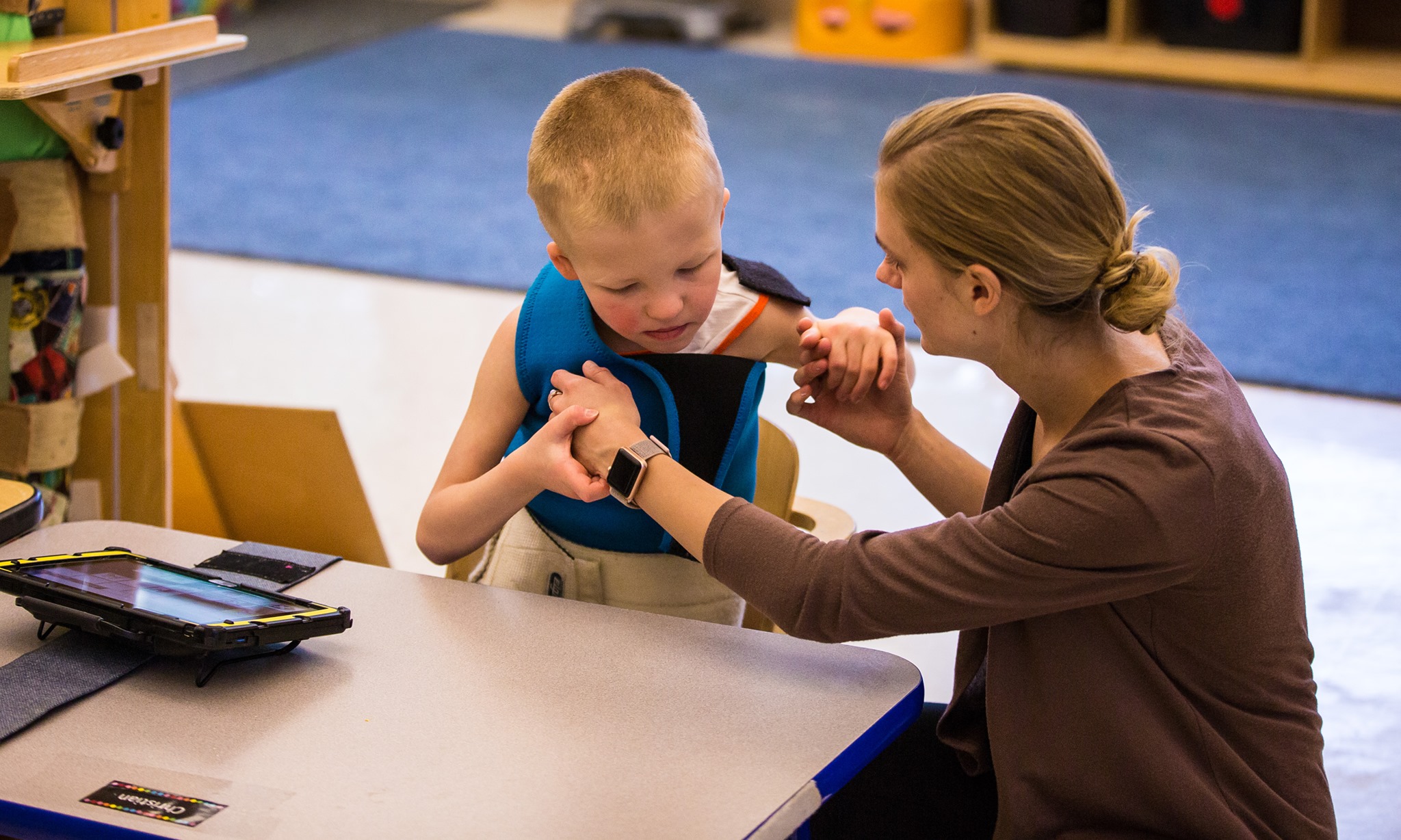
Special education classrooms are governed not by one standard, but by the intersection of building, fire, electrical, accessibility, environmental and educational requirements. Among the dominant U.S. codes and standards are:
International Building Code (IBC)
International Existing Building Code (IEBC)
International Fire Code (IFC)
NFPA 101 — Life Safety Code
NFPA 70 — National Electrical Code (NEC)
NFPA 72 — National Fire Alarm and Signaling Code
ICC A117.1 — Accessible and Usable Buildings and Facilities
2010 ADA Standards for Accessible Design
ASHRAE Standard 62.1 — Ventilation and Acceptable Indoor Air Quality
ASHRAE Standard 55 — Thermal Environmental Conditions for Human Occupancy
ASHRAE Standard 90.1 — Energy Standard for Sites and Buildings Except Low-Rise Residential Buildings
ANSI/ASA S12.60 — Acoustical Performance Criteria, Design Requirements and Guidelines for Schools
IES Lighting Library / ANSI-IES recommendations
ASCE 7 — Minimum Design Loads and Associated Criteria for Buildings and Other Structures
IDEA, ADA and Section 504 regulatory framework
The resulting classroom is therefore a systems problem: accessibility, acoustics, lighting, ventilation, electrical power, signaling, emergency egress and assistive technology all meet in the same room.
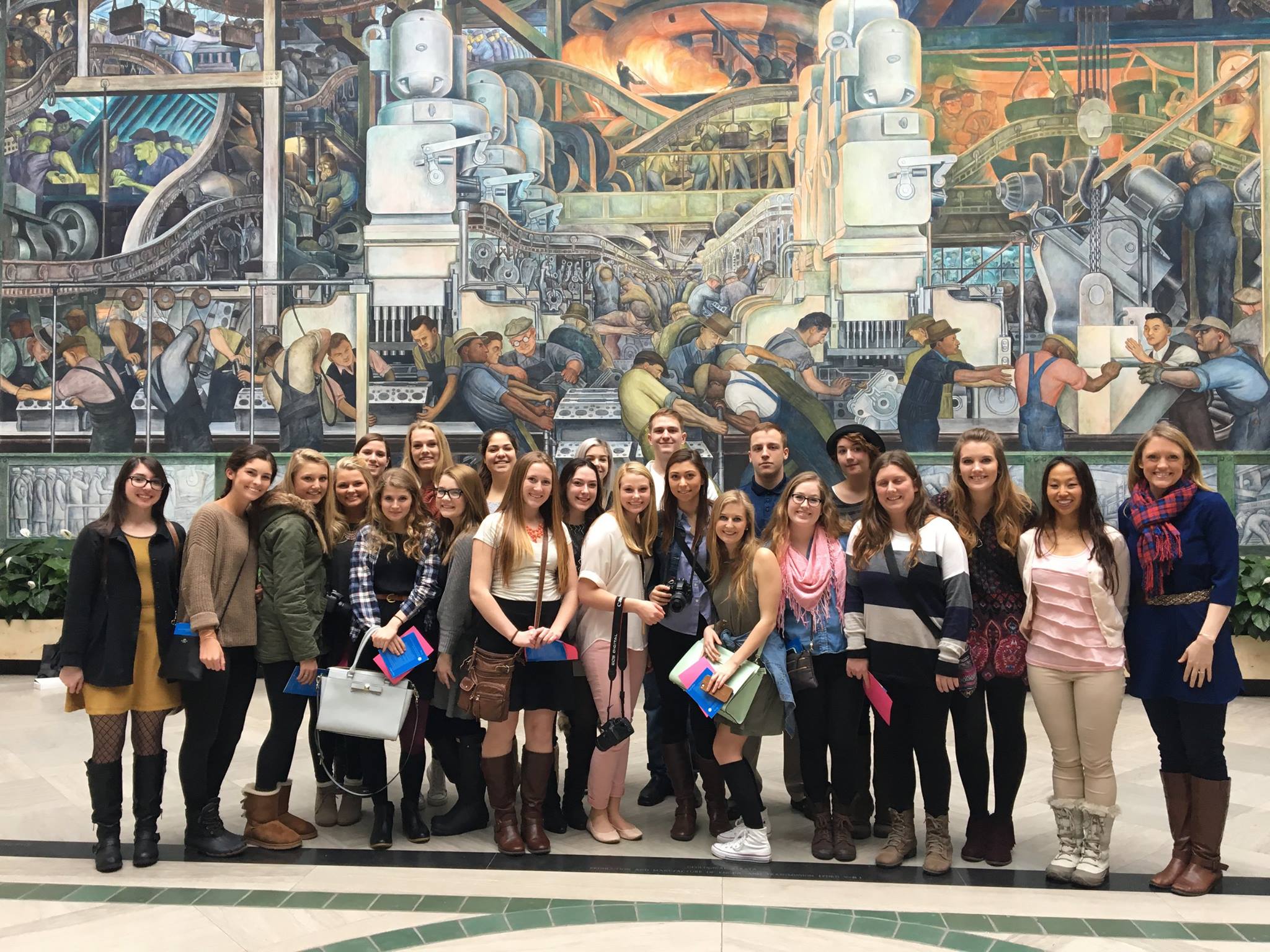
Saugatuck High School | Allegan County Michigan @ Detroit Institute of Arts | Michigan West
The American voluntary consensus standards system depends upon the steady participation of universities. To encourage that participation, many standards developers offer research grants, scholarships, travel stipends, student paper competitions, and postgraduate fellowships for faculty members, graduate students, and emerging professionals.
These programs help offset the costs of research, conference attendance, committee meetings, and publication while introducing new generations of scholars to the consensus process.
The investment benefits both the standards community and higher education. Universities contribute fresh research, analytical methods, and technical expertise, while students gain firsthand experience with the development of engineering, scientific, accounting, safety, and building standards that influence practice throughout the world.
Student Research Grants, Scholarships & Travel Support
ASTM International — Academic Outreach Program featuring student memberships, scholarships, research grants, travel assistance, student chapters, and opportunities to participate directly in standards committees. (Student Members)
ASHRAE — Society scholarships, Graduate Student Grant-in-Aid research awards, undergraduate equipment grants, and conference travel assistance.
ASCE — Undergraduate and graduate scholarships, Student Chapter awards, and discipline-specific fellowships.
ASME — Scholarships and fellowships through the ASME Foundation together with student paper competitions and travel assistance.
IEEE — Scholarships, fellowships, travel grants, Foundation awards, and Society-sponsored student programs. Most grants originate at the society, region and section level. Example: Education & Healthcare Facilities
ICC — Student chapters, scholarships, educational partnerships, and workforce development initiatives.
NFPA Research Foundation — Sponsored university research and academic partnerships advancing fire, electrical, and life safety.
NIST — Graduate student research opportunities, laboratory collaborations, and financial assistance for visiting scientists.
SAE International — Engineering scholarships supporting students in automotive, aerospace, manufacturing, and mobility disciplines.
FASB / GASB — The Postgraduate Technical Assistant Program and the Gilbert W. Crain Memorial Research Grant support the next generation of accounting standards professionals.
ISO Young Professionals Programme — Annual leadership and standards development program sponsored through ISO member bodies.
ISO
ISO DEVCO — Capacity-building initiatives, technical assistance, education, and participation support for developing countries.
IEC
IEC Young Professionals Programme — International leadership development and participation in electrotechnical standards activities.
IEC
IEC Academy — Standards education, webinars, technical training, and professional development resources.
ITU
ITU Academia Programme — Membership and engagement opportunities for universities participating in international telecommunications standards development.
ITU
ITU Fellowships Programme — Travel assistance and fellowships enabling qualified participants to attend ITU standards meetings and conferences.
ITU-R
ITU-R Fellowships — Support for participation in Radiocommunication Sector meetings and technical study groups.
Purpose: This study explored the impacts of elite-level youth sport participation on family life.
Methodology: In-depth semi-structured interviews were conducted with parents of youth athletes (N = 17).
Findings: Parents extensively talked about the temporal demands of elite youth sports and necessity of time management. Three domains were found in parents’ accounts including, children’s time, parents’ time, and family’s time; temporal opportunities and challenges were identified within each domain. Time spent on sports was perceived positively, keeping children out of trouble and from video games/time online; however, it left no time for other activities. Although parents sacrificed their own activities to facilitate their child’s sports participation, they used the practice and tournament time to engage in personal interests, such as reading or exercising. Likewise, family’s time was restricted by youth sport schedules, but parents managed to turn car rides or tournament trips into quality family time.
Practical implications: Findings can be used by youth sport practitioners to enhance children and parents’ experiences.
Research contribution: Findings contribute to the literature by assessing the impacts of elite-level youth sports participation on family life.
Originality: The intricacies of how time-on task relates to parents’ relationship with their child’s sport have been understudied.
NFHS Corporate Partner @BrooksRunning is BACK and officially off and running with their Future Run Team Grants Program. Brooks has donated over $4,000,000 in gear to Cross Country and Track programs around the county the past 3 years.
Mike Anthony is ID Number 469 | Proposal period closes 11:59 PM US Pacific Time | May 15
Meeting Notes in red
Loss of electric power and internet service happens more frequently and poses at least an equal — if not greater threat — to public safety. So why does neither the National Electrical Code or the National Electrical Safety Code integrate reliability into their core requirements? Reliability requirements appear in a network of related documents, either referenced, or incorporated by reference; sometimes automatically, sometimes not.
NESC Main Committee Membership: Page xii
Apart from the IEEE as the accredited standards developer, there are no “pure non-government user-interests” on this committee; although ANSI’s Essential Requirements for balance of interests provides highly nuanced interpretation. The Classifications on Page xiii represents due diligence on meeting balance of interest requirements.
In our case, we are one of many large universities that usually own district energy plants that both generate and purchase generate electric power (as sometimes provide var support to utilities when necessary; as during the August 2003 North American outage). For University of Michigan, for example, has about 20 service points at 4.8 – 120 kV. Its Central Power Plant is the largest cogeneration plant on the DTE system.
Contents: Page xxviii | PDF Page 29
Absence of internet service is at least as much a hazard, and more frequent, than downed wires. Is there a standards solution? Consideration of interoperability of internet service power supported on utility poles should track in the next revision.
No mention of any reliability related IEEE reliability standards in the present edition. Why is this?
Section 2: Definitions of Special Terms| PDF Page 46
In the 2023 Handbook, the term “reliability” shows up 34 times.
availability (from Bob Arno’s IEEE 3006-series and IEEE 493 Gold Book revision)
reliability (Bob Arno)
utility (PDF Page 57)
communication | PDF Page 47
list of terms defined in the 2023 National Electrical Code that are new and relevant to this revision: (Article 100 NEC)
municipal broadband network, digital subscriber line, surveillance cameras
wireless communication system
010. Purpose | PDF Page 40
Looks like improvement since last edition. Suggest explicit Informational Note, as in the NEC, using “reliability” and referring to other agencies. “Abnormal events” could be tighter and refer to other standards for abnormal, steady-state events. The clarification of purpose is welcomed although a great deal remains uncovered by other best practice literature; though that can be repaired in this edition.
Legacy of shared circuit path standards. Should provisions be made for municipal surveillance, traffic and vehicle control infrastructure. What would that look like?
011. Scope | Covered PDF Page 40
3. Utility facilities and functions of utilities that either (a) generate energy by conversion from some other form of energy such as, but not limited to, fossil fuel, chemical, electrochemical, nuclear, solar, mechanical, wind or hydraulic or communication signals, or accept energy or communication signals from another entity, or (b) provide that energy or communication signals through a delivery point to another entity.
5. Utility facilities and functions on the line side of the service point supplied by underground or overhead conductors maintained and/or installed under exclusive control of utilities located on public or private property in accordance with legally established easements or rights-of-way, contracts, other agreements (written or by conditions of service), or as authorized by a regulating or controlling body. NOTE: Agreements to locate utility facilities on property may be required where easements are either (a) not obtainable (such as locating utility facilities on existing rights-of-way of railroads or other entities, military bases, federal lands, Native American reservations, lands controlled by a port authority, or other governmental agency), or (b) not necessary (such as locating facilities necessary for requested service to a site).
012. General Rules | Covered PDF Page 42
For all particulars not specified, but within the scope of these rules, as stated in Rule 011A, design, construction, operation, and maintenance should be done in accordance with accepted good practice for the given local conditions known at the time by those responsible for the communication or supply lines and equipment
General purpose clause could use some work since no definition of “accepted good practice”. Refer to IEEE bibliography.
Section 2: Definition of special terms | PDF Page 46
Recommendations elsewhere should track here.
The word “installation” appears 256 times and is generally understood in context by experts. Suggest borrow from NEC to clarify our concern for including co-linear/communication circuits.
conduit. exclusive control, lines, photovoltaic, NEC interactive. qualified
Section 3: Reference
NFPA 70®, National Electrical Code® (NEC®). [Rules 011B4 NOTE, 099C NOTE 1, and 127
IEEE Std 4™-1995, IEEE Standard Techniques for High-Voltage Testing. [Table 410-2 and Table 410-3]
IEEE Std 516™-2009, IEEE Guide for Maintenance Methods on Energized Power-Lines. [Rules 441A4
NOTE 2, 446B1, and 446D3 NOTE, and Table 441-5, Footnote 4]
IEEE Std 1427™-2006, IEEE Guide for Recommended Electrical Clearances and Insulation Levels in
Air-Insulated Electrical Power Substations. [Rule 124A1 NOTE, Table 124-1, 176 NOTE, and 177 NOTE]
IEEE Std 1584™-2002, IEEE Guide for Performing Arc Flash Hazard Calculations. [Table 410-1,
Footnotes 1, 3, 6, and 14]
IEEE Std C62.82.1™-2010, IEEE Standard for Insulation Coordination—Definitions, Principles, and Rules.
[Table 124-1 Footnote 5]
Add references to Gold Book, 1386, etc. IEC since multinationals conform.
Safety Rules for the Installation and Maintenance of Overhead Electric Supply and Communication Line | PDF Page 111
Has anyone confirmed that these tables match NEC Table 495.24 lately? If it helps: there were no meaningful changes in the 2023 NEC in Article 495, the high voltage article
Section 11. Protective arrangements in electric supply stations | PDF Page 77
A safety sign shall be displayed on or beside the door or gate at each entrance. For fenced or walled electric supply stations without roofs, a safety sign shall be displayed on each exterior side of the fenced or wall enclosure. Where the station is entirely enclosed by walls and roof, a safety sign is required only at ground level entrances. Where entrance is gained through sequential doors, the safety sign should be located at the inner door position. (A clarification but no change. See Standards Michigan 2017 proposals)
Recommend that all oil-filled cans be removed and services upgraded through energy regulations with new kVA ratings
Section 12: Installation and maintenance of equipment
093. Grounding conductor and means of connection
Fences The grounding conductor for fences required to be effectively grounded by other parts of this Code shall meet the requirements of Rule 093C5 or shall be steel wire not smaller than Stl WG No. 5.
D. Guarding and protection | PDF Page 67
124. Guarding live parts| PDF Page 85
Propose roofs required for exterior installations
Part 2. Safety Rules for the Installation and Maintenance of Overhead Electric Supply and Communication Line | Page 72
Section 22. Relations between various classes of lines and equipment | Page 80
222. Joint use of structures | Page 82
Where the practice of joint use is mutually agreed upon by the affected utilities, facilities shall be subject to the appropriate grade of construction specified in Section 24. Joint use of structures should be
considered for circuits along highways, roads, streets, and alleys. The choice between joint use of structures and separate lines shall be determined through cooperative consideration with other joint
users of all the factors involved, including the character of circuits, worker safety, the total number and weight of conductors, tree conditions, number and location of branches and service drops, structure
conflicts, availability of right-of-way, etc.
Reliability considerations for sustaining internet service when power supply is absent.
Par2 Section 20 Safety Rules for the Installation and Maintenance of Overhead Electric Supply and Communication Line | PDF Page 111
Has anyone confirmed that these tables match NEC Table 495.24 lately?
Part 3. Safety Rules for the Installation and Maintenance of Underground Electric Supply and Communication Lines | Page 220
Renewable energy for internet access
311. Installation and maintenance
A. Persons responsible for underground facilities shall be able to indicate the location of their facilities.
B. Reasonable advance notice should be given to owners or operators of other proximate facilities that
may be adversely affected by new construction or changes in existing facilities.
C. For emergency installations, supply and communication cables may be laid directly on grade if the
cables do not unreasonably obstruct pedestrian or vehicular traffic and either:
1. The cables are covered, enclosed, or otherwise protected, or
2. The locations of the cables are conspicuous.
Supply cables operating above 600 V shall meet either Rule 230C or 350B.
NOTE: See Rules 014B2 and 230A2d.
Part 4. Work Rules for the Operation of Electric Supply and Communications Lines and Equipment | PDF Page 289
When and why was the term “Work” added to the title of this section?
Core text for the definition of wireless communication system reliability
Appendix E Bibliography| PDF Page 355
Index | PDF Page 398
The word “reliability” appears only three times. Should it track in the NESC or should it track in individual state requirements. So neither the NEC nor the NESC couples closely with power and communication reliability; despite the enormity and speed of research.
This content is accessible to paid subscribers. To view it please enter your password below or send mike@standardsmichigan.com a request for subscription details.
New update alert! The 2022 update to the Trademark Assignment Dataset is now available online. Find 1.29 million trademark assignments, involving 2.28 million unique trademark properties issued by the USPTO between March 1952 and January 2023: https://t.co/njrDAbSpwBpic.twitter.com/GkAXrHoQ9T