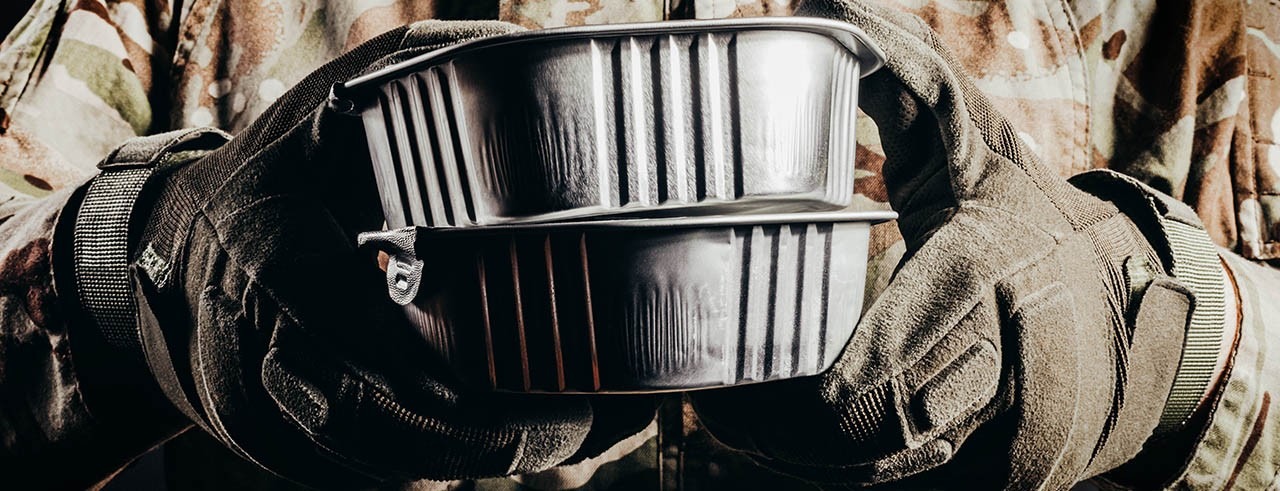
“Whether it’s chili with beans, barbecued beef or meatballs in marinara sauce, members of the United States military are served up a rotating menu of entrees through meals, ready to eat rations. Packed in individual pouches, these self-contained meals can be eaten during combat operations, humanitarian missions or field trainings, providing nourishment on the go. Yet while MREs were first piloted for U.S. military members during the Vietnam War, it wasn’t until the 1990s that it’s been possible for these meals to be served hot…
…We can thank a University of Cincinatti Professor of Mechanical Engineering for that.” (And transforming the civilian emergency food industry, to boot)
This content is accessible to paid subscribers. To view it please enter your password below or send mike@standardsmichigan.com a request for subscription details.
The steeplechase event requires a combination of speed, endurance, and jumping ability, as athletes must clear the barriers while maintaining their pace and negotiating the water jump. The rules and specifications for the steeplechase event are set by the International Association of Athletics Federations the governing body for the sport of athletics (track and field) worldwide; with minor adaptations by the NCAA for intercollegiate competition.
Emma Coburn | University of Colorado Boulder
The steeplechase is a distance race with barriers and a water pit that athletes must clear during the race. According to the NCAA Track and Field and Cross Country rulebook, the standards for the steeplechase water jump are as follows:
Length: The water pit must be at least 3.66 meters (12 feet) long.
Width: The water pit must be at least 3.66 meters (12 feet) wide.
Depth: The water pit must have a minimum depth of 0.7 meters (2 feet 4 inches) and a maximum depth of 0.9 meters (2 feet 11 inches).
Slope: The slope of the water pit must not exceed 1:5, meaning that for every 5 meters in length, the water pit can rise by no more than 1 meter in height.
Barrier: The water pit must be preceded by a solid barrier that is 91.4 cm (3 feet) high. Athletes are required to clear this barrier before landing in the water pit.
These standards may be subject to change and may vary depending on the specific NCAA division (Division I, Division II, or Division III) and other factors such as venue requirements. Therefore, it’s always best to refer to the official NCAA rules and regulations for the most up-to-date and accurate information on the steeplechase water jump standards in NCAA competitions.
ASTM F 2157-09 (2018) Standard Specification for Synthetic Surfaced Running Tracks
This specification establishes the minimum performance requirements and classification when tested in accordance with the procedures outlined within this specification. All documents referencing this specification must include classification required.
ASTM F 2569-11 Standard Test Method for Evaluating the Force Reduction Properties of Surfaces for Athletic Use
This test method covers the quantitative measurement and normalization of impact forces generated through a mechanical impact test on an athletic surface. The impact forces simulated in this test method are intended to represent those produced by lower extremities of an athlete during landing events on sport or athletic surfaces.
ASTM F 2949-12 Standard Specification for Pole Vault Box Collars
This specification covers minimum requirements of size, physical characteristics of materials, standard testing procedures, labeling and identification of pole vault box collars.
ASTM F 1162/F1162M-18 Standard Specification for Pole Vault Landing Systems
This specification covers minimum requirements of size, physical characteristics of materials, standard testing procedures, labeling and identification of pole vault landing systems.
ASTM F 2270-12 (2018) Standard Guide for Construction and Maintenance of Warning Track Areas on Sports Fields This guide covers techniques that are appropriate for the construction and maintenance of warning track areas on sports fields. This guide provides guidance for the selection of materials, such as soil and sand for use in constructing or reconditioning warning track areas and for selection of management practices that will maintain a safe and functioning warning track.
ASTM F 2650-17e1 Standard Terminology Relating to Impact Testing of Sports Surfaces and Equipment
This terminology covers terms related to impact test methods and impact attenuation specifications of sports equipment and surfaces.
This content is accessible to paid subscribers. To view it please enter your password below or send mike@standardsmichigan.com a request for subscription details.
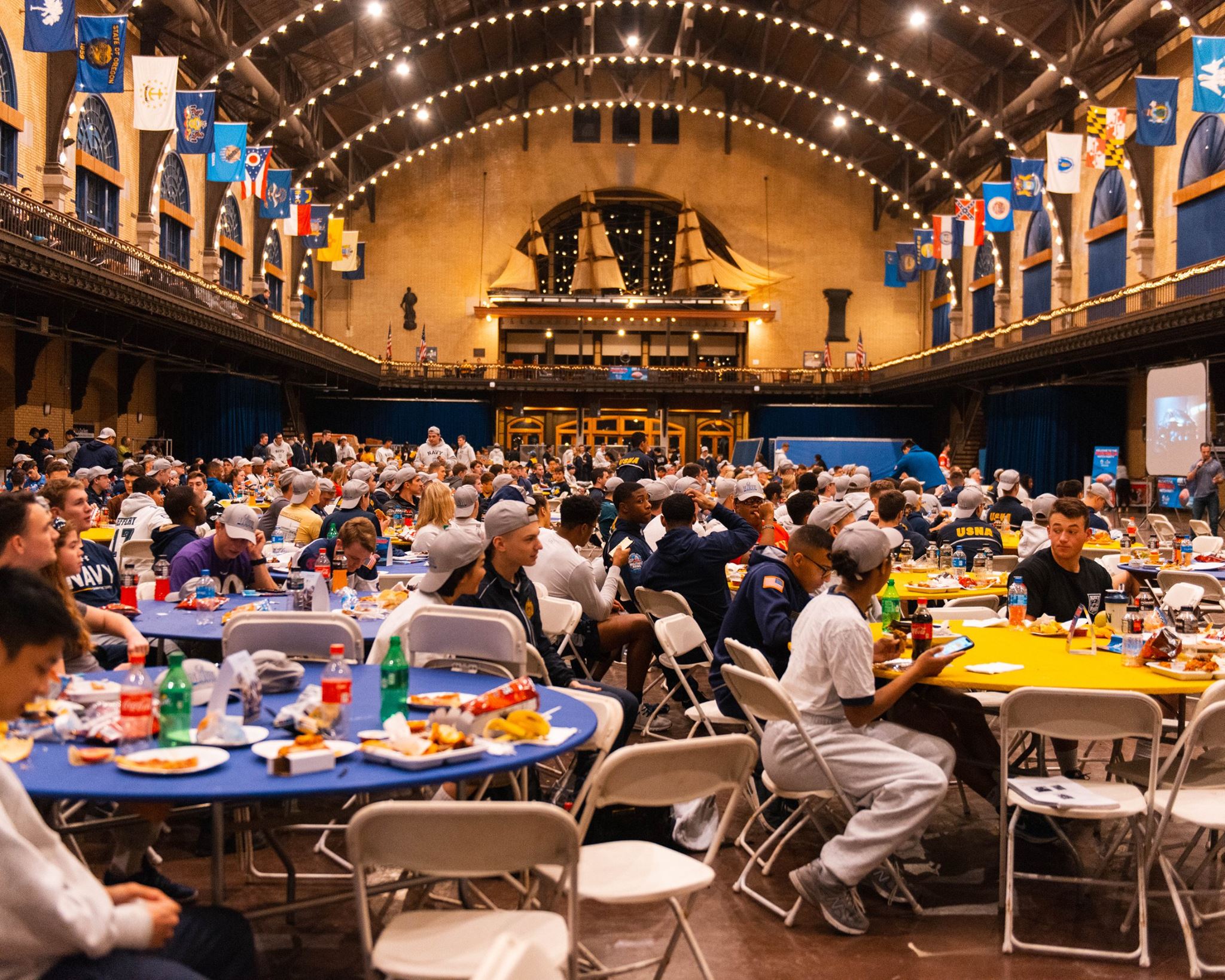
Named after Rear Admiral John A. Dahlgren, an influential figure in the development of naval ordnance. Its large, open space was ideal for indoor drills and military exercises. The hall was constructed between 1899 and 1903. Its design was overseen by Ernest Flagg, a prominent architect who designed several buildings at the Naval Academy. Today it houses the Drydock Restaurant, a gathering place for midshipmen, faculty, and visitors.
Named after Rear Admiral John A. Dahlgren (1809-1870) an influential figure in the development of naval ordnance during the United States Civil War. It served as an armory and drill hall for midshipmen. Its open space was ideal for indoor drills and military exercises.
The hall was constructed between 1899 and 1903. Its design was overseen by Ernest Flagg, a prominent architect who designed several buildings at the Naval Academy. Today it houses the Drydock Restaurant, a gathering place for midshipmen, faculty, and visitors.
This content is accessible to paid subscribers. To view it please enter your password below or send mike@standardsmichigan.com a request for subscription details.
IEEE English for Technical Professionals is a 14-hour online learning program designed to provide non-native English speakers with a working knowledge of English techniques and vocabulary that are essential for working in today’s technical workplace.
“It is a trite but true observation, that examples work more forcibly on the mind than precepts: and if this be just in what is odious and blameable, it is more strongly so in what is amiable and praiseworthy. Here emulation most effectually operates upon us, and inspires our imitation in an irresistible manner. A good man therefore is a standing lesson to all his acquaintance, and of far greater use in that narrow circle than a good book.
But as it often happens that the best men are but little known, and consequently cannot extend the usefulness of their examples a great way; the writer may be called in aid to spread their history farther, and to present the amiable pictures to those who have not the happiness of knowing the originals; and so, by communicating such valuable patterns to the world, he may perhaps do a more extensive service to mankind than the person whose life originally afforded the pattern…”
Since so much of what we do in standards setting is built upon a foundation of a shared understanding and agreement of the meaning of words (no less so than in technical standard setting) that time is well spent reflecting upon the origin of the nouns and verbs of that we use every day. Best practice cannot be discovered, much less promulgated, without its understanding secured with common language.
“Standard Root Beer” is typically made using a combination of ingredients that include water, sugar, sassafras root or extract, and various other flavoring agents. Here’s a general overview of the process:
Sassafras Flavoring: In traditional root beer recipes, sassafras root or extract is a key ingredient. However, it’s important to note that sassafras contains safrole, a compound that has been deemed potentially carcinogenic. For this reason, commercial root beers often use a safrole-free sassafras flavoring.
Sweetener: Sugar is commonly used to sweeten root beer, although some recipes may use alternatives like corn syrup or honey. The amount of sweetener can vary based on personal preference.
Water: Root beer typically starts with plain water as its base. The water is heated to dissolve the sweetener and other ingredients.
Flavorings: Besides sassafras flavoring, root beer can include a range of other flavorings to create its distinct taste. These may include wintergreen, vanilla, anise, licorice, molasses, or other herbs and spices. The exact combination of flavors varies among different root beer recipes.
Carbonation: Carbonation gives root beer its characteristic fizz. This can be achieved by using carbonated water or by introducing carbon dioxide gas into the mixture. In commercial production, carbonation is typically added during the bottling process.
Yeast Fermentation (optional): Some traditional homemade root beer recipes involve a fermentation step. Yeast is added to the root beer mixture, which consumes the sugar and produces carbon dioxide as a byproduct. This creates a natural carbonation in the beverage. However, this step can also increase the alcohol content, so it’s important to be mindful of the fermentation duration.
Bottling and Aging: Once the root beer is prepared, it is typically poured into bottles or kegs and sealed. Some recipes may recommend allowing the root beer to age for a certain period to develop the desired flavors.
It’s worth noting that the commercial production of root beer may involve different processes, as well as the use of artificial flavors, stabilizers, and preservatives to ensure consistency and shelf life. The specific recipe and production methods may vary among manufacturers.
New update alert! The 2022 update to the Trademark Assignment Dataset is now available online. Find 1.29 million trademark assignments, involving 2.28 million unique trademark properties issued by the USPTO between March 1952 and January 2023: https://t.co/njrDAbSpwBpic.twitter.com/GkAXrHoQ9T