United States National Committee of the IEC
USNC Current — Summer 2026 Newsletter

IEEE Education & Healthcare Facility Electrotechnology Committee




“A Sunday Afternoon on the Island of La Grande Jatte” 1884 / Georges Seurat
The Association Française de Normalisation (AFNOR), the International Organization for Standardization (ISO) member body for France, has submitted to ISO a proposal for a new field of ISO technical activity on Social Responsibility, with the following scope statement:
Standardization in the field of Social Responsibility to provide guidance and framework to all types of organizations, regardless of their size, activity or location. It allows organizations to challenge their own practices, define their corporate social responsibility and thus devise strategies to enhance their contribution to sustainable development.
Anyone wishing to review the proposal can request a copy by contacting ANSI’s ISO Team (isot@ansi.org), with a submission of comments to Steve Cornish (scornish@ansi.org) by close of business on Friday, June 5, 2020
We maintain all commenting opportunities on ISO consensus products on the standing agenda of our Global teleconferences. See our CALENDAR for the next online meeting; open to everyone.
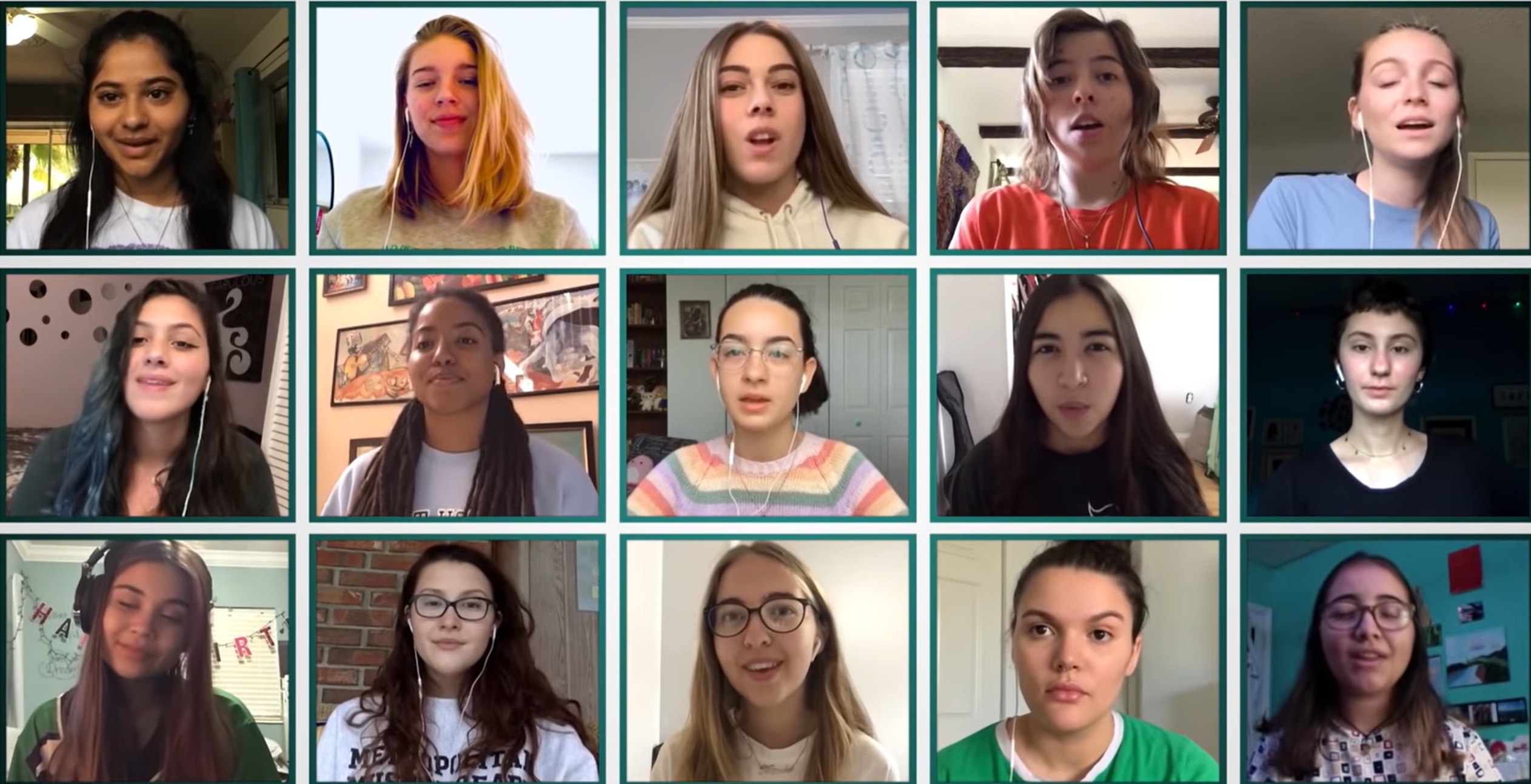
Miami Dade Schools Childrens Chorus
At the moment, we find only a few ISO consensus products incorporated by reference into the best practice literature that affects the cost of US education communities. It is wise to follow the action, however, because these products can inform higher level policy pronouncements. We maintain all ISO consensus products on the standing agenda of our Global teleconferences. See our CALENDAR for the next online meeting; open to everyone.
Issue: [20-126]
Category: Academic
Colleagues: Mike Anthony, Christine Fischer
Source: ANSI Standards Action
LEARN MORE:
ANSI Accredited U.S. Technical Advisory Groups (TAGs) to ISO

“The Bay of Naples with Vesuvius in the Background” c. 1872 | Oswald Achenbach
The MOOC BA, a New Frontier for Internationalization
Abstract. The early attraction of MOOCs was global reach and global branding to bolster university reputation and increase student enrollments from home and abroad, leading to a scenario marked by high numbers of HE Institutions with a low number of high-investment MOOCs. Recent emerging trends show a move towards online degrees, essentially postgraduate, which involves the big MOOC providers and universities positioning themselves to capture a growing market of lifelong learners through a broader portfolio of diversified credentials. The core business of curricular education verified by a degree, however, is only just being touched by the MOOC revolution, with very few – though significant – experiences. This paper proposes a policy framework for a MOOC strategy for bachelors degrees at the University of Naples, Federico II, which encompasses policy issues regarding funding, organization and governance.

CLICK ON IMAGE
Aperçu | Whatever Happened to MOOCs?
The massive open online courses that promised to transform higher education during the 2010s have not disappeared. They have evolved into a global market for professional certificates, microcredentials and online degrees. Coursera alone reported approximately 197 million registered learners at the end of 2025. Yet the original promise of universally free university education has given way to subscription services and paid credentials. The University of Naples Federico II was among the European institutions exploring how online instruction could extend the international reach of higher education. A decade later, the distinction between exporting instruction and exporting the residential university remains important. Digital platforms can transmit knowledge across national borders without requiring the migration of students or the construction of additional campus infrastructure.
CLICK HERE to order complete paper from IEEE
Part 3 — Safety Rules for the Installation and Maintenance of Underground Electric Supply and Communication Lines of the National Electrical Safety Code establishes safety requirements for underground electric supply and communication systems, including cables, conduits, ducts, vaults, manholes and associated equipment.
Its principal concerns are location, burial, mechanical protection, separation and accessibility. The rules address underground structures, direct-buried cables, supply and communication cables occupying common spaces, crossings with other utilities and protection against foreseeable excavation or physical damage. Part 3 also covers grounding and bonding, cable identification, work space and provisions intended to make underground systems safe for both workers and the public.
Particular attention is given to manholes and vaults, including access, drainage, ventilation where required and arrangements that reduce hazards from energized equipment, fire or accumulated gases.
For universities and other large educational settlements, Part 3 governs much of the infrastructure that is seldom visible: campus primary distribution, duct banks, utility tunnels and vaults, roadway crossings, telecommunications pathways and transitions between overhead and underground lines.

Pacific Lutheran University
Best practice literature to be covered in our 11 AM session today are listed below. These codes and standards ensure safety, reliability, and compliance for underground electrical and telecommunications installations:
ANSI/TIA-568 Series (Commercial Building Telecommunications Cabling Standards)
IEEE 835 (Standard Power Cable Ampacity Tables)
UL 83 (Standard for Thermoplastic-Insulated Wires and Cables)
OSHA 1910.305 (Wiring Methods, Components, and Equipment)
CSA C22.1 (Canadian Electrical Code)
Notes:
Underground Electrotechnology General Conditions and Standard Details
Related:

Ampere current flows through copper or aluminum conductor due to the movement of free electrons in response to an applied electric field of varying voltages. Each copper or aluminum contributes one free electron to the electron sea, creating a vast reservoir of mobile charge carriers. When a potential difference (voltage) is applied across the ends of the conductor, an electric field is established within the conductor. This field exerts a force on the free electrons, causing them to move in the direction of the electric field. The resulting current flow can be transformed into different forms depending on the nature of the device.
Heating: When current flows through a resistor, it encounters resistance, which causes the resistor to heat up. This is the principle behind electric heaters, toasters, and incandescent light bulbs.
Mechanical Work: Current flowing through an electric motor creates a magnetic field, which interacts with the magnetic field of the motor’s permanent magnets or electromagnets. This interaction generates a mechanical force, causing the motor to rotate. Thus, electrical energy is converted into mechanical energy; including sound.
Light: In an incandescent light bulb, a filament heats up ( a quantum phenomena) due to the current passing through it. This is an example of electrical energy being converted into light energy; including the chemical energy through light emitting diodes
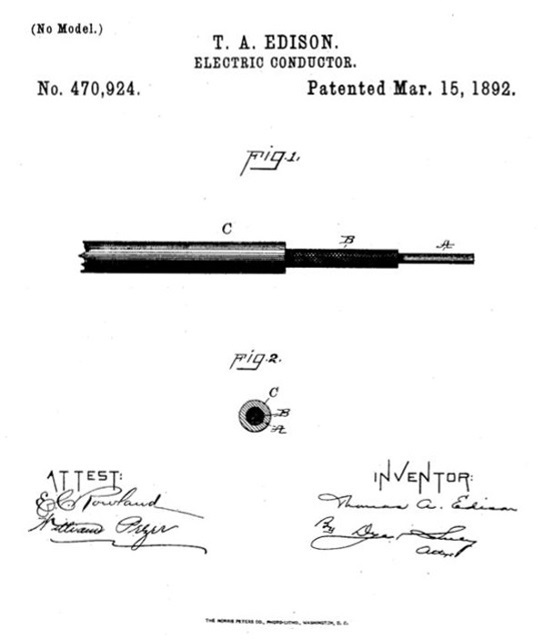
Today we dwell on how conductors are specified and installed in building premise wiring systems primarily; with some attention to paths designed to carry current flowing through unwanted paths (ground faults, phase imbalance, etc). In the time we have we will review the present state of the best practice literature developed by the organizations listed below:
International Electrotechnical Commission
60304 Low voltage installations: Protection against electric shock
Institute of Electrical and Electronic Engineers
National Electrical Safety Code
Insulated Cable Engineers Association
International Association of Electrical Inspectors
National Fire Protection Association
Transcript of CMP-6 Proposals for 2026 NEC
Other organizations such as the National Electrical Manufacturers Association, ASTM International, Underwriter Laboratories, also set product and installation standards. Data center wiring; fiber-optic and low-voltage control wiring is covered in other colloquia (e.g. Infotech and Security) and coordinated with the IEEE Education & Healthcare Facilities Committee.

Use the login credentials at the upper right of our home page.
Related:
National Electrical Code: 310.15(B) Temperature Correction Factors
Neher-McGrath Calculation: Cable Calculation ampacity and Thermal Analysis
Voltage Drop Calculation Example
ETAP: Cabling Sizing – Cable Thermal Analysis
Statement from NARUC During its Summer 2018 Committee Meetings
IEEE Education & Healthcare Facilities Committee
Draft Proposals for the 2028 National Electrical Safety Code
Representative State Level Service Quality Standards
The National Electrical Safety Code® sets the ground rules and guidelines for practical safeguarding of utility workers and the public.
Submit your changes and review proposals by 15 May 2024: https://t.co/kpf4JyhJSY pic.twitter.com/926L1g8Vxj
— IEEE Standards Association | IEEE SA (@IEEESA) April 21, 2024
PROCESS, PROCEDURES & SCHEDULE
2025-2026 NESC Revision Schedule
Mike Anthony is ID Number 469 | Proposal period closes 11:59 PM US Pacific Time | May 15
Meeting Notes in red
Loss of electric power and internet service happens more frequently and poses at least an equal — if not greater threat — to public safety. So why does neither the National Electrical Code or the National Electrical Safety Code integrate reliability into their core requirements? Reliability requirements appear in a network of related documents, either referenced, or incorporated by reference; sometimes automatically, sometimes not.
NESC Main Committee Membership: Page xii
Apart from the IEEE as the accredited standards developer, there are no “pure non-government user-interests” on this committee; although ANSI’s Essential Requirements for balance of interests provides highly nuanced interpretation. The Classifications on Page xiii represents due diligence on meeting balance of interest requirements.
In our case, we are one of many large universities that usually own district energy plants that both generate and purchase generate electric power (as sometimes provide var support to utilities when necessary; as during the August 2003 North American outage). For University of Michigan, for example, has about 20 service points at 4.8 – 120 kV. Its Central Power Plant is the largest cogeneration plant on the DTE system.
Contents: Page xxviii | PDF Page 29
Absence of internet service is at least as much a hazard, and more frequent, than downed wires. Is there a standards solution? Consideration of interoperability of internet service power supported on utility poles should track in the next revision.
No mention of any reliability related IEEE reliability standards in the present edition. Why is this?
Section 2: Definitions of Special Terms | PDF Page 46
In the 2023 Handbook, the term “reliability” shows up 34 times.
availability (from Bob Arno’s IEEE 3006-series and IEEE 493 Gold Book revision)
reliability (Bob Arno)
utility (PDF Page 57)
communication | PDF Page 47
list of terms defined in the 2023 National Electrical Code that are new and relevant to this revision: (Article 100 NEC)
Bonding jumper, system and supply
Survivability of communication network signaling
municipal broadband network, digital subscriber line, surveillance cameras
wireless communication system
010. Purpose | PDF Page 40
Looks like improvement since last edition. Suggest explicit Informational Note, as in the NEC, using “reliability” and referring to other agencies. “Abnormal events” could be tighter and refer to other standards for abnormal, steady-state events. The clarification of purpose is welcomed although a great deal remains uncovered by other best practice literature; though that can be repaired in this edition.
Legacy of shared circuit path standards. Should provisions be made for municipal surveillance, traffic and vehicle control infrastructure. What would that look like?
011. Scope | Covered PDF Page 40
3. Utility facilities and functions of utilities that either (a) generate energy by conversion from
some other form of energy such as, but not limited to, fossil fuel, chemical, electrochemical,
nuclear, solar, mechanical, wind or hydraulic or communication signals, or accept energy or
communication signals from another entity, or (b) provide that energy or communication
signals through a delivery point to another entity.
5. Utility facilities and functions on the line side of the service point supplied by underground or
overhead conductors maintained and/or installed under exclusive control of utilities located on
public or private property in accordance with legally established easements or rights-of-way,
contracts, other agreements (written or by conditions of service), or as authorized by a
regulating or controlling body.
NOTE: Agreements to locate utility facilities on property may be required where easements are either
(a) not obtainable (such as locating utility facilities on existing rights-of-way of railroads or other entities,
military bases, federal lands, Native American reservations, lands controlled by a port authority, or other
governmental agency), or (b) not necessary (such as locating facilities necessary for requested service to a
site).
012. General Rules | Covered PDF Page 42
For all particulars not specified, but within the scope of these rules, as stated in Rule 011A, design,
construction, operation, and maintenance should be done in accordance with accepted good practice
for the given local conditions known at the time by those responsible for the communication or
supply lines and equipment
General purpose clause could use some work since no definition of “accepted good practice”. Refer to IEEE bibliography.
Section 2: Definition of special terms | PDF Page 46
Recommendations elsewhere should track here.
The word “installation” appears 256 times and is generally understood in context by experts. Suggest borrow from NEC to clarify our concern for including co-linear/communication circuits.
conduit. exclusive control, lines, photovoltaic, NEC interactive. qualified
Section 3: Reference
NFPA 70®, National Electrical Code® (NEC®). [Rules 011B4 NOTE, 099C NOTE 1, and 127
IEEE Std 4™-1995, IEEE Standard Techniques for High-Voltage Testing. [Table 410-2 and Table 410-3]
IEEE Std 516™-2009, IEEE Guide for Maintenance Methods on Energized Power-Lines. [Rules 441A4
NOTE 2, 446B1, and 446D3 NOTE, and Table 441-5, Footnote 4]
IEEE Std 1427™-2006, IEEE Guide for Recommended Electrical Clearances and Insulation Levels in
Air-Insulated Electrical Power Substations. [Rule 124A1 NOTE, Table 124-1, 176 NOTE, and 177 NOTE]
IEEE Std 1584™-2002, IEEE Guide for Performing Arc Flash Hazard Calculations. [Table 410-1,
Footnotes 1, 3, 6, and 14]
IEEE Std C62.82.1™-2010, IEEE Standard for Insulation Coordination—Definitions, Principles, and Rules.
[Table 124-1 Footnote 5]
Add references to Gold Book, 1386, etc. IEC since multinationals conform.
Safety Rules for the Installation and Maintenance of Overhead Electric Supply and Communication Line | PDF Page 111
Has anyone confirmed that these tables match NEC Table 495.24 lately? If it helps: there were no meaningful changes in the 2023 NEC in Article 495, the high voltage article
Section 11. Protective arrangements in electric supply stations | PDF Page 77
A safety sign shall be displayed on or beside the door or gate at each entrance. For fenced or
walled electric supply stations without roofs, a safety sign shall be displayed on each exterior
side of the fenced or wall enclosure. Where the station is entirely enclosed by walls and roof, a
safety sign is required only at ground level entrances. Where entrance is gained through
sequential doors, the safety sign should be located at the inner door position. (A clarification but no change. See Standards Michigan 2017 proposals)
Recommend that all oil-filled cans be removed and services upgraded through energy regulations with new kVA ratings
Section 12: Installation and maintenance of equipment
093. Grounding conductor and means of connection
Fences
The grounding conductor for fences required to be effectively grounded by other parts of this
Code shall meet the requirements of Rule 093C5 or shall be steel wire not smaller than Stl WG
No. 5.
D. Guarding and protection | PDF Page 67
124. Guarding live parts| PDF Page 85
Propose roofs required for exterior installations
Part 2. Safety Rules for the Installation and Maintenance of Overhead Electric Supply and Communication Line | Page 72
Section 22. Relations between various classes of lines and equipment | Page 80
222. Joint use of structures | Page 82
Where the practice of joint use is mutually agreed upon by the affected utilities, facilities shall be subject to the appropriate grade of construction specified in Section 24. Joint use of structures should be
considered for circuits along highways, roads, streets, and alleys. The choice between joint use of structures and separate lines shall be determined through cooperative consideration with other joint
users of all the factors involved, including the character of circuits, worker safety, the total number and weight of conductors, tree conditions, number and location of branches and service drops, structure
conflicts, availability of right-of-way, etc.
Reliability considerations for sustaining internet service when power supply is absent.
Par2 Section 20 Safety Rules for the Installation and Maintenance of Overhead Electric Supply and Communication Line | PDF Page 111
Has anyone confirmed that these tables match NEC Table 495.24 lately?
Part 3. Safety Rules for the Installation and Maintenance of Underground Electric Supply and Communication Lines | Page 220
Renewable energy for internet access
311. Installation and maintenance
A. Persons responsible for underground facilities shall be able to indicate the location of their facilities.
B. Reasonable advance notice should be given to owners or operators of other proximate facilities that
may be adversely affected by new construction or changes in existing facilities.
C. For emergency installations, supply and communication cables may be laid directly on grade if the
cables do not unreasonably obstruct pedestrian or vehicular traffic and either:
1. The cables are covered, enclosed, or otherwise protected, or
2. The locations of the cables are conspicuous.
Supply cables operating above 600 V shall meet either Rule 230C or 350B.
NOTE: See Rules 014B2 and 230A2d.
Part 4. Work Rules for the Operation of Electric Supply and Communications Lines and Equipment | PDF Page 289
When and why was the term “Work” added to the title of this section?
Core text for the definition of wireless communication system reliability
Appendix E Bibliography| PDF Page 355
Index | PDF Page 398
The word “reliability” appears only three times. Should it track in the NESC or should it track in individual state requirements. So neither the NEC nor the NESC couples closely with power and communication reliability; despite the enormity and speed of research.
Public input on the 2029 Revision will be received until April 9th. Over the next weeks and months — typically meeting twice a day every Tuesday — we will pull forward our previous proposals and draft original proposals relevant to the education and healthcare electrotechnical infrastructure of educational settlements. Link to Proposed Reorganization.
NFPA 70 2029 Revision Mike Anthony IEEE and Standards Michigan public input April 2026
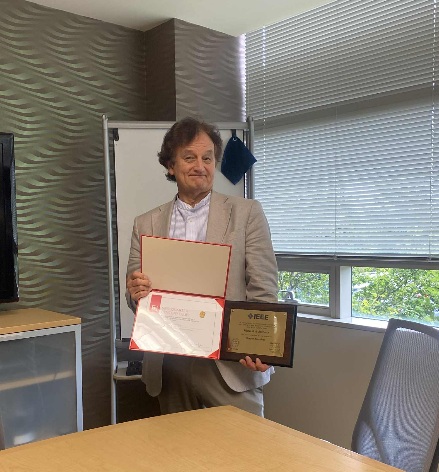
Photo at 2723 State Street Office*
Mike was part of the National Electrical Code Quarter Century Club but was at another conference and not able to receive the award at the June conference. University of Michigan support began in 1993. IEEE support began in 2014.
*New Office (a short walk across the street) starting October 1: 455 East Eisenhower, Ann Arbor, MI 48108
Current Issues and Recent Research
Today we examine Second Draft transcripts of the Special Equipment Chapter 6 (CMP-12) and product inspection, testing and certification listings that appear Annex A (CMP-1).
Once every eighteen months we spend a week drilling into the National Electrical Code by submitting new proposals or comments on proposed revisions. Today we review the actions taken by the technical committees on the First Draft. Responses to committee actions will be received until August 26th.
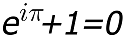
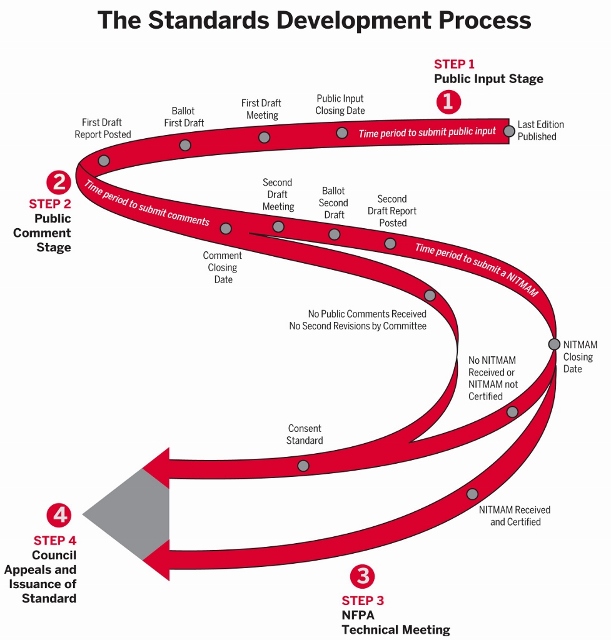
Interconnected Electric Power Production Sources “Microgrids”
It is impossible to overestimate the sensitivity of this topic but poke at it, we will. At the moment, the less written here; the better. Much of this domain is outside our wheelhouse; though it has settled on a few first principles regarding patents, trademarks and copyrights relevant to the user-interest we describe in our ABOUT.
Many large research universities have a watchdog guarding its intellectual property and trying to generate income from it, and; of course, for branding. We will dwell on salient characteristics of the intellectual property domain with which we reckon daily — highlighting the market actors and the standards they have agreed upon.
Additionally, technical standards developers are generally protected by copyright law, as the standards they create are typically considered original works of authorship that are subject to copyright protection. In the United States, the Copyright Act of 1976 provides copyright protection for original works of authorship, which includes technical standards. This means that the developers of technical standards have the exclusive right to reproduce, distribute, and create derivative works based on their standards, and others must obtain permission or a license to use or reproduce the standards.
Some technical standards may be subject to certain exemptions or limitations under copyright law. In the United States, there is a doctrine called “fair use” that allows for limited use of copyrighted works for purposes such as criticism, comment, news reporting, teaching, scholarship, or research, without the need for permission or a license from the copyright owner. Almost everything we do at Standards Michigan falls under the fair use doctrine. This is why we have no search feature and most pages are protected. If we err in this; let us know.
More
ASTM International Intellectual Property Policy
Healthcare Standards Institute IP Policy
International Code Council Copyright Protection
Underwriters Laboratory Patent Policy
Vad är en standard? Syftet med standarder är att skapa enhetliga och transparenta rutiner som vi kan enas kring. Det ligger ju i allas intresse att höja kvaliteten, undvika missförstånd och slippa uppfinna hjulet på nytt varje gång. https://t.co/zKhgPXPdpW pic.twitter.com/oKejdKSm47
— Svenska institutet för standarder, SIS (@svenskstandard) July 15, 2019
Innovation – Market Acceptance – Standardization – Human Right
New update alert! The 2022 update to the Trademark Assignment Dataset is now available online. Find 1.29 million trademark assignments, involving 2.28 million unique trademark properties issued by the USPTO between March 1952 and January 2023: https://t.co/njrDAbSpwB pic.twitter.com/GkAXrHoQ9T
— USPTO (@uspto) July 13, 2023
Standards Michigan Group, LLC
455 East Eisenhower Parkway, Suite 300
Ann Arbor, MI 48108 USA
888-748-3670
 |
 |
|
 |
 |
|
 |
 |