
Penguin Ballet
- Home Page 77



Steeplechase Water Jump
File: April 15, 2023
The steeplechase event requires a combination of speed, endurance, and jumping ability, as athletes must clear the barriers while maintaining their pace and negotiating the water jump. The rules and specifications for the steeplechase event are set by the International Association of Athletics Federations the governing body for the sport of athletics (track and field) worldwide; with minor adaptations by the NCAA for intercollegiate competition.

Emma Coburn | University of Colorado Boulder
The steeplechase is a distance race with barriers and a water pit that athletes must clear during the race. According to the NCAA Track and Field and Cross Country rulebook, the standards for the steeplechase water jump are as follows:
- Length: The water pit must be at least 3.66 meters (12 feet) long.
- Width: The water pit must be at least 3.66 meters (12 feet) wide.
- Depth: The water pit must have a minimum depth of 0.7 meters (2 feet 4 inches) and a maximum depth of 0.9 meters (2 feet 11 inches).
- Slope: The slope of the water pit must not exceed 1:5, meaning that for every 5 meters in length, the water pit can rise by no more than 1 meter in height.
- Barrier: The water pit must be preceded by a solid barrier that is 91.4 cm (3 feet) high. Athletes are required to clear this barrier before landing in the water pit.
These standards may be subject to change and may vary depending on the specific NCAA division (Division I, Division II, or Division III) and other factors such as venue requirements. Therefore, it’s always best to refer to the official NCAA rules and regulations for the most up-to-date and accurate information on the steeplechase water jump standards in NCAA competitions.

ASTM F 2157-09 (2018) Standard Specification for Synthetic Surfaced Running Tracks
This specification establishes the minimum performance requirements and classification when tested in accordance with the procedures outlined within this specification. All documents referencing this specification must include classification required.
ASTM F 2569-11 Standard Test Method for Evaluating the Force Reduction Properties of Surfaces for Athletic Use
This test method covers the quantitative measurement and normalization of impact forces generated through a mechanical impact test on an athletic surface. The impact forces simulated in this test method are intended to represent those produced by lower extremities of an athlete during landing events on sport or athletic surfaces.
ASTM F 2949-12 Standard Specification for Pole Vault Box Collars
This specification covers minimum requirements of size, physical characteristics of materials, standard testing procedures, labeling and identification of pole vault box collars.
ASTM F 1162/F1162M-18 Standard Specification for Pole Vault Landing Systems
This specification covers minimum requirements of size, physical characteristics of materials, standard testing procedures, labeling and identification of pole vault landing systems.
ASTM F 2270-12 (2018) Standard Guide for Construction and Maintenance of Warning Track Areas on Sports Fields
This guide covers techniques that are appropriate for the construction and maintenance of warning track areas on sports fields. This guide provides guidance for the selection of materials, such as soil and sand for use in constructing or reconditioning warning track areas and for selection of management practices that will maintain a safe and functioning warning track.
ASTM F 2650-17e1 Standard Terminology Relating to Impact Testing of Sports Surfaces and Equipment
This terminology covers terms related to impact test methods and impact attenuation specifications of sports equipment and surfaces.
Scholar Sips
This content is accessible to paid subscribers. To view it please enter your password below or send mike@standardsmichigan.com a request for subscription details.

Dahlgren Hall & “Seasoned” Coffee Mug Stories
Named after Rear Admiral John A. Dahlgren, an influential figure in the development of naval ordnance. Its large, open space was ideal for indoor drills and military exercises. The hall was constructed between 1899 and 1903. Its design was overseen by Ernest Flagg, a prominent architect who designed several buildings at the Naval Academy. Today it houses the Drydock Restaurant, a gathering place for midshipmen, faculty, and visitors.
.@NavyFB wins the 126th Army-Navy Game presented by @USAA and is singing second! 👏#ArmyNavy pic.twitter.com/R0zDl6XNpf
— Army-Navy Game (@ArmyNavyGame) December 13, 2025
🚨 WOW! The National Athem before the Army-Navy game, with President Trump on the field, might just be the BEST rendition I’ve ever heard
How can anyone listen to this and NOT feel patriotic?! 🇺🇸🦅 pic.twitter.com/OrehpqI6RI
— Nick Sortor (@nicksortor) December 13, 2025
Named after Rear Admiral John A. Dahlgren (1809-1870) an influential figure in the development of naval ordnance during the United States Civil War. It served as an armory and drill hall for midshipmen. Its open space was ideal for indoor drills and military exercises.
The hall was constructed between 1899 and 1903. Its design was overseen by Ernest Flagg, a prominent architect who designed several buildings at the Naval Academy. Today it houses the Drydock Restaurant, a gathering place for midshipmen, faculty, and visitors.
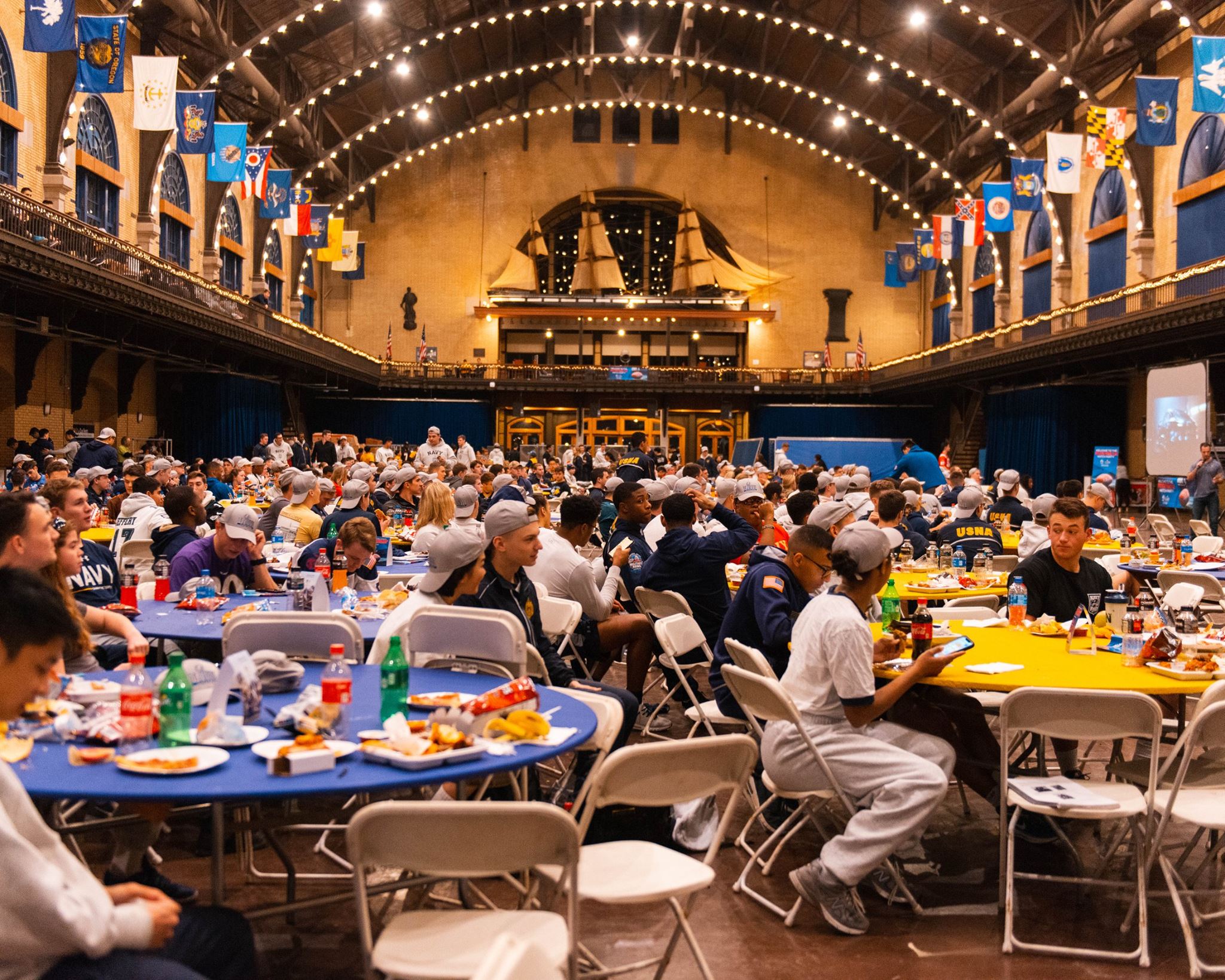
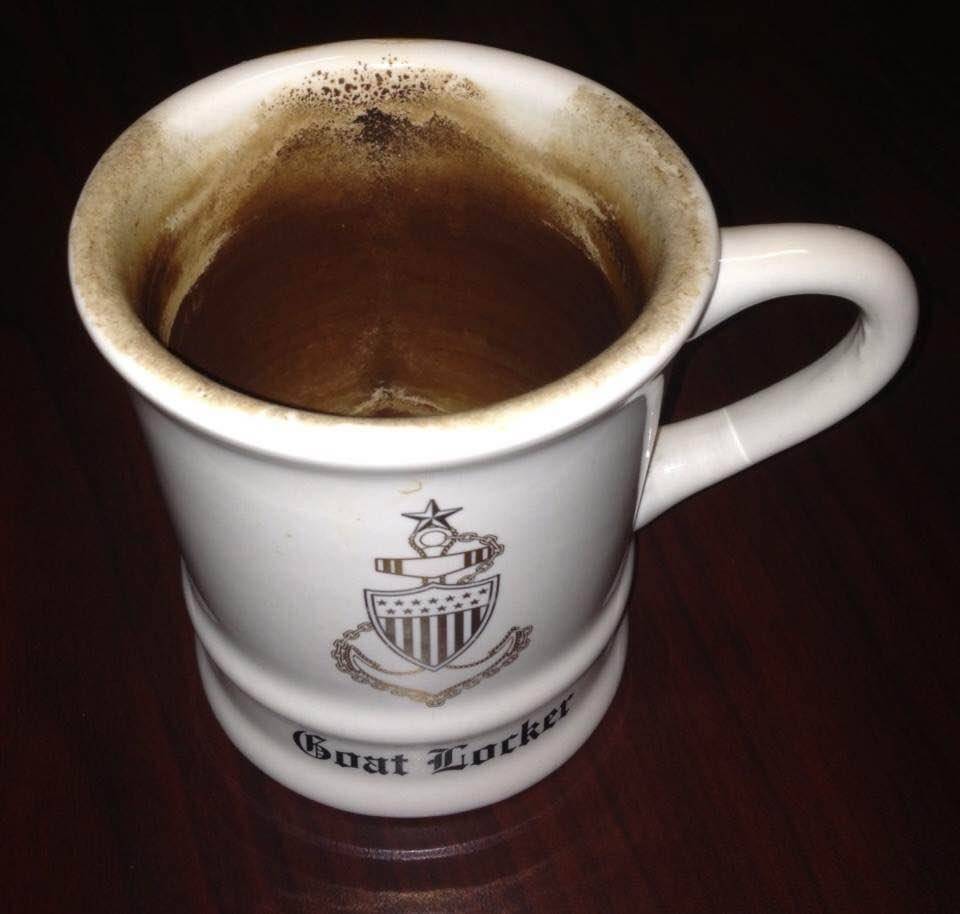
“How to Achieve the Ultimate Filthy Navy Coffee Mug”
“The Masters”
This content is accessible to paid subscribers. To view it please enter your password below or send mike@standardsmichigan.com a request for subscription details.

Standards impact industrial growth

The Pilgrims and Modern England: A Repeating Cycle
The Pilgrims—English Separatists who sailed on the Mayflower in 1620—left not solely for religious freedom, though persecution under James I was real. Fined, imprisoned, or driven from homes for rejecting the Church of England’s enforced conformity, they first fled to tolerant Holland. Yet by 1620 economic realities dominated: low-wage factory toil in Leiden aged their children prematurely, Dutch culture eroded their English identity and faith, and they craved land, self-sufficiency, and a stable society free of Old World constraints. England’s 17th-century pressures—population growth, land scarcity, rigid class structures, and state religious control—made daily life untenable. They sought a “new” England across the Atlantic.
Those same pressures have re-emerged in 21st-century England, imported through decades of high-volume immigration, much of it from Third World countries (non-EU Asia, Africa, Middle East). Net migration peaked at 944,000 in 2023 before falling to 204,000 by mid-2025, still historically elevated and overwhelmingly non-European. Unlike earlier skilled or culturally proximate inflows, recent waves include large asylum, family, and low-skilled cohorts whose origins feature high fertility, clan-based social norms, weak institutions, and often Islamist or tribal worldviews incompatible with Britain’s secular, liberal order.
Socially, the parallel is stark. Just as state religion once policed belief, today multiculturalism policies have fostered parallel societies. Enclaves exhibit grooming scandals, honor-based violence, FGM, Sharia patrols, and Islamist extremism—phenomena alien to historic English norms yet tolerated under “diversity” doctrines. Native Britons in cities like London, Birmingham, or Oldham report feeling culturally displaced, their children minorities in schools, Christmas sidelined, and free speech chilled by blasphemy sensitivities. Social trust has eroded; riots in 2024 exposed fractures. The Pilgrims feared Dutch assimilation erasing their identity; modern natives fear imported identities erasing theirs. Integration failures are empirical: certain groups show persistently lower employment, higher welfare dependency, and segregated outcomes decades later.
Economically, rapid population growth—driven almost entirely by immigration—mirrors 17th-century land and resource strains. Housing shortages have worsened; a 1% population rise from migration correlates with 1% higher house prices, pricing out young natives. NHS waiting lists balloon, schools overflow, and welfare costs mount for low-skilled arrivals and their larger families. Fiscal analyses show negative lifetime net contributions from asylum/refugee routes due to low employment and high inactivity. Low-wage competition depresses pay in care, retail, and construction. The welfare state, absent in Pilgrim times, now subsidizes dependency that 17th-century England’s poor laws could not sustain at scale. Britain’s per-capita GDP growth lags while aggregate GDP is artificially inflated—echoing the Pilgrims’ frustration with toil yielding no security.
Uncontrolled Third World inflows re-assert these conditions because the source societies export their unsolved problems—poverty traps, religious authoritarianism, demographic momentum—into a high-trust, high-welfare host society lacking assimilation enforcement. Post-war policy abandoned selective, small-scale migration for volume and “compassion,” ignoring cultural distance and labor-market fit. The result: natives face the very intolerance, economic precarity, and cultural erosion the Pilgrims fled. England has, in effect, recreated the Old World it once escaped—only this time the pressures arrive by jet and dinghy rather than royal decree. Without course correction toward skills, numbers, and integration, the cycle repeats.



English for Technical Professionals
IEEE English for Technical Professionals is a 14-hour online learning program designed to provide non-native English speakers with a working knowledge of English techniques and vocabulary that are essential for working in today’s technical workplace.
IEEE English for Technical Professionals
“It is a trite but true observation, that examples work more forcibly on the mind than precepts: and if this be just in what is odious and blameable, it is more strongly so in what is amiable and praiseworthy. Here emulation most effectually operates upon us, and inspires our imitation in an irresistible manner. A good man therefore is a standing lesson to all his acquaintance, and of far greater use in that narrow circle than a good book.
But as it often happens that the best men are but little known, and consequently cannot extend the usefulness of their examples a great way; the writer may be called in aid to spread their history farther, and to present the amiable pictures to those who have not the happiness of knowing the originals; and so, by communicating such valuable patterns to the world, he may perhaps do a more extensive service to mankind than the person whose life originally afforded the pattern…”
— Henry Fielding “The History of the Adventures of Joseph Andrews and of his Friend Mr. Abraham” (1742)
Electropedia: The World’s Online Electrotechnical Vocabulary

History of the English Speaking Peoples
| Since so much of what we do in standards setting is built upon a foundation of a shared understanding and agreement of the meaning of words (no less so than in technical standard setting) that time is well spent reflecting upon the origin of the nouns and verbs of that we use every day. Best practice cannot be discovered, much less promulgated, without its understanding secured with common language. |
Hanging with grandad just like the old days 😂 pic.twitter.com/fQVarEQ5Iw
— Alexandra Churchill ✌🏼⭐️⭐️ (@churchill_alex) December 2, 2023
Virginia Woolf: pic.twitter.com/8IPw1Fmevk
— Dr. Maya C. Popa (@MayaCPopa) May 25, 2023
Cambridge: English language education in the era of generative AI
We must spread our accent further pic.twitter.com/qEc3Cqd2cH
— Midwest vs. Everybody (@midwestern_ope) April 3, 2025

Root Beer Olympics

“Standard Root Beer” is typically made using a combination of ingredients that include water, sugar, sassafras root or extract, and various other flavoring agents. Here’s a general overview of the process:
- Sassafras Flavoring: In traditional root beer recipes, sassafras root or extract is a key ingredient. However, it’s important to note that sassafras contains safrole, a compound that has been deemed potentially carcinogenic. For this reason, commercial root beers often use a safrole-free sassafras flavoring.
- Sweetener: Sugar is commonly used to sweeten root beer, although some recipes may use alternatives like corn syrup or honey. The amount of sweetener can vary based on personal preference.
- Water: Root beer typically starts with plain water as its base. The water is heated to dissolve the sweetener and other ingredients.
- Flavorings: Besides sassafras flavoring, root beer can include a range of other flavorings to create its distinct taste. These may include wintergreen, vanilla, anise, licorice, molasses, or other herbs and spices. The exact combination of flavors varies among different root beer recipes.
- Carbonation: Carbonation gives root beer its characteristic fizz. This can be achieved by using carbonated water or by introducing carbon dioxide gas into the mixture. In commercial production, carbonation is typically added during the bottling process.
- Yeast Fermentation (optional): Some traditional homemade root beer recipes involve a fermentation step. Yeast is added to the root beer mixture, which consumes the sugar and produces carbon dioxide as a byproduct. This creates a natural carbonation in the beverage. However, this step can also increase the alcohol content, so it’s important to be mindful of the fermentation duration.
- Bottling and Aging: Once the root beer is prepared, it is typically poured into bottles or kegs and sealed. Some recipes may recommend allowing the root beer to age for a certain period to develop the desired flavors.
It’s worth noting that the commercial production of root beer may involve different processes, as well as the use of artificial flavors, stabilizers, and preservatives to ensure consistency and shelf life. The specific recipe and production methods may vary among manufacturers.

New update alert! The 2022 update to the Trademark Assignment Dataset is now available online. Find 1.29 million trademark assignments, involving 2.28 million unique trademark properties issued by the USPTO between March 1952 and January 2023: https://t.co/njrDAbSpwB pic.twitter.com/GkAXrHoQ9T
— USPTO (@uspto) July 13, 2023
Standards Michigan Group, LLC
455 East Eisenhower Parkway, Suite 300
Ann Arbor, MI 48108 USA
888-748-3670
DIRECTIONS
 |
 |
|
 |
 |
|
 |
 |