Today at the usual hour we examine the case studies undertaken by Department of Energy to explore the feasibility of buildings powered by entirely by direct current. Use the login credentials at the upper right of our home page.
Today at the usual hour we review best practice literature for the design, construction and operation of Power-Limited Circuits in healthcare facilities. With our previous tenure on Code Panel 15 of the National Electrical Code (which covers healthcare facilities, primarily) and our recent appointment by IEEE to Code Panel 3 (which covers power limited circuits in all occupancy classes) we set ourselves up to respond to the proposals that will shape the 2029 NEC. Use the login credentials at the upper right of our home page.
vbvbvbvbvb
If one imagines that three-phase hospital power distribution systems as “arteries” then power limited circuits can be imagined as the “capillaries” that drive hundreds of end use clinical equipment and devices. The analogy captures the hierarchical, physiological structure of hospital electrical systems—much like the human circulatory system—where power flows from high-capacity trunks to precision, low-risk endpoints.
Three-Phase Systems: The Arteries and Veins
Three-phase hospital power distribution systems function as the arteries and veins: they are the robust, high-volume “vascular” network. Incoming utility power (or on-site generators) arrives as three-phase medium voltage, stepped down through transformers and switchgear into the Essential Electrical System (EES). This backbone—normal power, life-safety, critical, and equipment branches—delivers bulk kilowatts across the facility to major loads: HVAC, lighting, elevators, imaging suites, and operating-room receptacles. Like arteries, these feeders carry large currents over long distances with minimal loss; like veins, they return current safely while maintaining redundancy and selective coordination to keep the “body” (hospital) alive during outages.
Power-Limited Circuits: The Capillaries
Power-limited circuits (NEC Article 725/724 Class 2 and Class 3) are the capillaries. They are the countless, tiny, energy-restricted final branches that directly “perfuse” end-use clinical devices. These circuits are deliberately power-limited—typically ≤30 V and ≤100 VA—to prevent fire, shock, or interference in patient-care spaces. They supply nurse-call systems, bedside monitors, infusion-pump controls, alarm signaling, data links, and low-voltage sensors. Just as capillaries exchange oxygen and nutrients cell-by-cell without flooding tissue, power-limited circuits deliver only the precise, safe wattage needed by sensitive electronics while isolating them from the high-energy main distribution. Their thin insulation, separation rules, and inherent current-limiting transformers mirror the delicate walls of capillaries.
The comparison illuminates why hospitals cannot rely solely on heavy three-phase feeders: without these microscopic “capillaries,” clinical devices would either lack power or be exposed to dangerous fault energies. The analogy shows how the entire system maintains life—bulk transport for infrastructure, micro-delivery for patient care—while enforcing safety through progressive limitation. In essence, the capillaries make the circulatory system functional at the point of use.
Here we shift our perspective 120 degrees to understand the point of view of the Producer interest in the American national standards system (See ANSI Essential Requirements). The title of this post draws from the location of US and European headquarters. We list proposals by a successful electrical manufacturer for discussion during today’s colloquium:
2026 National Electrical Code
CMP-1: short circuit current ratings, connections with copper cladded aluminum conductors, maintenance to be provided by OEM, field markings
CMP-2: reconditioned equipment, receptacles in accessory buildings, GFCI & AFCI protection, outlet placement generally, outlets for outdoor HVAC equipment(1)
(1) Here we would argue that if a pad mount HVAC unit needs service with tools that need AC power once every 5-10 years then the dedicated branch circuit is not needed. Many campuses have on-site, full-time staff that can service outdoor pad mounted HVAC equipment without needing a nearby outlet. One crew — two electricians — will run about $2500 per day to do anything on campus.
CMP-3: No proposals
CMP-4: solar voltaic systems (1)
(1) Seems reasonable – spillover outdoor night time lighting effect upon solar panel charging should be identified.
CMP-5: Administrative changes only
CMP-6: No proposals
CMP-7: Distinction between “repair” and “servicing”
CMP-10: Short circuit ratings, service disconnect, disconnect for meters, transformer secondary conductor, secondary conductor taps, surge protective devices, disconnecting means generally, spliced and tap conductors, more metering safety, 1200 ampere threshold for arc reduction technology, reconditioned surge equipment shall not be permitted, switchboard short circuit ratings
Public input on the 2029 Revision will be received until April 9th. Over the next weeks and months — typically meeting twice a day every Tuesday — we will pull forward our previous proposals and draft original proposals relevant to the education and healthcare electrotechnical infrastructure of educational settlements. Link to Proposed Reorganization.
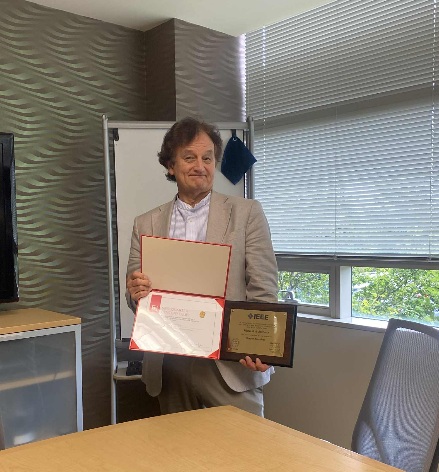
Mike was part of the National Electrical Code Quarter Century Club but was at another conference and not able to receive the award at the June conference. University of Michigan support began in 1993. IEEE support began in 2014.
*New Office (a short walk across the street) starting October 1: 455 East Eisenhower, Ann Arbor, MI 48108
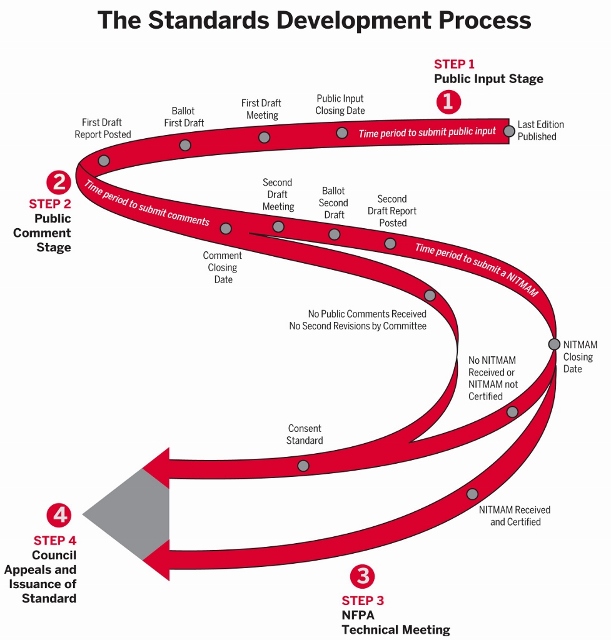
Once every eighteen months we spend a week drilling into the National Electrical Code by submitting new proposals or comments on proposed revisions. Today we review the actions taken by the technical committees on the First Draft. Responses to committee actions will be received until August 26th.
We collect a sample of cameras that follow construction from start to finish. Fixed on rooftops, poles, or nearby buildings, they record the work as it unfolds—foundations poured, steel raised, façades closed in, interiors finished. They do not interrupt the site. They simply keep a clear, continuous record.
.
Their role is practical: project teams check daily conditions, facilities staff document milestones, and the campus community can see a building take shape over months that would otherwise pass unseen. Time-lapse footage turns a long construction schedule into a fun, brief story of how a new building joins the campus.
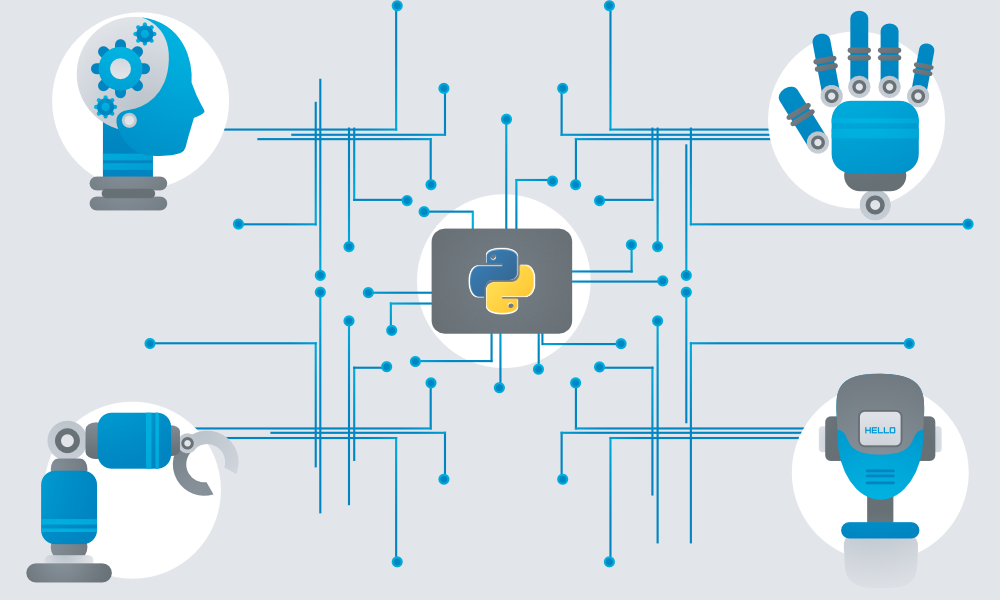
Open source standards development is characterized by very open exchange, collaborative participation, rapid prototyping, transparency and meritocracy. The Python programming language is a high-level, interpreted language that is widely used for general-purpose programming. Python is known for its readability, simplicity, and ease of use, making it a popular choice for beginners and experienced developers alike. Python has a large and active community of developers, which has led to the creation of a vast ecosystem of libraries, frameworks, and tools that can be used for a wide range of applications. These include web development, scientific computing, data analysis, machine learning, and more.
Another important aspect of Python is its versatility. It can be used on a wide range of platforms, including Windows, macOS, Linux, and even mobile devices. Python is also compatible with many other programming languages and can be integrated with other tools and technologies, making it a powerful tool for software development. Overall, the simplicity, readability, versatility, and large community support of Python make it a valuable programming language to learn for anyone interested in software development including building automation.
As open source software, anyone may suggest an improvement to Python(3.X) starting at the link below:
Python can be used to control building automation systems. Building automation systems are typically used to control various systems within a building, such as heating, ventilation, air conditioning, lighting, security, and more. Python can be used to control these systems by interacting with the control systems through the building’s network or other interfaces.
There are several Python libraries available that can be used for building automation, including PyVISA, which is used to communicate with instrumentation and control systems, and PyModbus, which is used to communicate with Modbus devices commonly used in building automation systems. Python can also be used to develop custom applications and scripts to automate building systems, such as scheduling temperature setpoints, turning on and off lights, and adjusting ventilation systems based on occupancy or other variables. Overall, Python’s flexibility and versatility make it well-suited for use in building automation systems.
.@PyCon US 2025 is a wrap, and our hearts are full with #Python community love! Thanks to every single one of you who organized, volunteered, attended, & sponsored 🐍🫶 #PyConUS
The PSF office will be closed May 26-28 so our staff can rest & recover. See you back online soon! pic.twitter.com/Sy1hiRmvw4
— Python Software Foundation (@ThePSF) May 27, 2025
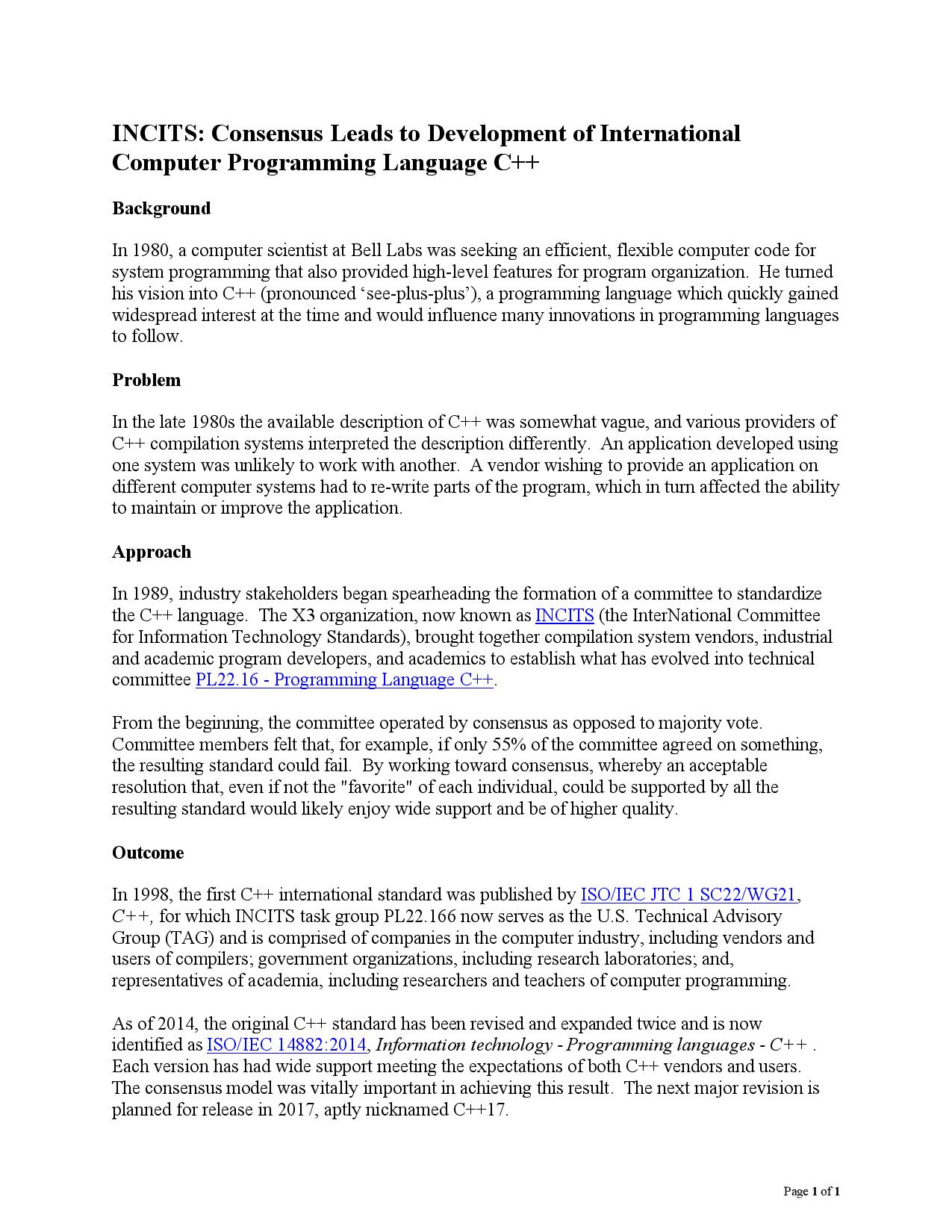
Python and C++ often work together rather than compete. Python provides an accessible, expressive language for developing applications, experiments and artificial-intelligence workflows, while C++ supplies speed and close control of computing resources. Many Python libraries therefore present a convenient Python interface while performing demanding calculations in compiled C or C++ code underneath. AI frameworks such as PyTorch follow this pattern extensively.
Developers can also connect the languages directly: Python can call C++ libraries, and C++ programs can embed Python. The result combines Python’s rapid development and enormous software ecosystem with C++ performance, making the partnership especially important in scientific computing and artificial intelligence.
* CLICK HERE to access ANSI Committee on Education Case Study Catalog
Abstract. The recently introduced continuous Skip-gram model is an efficient method for learning high-quality distributed vector representations that capture a large number of precise syntactic and semantic word relationships. In this paper we present several extensions that improve both the quality of the vectors and the training speed. By subsampling of the frequent words we obtain significant speedup and also learn more regular word representations. We also describe a simple alternative to the hierarchical softmax called negative sampling.
An inherent limitation of word representations is their indifference to word order and their inability to represent idiomatic phrases. For example, the meanings of “Canada” and “Air” cannot be easily combined to obtain “Air Canada”. Motivated by this example, we present a simple method for finding phrases in text, and show that learning good vector representations for millions of phrases is possible.
Large Language Models and Infrastructure Technical Standards
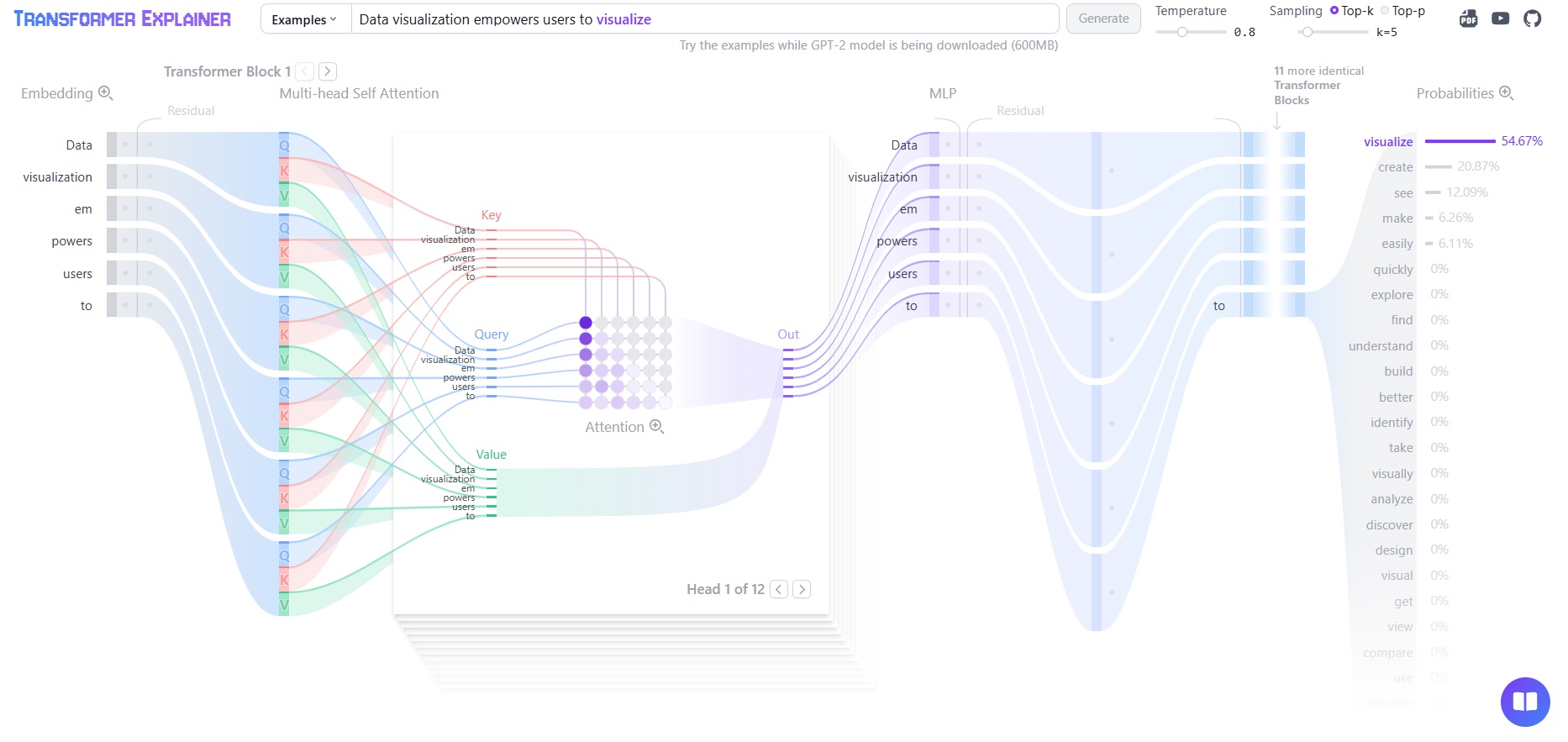
Large Language Models (LLMs) are poised to significantly accelerate and reshape the development of infrastructure standards — including engineering codes, technical specifications for civil works, transportation, energy grids, water systems, and related Standards Development Organization (SDO) processes at ASTM, IEEE, ASABE, ISO, and similar bodies. This connection traces back to foundational ideas in distributed representations (Hinton et al., Mikolov’s Word2Vec) that powered the transformer revolution, which in turn enabled modern LLMs and the shift from passive generative AI to active, goal-directed agentic AI.
While LLMs will not replace human expertise, consensus-building, or rigorous validation, they will transform traditionally slow, document-heavy workflows into faster, more collaborative, and data-driven processes.
1. Faster Drafting, Summarization, and Gap Analysis
LLMs can rapidly summarize lengthy documents, extract key requirements, identify inconsistencies across related standards, and generate initial draft sections or comparison tables. This is especially valuable for reviewing historical codes, research papers, regulations, and stakeholder inputs.
Infrastructure example: In renewable energy permitting or grid interconnection standards, LLMs excel at processing complex environmental impact statements and regulatory texts to accelerate reviews.
2. Enhanced Requirements Engineering and Consistency Checking
LLMs support formal requirements extraction, flag ambiguities, suggest measurable criteria, and translate between domains. They help maintain alignment between textual standards and digital implementations such as Building Information Modeling (BIM) or simulation tools.
3. Improved Accessibility, Education, and Stakeholder Participation
LLMs make standards more usable by generating plain-language explanations, FAQs, examples, and tailored training materials. They lower barriers for broader participation in SDO committees by helping non-experts understand and contribute to drafts.
4. Domain-Specific Applications in Infrastructure
Civil, Structural & Agricultural Engineering: Design ideation, safety analysis, and updating standards for new materials and climate resilience.
Permitting & Compliance: Summarizing environmental documents and speeding up infrastructure deployment.
Interoperability & Testing: Verification support for software-heavy systems such as smart grids and autonomous infrastructure.
5. Broader Process Changes for SDOs
Zero-draft acceleration for preliminary stakeholder review
Continuous monitoring for maintenance and timely updates
Multi-agent LLM systems for parallel virtual expert review before human consensus
Limitations and Important Caveats
“Hallucinations” & Validation: Outputs must always be human-verified, especially in safety-critical areas. Domain-specific fine-tuning and retrieval-augmented generation (RAG) help but are not foolproof.
Bias, Copyright & Accountability: Standards demand traceability and consensus; LLMs can introduce subtle biases or IP concerns.
Not a Full Replacement: Human judgment remains essential for risk assessment, ethics, and real-world tradeoffs.
Expect 2–5× faster iteration on drafts, superior knowledge management, and more adaptive standards. Early adopters using LLM assisted tools with proper governance will lead the next generation of infrastructure standards development.
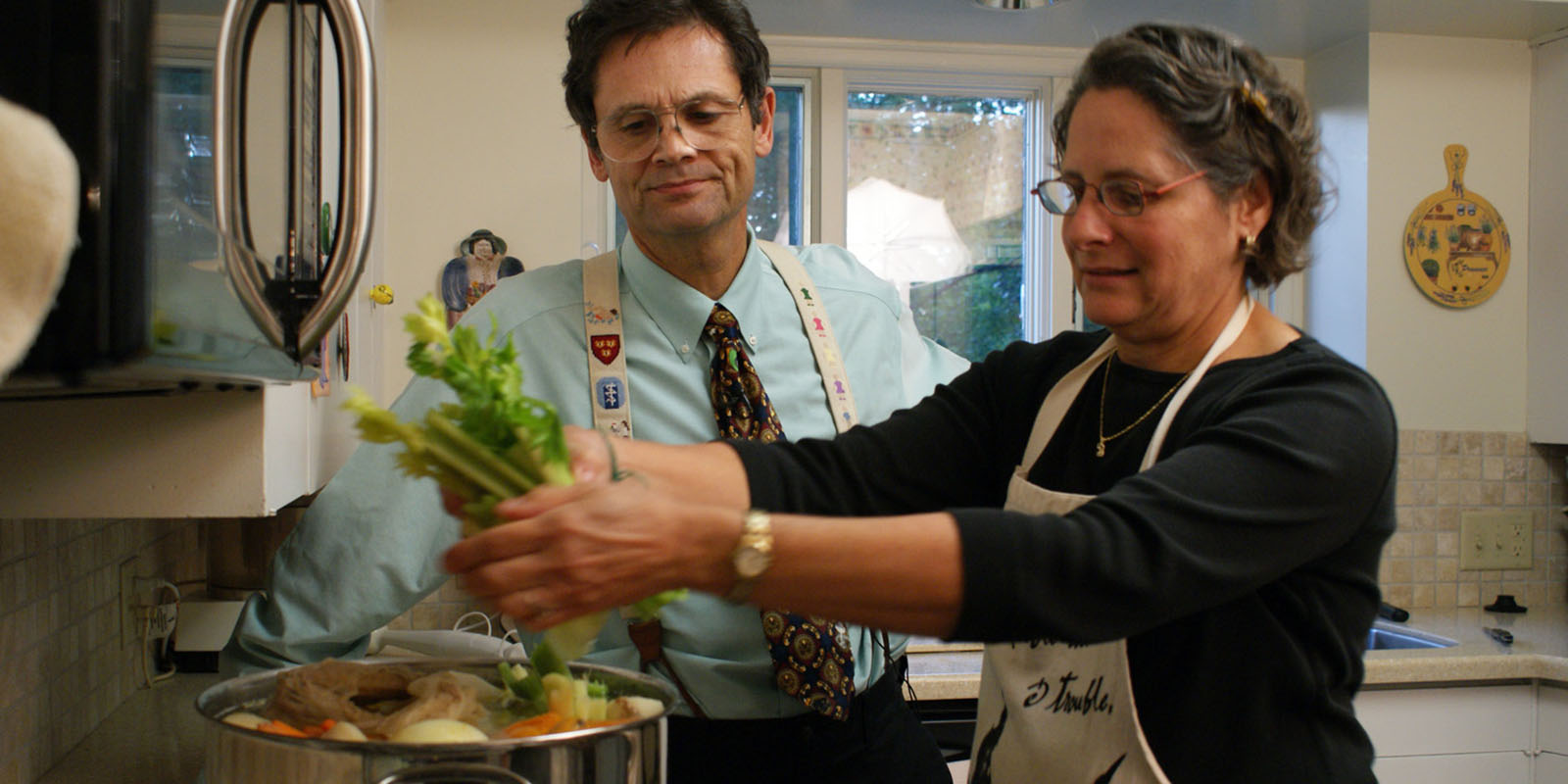
Clean the chicken, put it in a large pot and cover it with cold water. Bring the water to boil.
Add the chicken wings, onions, sweet potato, parsnips, turnips and carrots. Boil about 1 and a half hours. Remove fat from the surface as it accumulates.
Add the parsley and celery. Cook the mixture about 45 min. longer.
Remove the chicken. The chicken is not used further for the soup. (The meat makes excellent chicken parmesan.)
Put the vegetables in a food processor until they are chopped fine or pass through a strainer. Both were performed in the present study.
Add salt and pepper to taste.
(Note: This soup freezes well.) Matzo balls were prepared according to the recipe on the back of the box of matzo meal (Manischewitz).
Today marks the 10th anniversary of Chancellor Jeffrey P. Gold’s remarkable journey with UNMC. Thank you, @jeffreypgold, for your unwavering commitment to excellence and your visionary guidance to the UNMC community. https://t.co/jgGhyMH55rpic.twitter.com/fPxvyMsnz2
— University of Nebraska Medical Center (@unmc) February 1, 2024
New update alert! The 2022 update to the Trademark Assignment Dataset is now available online. Find 1.29 million trademark assignments, involving 2.28 million unique trademark properties issued by the USPTO between March 1952 and January 2023: https://t.co/njrDAbSpwBpic.twitter.com/GkAXrHoQ9T