Tolkien, author of “The Lord of the Rings” and “The Hobbit,” completed his studies at the University of Birmingham in 1915. He graduated with first-class honors in English Language and Literature. After graduation, Tolkien went on to serve in World War I before embarking on his distinguished career as a writer and academic.
Our researchers have found that banning phones in schools doesn’t improve students’ mental health and wellbeing. However, increased phone and social media use correlated with negative impacts. Addressing use both in and out of school is crucial. Read more: https://t.co/OrMdq735f5pic.twitter.com/hkuuqGnQ8q
This content is accessible to paid subscribers. To view it please enter your password below or send mike@standardsmichigan.com a request for subscription details.
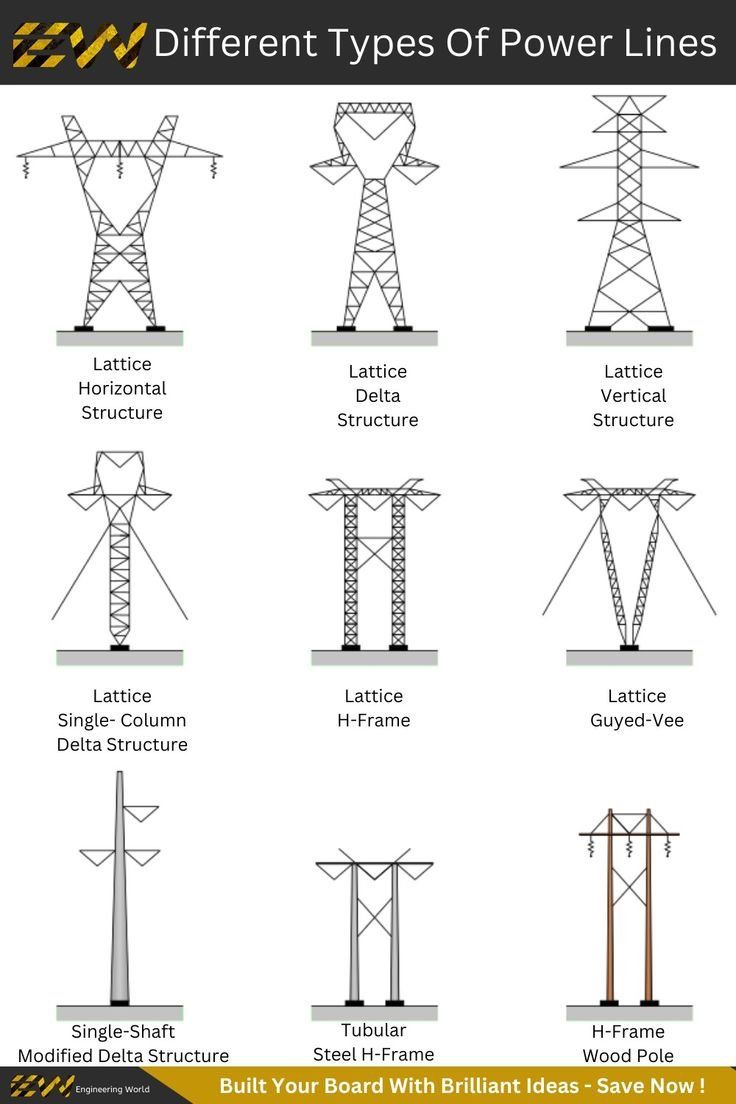
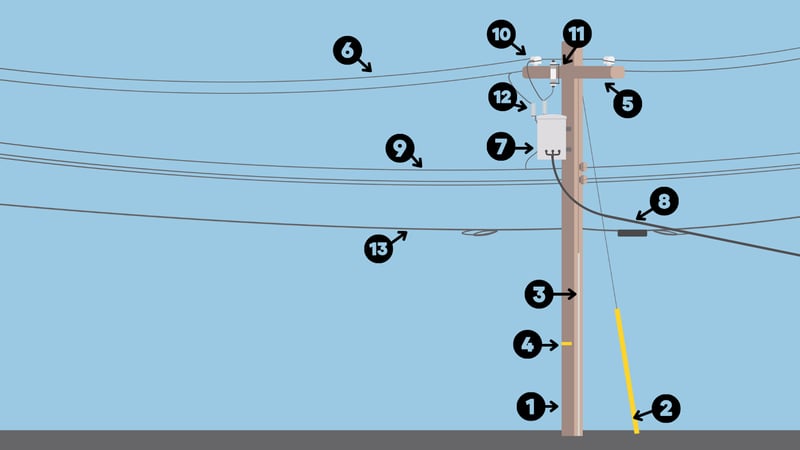
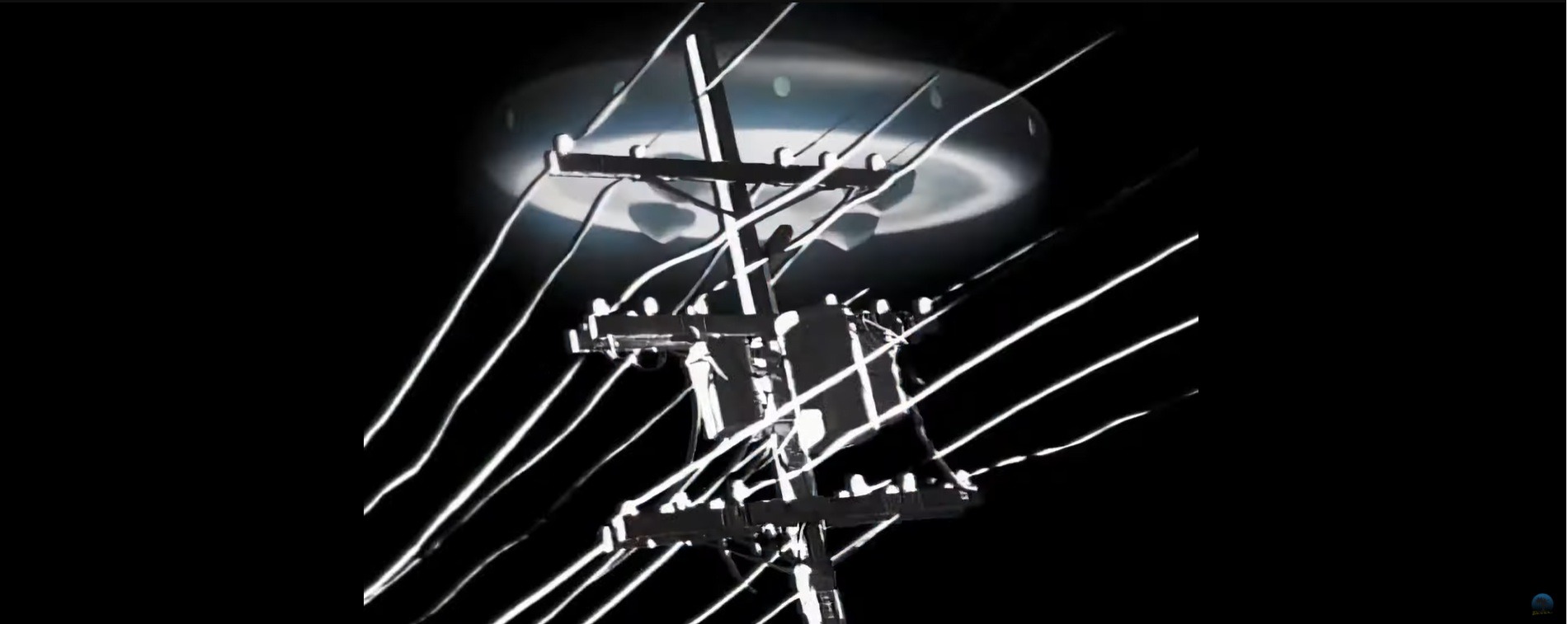
Abstract: This guide identifies the mechanisms and an analytic approach for developing consistent rules, agreements, and/or methodologies for the evaluation and inter-entity cooperation managing pole attachments on utility infrastructure that can contain both electric supply as well as communications wireline and wireless facilities.
The common safety codes and accepted good industry practices for joint use are referenced, including items such as clearances and strength/loading requirements, appropriate work rules during installation, maintenance and restoration, and general guidelines. The considerations within this guide can be used to help perform a detailed assessment of attachment installations where communications antennas and related wireline and wireless equipment are to be co-located on joint use structures.
Scope: This guide provides recommendations for the development of consistent guides, agreements, and/or methodologies for the evaluation and inter-company cooperation on managing pole attachments on Electric Utility infrastructure.
Purpose: The Joint Use Guide documents consistent approaches, methodologies and rules for the sharing and co-location of equipment with electric Transmission & Distribution (T&D) facilities for communications such as antennae and/or cable. With the emergence of new communications networks and emerging technologies which depend on widely distributed communications {e.g. 5G and Internet of Things ( IoT)}, the needs of vertical real-estate for use in communications is expected to dramatically increase in the coming years. While electric T&D facilities provide an excellent platform to help meet these needs, there are significant safety and reliability issues associated with their use.
“All the months are crude experiments, out of which the perfect September is made” — Virginia Woolf
§
“Daybreak” | Maxfield Parrish 1922
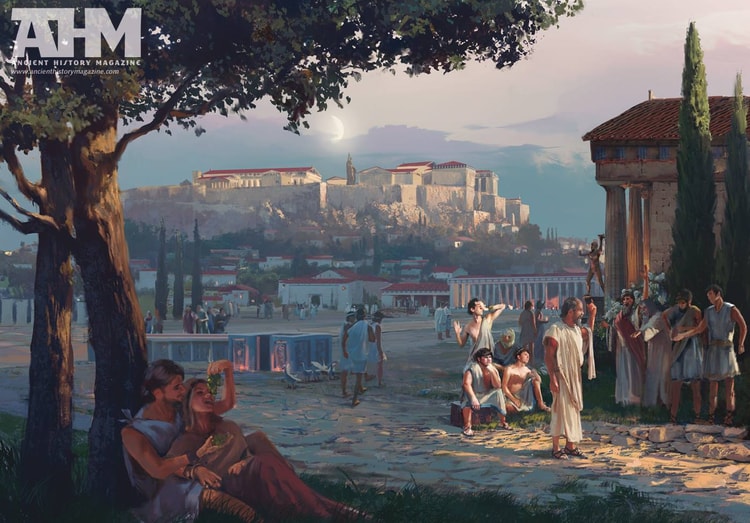
Our use of the term the essential works of “Educational Settlements” captures the self-contained energy of these places — kindergartens, classrooms, quads, dining halls, dorms, and nearby squares buzzing with student life amid broader higher-ed shifts like the “demographic cliff” (declining traditional enrollments), AI integration, skills-focused curricula, and financial pressures. (Related: Agora)
“…O chestnut tree;, great rooted blossomer, Are you the leaf, the blossom or the bold? O body swayed to music, O brightening glance, How can we know the dancer from the dance?”
We sweep through the world’s three major time zones; updating our understanding of the literature at the technical foundation of education community safety and sustainability in those time zones 24 times per day. We generally eschew “over-coding” web pages to sustain speed, revision cadence and richness of content as peak priority. We do not provide a search facility because of copyrights of publishers and time sensitivity of almost everything we do.
Our daily colloquia are typically doing sessions; with non-USA titles receiving priority until 16:00 UTC and all other titles thereafter. We assume policy objectives are established (Safer-Simpler-Lower-Cost, Longer-Lasting). Because we necessarily get into the weeds, and because much of the content is time-sensitive and copyright protected, we usually schedule a separate time slot to hammer on technical specifics so that our response to consultations are meaningful and contribute to the goals of the standards developing organization and to the goals of stewards of education community real assets — typically the largest real asset owned by any US state and about 50 percent of its annual budget.
1. Leviathan. We track noteworthy legislative proposals in the United States 118th Congress. Not many deal specifically with education community real assets since the relevant legislation is already under administrative control of various Executive Branch Departments such as the Department of Education.
We do not advocate in legislative activity at any level. We respond to public consultations but there it ends.
We track federal legislative action because it provides a stroboscopic view of the moment — the “national conversation”– in communities that are simultaneously a business and a culture. Even though more than 90 percent of such proposals are at the mercy of the party leadership the process does enlighten the strengths and weakness of a governance system run entirely through the counties on the periphery of Washington D.C. It is impossible to solve technical problems in facilities without sensitivity to the zietgeist that has accelerated in education communities everywhere.
Michigan Great Lake Quilt
Michigan can 100% water and feed itself. Agriculture is its second-largest industry.
CIP-014-4 strengthens the physical-security framework for transmission stations, substations and associated primary control centers whose loss through physical attack could cause instability, uncontrolled separation or cascading within an Interconnection. The revised standard tightens risk-assessment timelines, clarifies applicability and strengthens independent verification and oversight.
University cogeneration: Large campus cogenerating plants do not become subject to CIP-014-4 simply because it operates in parallel with the utility grid. The standard is directed principally at qualifying Transmission Owners and Transmission Operators and the critical transmission facilities identified through the prescribed risk assessment. When the plant gets to about 75 MVA and is connected at greater than 100 kV ( a fairly common “service” interconnect voltage, the NERC registration, the ownership boundary and the topology of the high-voltage interconnection all become consequential. The University of Michigan and MIT plants — the largest in the USA — lie on the boundary
Practical implication: Large research universities with interconnected cogeneration should nevertheless examine the physical security of the campus–utility interface: high-voltage substations, switchyards, protection and control systems, communications, black-start capability and operating arrangements with the serving utility. A campus facility outside CIP-014-4 may still affect — or depend upon — a transmission facility that is inside it. Resilience therefore becomes a shared engineering problem even where regulatory responsibility does not.
University district energy systems are significant stakeholders in bulk electrical transmission reliability because large educational settlements behave much like small cities. Hospitals, laboratories, data centers, residence halls, athletic facilities and central utility plants create substantial, concentrated electrical loads whose interruption may have consequences extending beyond ordinary commercial outages.
Many universities also operate combined heat and power plants, generators, thermal storage, microgrids and other distributed energy resources. These assets can reduce transmission demand, support local resilience and, where market and interconnection arrangements permit, participate in demand response or other grid-support activities. Conversely, disturbances on the bulk transmission system can disrupt campus generation, utility distribution and critical research or clinical operations.
Universities therefore occupy both sides of the reliability equation: they are dependent loads and potential reliability resources. Transmission planning, protection, restoration priorities, interconnection requirements and emergency operating procedures can directly affect the continuity, cost and resilience of university district energy systems.
Key point for us: FERC directed NERC on computational/large loads (E-1, RD26-7-000) — Ordered the North American Electric Reliability Corporation (NERC) to develop and submit new or modified Reliability Standards addressing reliability risks from integrating computational loads (e.g., data centers) into the Bulk-Power System, plus revisions to its Rules of Procedure (including registry criteria for such loads). Filings due by December 31, 2026.
The Commission voted on a series of mostly consent agenda items focused on electric reliability, market rules, compliance, infrastructure, and related matters. Some of them are relevant to large, sometimes privatized, campus power systems:
Major initiative to accelerate large-load interconnections. The Commission’s headline action was the issuance of six “show cause” orders directing every jurisdictional RTO/ISO (except Texas/ERCOT) to justify or reform how they connect very large electric loads, particularly AI data centers. The objective is to reduce delays while protecting grid reliability and ensuring that costs are appropriately assigned.
Large customers expected to bear infrastructure costs. FERC made clear that new large loads should generally pay for the transmission and distribution upgrades needed to serve them, rather than shifting those costs onto existing retail customers. This principle is expected to influence future tariff filings nationwide
Encouragement of customer-owned generation. The Commission encouraged tariff structures that would allow large customers to supply some or all of their own electricity—such as on-site generation, microgrids, or other behind-the-meter resources—to reduce impacts on the bulk power system.
MISO emergency demand-resource improvements. The Commission conditionally accepted tariff revisions from MISO that improve the visibility, dispatch, and operation of demand-side resources during grid emergencies beginning with the 2028–2029 planning year. This strengthens reliability during extreme system conditions.
A clear policy shift toward speed-to-power. The June meeting signaled perhaps the strongest policy emphasis in years on rapidly connecting new electric demand while maintaining reliability. The Commission characterized the integration of very large loads—especially AI-related facilities—as a national priority and indicated that existing interconnection practices may no longer be adequate
For universities, research campuses, hospitals, semiconductor manufacturers, and data center developers, the June 2026 meeting represents a significant shift in federal policy. Rather than treating large-load requests as exceptional cases, FERC is moving toward standardized, faster interconnection procedures coupled with clearer cost-allocation rules. Institutions planning major campus expansions or new energy-intensive facilities should monitor the forthcoming tariff revisions from their regional transmission organizations, as these changes could substantially affect project schedules, interconnection costs, and opportunities to incorporate on-site generation or microgrids.
Key Reliability & Cybersecurity Actions. FERC approved important updates to Critical Infrastructure Protection (CIP) Reliability Standards. These included modernized rules for virtualization (allowing secure use of virtual machines), enhanced security management controls for low-impact cyber systems (CIP-003-11), and refinements to the definition of “control center” to better protect high-risk assets. The changes aim to strengthen the bulk-power system against rising cyber threats and extreme weather while reducing unnecessary administrative burdens.
Electric Rate and Complaint Resolutions. The Commission resolved several long-running rate complaints, including setting a base return on equity (ROE) of 9.57% for New England Transmission Owners. It addressed complaints involving spot market sales exceeding price caps in the WECC region and cost allocation issues in MISO related to DOE emergency orders. Several tariff revisions and generator interconnection filings were also accepted.
Other Actions. FERC modernized Electric Quarterly Report (EQR) filing requirements, authorized multiple asset transactions and dispositions, and approved several natural gas pipeline, storage, and abandonment projects. A presentation on the 2025 State of the Markets Report was also delivered.
FERC’s involvement in CHP plants at universities and hospitals depends on and how the facility interacts with the bulk electric power system and wholesale markets. In many cases, FERC’s role is indirect—but it can become significant under certain conditions. We cover this topic separately in our periodic US Department of Energy Combined Heat & Power eCATALOG
Next Open Meeting: May 21. Keep in mind that much “bandwidth” is devoted to administrative issues; the technical specifics of primary interest to us referenced in case dockets that are referenced here: FERC Online
The current full complement of five FERC commissioners is relatively new as of December 23, 2025. The two most recent additions — Chairman Laura V. Swett (term expiring June 30, 2030) and Commissioner David A. LaCerte (term expiring June 30, 2026) — were confirmed by the U.S. Senate on October 7, 2025.
Ω
This restored FERC to its full five members after prior vacancies and transitions earlier in the year. The other commissioners (David Rosner, Lindsay S. See, and Judy W. Chang) have been in place since mid-2024 or earlier, but the current lineup only fully formed about two and a half months ago.
Ω
This followed changes tied to the new administration, including shifts in majority and leadership.
January 22. Issues of interest discussed at the FERC Open Meeting on January 22, 2026, centered primarily on electric sector matters related to generator interconnection reforms, expedited processes for resource adequacy. Our interest lies in the effect of FERC action will have on the utility costs of educational settlements which, of course, practically involves all utilities and how those decisions are reflected in state tariffs.
One issue of particular interest for Michigan: Midcontinent Independent System Operator, Inc. (MISO) Expedited Resource Addition Study (ERAS) process (Docket No. ER25-2454-002): The Commission addressed arguments on rehearing and sustained its prior July 21, 2025, order approving MISO’s ERAS framework. This provides an expedited interconnection study process for generation projects addressing urgent near-term resource adequacy and reliability needs in the MISO region. Discussions involved balancing reliability concerns (e.g., load growth, resource shortfalls) against claims of undue discrimination or preference in interconnection queuing, as raised by public interest groups. We will see these conclusions reflected in Michigan Public Service Commission action.Other agenda elements likely included routine administrative matters (e.g., A-1 Agency Administrative Matters, A-2 Customer Matters/Reliability/Security/Market Operations) and consent items (often non-controversial electric, gas, hydro, or certificate matters voted en bloc without discussion).
No major presentations were noted, and the meeting focused on these reliability/interconnection and market integrity issues amid broader grid challenges like queue backlogs, rapid load growth, and transitioning resources.The Q&A afterward involved energy media, with emphasis by Laura V. Swett on reliability concerns ahead of likely winter storms. The next public open meeting is scheduled for Thursday, February 19th.
December 18. The public meetings are dominated by administrative procedures and mutual admiration. Technical issues that require in-depth, expert-level understanding of complex laws, rules, guidelines, and precedents beyond surface-level awareness appear deeper into the FERC website. There you will generally find:
Nuanced interpretation of statutes and agency decisions
Awareness of historical context and evolving policies
Insight into how rules interact with technical, economic, and operational realities
Impacts of changes and navigate compliance strategically
As interest and time allows we can pick through technical specifics regarding FERC oversight of interstate electricity with the IEEE colleagues.
Article 206 Non-Power-Limited Remote-Control and Signaling Circuits | Article 300 General Requirements for Wiring Methods and Materials | Article 335 Instrumentation Tray Cable — formerly Article 727 | Article 720 Limited-Energy System Installations | Article 721 Limited-Energy Power Sources | Article 722 Limited-Energy Cables | Article 723 Raceways, Cable Routing Assemblies, and Cable Trays for Limited-Energy Systems | Article 724 Class 1 Power-Limited Remote-Control and Signaling Circuits | Article 725 Class 2 and Class 3 Power-Limited Circuits | Article 726 Class 4 Fault-Managed Power Systems | Article 728 Fire-Resistive Cable Systems | Article 760 Fire Alarm Systems | Article 772
Chapter 9 Tables
Top 10 Issues
Issue
Summary
1. Consistency of Code Language
Standardize terminology throughout the NEC by eliminating inconsistent wording, duplicate phrases, and varying expressions that describe the same technical concepts.
2. Compliance with the NEC Style Manual
Many proposals seek removal of redundant requirements already addressed elsewhere in the Code, resulting in a cleaner, more concise document.
3. Restoring Lost Requirements
Numerous submitters argue that important technical provisions disappeared during recent article reorganizations and should be restored.
4. Article Organization
Improve article formatting, numbering, and overall structure to make the NEC easier to navigate and maintain.
5. Emerging Technologies
Expand the Code to better accommodate fault-managed power, battery energy storage, portable power systems, EV-based power sources, hydrogen technologies, and new circuit classifications.
6. Installation Clarification
Clarify requirements for raceways, wet locations, roof decks, cable trays, conductor spacing, barriers, and other installation practices.
7. Installer Safety & Reliability
Enhance electrical safety through improved wiring practices, better physical protection, stronger cable support requirements, and fewer failure points.
8. Definition Ownership
Assign definitions to the Code-Making Panels having primary technical expertise to improve long-term consistency and maintenance.
9. Coordination with Other Standards
Improve harmonization between the NEC and companion standards such as UL, ANSI, NFPA 79, and hazardous-location requirements.
10. Reducing Complexity
A recurring objective is to simplify the NEC by reducing duplication, improving readability, and making the Code easier for installers, inspectors, designers, trainers, and licensing authorities to use.
The Public Inputs demonstrate a broad desire to make the National Electrical Code more consistent, technically complete, better coordinated with related standards, and easier to understand without compromising electrical safety. Many proposals emphasize restoring requirements inadvertently lost during recent reorganizations while preparing the Code to accommodate rapidly emerging electrical technologies.
Mike recommends these issues as priority for the Joint IEEE IAS/PES committee
N.B. Public Input No. 2633-NFPA 70-2026 [ Global Input ] PDF Page 6, regarding re-organization of the NEC into below 1000 V and above 1000 V.
Noteworthy proposal concepts:
Cable trays interfering with HVAC ductwork and fire sprinkler lines. Parallel cable tray feasibility
Difficulty accessing lighting fixtures and fire alarm components for maintenance.
Potential violation of plenum clearance and airflow requirements. Some cable trays in plenums reportedly contain non-plenum-rated cables, which is a fire code violation.
Document flags this as a high-priority remediation item before any LED lighting retrofit proceeds.
Existing security wiring (CCTV, access control, intrusion detection) is a mix of old analog coax and early Cat 5 cables.
Many runs exceed recommended length for reliable video transmission. Frequent signal degradation and reliability complaints.
Security cables are sharing overcrowded cable trays with power-limited lighting control wires and fire alarm cabling.
Risk of electromagnetic interference (EMI) noted due to proximity to higher-voltage lines.
Plenum space constraints make it difficult to add new IP-based security cameras without major reorganization.
Current security wiring cannot support newer high-resolution IP cameras or PoE+ powered devices.
Several editorial proposals by Mike Holt. (He’s generally correct on clarity improvements that he needs for educational purposes)
Ω
For discussion next meeting, when we march through all proposals of interest to IEEE:
When electricians work in ceiling plenums above hallways while students pass below, several serious hazards emerge. Tools, screws, cable scraps, or ceiling tiles can fall, causing head injuries or slips. Disturbed dust, fiberglass, or potential asbestos particles may rain down, creating respiratory risks.
Live electrical work on lighting or cable trays raises shock/fire dangers if a fault occurs or debris shorts circuits. Open plenums can compromise fire-rated barriers, allowing smoke or flames to spread rapidly in an emergency.
Noise and visual distractions increase trip hazards for students. Without full barricades, lockout/tagout, and proper fall protection, these overhead activities expose young people to preventable injury. Scheduling work after hours or using full corridor closures is essential.
Power-limited (Class 2) cabling operates at low voltage (<60V DC) with current/power caps (~100VA), dramatically reducing shock and fire risks. Installation is simpler and cheaper—no conduit or heavy mechanical protection needed in many cases, allowing flexible routing. LEDs run cooler and more efficiently with remote drivers, improving lifespan and energy savings. Easier maintenance and safer for retrofits.
Severe distance and power limits due to voltage drop and 100W/5A caps require multiple drivers or shorter runs. Higher upfront costs for specialized power supplies. Potential reliability issues from more connection points. Less suitable for high-power or long-distance applications compared to line-voltage wiring.
Public Inputs Relevant to School and College Facilities
Campus Facility
Relevant Issue
Why It Matters
Student Health Centers, Medical Schools & Campus Hospitals
Improved protection of underground feeders, raceways, and wiring methods, together with replacement of conductors damaged by water, fire, corrosion, or severe physical impact.
Enhances electrical reliability for healthcare occupancies where continuous operation is essential.
Athletic Stadiums & Arenas
Improved protection of underground services, direct-buried conductors, warning ribbons, and raceways.
Supports reliable electrical service for stadium lighting, scoreboards, concessions, and outdoor utility infrastructure.
Temporary Athletic & Campus Events
Recognition of modern portable power sources, including battery energy storage systems and portable fuel cells, in addition to traditional generators.
Useful for commencement ceremonies, concerts, athletic tournaments, festivals, and temporary event power.
Research Laboratories
Expanded wiring methods for hazardous (classified) locations, including ITC-HL cable installations.
May affect university research laboratories, pilot plants, engineering facilities, and chemical research buildings.
Residence Halls & Classroom Buildings
Improved protection against concealed wiring damage caused by nails, screws, and furring strips during construction and renovation.
Helps reduce wiring damage during frequent campus remodeling and maintenance projects.
Campus Utility Infrastructure
Clarifications involving direct boring, underground raceways, service feeders, and warning ribbon installation.
Relevant to the large underground electrical distribution systems commonly found on university campuses.
Although these proposals would benefit campus infrastructure, the CMP-3 transcript contains very little discussion directed specifically at educational occupancies. Topics such as healthcare facilities (Article 517), stadium emergency systems, data centers, laboratories as occupancies, residence halls, libraries, and central utility plants largely fall within the jurisdiction of other NEC Code-Making Panels such as CMP-1 and CMP-15 where Mike has been a Principal or Alternate for IEEE.
April 29, 2026
At the request of IEEE Joint IAS/PES Standards Michigan, Mike Anthony moved to CMP-3 from CMP-15.
Articles Under CMP 3
Article 300 — General Requirements for Wiring Methods and Materials
Article 335 — Instrumentation Tray Cable (in some references for the 2029 cycle)
Article 590 — Temporary Installations (being relocated/renumbered in the 2026 cycle, e.g., potentially to Article 140 in Chapter 1, as temporary wiring is not treated as a special occupancy)
Article 720 — Limited-Energy System Installations (new/general article covering wiring methods for limited-energy systems)
Article 723 — Raceways, Cable Routing Assemblies, and Cable Trays for Limited-Energy Systems (newly created in the 2026 cycle)
Article 725 — Class 2 and Class 3 Remote-Control, Signaling, and Power-Limited Circuits
Article 726 — Class 4 Fault-Managed Power Circuits and Equipment
Article 727 — Instrumentation Tray Cable
Article 728 — Fire-Resistive Cable Systems
Article 760 — Fire Alarm Systems (power-limited and non-power-limited portions)
CMP 3 also handles associated content in: Chapter 9 — Tables, including Tables 11(A) & (B) and Tables 12(A) & (B) (related to conductor properties and other supporting tables for the above topics).
Notes on Changes and Scope CMP 3 focuses on general wiring rules, cable types, raceways/trays for low-energy applications, and signaling/communications-related wiring (distinct from higher-power utilization equipment or special occupancies handled by other panels).
In the 2026 NEC cycle, there has been significant reorganization of Chapter 7 to consolidate limited-energy systems under articles like 720–726 (and related ones), moving away from older structures. This includes new articles for raceways/cable trays specific to limited-energy systems and adjustments to scopes for clarity.
Article 206 (Non-Power-Limited Remote-Control and Signaling Circuits) appears in some 2026-related references as newly designated or relocated material handled in this area. Temporary installations (Article 590) are transitioning out of “special” categories in restructuring efforts.
During today’s sessions of the IEEE E&H Committee and our own we will prepare draft proposals relevant to the safety and sustainability agenda of the USA education facility industry. Use the login credentials at the upper right of our home page.
The University of Michigan has supported the voice of the United States education facility industry since 1993 — the second longest tenure of any voice in the United States. That voice has survived several organizational changes but remains intact and will continue its Safer-Simpler-Lower Cost-Longer Lasting priorities on Code Panel 3 in the 2029 Edition.
Today, during our customary “Open Door” teleconference we will examine the technical concepts under the purview of Code Panel 3; among them:
Article 206 Signaling Circuits
Article 300 General Requirements for Wiring Methods and Materials
Article 335 Instrumentation Tray Cable
Article 590 Temporary Installations
Chapter 7 Large sections of limited energy cabling for signaling and information technology
Since the lifespan of educational buildings make the building core and shell susceptible to multiple changes not typically associated with commercial buildings, additional pathways should be placed in areas where the core and shell components of the facility are likely to re-main for extended periods of time
It is recommended that all areas of an educational building have wireless coverage unless prohibited
We examine the proposals for the 2028 National Electrical Safety Code; including our own. The 2026 National Electrical Code where sit on CMP-15 overseeing health care facility electrical issues should be released any day now. We have one proposal on the agenda of the International Code Council’s Group B Committee Action Hearings in Cleveland in October. Balloting on the next IEEE Gold Book on reliability should begin.
FERC Open Meetings | (Note that these ~60 minute sessions meet Sunshine Act requirements. Our interest lies one or two levels deeper into the technicals underlying the administrivia)
Department of Electrical Engineering, National Taiwan University of Science and Technology, Taipei City, Taiwan
First Draft Proposals contain most of our proposals — and most new (original) content. We will keep the transcripts linked below but will migrate them to a new page starting 2025:
N.B. We are in the process of migrating electric power system research to the Institute of Electrical and Electronics Engineers bibliographic format.
Recap of the May meetings of the Industrial & Commercial Power Systems Conference in Las Vegas. The conference ended the day before the beginning of the 3-day Memorial Day weekend in the United States so we’re pressed for time; given all that happened.
We can use our last meeting’s agenda to refresh the status of the issues.
We typically break down our discussion into the topics listed below:
Codes & Standards:
While IAS/I&CPS has directed votes on the NEC; Mike is the only I&CPS member who is actually submitting proposals and responses to codes and standards developers to the more dominant SDO’s — International Code Council, ASHRAE International, UL, ASTM International, IEC & ISO. Mike maintains his offer to train the next generation of “code writers and vote getters”
Performance-based building premises feeder design has been proposed for the better part of ten NEC revision cycles. The objective of these proposals is to reduce material, labor and energy waste owed to the branch and feeder sizing rules that are prescriptive in Articles 210-235. Our work in service and lighting branch circuit design has been largely successful. A great deal of building interior power chain involves feeders — the network upstream from branch circuit panels but down stream from building service panel.
Our history of advocating for developing this approach, inspired by the NFPA 101 Guide to Alternative Approaches to Life Safety, and recounted in recent proposals for installing performance-based electrical feeder design into the International Building Code, appears in the link below:
Access to this draft paper for presentation at any conference that will receive it — NFPA, ICC or IEEE (or even ASHRAE) will be available for review at the link below:
NFPA 110 Definitions of Public Utility v. Merchant Utility
NFPA 72 “Definition of Dormitory Suite” and related proposals
Buildings:
Renovation economics, Smart contracts in electrical construction. UMich leadership in aluminum wiring statements in the NEC should be used to reduce wiring costs.
This paper details primary considerations in estimating the life cycle of a campus medium voltage distribution grid. Some colleges and universities are selling their entire power grid to private companies. Mike has been following these transactions but cannot do it alone.
Variable Architecture Multi-Island Microgrids
District energy:
Generator stator winding failures and implications upon insurance premiums. David Shipp and Sergio Panetta. Mike suggests more coverage of retro-fit and lapsed life cycle technicals for insurance companies setting premiums.
Reliability:
Bob Arno’s leadership in updating the Gold Book.
Mike will expand the sample set in Table 10-35, page 293 from the <75 data points in the 1975 survey to >1000 data points. Bob will set up meeting with Peyton at US Army Corps of Engineers.
Reliability of merchant utility distribution systems remains pretty much a local matter. The 2023 Edition of the NESC shows modest improvement in the vocabulary of reliability concepts. For the 2028 Edition Mike submitted several proposals to at least reference IEEE titles in the distribution reliability domain. It seems odd (at least to Mike) that the NESC committees do not even reference IEEE technical literature such as Bob’s Gold Book which has been active for decades. Mike will continue to propose changes in other standards catalogs — such as ASTM, ASHRAE and ICC — which may be more responsive to best practice assertions. Ultimately, improvements will require state public utility commission regulations — and we support increases in tariffs so that utilities can afford these improvements.
Mike needs help from IEEE Piscataway on standard WordPress theme limitations for the data collection platform.
Mike will update the campus power outage database.
Healthcare:
Giuseppe Parise’s recent work in Italian power grid to its hospitals, given its elevated earthquake risk. Mike’s review of Giuseppe’s paper:
Mike and David Shipp will prepare a position paper for the Harvard Healthcare Management Journal on reliability advantages of impedance grounding for the larger systems.
The Internet of Bodies
Forensics:
Giuseppe’s session was noteworthy for illuminating the similarity and differences between the Italian and US legal system in handling electrotechnology issues.
Mike will restock the committee’s library of lawsuits transactions.
Ports:
Giuseppe updates on the energy and security issues of international ports. Mike limits his time in this committee even though the State of Michigan has the most fresh water international ports in the world.
A PROPOSED GUIDE FOR THE ENERGY PLAN AND ELECTRICAL INFRASTRUCTURE OF A PORT
Other:
Proposals to the 2028 National Electrical Safety Code: Accepted Best Practice, exterior switchgear guarding, scope expansion into ICC and ASHRAE catalog,
Apparently both the Dot Standards and the Color Books will continue parallel development. Only the Gold Book is being updated; led by Bob Arno. Mike admitted confusion but reminded everyone that any references to IEEE best practice literature in the NFPA catalog, was installed Mike himself (who would like some backup help)
Mike assured Christel Hunter (General Cable) that his proposals for reducing the 180 VA per-outlet requirements, and the performance-base design allowance for building interior feeders do not violate the results of the Neher-McGrath calculation used for conductor sizing. All insulation and conducting material thermal limits are unaffected.
Other informal discussions centered on the rising cost of copper wiring and the implications for the global electrotechnical transformation involving the build out of quantum computing and autonomous vehicles. Few expressed optimism that government ambitions for the same could be met in any practical way.
Are students avoiding use of Chat GPT for energy conservation reasons? Mike will be breaking out this topic for a dedicated standards inquiry session:
The University of Michigan has supported the voice of the United States education facility industry since 1993 — the second longest tenure of any voice in the United States. That voice has survived several organizational changes but remains intact and will continue its Safer-Simpler-Lower Cost-Longer Lasting priorities on Code Panel 3 in the 2029 Edition.
Today, during our customary “Open Door” teleconference we will examine the technical concepts under the purview of Code Panel 15; among them:
Article 120 Part VI
Article 517 Health Care Facilities
Article 518 Assembly Occupancies
Article 520 Theaters…and Performance Areas
Article 522 Control Systems for Permanent Amusement Attractions
Article 525 Carnivals, Circuses, Fairs and Similar Events
Since the lifespan of educational buildings make the building core and shell susceptible to multiple changes not typically associated with commercial buildings, additional pathways should be placed in areas where the core and shell components of the facility are likely to re-main for extended periods of time
It is recommended that all areas of an educational building have wireless coverage unless prohibited
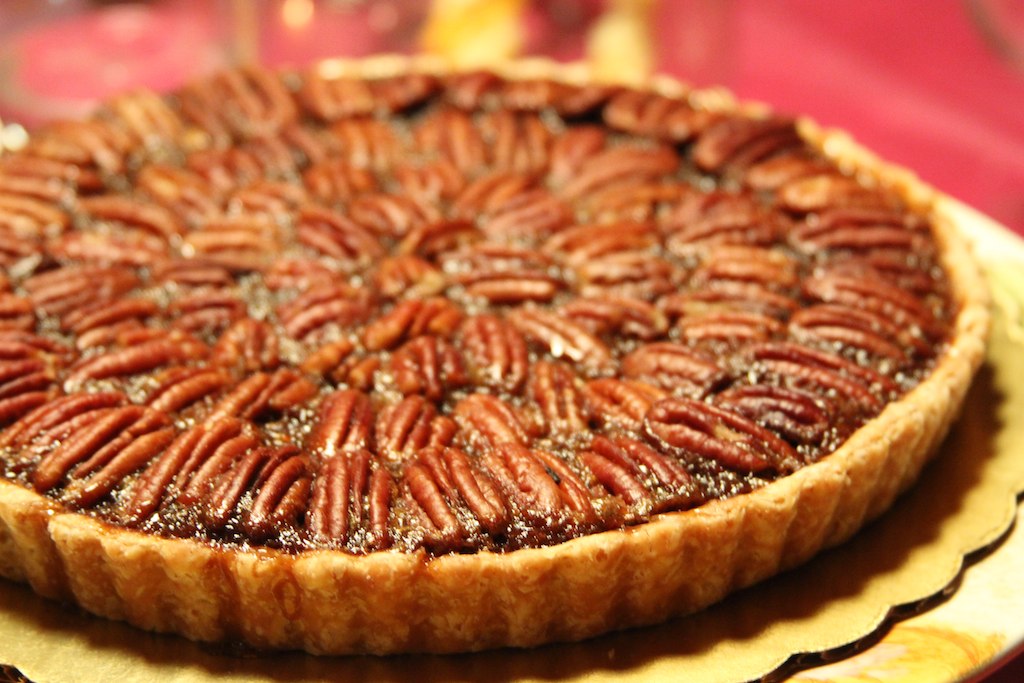
The popularity of Georgia pecan pie can be attributed to several factors:
Abundance of Pecans: Georgia, particularly in the southern region of the United States, has a favorable climate for pecan trees. Pecans have been grown in Georgia for centuries, and the state has a long history of pecan cultivation. With such abundance, pecans became a staple ingredient in many traditional Southern recipes, including pecan pie.
Southern Culinary Tradition: Southern cuisine, known for its comfort foods and indulgent desserts, heavily features pecans in various recipes. Pecan pie is a classic Southern dessert that has been passed down through generations, becoming deeply ingrained in the culinary heritage of the region. Georgia, as a quintessential Southern state, plays a significant role in promoting and preserving these culinary traditions.
Cultural Significance: Pecan pie is not only a delicious dessert but also holds cultural significance in the South. It is often served during holidays and family gatherings, evoking feelings of warmth, nostalgia, and tradition. The act of sharing a slice of pecan pie with loved ones is a cherished tradition for many families in Georgia and throughout the South.
New update alert! The 2022 update to the Trademark Assignment Dataset is now available online. Find 1.29 million trademark assignments, involving 2.28 million unique trademark properties issued by the USPTO between March 1952 and January 2023: https://t.co/njrDAbSpwBpic.twitter.com/GkAXrHoQ9T










#/media/File:Daybreak_by_Parrish_(1922).jpg)