Revolving Pedestrian Doors

Loading
loading...

Revolving Pedestrian Doors

January 11, 2024
mike@standardsmichigan.com
No Comments

Gone are the days when a door was just a door (or “opening”) — at least insofar as public safety expectations are  concerned.   As we explain in our School Security Standards post the pace of standardization in public safety management and technology has increased; driven by events.  Some of the risk management can be accomplished with integrated electrotechnology solutions that are complex and more expensive to design, build, operate and maintain.  Architects, electrical and information and communications technology professionals usually have to collaborate on the application of the technology owing to the blistering pace of cross-disciplinary integration.
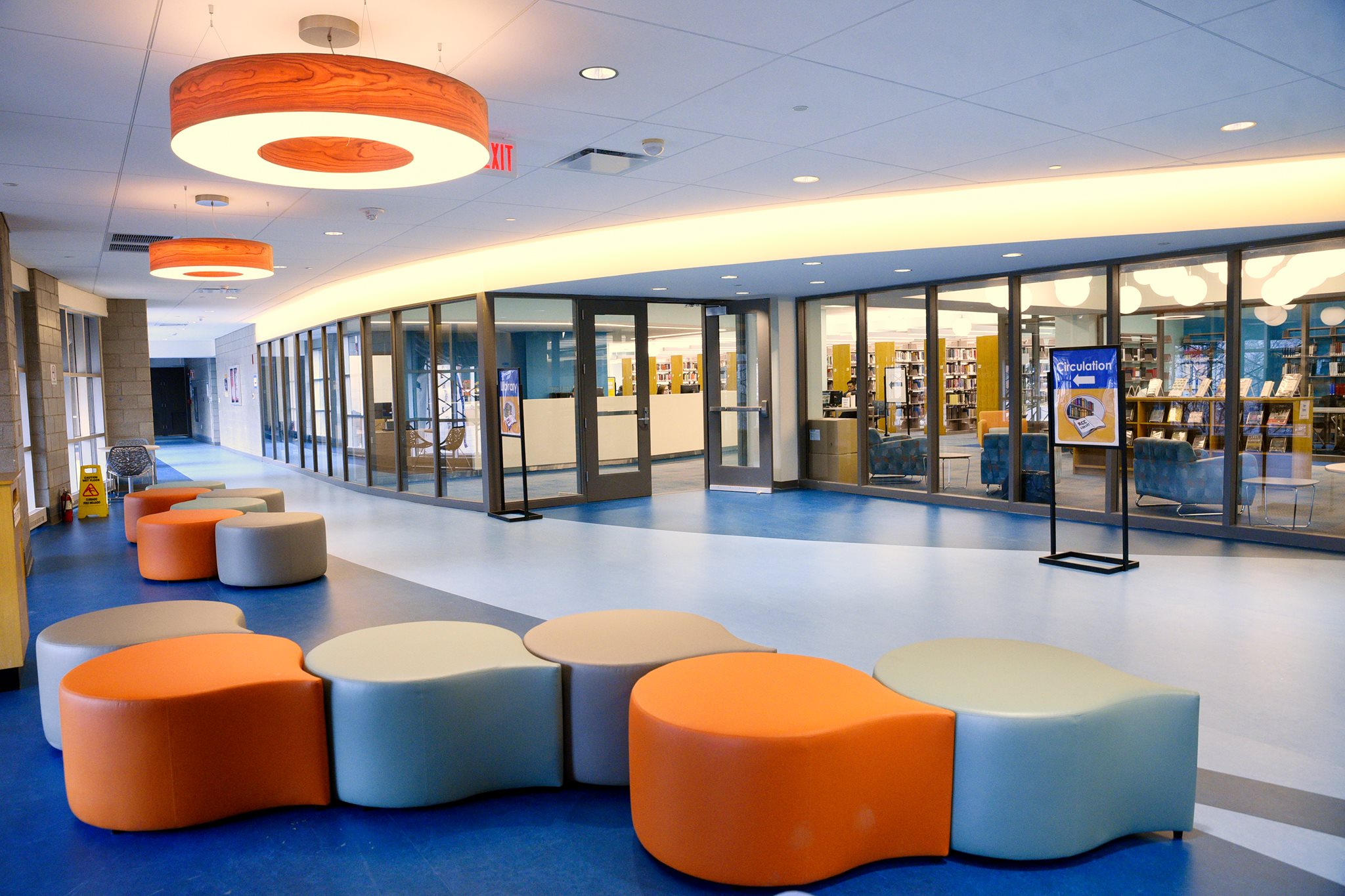
The Builders Hardware Manufacturers Association (BHMI) is an ANSI accredited consensus standards developer for building access and egress technology standards that facility managers may see incorporated by reference deep in the architectural and electrical sections of construction contract specifications.    An example of how BHMA standards show up in enforceable contracts can be found in most master construction contracts in the education facility industry.*on Page 38 Master Construction Contract

The front door to the BHMA public commenting facility is linked below:

BHMA Standards Home Page

No drafts have been released for public consultation at this time; however we maintain the BHMA catalog on our daily scan of building construction standards.

We always encourage direct participation in the BHMA standards development process by facility managers and those with oversight on campus security.  You may obtain an electronic copies of any of the foregoing from MTierney@kellencompany.com and send comments to the same (with copy to psa@ansi.org).

All education facility security standards can be discussed any day at our daily 11 AM Eastern time teleconference.  We also set aside one hour every month to review the status of the rapidly evolving “fabric” of school security standards.  See our CALENDAR for the next online meeting; always using the same login credentials and always open to everyone.

Issue: [19-52]

Category: Architectural, Electrical, Facility Asset Management, Telecommunication, Public Safety, #SmartCampus, Risk Management

Colleagues: Mike Anthony, Jim Harvey. Jim Vibbart

Source: ANSI Standards Action

* See Page 38: Master Construction Specifications (Samples) (E.729) : Note the requirement to “Use date of standard in effect as of Bid date”.  Standards  in this space are moving quickly, and integrate with other electrotechnology standards.   It is an uphill battle for architects, engineers, specifiers and contractors to keep pace with them.  Compliance authorities usually keep pace with them, however, because the compliance interest is very strong in all standards development committees and compliance revenue originates from enforcing them.


LEARN MORE:


The Influence of Family Capital Theory on The Students’ Choice of Normal Majors

January 11, 2024
mike@standardsmichigan.com
,
No Comments


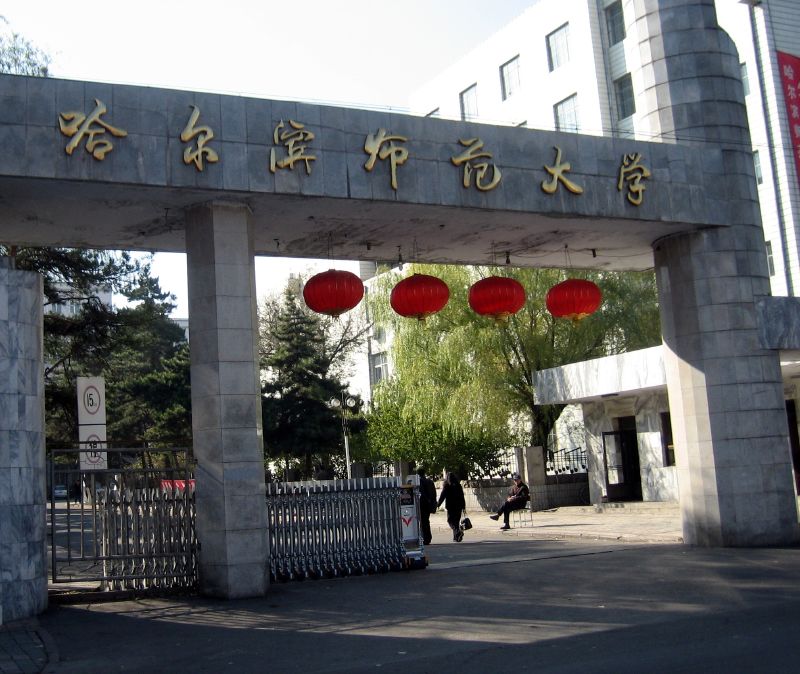
The Influence of Family Capital Theory on The Students’ Choice of Normal Majors Based on Experimental Survey

Huiping You, et. al

College of Education Science, Harbin Normal University

Abstract: This paper constructs an analysis model based on three dimensions of the family economic capital, family cultural capital and family social capital of the family capital theory. It was using questionnaire method, SPSS software, from the family economic income, income sources, family parenting style and other aspects of the investigation. It is found that family economic capital has a negative correlation with the choice of normal majors of college students. Family cultural capital has no apparent correlation with college students’ normal major choice, and family social capital has a positive correlation with college students’ normal major choice. To provide a reference for promoting the choice of normal majors and promoting the high- quality development of normal education.

CLICK HERE to order complete paper


How to Wear A Kilt

January 10, 2024
mike@standardsmichigan.com
, , ,
No Comments

Michigan 34 | Washington 13

January 9, 2024
mike@standardsmichigan.com
, , ,
No Comments

Washington Post: The Year of Magical Thinking

How To Build A Football Stadium

Barbie

January 8, 2024
mike@standardsmichigan.com
,
No Comments

This content is accessible to paid subscribers. To view it please enter your password below or send mike@standardsmichigan.com a request for subscription details.

Isaac Newton and the perils of the financial South Sea

January 8, 2024
mike@standardsmichigan.com
No Comments

This content is accessible to paid subscribers. To view it please enter your password below or send mike@standardsmichigan.com a request for subscription details.

El Paso

January 8, 2024
mike@standardsmichigan.com

No Comments

This content is accessible to paid subscribers. To view it please enter your password below or send mike@standardsmichigan.com a request for subscription details.

Streets of Laredo

January 8, 2024
mike@standardsmichigan.com
, , , ,
No Comments

This content is accessible to paid subscribers. To view it please enter your password below or send mike@standardsmichigan.com a request for subscription details.

Architecture of power systems: Special cases

January 6, 2024
mike@standardsmichigan.com

No Comments

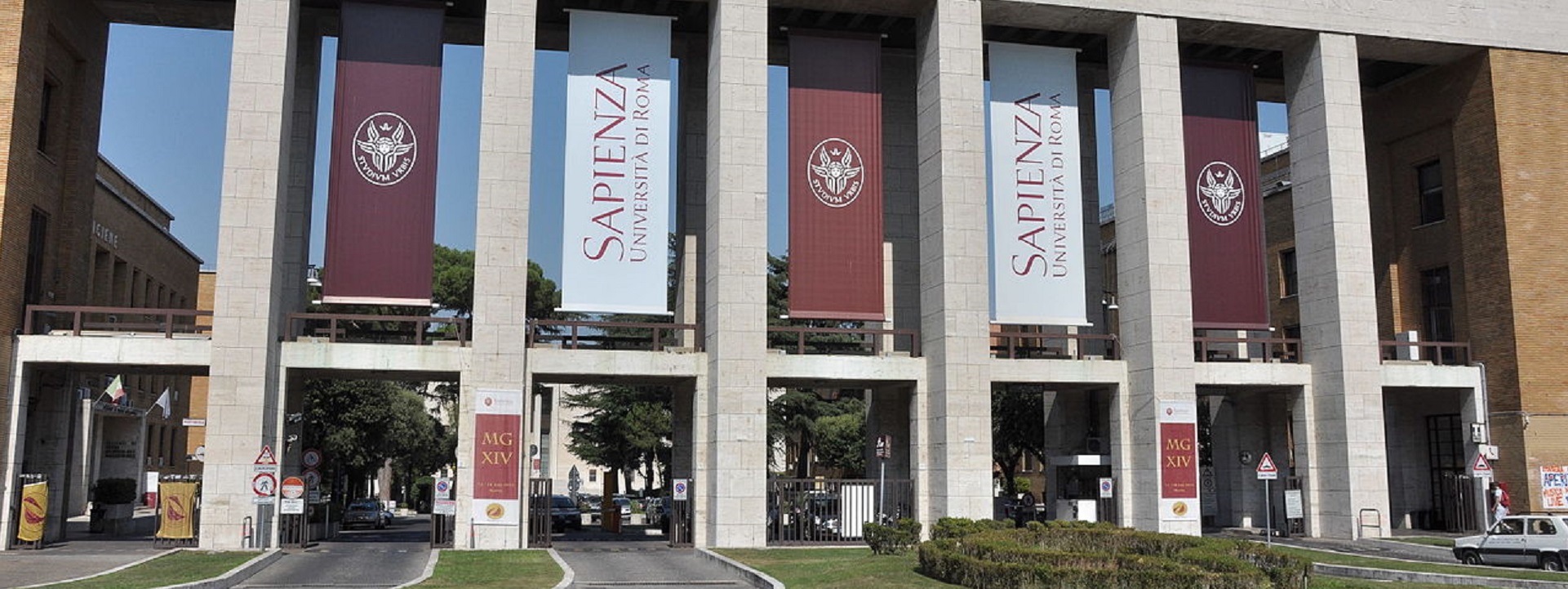
Sapienza – Università di Roma

The architecture of electric power systems: Some special cases


Abstract  Modeling of the electric system “architecture” aims to achieve performances of operation, maintenance and safety. The paper discusses about the criteria in designing the normal and special cases that need a structured architecture complying with electrical loads extensively distributed and with installation requirements proper to external stresses hazard as earthquake, fire, flood, extreme environment conditions. Also advanced architectural buildings outside of the typical and classical configurations require tailored solutions for the electrical systems. The general criterion of designing power distributions is to structure the system in two or more levels from the utility up to the terminal equipment adopting a number equal or lower of voltages. The criterion of the barycentered distribution is generally applied for defining the dimension and the voltage of each distribution level. In critical facilities, it is necessary to ensure that electrical service will be available during and after a hazardous event and so all the components should have adequate ratings and be installed in a proper manner. A special power distribution, “brush-distribution”, is suitable for the strategic buildings with higher risk for seismic event, for the photovoltaic systems against extreme temperature conditions and for the road tunnels against the fire.

PURCHASE INFORMATION: IEEE Digital Library


Higher Education Accreditation Standard

January 5, 2024
mike@standardsmichigan.com

No Comments

United States Department of Education

National Association of State Boards of Education

“Apology” Defense of Socrates | Plato

Accreditation is a process that involves evaluating the overall quality of an institution and its programs, including the qualifications and expertise of faculty members.  Accreditation is institution-specific, and individual professors are not typically accredited separately. Instead, the accreditation process assesses the overall effectiveness of the educational institution and its ability to meet certain standards.


IRS 990 (Non-Profit Explorer: Council For Higher Education Accreditation

The Council for Higher Education Accreditation claims to be the national advocate and institutional voice for self-regulation of academic quality through accreditation — a non-profit organization with 3,000 degree-granting colleges and universities and recognizes 60 institutional and programmatic accrediting organizations.

Have America’s Classrooms Become Profit Centers for the Mental Health Industry? Abigail Shrier Explains.

In the United States, the accreditation of college and university programs, including the evaluation of faculty qualifications, is typically managed by regional accrediting agencies; each with hegemonic claims.  They are united with a common interest in money coming from the U.S. Department of Education which controls money flow.

While the CHEA plays a role in overseeing accrediting bodies, the direct influence on the quality of facilities lies with the institutions themselves and the accrediting agencies that evaluate them.

Accreditation standards may touch upon aspects of facilities, but the day-to-day management and improvement of facilities are typically the responsibility of the individual higher education institutions.

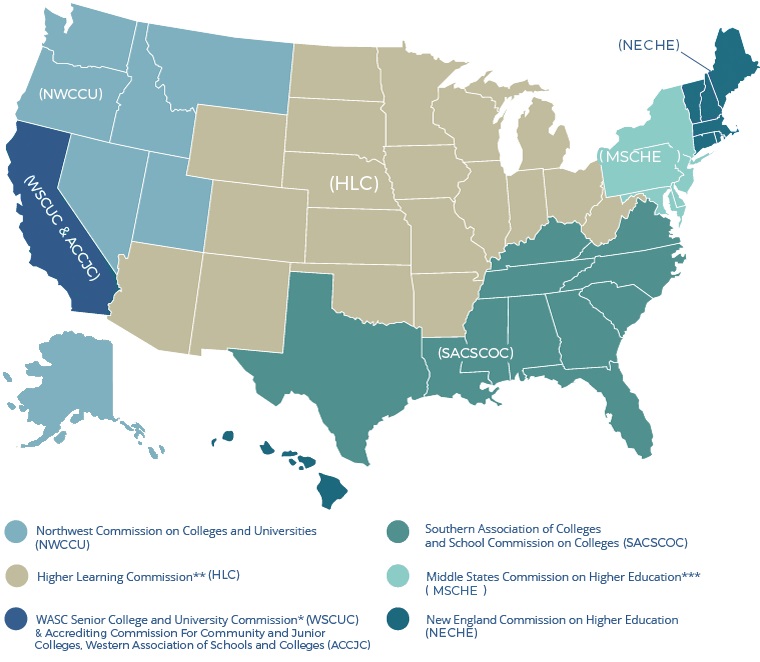
The regional accrediting agencies in the United States include:

  1. Higher Learning Commission (HLC) – Covers the central United States.
  2. Middle States Commission on Higher Education (MSCHE) – Covers the mid-Atlantic region.
  3. New England Commission of Higher Education (NECHE) – Covers the New England states.
  4. Northwest Commission on Colleges and Universities (NWCCU) – Covers the northwest region.
  5. Southern Association of Colleges and Schools Commission on Colleges (SACSCOC) – Covers the southern United States.
  6. WASC Senior College and University Commission (WSCUC) – Covers the western United States.

Human Resources 200

Layout mode
Predefined Skins
Custom Colors
Choose your skin color
Patterns Background
Images Background
Standards Michigan
error: Content is protected !!
Skip to content