
Workcred

Loading
loading...

Workcred

September 14, 2026
mike@standardsmichigan.com

No Comments

“Art of Manliness”

We find relatively few public consultations presented by accredited standards developers in the human resource domain; surprising because human resources are the largest cost center in nearly every industry.  Alas, manufacturers, insurance and conformance companies remain the strongest voices; the “wicked problem” we describe in our ABOUT.

Even before the circumstances of the pandemic inspired a revisit of large government politics and cultural mashing in education communities in the United States we could hear the first footfalls of disruption when ANSI catalyzed the creation of a related entity in 2014, described in the link below:

WORKCRED: Connecting credential, competencies, careers, customers

The proper business of the education industry overall — and the ~$500 billion facility segment we track — is preparing the workforce everywhere to contribute to national economic priorities.   There is a strong cultural component in the human resource domain — i.e. branding — the topic of another post.   For now, we simply suggest that much of the economic activity of education communities is devoted to building a cohort (or guild) that creates an emotional bond that hastens learning and a continual desire to self-educate to remain part of the cohort.

At the moment, the WORKCRED program at this point in its development, appears to provides guidance to conformance and compliance organizations among its members.   The user-interest in the education facility industry, at least dependent on a skilled workforce as any economic sector, and welcomed to participate.  We identify the initiative here and will keep a weather-eye out for commenting opportunities on draft consensus products emerging from it.  The link below should provide a more detailed overview of the program until a “commentable consensus product” suitable for incorporation by reference into legislation is released.

Understanding Successful Career Pathways with Certification & Education Data | January 19, 2021

Of course, there will be cultural competition among the guardians of the cohort.

Organizations with their own credentialing enterprises for skilled trades, ICT, software engineering, etc. — are encouraged to communicate directly with the WORKCRED staff (CLICK HERE).


 

Excellence in Facilities Management

September 14, 2026
mike@standardsmichigan.com
, ,
No Comments
“By much slothfulness the building decayeth; and through idleness of the hands the house droppeth through.” 
 — Ecclesiastes 10:18

Contact


“I Vow To Thee My Country”

September 13, 2026
mike@standardsmichigan.com
No Comments

2026 BBC Proms

PSDM-904650

September 13, 2026
mike@standardsmichigan.com
No Comments

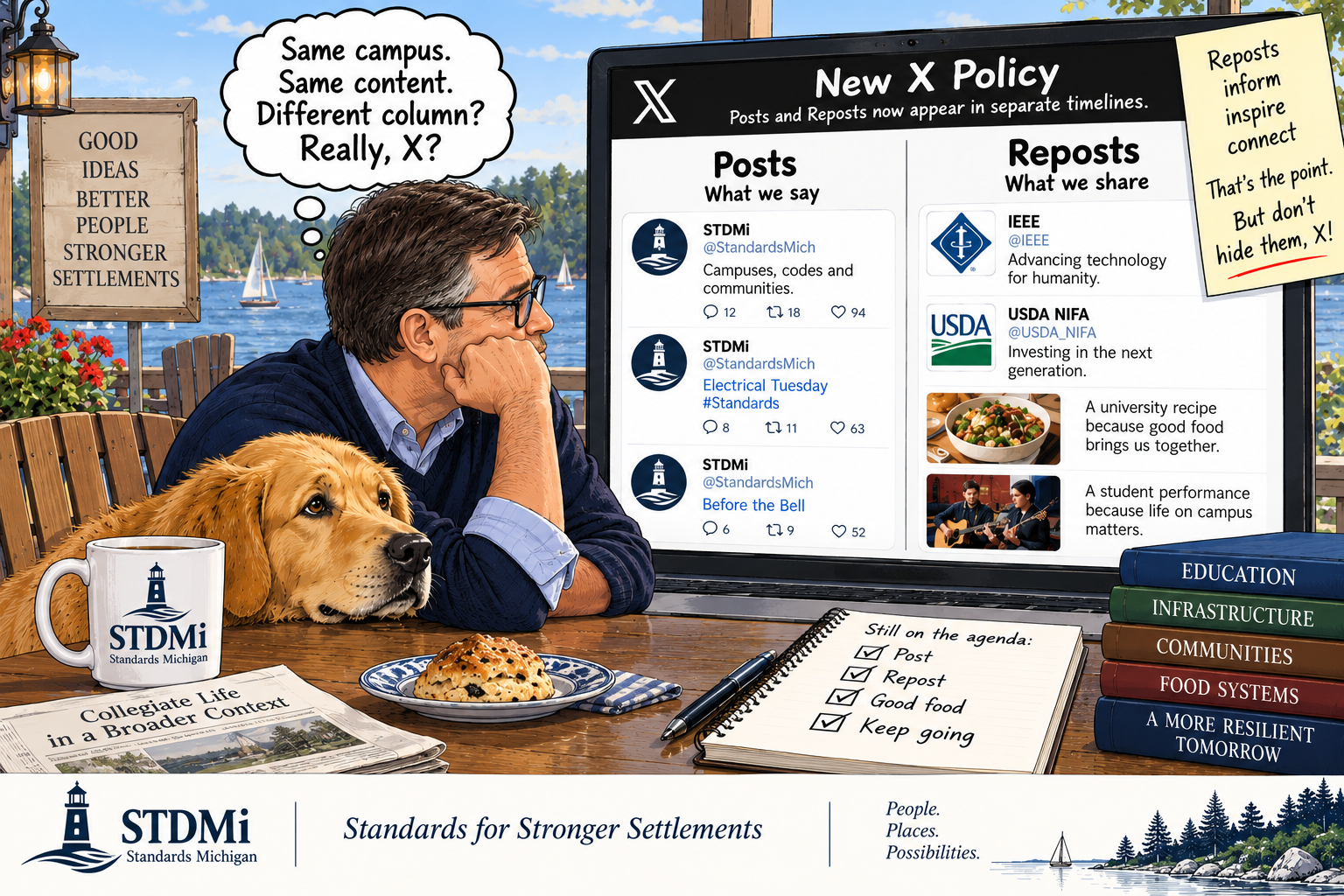
We want to see our Posts and Reposts together in one stream — the way they used to be — but, alas, we may be forced to adjust the manner in which our X feed interacts with our desktop web page.  For us, reposting and original posting perform different editorial functions.  For a curator, standards organization, university or news-oriented account, the sequence can itself carry meaning. Separating the pieces can destroy that sequence.

Stay tuned.


Avinu Malkeinu

September 13, 2026
mike@standardsmichigan.com

No Comments

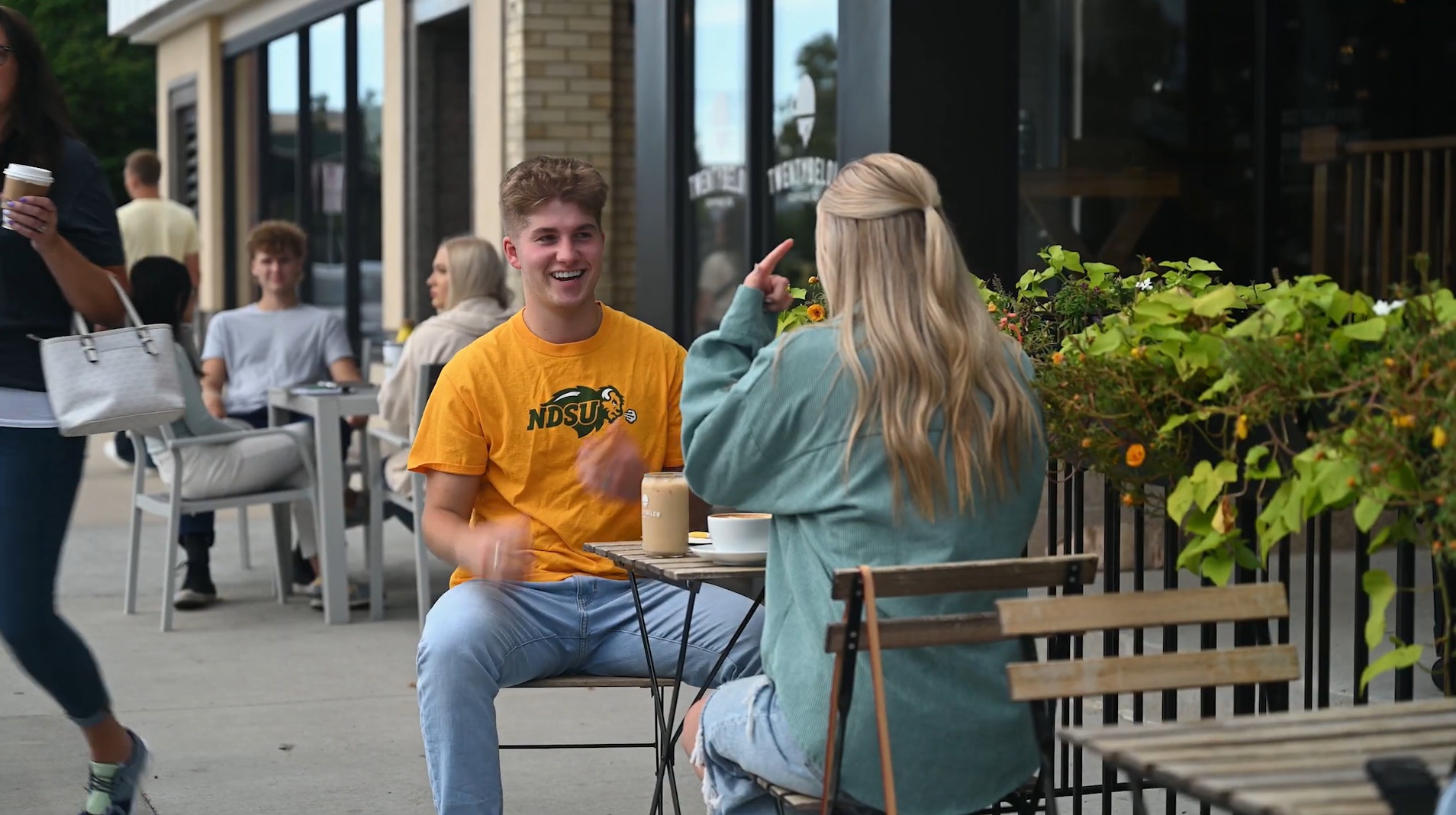
Standards North Dakota

Avinu Malkeinu (“Our Father, Our King”) is a Jewish prayer associated especially with Rosh Hashanah, Yom Kippur and the Days of Awe. Its short petitions address God alternately as compassionate parent and sovereign judge, asking for forgiveness, mercy, healing, sustenance and a good year.  Repeated congregational responses give the prayer unusual musical power. Many settings exist, but Max Janowski’s twentieth-century arrangement has become particularly familiar to American Jewish congregations and concert choirs.


North Dakota State University | Fargo County 701

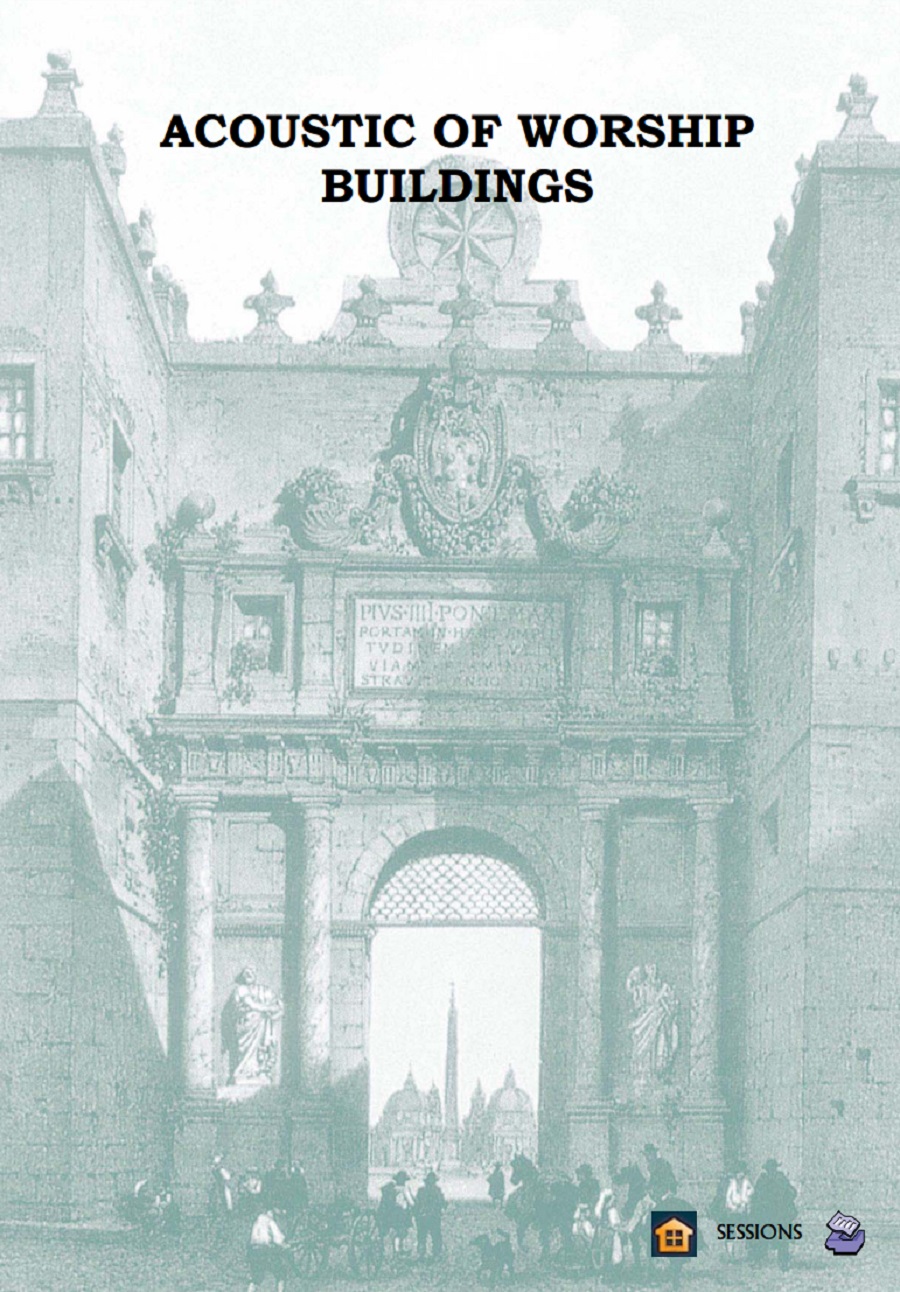
History of Western Civilization Told Through the Acoustics of its Worship Spaces

September 13, 2026
mike@standardsmichigan.com
, , , , , ,
No Comments


Abstract.  Insights into the history and future of western civilization are found by applying information theory to the acoustical communication channel (ACC) of its worship spaces. Properties of the ACC have both influenced and reflected the choice of message coding (e.g., speech or music) at various times. Speech coding is efficient for acoustically dry ACCs, but hopeless for highly time-dispersive ACCs. Music coding is appropriate for time dispersive (reverberant) ACCs. The ACCs of synagogues, early Christian house churches, and many Protestant churches are relatively acoustically “dry” and thus well suited to spoken liturgies.

The spoken liturgy, dominant in synagogues, was carried over to early Christian churches, but became unworkable in Constantinian cathedrals and was largely replaced with a musical liturgy. After a millennium, the cathedral acoustic was altered to suit the doctrinal needs of reformation churches with its renewed emphasis on the spoken word. Worship forms continue to change, and the changes are reflected in the properties of the ACC. The pulpits of electronic churches may be evolving into radio and television performance spaces and naves into worshipers’ living rooms.

CLICK IMAGE

Evensong “How Do You Keep the Music Playing?”

Sacred Spaces

National Youth Choir of Scotland “Love Divine”

Making the Better Burger.

September 11, 2026
mike@standardsmichigan.com
, , ,
No Comments

This content is accessible to paid subscribers. To view it please enter your password below or send mike@standardsmichigan.com a request for subscription details.

The Hundred-Year Bet

September 11, 2026
mike@standardsmichigan.com

No Comments

This content is accessible to paid subscribers. To view it please enter your password below or send mike@standardsmichigan.com a request for subscription details.

Layout mode
Predefined Skins
Custom Colors
Choose your skin color
Patterns Background
Images Background
Standards Michigan
error: Content is protected !!
Skip to content