Rain & Lightning

Loading
loading...

Rain & Lightning

July 8, 2026
mike@standardsmichigan.com
, ,
No Comments

The thunderbolt steers all things.
—Heraclitus, c. 500 BC

After the rain. Personal photograph taken by Mike Anthony biking with his niece in Wirdum, The Netherlands

Today at 15:00 UTC we examine the technical literature about rainwater management in schools, colleges and universities — underfoot and on the roof.  Lightning protection standards will also be reviewed; given the exposure of outdoor athletic activity and exterior luminaires.

We draw from previous standardization work in titles involving water, roofing systems and flood management — i.e. a cross-cutting view of the relevant standard developer catalogs.   Among them:

American Society of Civil Engineers

American Society of Plumbing Engineers

ASHRAE International

ASTM International

Construction Specifications Institute (Division 7 Thermal and Moisture Protection)

Environmental Protection Agency | Clean Water Act Section 402

Federal Emergency Management Agency

FM Global

Sustainable Sites Initiative

IAPMO Group (Mechanical and Plumbing codes)

Institute of Electrical and Electronic Engineers

Heat Tracing Standards

International Code Council

Chapter 15 Roof Assemblies and Rooftop Structures

Why, When, What and Where Lightning Protection is Required

National Fire Protection Association

National Electrical Code: Article 250.16 Lightning Protection Systems

Lightning Protection

Underwriters Laboratories: Lightning Protection

Underground Stormwater Detention Vaults

United States Department of Agriculture: Storm Rainfall Depth and Distribution

Risk Assessment of Rooftop-Mounted Solar PV Systems

Readings: The “30-30” Rule for Outdoor Athletic Events Lightning Hazard

As always, our daily colloquia are open to everyone.  Use the login credentials at the upper right of our home page.

“Rainbow Connection”
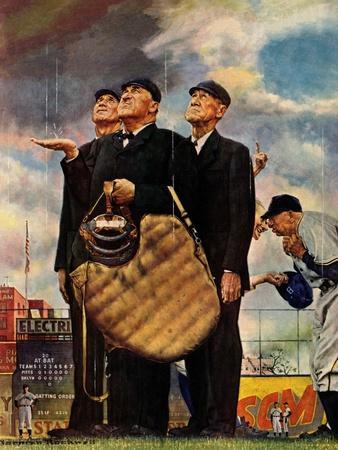
Norman Rockwell Posters & Wall Art - Shop Norman Rockwell Prints, Canvas, Framed Artwork, & Wall Décor | Allposters

“Tough Call” | Norman Rockwell 1949

The “lightning effect” seen in carnival tricks typically relies on a scientific principle known as the Lichtenberg figure or Lichtenberg figure. This phenomenon occurs when a high-voltage electrical discharge passes through an insulating material, such as wood or acrylic, leaving behind branching patterns resembling lightning bolts.

The process involves the creation of a temporary electric field within the material, which polarizes its molecules. As the discharge propagates through the material, it causes localized breakdowns, creating branching paths along the way. These branching patterns are the characteristic Lichtenberg figures.

In the carnival trick, a high-voltage generator is used to create an electrical discharge on a piece of insulating material, such as acrylic. When a person touches the material or a conductive object placed on it, the discharge follows the path of least resistance, leaving behind the branching patterns. This effect is often used for entertainment purposes due to its visually striking appearance, resembling miniature lightning bolts frozen in the material. However, it’s crucial to handle such demonstrations with caution due to the potential hazards associated with high-voltage electricity.


Flood Abatement Equipment

July 8, 2026
mike@standardsmichigan.com
No Comments

Vereenigde Oostindische Compagnie | Dutch East India Company

FM Global is one of several organizations that produce technical and business documents that set the standard of care for risk management in education facilities.   These standards — Property Loss Prevention Data Sheets —  contribute to the reduction in the risk of property loss due to fire, weather conditions, and failure of electrical or mechanical equipment.  They incorporate nearly 200 years of property loss experience, research and engineering results, as well as input from consensus standards committees, equipment manufacturers and others.

In July FM Global updated its standard FM 2510 Flood Abatement Equipment which should interest flood barrier manufacturers, standard authorities, industrial and commercial facilities looking to protect their buildings from riverline flooding conditions.

The following updates were proposed and mostly adopted:

  • Modifications to the opening barrier protocol to include water performance testing at lower depths;
  • Additional tests that apply to open-cellular rubber compounds (i.e., foam-type rubber) which are commonly used as gaskets on flood barriers need to be added to the Standard to sufficiently assess their quality;
  • Addition of adhesive testing. Many barrier designs use adhesives to bond the gasket material to the barrier. Adhesives are not addressed under the current protocol;
    Modify the flood abatement pump section to clarify approval of pump packages vs. wet-end only;
  • Additional requirements for electric drive and submersible flood pumps;
  • Modifications to backwater valve section to be inclusive of all types of “backwater valves” besides the traditional check valve.
  • Additional requirements for waterproofing products for building penetrations. Products in this category include collars, plugs, elastomeric seals, and types of putty.

This standard also contains test requirements for the performance of flood barriers, flood mitigation pumps, backwater valves, and waterproofing products for building penetrations, as well as an evaluation of the components comprising these products to assure reliability in the barrier’s performance.

While there are a number of noteworthy colleges and universities that have grown near rivers and lakes — twenty-five of which are listed HERE — severe weather and system failures present flooding risks to them all.

Another Data Sheet — I-40 Floods — was updated in October.   Both Data Sheets are available for download at the link below:

FM GLOBAL PROPERTY LOSS PREVENTION DATA SHEETS

You will need to set up (free) access credentials.

You may contact FM Global directly: Josephine Mahnken, (781) 255-4813, josephine.mahnken@fmapprovals.com, 1151 Boston-Providence Turnpike, Norwood, MA 02062

Our “door” is open every day at 11 AM Eastern time to discuss any consensus document that sets the standard of care for the emergent #SmartCampus.  Additionally, we dedicate one session per month to Management and Water standards.  See our CALENDAR for the next online teleconference.   Use the login credentials at the upper right of our home page.

Issue: [Various]

Category: Risk Management, Facility Asset Management

Colleagues: Mike Anthony, Jack Janveja, Richard Robben

Property Loss Prevention


Blueberry Pancakes!

July 7, 2026
mike@standardsmichigan.com
, ,
No Comments
University of Maine Wild Blueberries
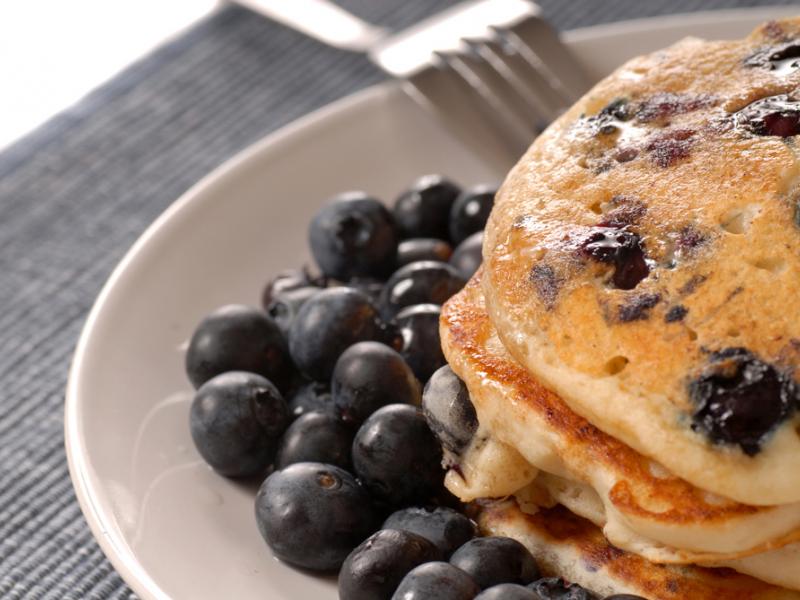
Blueberry pancakes have deep roots in the American Midwest, blending Native American traditions with 20th-century agricultural innovation. Indigenous peoples in the Great Lakes region had long used wild blueberries — abundant in Michigan, Wisconsin, and Illinois — as a nutritious food source, mixing them into cornmeal flatbreads and porridges. European settlers adopted these berries into their pancake recipes by the 19th century. However, blueberry pancakes as a widespread breakfast staple only emerged in the early 1900s. The breakthrough came after 1916, when commercial highbush blueberry cultivation began in New Jersey and quickly spread to Midwest states.

Blueberry Pancakes

Chemist Isabel Bevier pioneered innovations in home economics

Sport Scoreboards

July 7, 2026
mike@standardsmichigan.com
No Comments

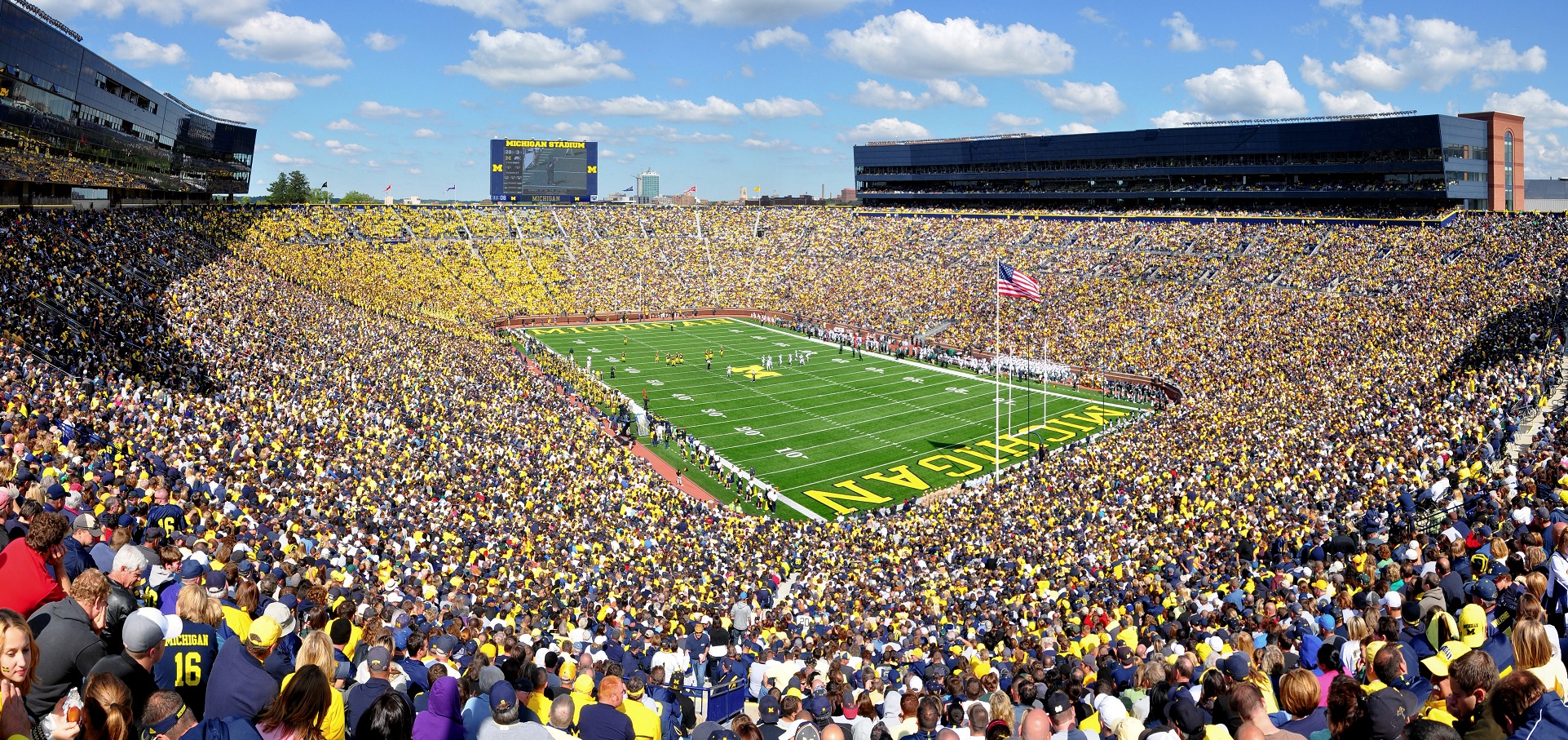
Building, operating, and maintaining athletic scoreboards requires a range of technologies, including hardware and software components.   These are central features in nearly every athletic event, governing the state of play and attendee response.   

Scoreboard Hardware: A range of hardware components, including display panels, control consoles, sound systems, and wiring, is necessary to build an athletic scoreboard.  While there are no universal standards for LED displays in athletic scoreboards, but there is a common vocabulary used by  manufacturers and installers follow to ensure quality, performance, and safety:

    • Brightness and Contrast: LED displays should be bright enough to be visible from a distance, but not so bright that they cause glare or eye strain. The contrast ratio between the LED display and the surrounding environment should be optimized for visibility.
    • Pixel Density and Resolution: The pixel density and resolution of an LED display should be appropriate for the size of the scoreboard and the viewing distance. Higher pixel density and resolution can improve the clarity and detail of the scoreboard display.
    • Color Accuracy: Athletic scoreboards often display team colors and logos, so color accuracy is important. LED displays should be capable of reproducing colors accurately and consistently.
    • Refresh Rate: The refresh rate of an LED display refers to how quickly the display can update its image. A higher refresh rate can reduce motion blur and improve the clarity of fast-moving action on the scoreboard.
    • Environmental Factors: Athletic scoreboards are often exposed to outdoor elements such as sunlight, rain, and extreme temperatures. LED displays should be designed and manufactured to withstand these environmental factors and maintain their performance over time.
    • Safety: Athletic scoreboards should be designed and installed to minimize the risk of injury to players or spectators. This may include factors such as the height and location of the scoreboard, the durability of the display panels, and the strength of mounting hardware.

Power Reliability.  Event timing and attendee emergency egress systems rest upon best practice found in Chapter 2 and Chapter 7 of NFPA 70 National Electrical Code and NFPA 110 Standard for Emergency and Standby Power Systems.

Lightning Protection.  CLICK HERE for our coverage of the “30-30 Rule”

Operation and Maintenance Safety.  Because so many scoreboards are occupiable the Chapter 3 Occupancy Classification and Chapter 10 (Means of Egress) of the International Building Code applies.  Many are several stories high requiring attention to stairway construction details.

Control Software: Software that enables the scoreboard operator to input game data and control the scoreboard display is essential. 

Mass Notification: Egress and Evacuation requirements are asserted in NFPA 72 – National Fire Alarm and Signaling Code. 

Audio Standards: lorem ipsum

Wireless Communications: Many modern athletic scoreboards use wireless communication systems to connect the scoreboard control console to the scoreboard display. This allows for greater flexibility in installation and reduces the need for cabling.

LED Technology: LED technology has revolutionized athletic scoreboards in recent years. LED displays offer superior brightness, color accuracy, and energy efficiency compared to traditional scoreboards but must conform to local night-sky regulations.

Power Management Systems: Athletic scoreboards require significant amounts of power to operate, and efficient power management systems are necessary to ensure reliable and continuous operation.  Maintaining temperatures — heating and cooling within specification — is a priority for maximum operable life.

Maintenance and Diagnostic Tools: To maintain and troubleshoot athletic scoreboards, specialized tools and software are necessary. This may include diagnostic software, specialized cables, and other testing equipment.

Overall, the technologies required to build, operate, and maintain athletic scoreboards are diverse and constantly evolving. A range of specialized hardware and software components, as well as skilled technicians, are necessary to ensure that athletic scoreboards remain functional and reliable.

Join us today at 11 AM/ET (15:00 UTC) when we review best practice literature.  Open to everyone.  Use the login credentials at the upper right of our home page.   This topic is also tracked by experts in the IEEE Education & Healthcare Facilities Committee which meets online 4 times monthly in Central European and American time zones and is also open to everyone.

رياضة

Relata: (US-Based Manufacturers)

Daktronics (Brookings, South Dakota)
Watchfire (Spectrum) Signs (Danville, Illinois)
Formetco (Duluth/Atlanta, Georgia
SNA Displays (headquartered in New York City,
Nevco (Greenville, Illinois)
Planar (Hillsboro, Oregon)


Students’ top five loved lounge spots

July 6, 2026
mike@standardsmichigan.com
,
No Comments

Standards Canada (CSI Group) | Bureau de normalisation du Québec (BNQ)

Consolidated Financial Statement 2025: Deficit of $17.0M CAD


Higher education institutions worldwide exhibit a pronounced left-leaning bias primarily due to their structural dependence on large government. Public universities rely directly on taxpayer subsidies, while even elite private ones receive massive federal research grants, loan guarantees, and regulatory favors. This creates powerful incentives to support expansive government: more spending sustains enrollment via student aid, funds bureaucratic growth, and aligns research agendas with state priorities in climate, equity, and regulation.

Faculty and administrators, insulated by tenure and public-sector-like employment, internalize the worldview that justifies their funding model—favoring redistribution, identity politics, and skepticism of markets. Dissenting views threaten grant flows and institutional prestige tied to government alignment. Globally, from Europe to Latin America to Asia, state-dominated higher education reproduces this pattern, as independence from Leviathan remains rare. The result is ideological conformity masquerading as expertise.

Gad Saad, Professor of Marketing at Concordia Quebec, quotes E. O. Wilson (Edward Osborne Wilson), the renowned Harvard biologist and professor” “Karl Marx was right, socialism works, it is just that he had the wrong species.”

https://postharvest.ucdavis.edu/produce-facts-sheets/watermelon https://wvstateu.edu/news/wvsu-watermelon-research-published-in-the-plant-jo/

Vacation Bible School

July 6, 2026
mike@standardsmichigan.com

No Comments

This content is accessible to paid subscribers. To view it please enter your password below or send mike@standardsmichigan.com a request for subscription details.

Global Positioning System: A Generation of Service to the World

July 4, 2026
mike@standardsmichigan.com
, , , ,
No Comments

Citizens of the Earth depend upon United States leadership in this technology for several reasons:

Development: The GPS was originally developed by the US Department of Defense for military purposes, but it was later made available for civilian use. The US has invested heavily in the development and maintenance of the system, which has contributed to its leadership in this area.

Coverage: The GPS provides global coverage, with 24 satellites orbiting the earth and transmitting signals that can be received by GPS receivers anywhere in the world. This level of coverage is unmatched by any other global navigation system.

Accuracy: The US has worked to continually improve the accuracy of the GPS, with current accuracy levels estimated at around 10 meters for civilian users and even higher accuracy for military users.

Innovation: The US has continued to innovate and expand the capabilities of the GPS over time, with newer versions of the system including features such as higher accuracy, improved anti-jamming capabilities, and the ability to operate in more challenging environments such as indoors or in urban canyons.

Collaboration: The US has collaborated with other countries to expand the reach and capabilities of the GPS, such as through the development of compatible navigation systems like the European Union’s Galileo system and Japan’s QZSS system.

United States leadership in the GPS has been driven by a combination of investment, innovation, collaboration, and a commitment to improving the accuracy and capabilities of the system over time.

Timation Development Plan

Timing Applications: GPS.GOV

Suggested Functional Specifications for a GPS-Synchronized Clock System using Network Time Protocol and Power over Ethernet

Construction Specifications for Exterior Clocks

Seamless positioning system using GPS and beacons for community service robot

Global Positioning System: Monitoring the Fuel Consumption in Transport Distribution

Kerckhoff Coffeehouse

July 4, 2026
mike@standardsmichigan.com

No Comments

This content is accessible to paid subscribers. To view it please enter your password below or send mike@standardsmichigan.com a request for subscription details.

Layout mode
Predefined Skins
Custom Colors
Choose your skin color
Patterns Background
Images Background
Standards Michigan
error: Content is protected !!
Skip to content