



The Cambridge Union is the oldest debating society in the world, as well as the largest student society in Cambridge. It remains one of the highest-ranking competitive debating chambers worldwide, and hosts a range of speakers and topical debates each term.
Since 1815 the Union has been committed to the principles of free speech and of fair, open, and honest debate. Founded at a time when the university authorities attempted to restrict these freedoms, the Union remains the centre of controversial and serious debate within the University of Cambridge.
The Union has been discussing, debating, and shaping the issues that matter for the last two hundred years. Understanding how concepts work, challenging ideas, and having a frank discussion is the bedrock upon which our society is founded. It is the responsibility of the Union to ensure that these ideals are protected and nurtured for years to come.

Academic and Financial Planning and Analysis

The command issued by the character Captain Jean-Luc Picard in the television series “Star Trek: The Next Generation” finds its way into the archive of photographs of Nobel Laureates consorting with politicians at the University of Michigan and elsewhere.
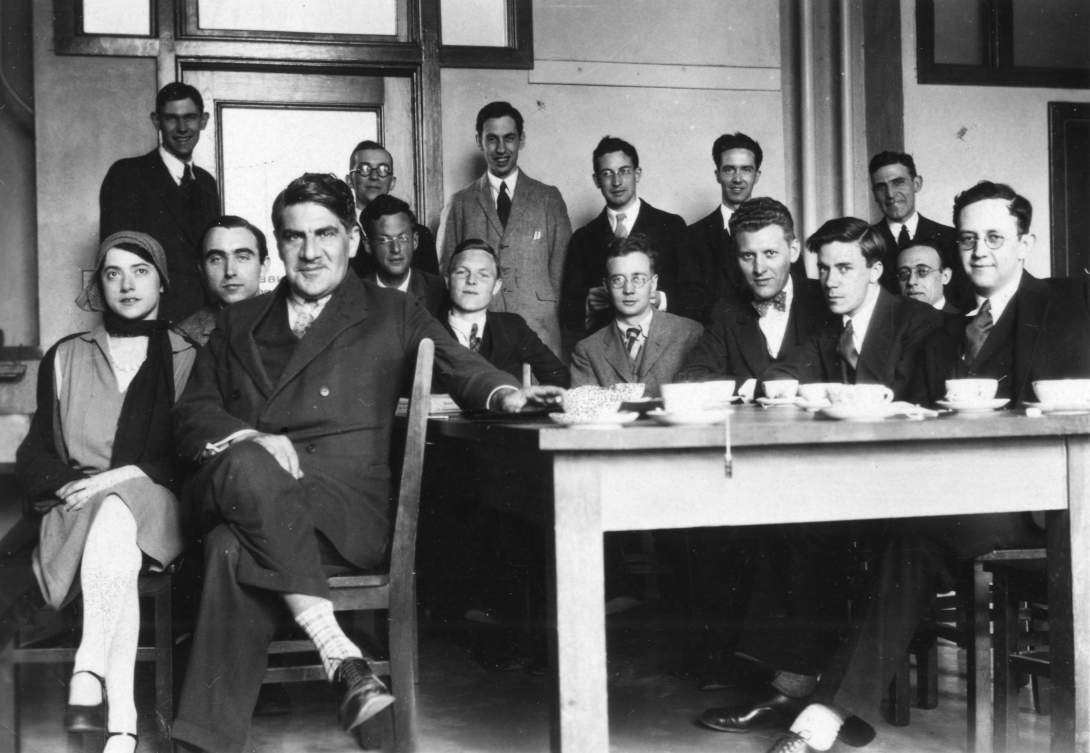
Attendees of the Theoretical Physics Colloquium at the University of Michigan in 1929.
American Institute of Physics Archive
…”There’s not good math explaining forget the physics of it. Math explaining the behavior of complex systems yeah and that to me is both exciting and paralyzing like we’re at very early days of understanding you know how complicated and fascinating things emerge from simple rules…” — Peter Woit [1:16:00]
Since 1936 the Brown Jug has been the ancestral trough of generations of University of Michigan students and faculty — notably. Donald Glaser (inventor of the bubble chamber) and Samuel C. C. Ting (Nobel Laureate) whose offices at Randall Laboratory were a 2-minute walk around the corner from The Brown Jug. As the lore goes, the inspiration happened whilst watching beer bubbles one ordinary TGIF Friday.
The Brown Jug is named after the Michigan vs Minnesota football trophy, which is the oldest in college football.
This content is accessible to paid subscribers. To view it please enter your password below or send mike@standardsmichigan.com a request for subscription details.
NDSU Net Position 2024: $570 M | Standards North Dakota | Capital Renewal Master Plan

College is about creating memories you’ll never forget, and NDSU’s Wellness Center offers unique ways to do just that. Canoe Battleship is your chance to team up with friends and compete to be the last canoe floating! 🛶
Ready to dive in?
📅 Sunday, Feb. 2
🕓 4 – 6 p.m.
📍… pic.twitter.com/Fcby09ouWO— North Dakota State University (@NDSU) January 31, 2025
Old Main, North Dakota Agricultural College | Milton Earl Beebe, Architect
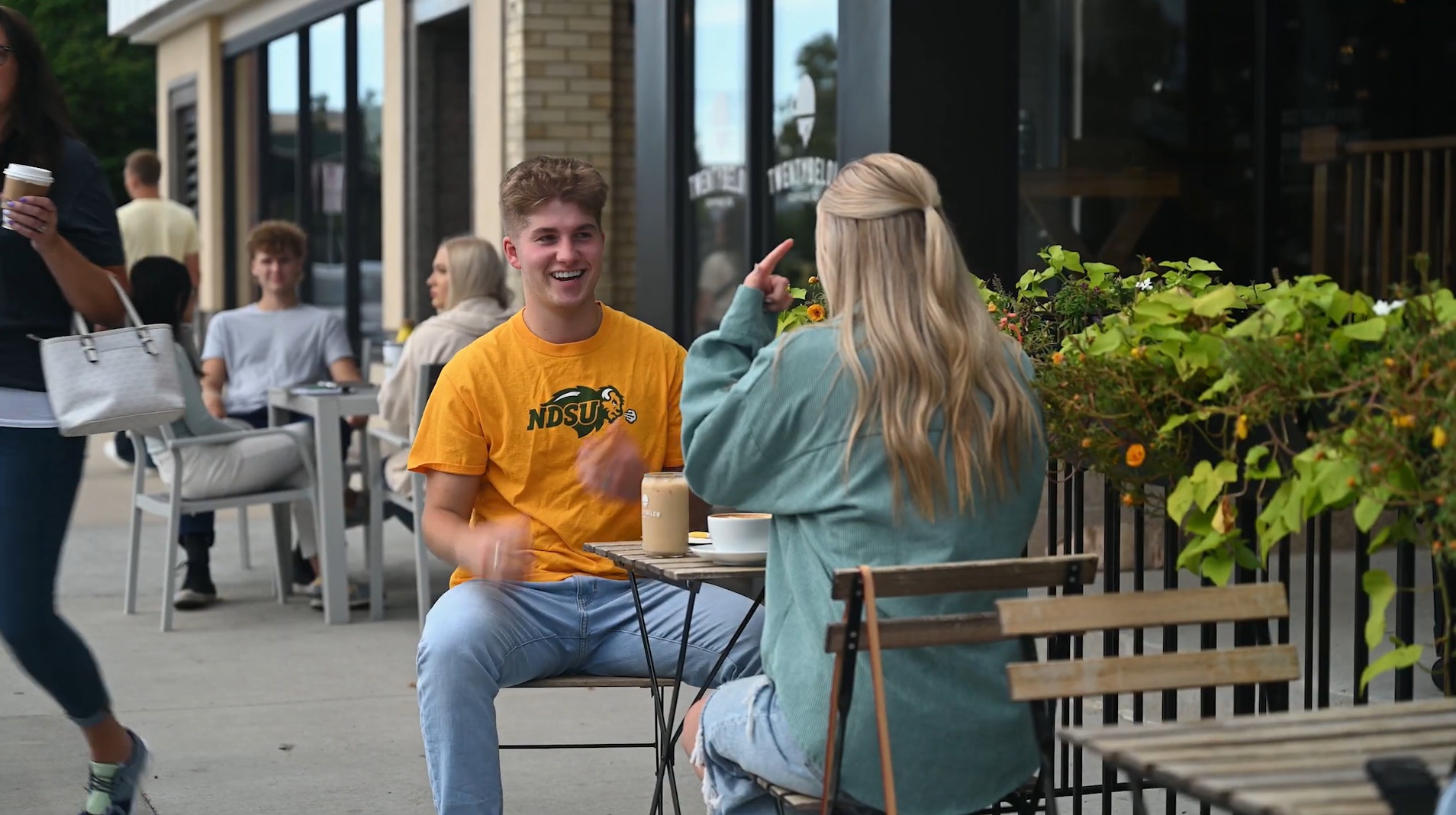
This week, NDSU is hosting the state Future Farmers of America (FFA) convention with over 1,000 students from across North Dakota. We’re excited to have these future Bison on campus as students soon! 🤘🚜#NDSU pic.twitter.com/OoMmrpHim9
— North Dakota State University (@NDSU) June 5, 2024
“The Liberals are Coming, and They’re Bringing Fancy Coffee” https://t.co/XykfCFYZgVhttps://t.co/exHU6TR2h9
America is changed by flight from miserable Blue States to better Red States—only to import the policies that created the misery they fled from in the first place. pic.twitter.com/OaVVgrTxJr— Standards Michigan (@StandardsMich) October 31, 2022
This week, NDSU is hosting the state Future Farmers of America (FFA) convention with over 1,000 students from across North Dakota. We’re excited to have these future Bison on campus as students soon! 🤘🚜#NDSU pic.twitter.com/OoMmrpHim9
— North Dakota State University (@NDSU) June 5, 2024
At the 1853 New York World’s Fair Elisha Otis amazed a crowd when he ordered the only rope holding the platform on which he was standing cut by an axeman. The platform fell only a few inches before coming to a halt; thus proving the safety locking mechanism he had invented will work. These elevators quickly became the type in most common usage and made vertical living possible.

Elisha Graves Otis shows his first elevator in the Crystal Palace, New York City, 1853. — Image by © Bettmann/CORBIS
Most large research universities have 100 – 1000 elevators that are highly regulated, maintained by highly regulated service personnel and inspected by highly trained conformance operatives; thus our primary interest in state-specific regulations. We have a secondary interest in innovation in the technology generally. Many sustainability goals urged in academic circles — which include greater population density in smaller areas — are challenged by mobility issues.
From the project prospectus:
“…The main feature of these products is that they are an integral part of industrial, residential or public buildings. Consequently, they should be adaptable to the technical and architectural constraints of such buildings. They must also meet the capacity requirements imposed by the intended use of the building. These products are considered as means of transport and therefore represent an essential component of the functional life of the buildings in which they are installed. Contrary to most public means of transport, they are intended for free use and operation by their passengers, which makes the integration of safety an essential concern…”
STRATEGIC BUSINESS PLAN ISO/TC178: Lifts, escalators and moving walks
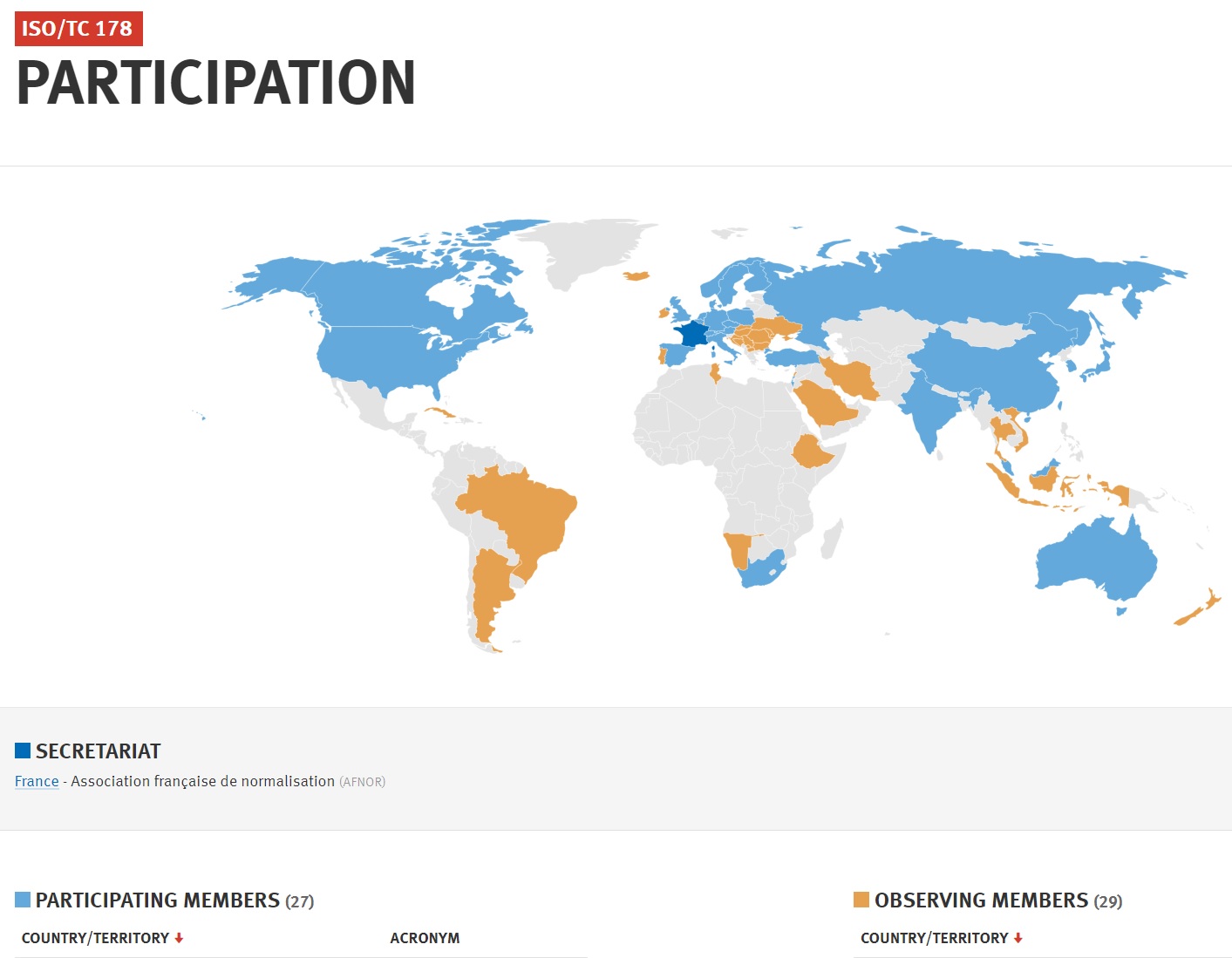
The Association française de normalisation (AFNOR) is the global Secretariat. ANSI’s US Technical Advisory Group Administrator is the American Society of Mechanical Engineers. Stakeholders in US-based education communities are encouraged to communicate directly with ASME; CLICK HERE.
We maintain the work products of this committee on the standing agendas of our Mechanical, Elevator and Global colloquia; open to everyone. See our CALENDAR for the next online meeting.
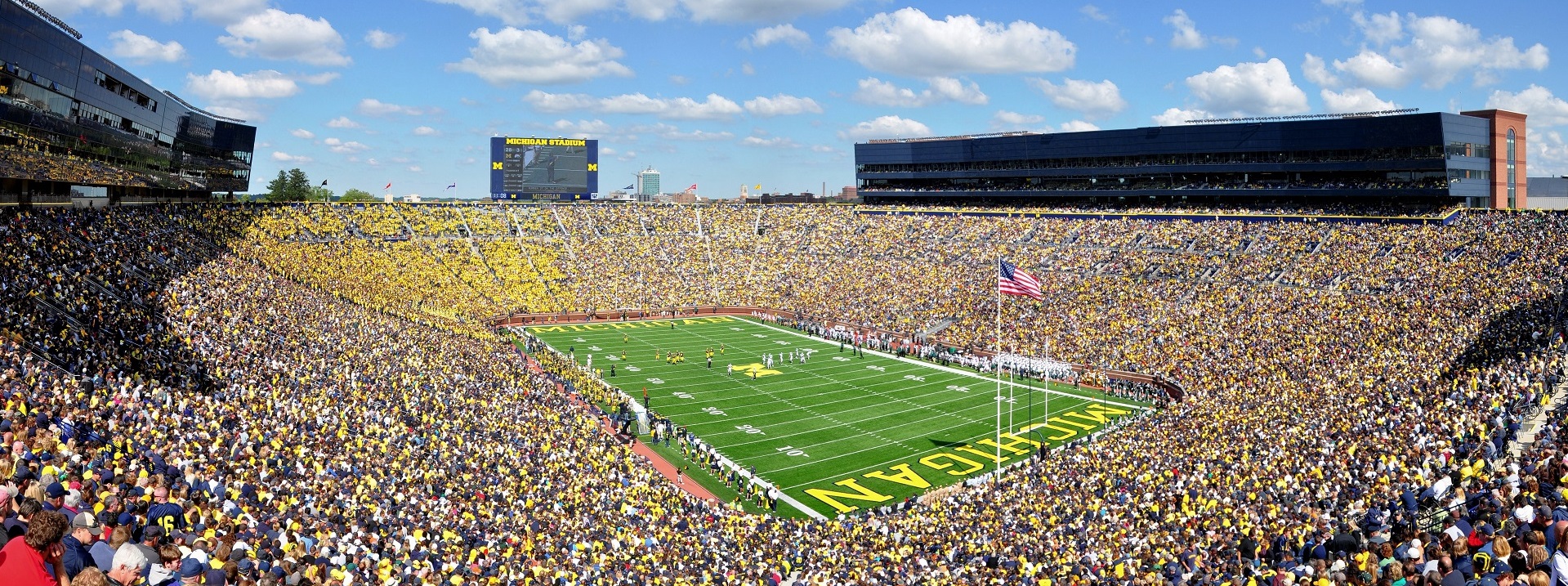
Michigan Stadium — the largest collegiate stadium in the world — has 19 elevators.
Issue: [11-50]
Category: Mechanical, Mobility, Global
Colleagues: Mike Anthony, Larry Spielvogel
Obsessed with this vintage elevator inside the Galeries Lafayette in Paris pic.twitter.com/3j6WYcS8I5
— Dume (@gietzschean) September 29, 2026

International Building Code (IBC): Widely used in the United States and other regions, the IBC sets minimum requirements for structural design, materials, and maintenance to ensure safety and performance. It references standards like ASCE 7 (Minimum Design Loads and Associated Criteria for Buildings and Other Structures) for load calculations (e.g., wind, seismic, snow).Maintenance provisions require regular inspections and repairs to address issues like cracking or deterioration.
ACI 318 (Building Code Requirements for Structural Concrete): Published by the American Concrete Institute this standard governs the design and construction of concrete structures.Includes requirements to control cracking (e.g., reinforcement detailing, concrete mix design) and ensure durability under environmental exposure.Maintenance guidelines recommend periodic inspections for cracks, spalling, or reinforcement corrosion.
AISC 360 (Specification for Structural Steel Buildings): Published by the American Institute of Steel Construction, this standard covers the design, fabrication, and erection of steel structures. Addresses fatigue, connection design, and corrosion protection to prevent structural failure. Maintenance involves inspecting for issues like weld imperfections or coating degradation.

IEEE: Structural Health Monitoring system based on strain gauge enabled wireless sensor nodes
The earliest installation of a passenger elevator in a university building in the United States was at the Massachusetts Institute of Technology in Cambridge. In 1861, Otis Brothers & Co., the company founded by Elisha Graves Otis, installed the first passenger elevator in this three-story structure that housed laboratories, classrooms, and offices for faculty and students.
This early installation of a passenger elevator marked an important milestone in the history of vertical transportation on college and university campuses, and it paved the way for the adoption of elevators in other educational institutions as they expanded in size and height over time.

New update alert! The 2022 update to the Trademark Assignment Dataset is now available online. Find 1.29 million trademark assignments, involving 2.28 million unique trademark properties issued by the USPTO between March 1952 and January 2023: https://t.co/njrDAbSpwB pic.twitter.com/GkAXrHoQ9T
— USPTO (@uspto) July 13, 2023
Standards Michigan Group, LLC
455 East Eisenhower Parkway, Suite 300
Ann Arbor, MI 48108 USA
888-748-3670
 |
 |
|
 |
 |
|
 |
 |