ICC Response to Performance Based Wiring Design Proposal July 2025
2025 Group B | Committee Action Hearing #1 | Starts April 27, 1 PM
Video Recording of Floor Debate: IBC G153-25
National Center for Health Statistics: Birth Data Files
From Cheerleader & Footballer To Pregnant at 15
Jordan Peterson: Accidental Childlessness, The Epidemic That Dare Not Speak Its Name
REDDIT: An estimated 1/3 of all GenZ were aborted
Today we break down the stack of regulations, codes, standards and open-source literature governing the safety and sustainability of university-affiliated medical research and healthcare delivery facilities. Because of the complexity of the topic we break down our coverage:
Health 200. Survey of all relevant codes, standards, guidelines and recommended practices for healthcare settings.
Health 400. All of the above with special consideration needed for obstetrics, gynecological and neonatal clinical practice and research.
We limit our interest to systems — water, power, telecommunication and security; for example — that are unique to campus-configured, city-within-city risk aggregations. Electrotechnologies (voltage stability, static electricity control, radio-interference, etc.) in these enterprises are subtle, complex and high risk. Sample titles from legacy best practice literature in this domain are listed below:
American College of Obstetricians and Gynecologists: Levels of Maternal Care
Provision of Care, Treatment, and Services standards for maternal safety
Since our interest lies in the habitable spaces for these enterprises we usually start with a scan of the following titles:
International Building Code Section 407 (Institutional Group I-2) identifies requirements specific to healthcare settings, covering aspects such as fire safety, means of egress, and smoke compartments. Maternity and obstetric facilities within hospitals fall under this classification.
K-TAG Matrix for Healthcare Facilities
NFPA 70 National Electrical Code Article 517
NFPA 99 Healthcare Facilities Code
NFPA 101 Life Safety Code Chapters 18 & 19
ASHRAE 170 Ventilation of Healthcare Facilities
Relevant Institute of Electrical and Electronic Engineers research
Towards Deeper Neural Networks for Neonatal Seizure Detection
A System to Provide Primary Maternity Healthcare Services in Developing Countries
Deep Learning for Continuous Electronic Fetal Monitoring in Labor
Reorganizing of University Hospital of Oran’s operating theatre: Simulation approach
Finally, we collaborate with the IEEE E&H Committee on the following IEC committee projects from IEC/TC 62 Electrical equipment in medical practice:
– Common aspects of electrical equipment used in diagnostic imaging equipment
– Equipment for radiotherapy, nuclear medicine and radiation dosimetry
– Electromedical equipment for neonatal care
![]()
More
A relatively new publisher of related standards is the Facility Guidelines Institute. We are monitoring its catalog and its processes. The healthcare facility industry is likely large enough for another non-profit but we have yet to see meaningful leading practice discovery and promulgation that is unrelated to the literature that is already out there.
Health Insurance Portability and Accountability Act (HIPAA)
Health care cost as percentage of Gross Domestic Product for six representative nations.
Association of Academic Health Centers
International Conference on Harmonization: The ICH guidelines provide guidance on the development of pharmaceuticals and related substances, including clinical trials, drug safety, and efficacy.
Animal Welfare Act and the Institutional Animal Care and Use Committee
Good Laboratory Practice: GLP is a set of principles that ensure the quality and integrity of non-clinical laboratory studies. It ensures that data generated from non-clinical laboratory studies are reliable, valid, and accurate.
International Code Council Representation of Interests
In the early to mid-1900s, some US colleges used orphaned babies in home economics programs to teach child-rearing skills
These children were referred to as "practice babies" pic.twitter.com/FZCkeu0p2m
— UberFacts (@UberFacts) August 17, 2023
👩⚕️👩🎓 Warmest congratulations to UCD School of Nursing, Midwifery and Health Systems’ Higher Diploma in Midwifery group (2022-2024), who have officially completed their 18-month programme to become registered midwives 👏👏👏 pic.twitter.com/hixD1gT1no
— University College Dublin (@ucddublin) March 7, 2024
2025 REPORT OF THE COMMITTEE ACTION HEARINGS

Safety and sustainability for any facility, not just university-affiliated healthcare facilities, usually begin with an understanding of who, and how, shall occupy the built environment. University settings, with mixed-use occupancy arising spontaneously and temporarily, often present challenges and they are generally well managed.
First principles regarding occupancy classifications for healthcare facilities appear in Section 308 of the International Building Code, Institutional Group I; linked below:
2021 International Building Code Section 308 Institutional Group I


There are thousands of healthcare code compliance functionaries and instructors; most of them supported by trade associations and most of them authoritative. Hewing to our market discipline to track only the concepts that will affect university-affiliated healthcare enterprises only. There are a few noteworthy differences between corporate healthcare businesses and university affiliated healthcare enterprises (usually combined with teaching and research activity) that we identify on this collaboration platform.
We collaborate closely with the IEEE Education & Healthcare Facilities Committee which takes a far more global view of the healthcare industry. That committee meets online 4 times monthly in European and American time zones.
Finally, we encourage our colleagues to participate directly in the ICC Code Development process. Contact Kimberly Paarlberg (kpaarlberg@iccsafe.org) for more information about its healthcare committees and how to participate in the ICC code development process generally. Tranches of ICC titles are developed according to the schedule below:
2024/2025/2026 ICC CODE DEVELOPMENT SCHEDULE
Issue: [18-166]
Category: Architectural, Healthcare Facilities, Facility Asset Management
Colleagues: Mike Anthony, Jim Harvey, Richard Robben
More
The ICC Code Development Process
The so-called “Godfather of AI” who won the Nobel Prize is Geoffrey Hinton. He was awarded the 2024 Nobel Prize in Physics alongside John Hopfield for their foundational discoveries and inventions that enabled machine learning with artificial neural networks.
Hinton, a British-Canadian computer scientist and cognitive psychologist, is widely recognized for his pioneering work on neural networks, particularly the development of the Boltzmann machine and contributions to the backpropagation algorithm, which have been critical to modern AI systems like ChatGPT.
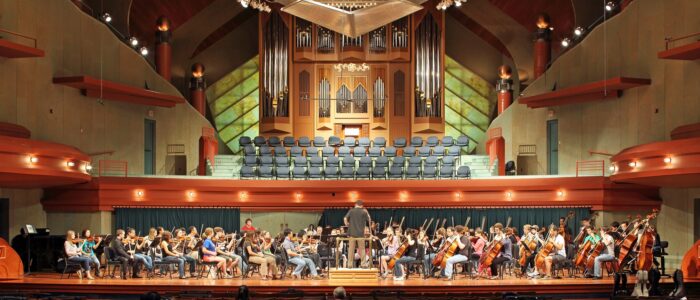
The work of each, starting in the 1980s, laid the groundwork for the AI revolution, earning them the title “Godfathers of AI.”
John J. Hopfield delivered his Nobel Prize lecture “Physics is a point of view” on 8 December 2024 at the Aula Magna, Stockholm University. He was introduced by Professor Ellen Moons, Chair of the Nobel Committee for Physics.
“No hour of life is wasted that is spent in the saddle.”
— Winston Churchill

…”The curiosity and impatience of my master were so great, that he spent many hours of his leisure to instruct me. He was convinced (as he afterwards told me) that I must be a Yahoo, but my teachableness, civility and cleanliness, astonished him; which were qualities altogether opposite to those animals…”
That’s great!
The horse lies down with its owner. pic.twitter.com/lCB85DSkAl
— The Figen (@TheFigen_) February 10, 2025
The literature for designing, building and maintaining sport and recreation related spaces in education settlements cuts across so many safety and sustainability risk aggregations that, starting 2024, we begin breaking up the topic according to four seasons; mindful that not all seasons are present in all settlements at all times of the year and in different age groups.
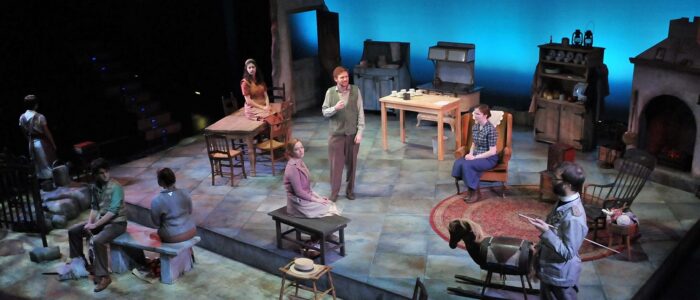
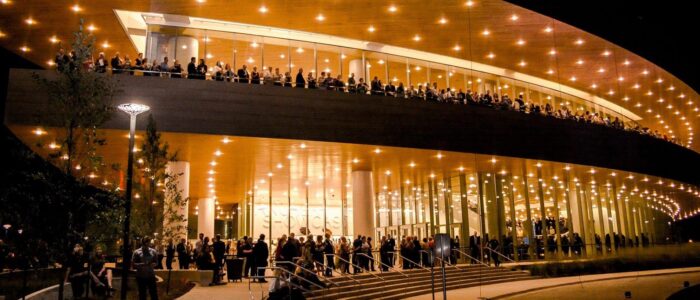
Volleyball at the high school level in the USA is a winter sport but a fall sport at the collegiate level. Rifle and Fencing is only a collegiate sport. Swimming “short course” (25 meter) competition is a winter sport depending upon regional facilities. (e.g. University of Southern California, University of North Carolina Wilmington, University of Michigan)
Join us today when we sort through the literature and any live public consultations on proposed changes to the most frequently referenced titles.
Hockey
Figure Skating
Rifle
Recreation
Swimming
Related:
Virtual reality technology in evacuation simulation of sport stadiums
Standards Illinois | Capital Projects | University Bond Data
The University has been exploring options for its aging Ice Arena (built in 1931) since at least 2022, including potential renovations or a new off-campus facility. The current arena requires significant upgrades for ADA compliance, structural repairs, windows, roof, and ice mat replacement to serve its users (hockey clubs, figure skating, public skating, etc.). It’s funded primarily by student fees, and decisions involve student referendums. So early in the concept phase numbers fly — recently $50 million.
Local developer shares vision, seeks input on ice facility proposal https://t.co/W19tuJ3QIl via @thedailyillini
— Standards Michigan (@StandardsMich) December 5, 2025
Play is the making of civilization—how one plays the game
more to the point than whether the game is won or lost.
We follow development of best practice literature for spectator seating structures produced by the International Code Council, the National Fire Protection Association (NFPA 102), the American Society of Civil Engineers Structural Engineering Institute (ASCE SEI-7). There are also federal regulations promulgated by the Consumer Product Safety Commission. (Note that some of the regulations were inspired by the several regional building code non-profits before the International Code Council was formed in year ~ 2000)
The parent standard from the International Code Council is linked below:
ICC 300 Standard on Bleachers, Folding and Telescopic Seating, and Grandstands
The development of this standard is coordinated with the ICC Group A Codes. We have tracked concepts in it previous revisions; available in the link below.
2024/2025/2026 ICC CODE DEVELOPMENT SCHEDULE
As always, we encourage our colleagues with workpoint experience to participate directly in the ICC Code Development process. CLICK HERE to get started.


Category: Athletics & Recreation, Architectural, Public Safety
Contact: Mike Anthony, Jack Janveja, Richard Robben
Virtual reality technology in evacuation simulation of sport stadiums
LEARN MORE:
Student Membership | @ASTMStudentFans
Sport is the bloom and glow of a perfect health.
—Ralph Waldo Emerson
Sport programs, facilities and equipment support one of the most visible and emotionally engaging enterprises in the education communities. These programs are central to the brand identity of the community and last, but not least, physical activity keeps our young people healthy in body and mind.
ASTM International is one of the first names among the 300-odd ANSI accredited standards setting organizations whose due processes discover and promulgate the standard of care for the design, construction, operations and maintenance of the facilities that support these enterprises. The parent committee is linked below:
ASTM Committee F08 on Sports Equipment, Playing Surfaces, and Facilities
While ASTM bibliography is largely product-oriented, there are many titles that set the standard of care for sport enterprises and the accessories to these enterprises. To identify a few:
ASTM F1774 Standard Specification for Climbing and Mountaineering Carabiners
ASTM F2060-00(2011) Standard Guide for Maintaining Cool Season Turfgrasses on Athletic Fields
ASTM F1703-13 Standard Guide for Skating and Ice Hockey Playing Facilities
ASTM F1953-10 Standard Guide for Construction and Maintenance of Grass Tennis Courts
ASTM F1081-09(2015) Standard Specification for Competition Wrestling Mats
ASTM F2950-14 Standard Safety and Performance Specification for Soccer Goals
When the General Requirements of an athletic facility construction project indicates: “Conform to all applicable standards” then, in the case of an sport facility, the ASTM title is likely the document that defines the standard of care from a product standpoint. Interoperability of the products in a sport setting are quite another matter.
At the international level, we track action in ISO/TC 83 Sports and other recreational facilities and equipment administered globally by the Deutsches Institut für Normung e.V. ASTM International is ANSI’s Technical Advisory Group for this committee.
The ASTM standards development process depends heavily on face-to-face meetings — typically two times per year – in different parts of the United States. The benefit of this arrangement lies in the quality of discussion among subject matter experts that results produced from face-to-face discussion. The price to pay for this quality, however, lies in the cost of attendance for the user-interest in the education industry. Relatively few subject matter experts directly employed by a school district, college or university who are charged with lowering #TotalCostofOwnership can attend the meetings. Many of the subject matter experts who are in attendance at the ASTM meetings from the education industry tend to be faculty who are retained by manufacturers, insurance, testing laboratories, conformity and compliance interests. (See our discussion of Incumbent Interests)
That much said, ASTM welcomes subject matter experts on its technical committees (Click here) We encourage participation by end users from the education industry — many of them in the middle of athletic facility management organization charts. The parent committee meets twice a year; after which we usually find public review redlines developed during those meetings to hit our radar. The link to the schedule of face-to-face meetings appears below:
Note that the August 2020 cancelled but the November 2020 meeting still appears on the schedule. It is likely that much of the committee work will be done online.


We are required to review draft ASTM consensus products with some care — owing to copyright restrictions — so we do it interactively online during teleconferences devoted to Sport. See our CALENDAR for the next online meeting; open to everyone.
Issue: [7-7] [10-32] [13-165] [20-156]
Category: Sport, Management, Risk Management
Contact: Mike Anthony, Jack Janveja, George Reiher, Richard Robben
Harvard upgrades stadium field | ASTM develops turf safety standards http://t.co/pObQduSg0Khttp://t.co/wRoCPDeVbZ pic.twitter.com/7gLp9tO3B1
— Standards Michigan (@StandardsMich) April 22, 2015
New update alert! The 2022 update to the Trademark Assignment Dataset is now available online. Find 1.29 million trademark assignments, involving 2.28 million unique trademark properties issued by the USPTO between March 1952 and January 2023: https://t.co/njrDAbSpwB pic.twitter.com/GkAXrHoQ9T
— USPTO (@uspto) July 13, 2023
Standards Michigan Group, LLC
2723 South State Street | Suite 150
Ann Arbor, MI 48104 USA
888-746-3670