
“Catch Me If You Can”
- Home Page 94



5G Small Cells
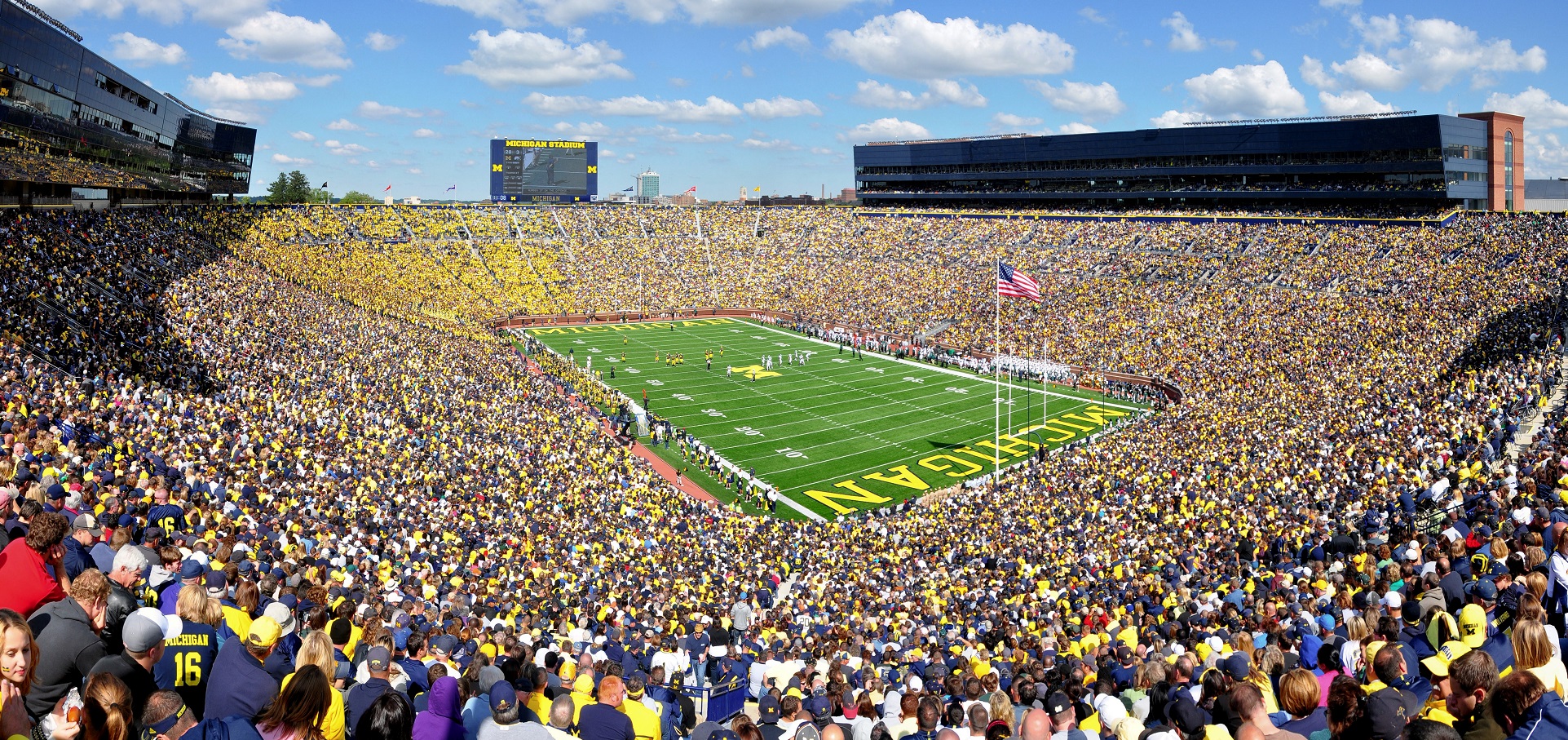
Today at the usual hour we examine the codes and standards that inform the deployment of distributed antenna systems for private 5G networks. While not every campus has full small cell density yet (deployment is ongoing and varies by size/location), it’s increasingly common on major ones to support “smart campus” initiatives and handle peak loads during athletic events such as football stadiums we know rather well.
Federal Regulations (Primarily FCC)
- FCC Small Cell Order (FCC 18-133, 2018, with ongoing updates/clarifications through 2025): Defines “small wireless facilities” (e.g., antennas ≤3 cubic feet, equipment ≤28 cubic feet total, structures ≤50 feet or limited height increases). Establishes “shot clocks” (presumptive review timelines: 60 days for collocations on existing structures, 90 days for new builds). Limits state/local fees (presumptive caps: ~$500 one-time, ~$270 annual recurring, unless justified by actual costs). Prohibits regulations that “prohibit or have the effect of prohibiting” service under Sections 253 and 332(c)(7) of the Communications Act. Allows reasonable, objective, published aesthetic requirements if no more burdensome than for other infrastructure.
- FCC RF Exposure Limits (updated 2019–2020, reaffirmed in recent proceedings): Maximum Permissible Exposure (MPE) guidelines for general public (e.g., ~580–1,000 µW/cm² depending on frequency) and occupational limits. All small cells must comply; local governments are preempted from regulating based on RF health/environmental effects if compliant. Requires RF compliance reports/certification in applications.
- NEPA (National Environmental Policy Act) and NHPA (National Historic Preservation Act) Streamlining: FCC has categorical exclusions/exemptions for many small cell deployments to speed environmental and historic reviews.
- Section 6409(a) of the Spectrum Act (2012, codified at 47 U.S.C. § 1455(a)): Mandates approval of collocation/modification requests on existing structures unless it substantially changes physical dimensions (with clarifications on concealment elements).
Electrical and Safety Codes
- National Electrical Code (NEC, NFPA 70): Applies to wiring, grounding, power distribution, surge protection, and service equipment for small cell installations (e.g., power supplies, rectifiers, enclosures). Often referenced for Class 2/Class 4 power systems in remote powering setups.
- National Electrical Safety Code (NESC): Governs utility pole attachments, clearances, climbing space, and overhead/underground installations (critical for pole-mounted small cells).
Structural and Engineering Standards
- ANSI/TIA-222 (Structural Standard for Antenna Supporting Structures, Antennas, and Small Auxiliary Structures, latest revisions e.g., -H or -I): Primary standard for structural design, wind/ice loading, risk categorization (often Risk Category I or II for small cells), foundation, and mounting on poles/towers. Used for pole modifications, new small cell poles, and load calculations.
- International Building Code (IBC) / ASCE 7: Often cross-referenced with TIA-222 for seismic, wind, and load requirements in structural reviews.
- AASHTO (American Association of State Highway and Transportation Officials) standards: For attachments near roadways or on traffic poles.
Other Relevant Standards and Guidelines
- 3GPP Technical Specifications: For 5G NR (New Radio) air interface, equipment interoperability, and performance (e.g., Release 15+ for standalone 5G).
- Small Cell Forum Documents: Industry best practices (e.g., definitions, siting considerations, product specs), though not mandatory codes.
- State-Specific Small Cell Laws: Many states (e.g., Utah, Texas, California, Colorado) have statutes streamlining permitting, capping fees, setting ROW access rules, and aligning with FCC preemption (e.g., Texas Chapter 284, Utah Small Wireless Facilities Deployment Act).
- Local Design/Aesthetic Guidelines: Cities (e.g., Denver, San José, Salt Lake City) adopt standards for concealment, placement, height, materials, and integration (must be reasonable/objective per FCC to avoid preemption).
Related:

Fire Alarm & Signaling Code

“Prometheus Bound” | Thomas Cole (1847)

NFPA 72 National Fire Alarm and Signaling Code is one of the core National Fire Protection Association titles widely incorporated by reference into public safety legislation. NFPA 72 competes with titles of “similar” scope — International Fire Code — developed by the International Code Council. We place air quotes around the word similar because there are gaps and overlaps depending upon whether or not each is adopted partially or whole cloth by the tens of thousands of jurisdictions that need both.
Our contact with NFPA 72 dates back to the early 2000’s when the original University of Michigan advocacy enterprise began challenging the prescriptive requirements for inspection, testing and maintenance (IT&M) in Chapter 14. There are hundreds of fire alarm shops, and thousands of licensed fire alarm technicians in the education facility industry and the managers of this cadre of experts needed leadership in supporting their lower #TotalCostofOwnership agenda with “code-writing and vote-getting”. There was no education industry trade association that was even interested, much less effective, in this space so we had to do “code writing and vote getting” ourselves (See ABOUT).
Code writing and vote getting means that you gather data, develop relationships with like minded user-interests, find agreement where you can, then write proposals and defend them at NFPA 72 technical committee meetings for 3 to 6 years. Prevailing in the Sturm und Drang of code development for 3 to 6 years should be within the means of business units of colleges and universities that have been in existence for 100’s of years. The real assets under the stewardship of these business units are among the most valuable real assets on earth.
Consider the standard of care for inspection, testing and maintenance. Our cross-cutting experience in over 100 standards suites allows us to say with some authority that, at best the IT&M tables of NFPA 72 Chapter 14 present easily enforceable criteria for IT&M of fire alarm and signaling systems. At worst, Chapter 14 is a solid example of market-making by incumbent interests as the US standards system allows. Many of the IT&M requirements can be modified for a reliability, or risk-informed centered maintenance program but fire and security shops in the education industry are afraid to apply performance standards because of risk exposure. This condition is made more difficult in large universities that have their own maintenance and enforcement staff. The technicians see opportunities to reduce IT&M frequencies — thereby saving costs for the academic unit facility managers — the enforcement/compliance/conformity/risk management professionals prohibit the application of performance standards. They want prescriptive standards for bright line criteria to make their work easier to measure.
While we have historically focused on Chapter 14 we have since expanded our interest into communication technologies within buildings since technicians and public safety personnel depend upon them. Content in Annex G — Guidelines for Emergency Communication Strategies for Buildings and Campuses — is a solid starting point and reflects of our presence when the guidance first appeared in the 2016 Edition. We shall start with a review of the most recent transcript of the NFPA Technical Committee on Testing and Maintenance of Fire Alarm and Signaling Systems
NFPA 72 First Draft Meeting (A2024)
Public Emergency Reporting Systems (SIG-PRS) First Draft
Public comment of the First Draft of the 2025 Edition is receivable until May 31, 2023. As always, we encourage direct participation in the NFPA process by workpoint experts with experience, data and even strong opinions about shortcomings and waste in this discipline. You may key in your proposals on the NFPA public input facility linked below:
You will need to set up a (free) NFPA TerraView account. Alternatively, you may join us any day at 11 AM US Eastern time or during our Prometheus or Radio colloquia. See our CALENDAR for the online meeting.
Issue: [15-213]
Category: Fire Safety & Security, #SmartCampus, Informatics
Colleagues: Mike Anthony, Joe DeRosier, Josh Elvove, Jim Harvey, Marcelo Hirschler
More
2013 NFPA 72 National Fire Alarm and Signaling Code (357 pages)
TIA-222 Standard For Towers And Antenna Supporting Structures





Installation Practices for ICT Cabling
BICSI G1-2023, Outside Plant Construction | Outside Plant Design Reference Manual (OSPDRM), 6th Edition

North Dakota State University
Information and communications technology (ICT) is a fast-moving economic space in which a mix of consensus and open-source standards form the broad contours of leading practice. ICT standards tend to follow international developments — more so than, say, fire safety standards which are more familiar to education facility leadership. All school districts, colleges, universities and university-affiliated health care systems have significant product, system, firmware and labor resources allocated toward ICT. Risk management departments are attentive to cybersecurity issues. All school districts, colleges, universities and university-affiliated health care systems have significant product, system, firmware and labor resources allocated toward ICT.
The Building Industry Consulting Service International (BICSI) is a professional association supporting the advancement of the ICT community. This community is roughly divided between experts who deal with “outside-plant” systems and “building premise” systems on either side of the ICT demarcation point. BICSI standards cover the wired and wireless spectrum of voice, data, electronic safety & security, project management and audio & video technologies. Its work is divided among several committees:
BICSI Technical Information & Methods Subcommittee
BICSI International Standards Program
As of this date one title has been released for public consultation:
The change is largely administrative. Comments are due December 10th
You may send comments directly to Jeff (with copy to psa@ansi.org). This commenting opportunity will be referred to the IEEE Education & Healthcare Facilities Committee which meets 4 times monthly in American and European time zones and will meet today; typically on Tuesdays. CLICK HERE for login information.
Issue: [18-191]
Category: Telecommunications, Electrical, #SmartCampus
Colleagues: Mike Anthony, Jim Harvey, Michael Hiler
Representative ICT Design Guidelines:
University of Tennessee Knoxville: Telecommunications Design and Installation Standards
Dennison University: Telecommunication Standards & Design Guidelines
University of Florida Information Technology: Telecommunications Standards
Adhiyamaan College of Engineering

Wires

Ampere current flows through copper or aluminum conductor due to the movement of free electrons in response to an applied electric field of varying voltages. Each copper or aluminum contributes one free electron to the electron sea, creating a vast reservoir of mobile charge carriers. When a potential difference (voltage) is applied across the ends of the conductor, an electric field is established within the conductor. This field exerts a force on the free electrons, causing them to move in the direction of the electric field. The resulting current flow can be transformed into different forms depending on the nature of the device.
Heating: When current flows through a resistor, it encounters resistance, which causes the resistor to heat up. This is the principle behind electric heaters, toasters, and incandescent light bulbs.
Mechanical Work: Current flowing through an electric motor creates a magnetic field, which interacts with the magnetic field of the motor’s permanent magnets or electromagnets. This interaction generates a mechanical force, causing the motor to rotate. Thus, electrical energy is converted into mechanical energy; including sound.
Light: In an incandescent light bulb, a filament heats up ( a quantum phenomena) due to the current passing through it. This is an example of electrical energy being converted into light energy; including the chemical energy through light emitting diodes
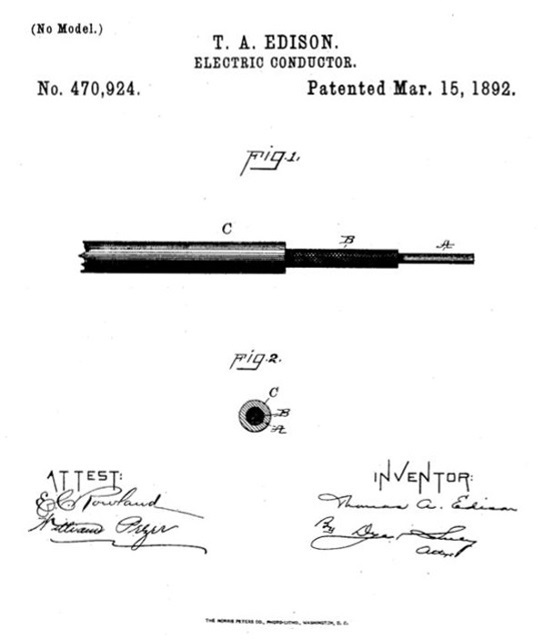
Today we dwell on how conductors are specified and installed in building premise wiring systems primarily; with some attention to paths designed to carry current flowing through unwanted paths (ground faults, phase imbalance, etc). In the time we have we will review the present state of the best practice literature developed by the organizations listed below:
International Electrotechnical Commission
60304 Low voltage installations: Protection against electric shock
Institute of Electrical and Electronic Engineers
National Electrical Safety Code
Insulated Cable Engineers Association
International Association of Electrical Inspectors
National Fire Protection Association
Transcript of CMP-6 Proposals for 2026 NEC
Other organizations such as the National Electrical Manufacturers Association, ASTM International, Underwriter Laboratories, also set product and installation standards. Data center wiring; fiber-optic and low-voltage control wiring is covered in other colloquia (e.g. Infotech and Security) and coordinated with the IEEE Education & Healthcare Facilities Committee.

Use the login credentials at the upper right of our home page.
Related:
National Electrical Code: 310.15(B) Temperature Correction Factors
Neher-McGrath Calculation: Cable Calculation ampacity and Thermal Analysis
Voltage Drop Calculation Example
ETAP: Cabling Sizing – Cable Thermal Analysis

NESC 2028 Call for Comment
The NESC Subcommittees have specifically requested public comment on ten proposals from affected interests. Today at the usual hour we will discuss them in detail and draft responses to be submitted before the April 9th deadline.
CP6007
CP6008
CP6026
CP6117
CP6292
CP6317
CP6327
CP6581
Part 3: Safety Rules for the Installation and Maintenance of Underground Electric Supply and Communication Lines CP6253
Part 5: Safety Rules for the Installation and Maintenance of Electric Generating Stations and Equipment
The new Part 5 was developed to focus on developing and enhancing procedures to safeguard persons during the installation, operation, or maintenance of an electric generating station and their associated equipment. These responsibilities used to be part of Subcommittee 3, which deals with electrical substations. Part 5 is placing particular emphasis on renewable energy, grid storage batteries, and distributed energy resources. The submitted change proposals produce updates to the Code in these areas.
New update alert! The 2022 update to the Trademark Assignment Dataset is now available online. Find 1.29 million trademark assignments, involving 2.28 million unique trademark properties issued by the USPTO between March 1952 and January 2023: https://t.co/njrDAbSpwB pic.twitter.com/GkAXrHoQ9T
— USPTO (@uspto) July 13, 2023
Standards Michigan Group, LLC
455 East Eisenhower Parkway, Suite 300
Ann Arbor, MI 48108 USA
888-748-3670
DIRECTIONS
 |
 |
|
 |
 |
|
 |
 |