Improvement of Campus Wireless

Loading
loading...

Improvement of Campus Wireless

January 12, 2026
mike@standardsmichigan.com
No Comments

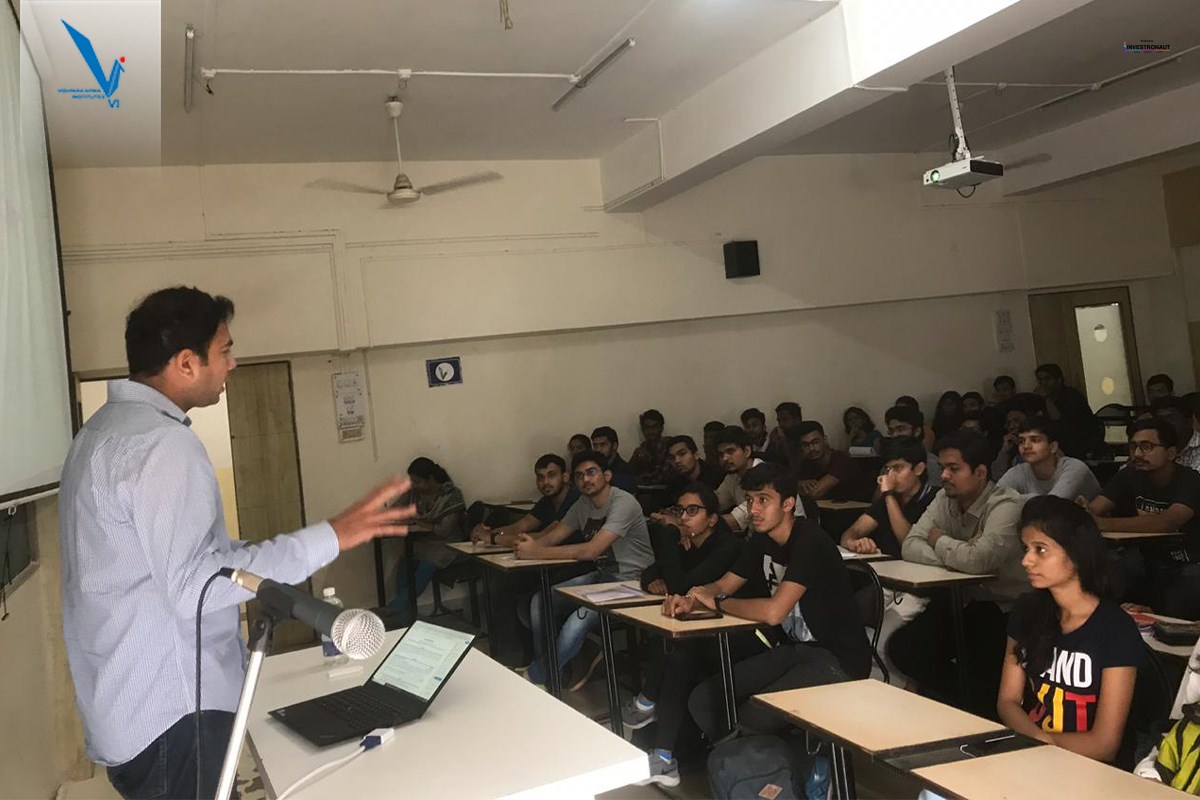
Vishwakarma Institute Of Technology

Coverage Improvement of IEEE 802.11n Based Campus Wide Wireless LANs

Aashi Srivastava – Rambabu Vatti – Viplavi – Jitesh Patil – Omkar Nikte


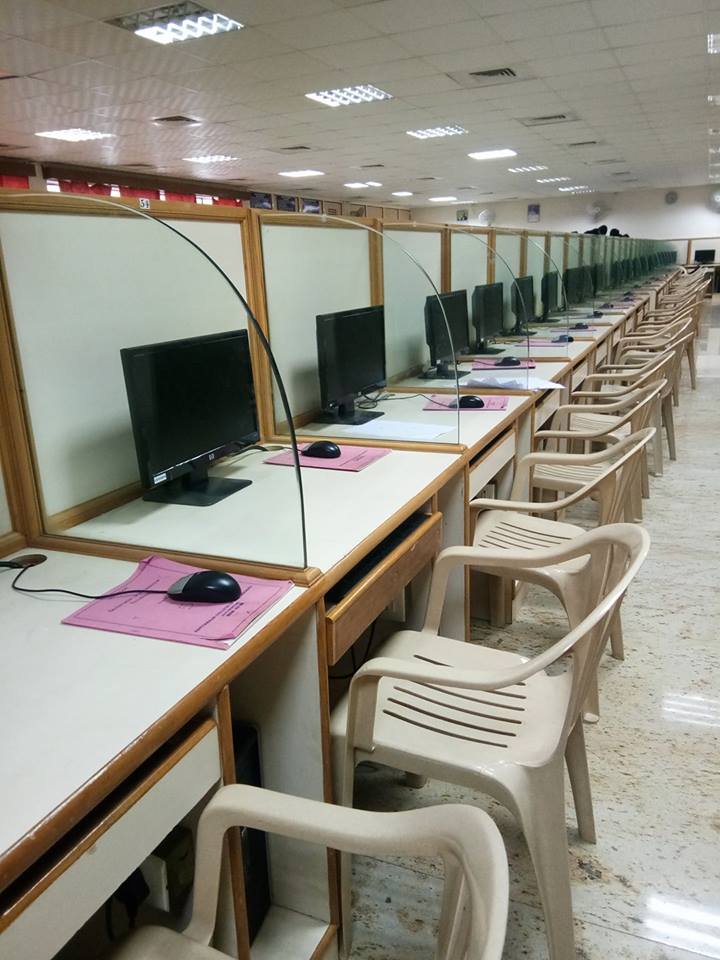
Abstract: Wi-Fi is the most commonly used technology for internet access. Many commercial organizations and educational complexes have been using IEEE 802.11n based wireless Local Area Networks in their campuses to provide seamless internet access to their stake holders. However, these networks suffer severe network coverage problems due to which, some of the network users in the campus will not be in the coverage of the network and some will go out of coverage when they are moving from one building to another in the campus, which causes the loss of some of the important and critical information. These no Wi-Fi coverage areas are known as Dead Zones. In this paper, the authors have made an attempt to identify dead zones in the campus by measuring Wi-Fi signal strength using Netspot tool. The Wi-Fi signal strength is represented with heat map to identify the weak signal areas and dead zones. Solutions to improve the coverage have been presented.

CLICK HERE for complete paper

Installation Practices for ICT Cabling

January 12, 2026
mike@standardsmichigan.com
No Comments

BICSI G1-2023, Outside Plant Construction | Outside Plant Design Reference Manual (OSPDRM), 6th Edition

North Dakota State University

Information and communications technology (ICT) is a fast-moving economic space in which a mix of consensus and open-source standards form the broad contours of leading practice.   ICT standards tend to follow international developments — more so than, say, fire safety standards which are more familiar to education facility leadership.  All school districts, colleges, universities and university-affiliated health care systems have significant product, system, firmware and labor resources allocated toward ICT.   Risk management departments are attentive to cybersecurity issues.   All school districts, colleges, universities and university-affiliated health care systems have significant product, system, firmware and labor resources allocated toward ICT.

The Building Industry Consulting Service International (BICSI) is a professional association supporting the advancement of the ICT community.   This community is roughly divided between experts who deal with “outside-plant” systems and “building premise” systems on either side of the ICT demarcation point.   BICSI standards cover the wired and wireless spectrum of voice, data, electronic safety & security, project management and audio & video technologies.  Its work is divided among several committees:

BICSI Technical Information & Methods Subcommittee

BICSI International Standards Program

As of this date one title has been released for public consultation:

Building Information Modeling (BIM) Practices for Information Communication Technology Systems (Page 52)

The change is largely administrative.  Comments are due December 10th 

You may send comments directly to Jeff (with copy to psa@ansi.org).   This commenting opportunity will be referred to the IEEE Education & Healthcare Facilities Committee which meets 4 times monthly in American and European time zones and will meet today; typically on Tuesdays.  CLICK HERE for login information.

Issue: [18-191]

Category: Telecommunications, Electrical, #SmartCampus

Colleagues: Mike Anthony, Jim Harvey, Michael Hiler

Representative ICT Design Guidelines:

University of Tennessee Knoxville: Telecommunications Design and Installation Standards

Dennison University: Telecommunication Standards & Design Guidelines

University of Florida Information Technology: Telecommunications Standards

Adhiyamaan College of Engineering

“Wade in the Water”

January 11, 2026
mike@standardsmichigan.com

No Comments

The Aeolians

Gospel of John 1:29–34 (King James Version)

Here is the passage from the Gospel of John 1:29–34 in the King James Version (KJV), which recounts John the Baptist’s testimony about Jesus, alluding to His baptism through the sign of the descending Spirit:

29 The next day John seeth Jesus coming unto him, and saith, Behold the Lamb of God, which taketh away the sin of the world.

30 This is he of whom I said, After me cometh a man which is preferred before me: for he was before me.

31 And I knew him not: but that he should be made manifest to Israel, therefore am I come baptizing with water.

32 And John bare record, saying, I saw the Spirit descending from heaven like a dove, and it abode upon him.

33 And I knew him not: but he that sent me to baptize with water, the same said unto me, Upon whom thou shalt see the Spirit descending, and remaining on him, the same is he which baptizeth with the Holy Ghost.

34 And I saw, and bare record that this is the Son of God.

Unlike the Synoptic Gospels (Matthew, Mark, Luke), which narrate the baptism directly, John’s Gospel focuses on the Baptist’s witness to it.

Alabama

Roger Scruton Memorial Lectures

January 11, 2026
mike@standardsmichigan.com
, ,
No Comments


“Stand up for your friends especially when they’re right.  There is every reason in the world to do so but one is not obvious — although perhaps it should be — and it’s this:  it might be the only chance you get to show them how much they mean to you if you don’t seize this opportunity whenever it comes along. 

To save the truth of your feelings for their funeral or obituaries it’s not much use to anyone then but if you defend a friend while they’re alive you might just give them the slightest intimation of how much you value them and love them and how much other people love them too…”

Douglas Murray


Related:

Conan O’Brian

Charlie Kirk (August 12, 2025): “Has U.S. President Donald Trump gone too far?”

Timon of Athens

Winter Sport

January 9, 2026
mike@standardsmichigan.com
, , , , , ,
No Comments


“Indians Playing Lacrosse on the Ice” 1934 Yale University Art Gallery

The literature for designing, building and maintaining sport and recreation related spaces in education settlements cuts across so many safety and sustainability risk aggregations that, starting 2024, we begin breaking up the topic according to four seasons; mindful that not all seasons are present in all settlements at all times of the year and in different age groups.

Volleyball at the high school level in the USA is a winter sport but a fall sport at the collegiate level.  Rifle and Fencing is only a collegiate sport.  Swimming “short course” (25 meter) competition is a winter sport depending upon regional facilities. (e.g. University of Southern California, University of North Carolina Wilmington, University of Michigan)

Join us today when we sort through the literature and any live public consultations on proposed changes to the most frequently referenced titles.


Hockey

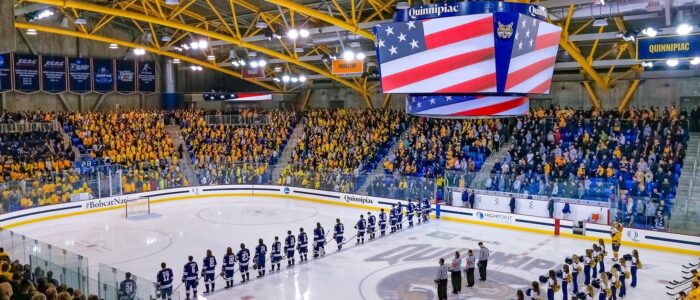
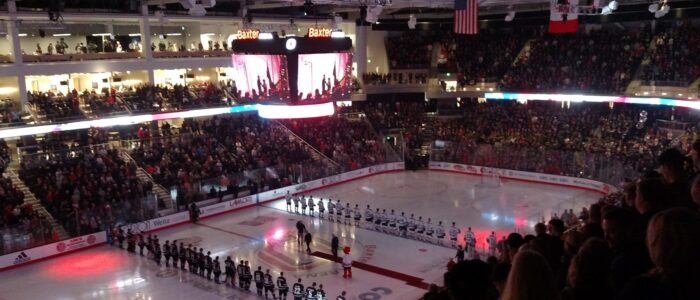
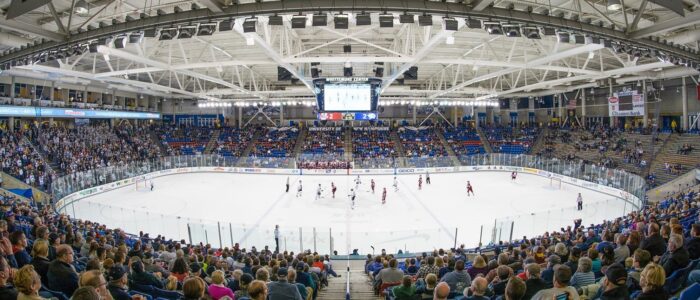
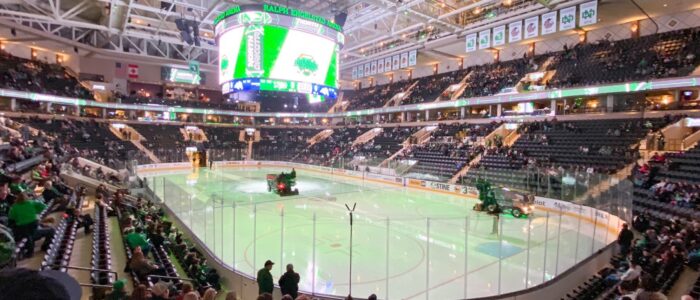
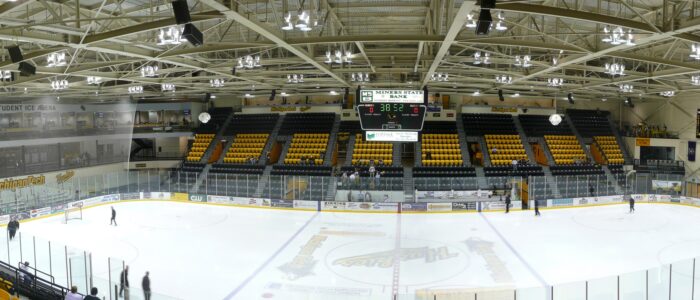
Ice Hockey Arena Lighting


Figure Skating


Rifle


Recreation

Darts

Ice Fishing

Curling

Billiards


Swimming

Coetzenburg Swimming Pool


Related:

Readings / Sport, Culture & Society

Maths and Sport

National Center for Spectator Sports Safety and Security

Virtual reality technology in evacuation simulation of sport stadiums


Ice Hockey Arena Lighting

January 9, 2026
mike@standardsmichigan.com
, , , , , , ,
No Comments

National Collegiate Athletic Association: August 2022 IRS Form 900 Tax Filing

"People don’t notice whether it’s winter or summer when they’re happy" -- Anton Chekhov

After athletic arena life safety obligations are met (governed legally by NFPA 70, NFPA 101, NFPA 110,  the International Building Code and possibly other state adaptations of those consensus documents incorporated by reference into public safety law) business objective standards may come into play.For almost all athletic facilities,  the consensus documents of the Illumination Engineering Society[1], the Institute of Electrical and Electronic Engineers[2][3] provide the first principles for life safety.  For business purposes, the documents distributed by the National Collegiate Athletic Association inform the standard of care for individual athletic arenas so that swiftly moving media production companies have some consistency in power sources and illumination as they move from site to site.  Sometimes concepts to meet both life safety and business objectives merge.


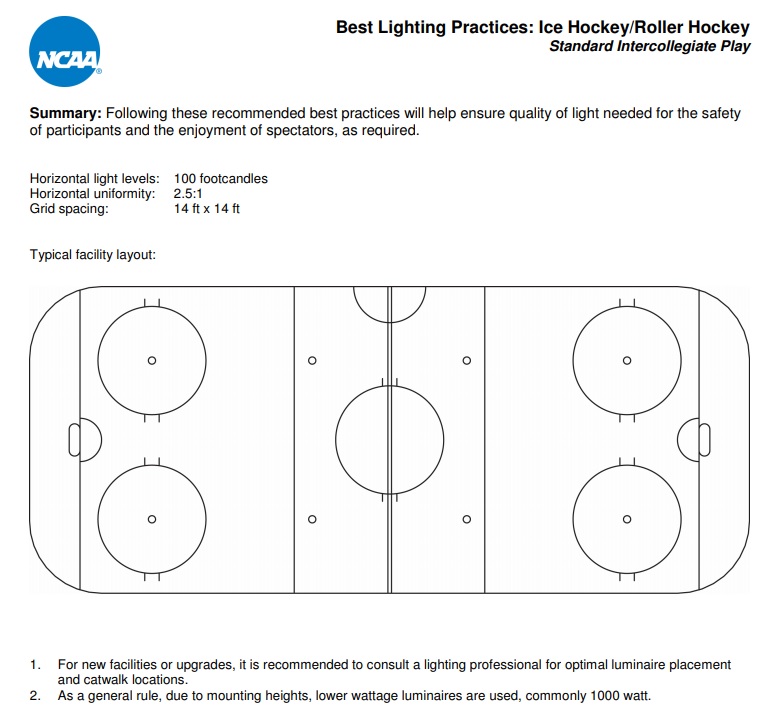
During hockey season the document linked below provides information to illumination designers and facility managers:

NCAA Best Lighting Practices

Athletic programs are a significant source of revenue and form a large part of the foundation of the brand identity of most educational institutions in the United States.   We focus primarily upon the technology standards that govern the safety, performance and sustainability of these enterprises.  We collaborate very closely with the IEEE Education & Healthcare Facilities Committee where subject matter experts in electrical power systems meet 4 times each month in the Americas and Europe.

See our CALENDAR for our next colloquium on Sport facility codes and standards  We typically walk through the safety and sustainability concepts in play; identify commenting opportunities; and find user-interest “champions” on the technical committees who have a similar goal in lowering #TotalCostofOwnership.

"People don’t notice whether it’s winter or summer when they’re happy" -- Anton Chekhov

Issue: [15-138]*

Category: Electrical, Architectural, Arts & Entertainment Facilities, Athletics

Colleagues: Mike Anthony, Jim Harvey, Jack Janveja, Jose Meijer, Scott Gibbs


LEARN MORE:

[1] Illumination Engineering Handbook

[2] IEEE 3001.9 Recommended Practice for Design of Power Systems for Supplying Lighting Systems for Commercial & Industrial Facilities

[3] IEEE 3006.1 Power System Reliability


* Issue numbering before 2016 dates back to the original University of Michigan codes and standards advocacy enterprise 

From Cow to Coffee

January 8, 2026
mike@standardsmichigan.com

No Comments

This content is accessible to paid subscribers. To view it please enter your password below or send mike@standardsmichigan.com a request for subscription details.

Community Hub Schools

January 8, 2026
mike@standardsmichigan.com
No Comments

Donegan Acoustics

The larger part of using the global standardization system to make the real assets of educational settlements safer, simpler, lower-cost and longer-lasting is to make every effort to use those spaces and occupancies effectively.  Today we examine a few case studies and explore possibilites mapped in safety and sustainability catalogs of standards developers whose titles become the basis for government regulation.  Use the login credentials at the upper right of our home page at the usual hour.

The topic is necessarily cross-cutting and technologically interdisciplinary so we draw from the syllabi of colloquia we previously covered.

Ædificare & Utilization

Data Points: National Center for Education Statistics

Child Day Care

Kitchen Wiring

Laundry

Case Study: Center Grove Community School Corporation Security

Clery Act

Summer Sport

Related:

Here are 10 current trends in the construction of K-12 education facilities in the United States, based on recent industry insights and developments. These trends reflect a focus on safety, sustainability, technology, and evolving educational needs, drawn from sources like architectural firms, construction reports, and educational design analyses.

  1. Enhanced Security Systems
    Schools are prioritizing advanced security measures, such as wearable panic devices for staff, access control systems, secure vestibules, surveillance technology, and remote hallway gate controls. Many districts are proactively upgrading security as standalone projects rather than waiting for renovations, aiming to create safer environments without highly visible fortifications. For example, Solomon-Solis Cohen Elementary in Philadelphia integrates park-like settings with security features to balance safety and community appeal.

  2. Flexible and Adaptable Learning Spaces
    Traditional static classrooms are being replaced with modular, flexible spaces that support diverse teaching styles and learning needs. These include movable partitions, demountable walls, and multi-purpose areas like learning stairs, which serve as seating or presentation spaces. Schools like Warsaw High School use learning stairs as dynamic hubs for collaboration, allowing easy reconfiguration for group work, individual study, or CTE programs.

  3. Sustainability and Net-Zero Energy Design
    Schools are adopting eco-friendly designs, such as energy-efficient HVAC systems, solar panels, and green materials, to achieve net-zero energy goals. The transition to electric vehicle (EV) bus fleets with charging infrastructure is also growing, as seen in districts incrementally upgrading transportation facilities. These designs educate students about sustainability while reducing operational costs.

  4. Improved Indoor Air Quality and HVAC Upgrades
    With 38% of U.S. public schools built before 1970, upgrading HVAC systems is a priority to improve air quality and prevent health issues like mold. The American Society of Civil Engineers noted in 2021 that 41% of districts need HVAC updates in at least half their schools, costing billions. Post-COVID, schools are using federal relief funds to enhance ventilation, as seen in Clark County School District’s UL Verified Ventilation mark.

  5. Career and Technical Education (CTE) and STEAM Facilities
    There’s a resurgence in CTE and STEAM (Science, Technology, Engineering, Arts, Mathematics) spaces, with schools building specialized labs for robotics, welding, automotive, and filmmaking. For instance, Merrillville Community School Corporation added a 57,000-square-foot CTE addition with state-of-the-art labs. These spaces prepare students for skilled trades and tech careers, reflecting a shift away from college-only pathways.

  6. Technology Integration and Wi-Fi Optimization
    Schools are designing comprehensive Wi-Fi coverage using predictive modeling to eliminate dead zones, ensuring access for all users (students, staff, parents). Classrooms are equipped with IT infrastructure for digital learning, including VR/AR tools and BIM (Building Information Modeling) for design precision. Santa Ana High School’s transformation of a library into a digital media lab exemplifies this trend.

  7. Health and Wellness-Focused Design
    Designs prioritize mental and physical well-being with natural lighting, ergonomic furniture, and outdoor learning spaces like gardens or courtyards. The “One Health” movement, cited by PBK Architects, emphasizes environments where students and buildings are holistically healthy. Twin Buttes High School in North Dakota incorporates food sovereignty programs with greenhouses and culinary labs to promote wellness.

  8. Community-Centric Facilities
    Schools are being designed as community hubs, hosting events and serving as emergency shelters or voting places. Flexible designs allow spaces to be used by the community year-round, generating revenue. For example, Eddy & Debbie Peach Elementary School includes outdoor art and science labs that double as community spaces, fostering engagement and connection.

  9. Resilient and Durable Construction
    New builds and renovations use resilient materials to withstand high-traffic use and extreme weather, adhering to updated building codes for fire resistance and accessibility. Designers assess existing structures for “good bones” to repurpose them cost-effectively, as seen in HED’s redesign of Santa Monica High School with adaptable, demountable walls.

  10. Collaborative Design with Stakeholder Input
    Construction projects increasingly involve teachers, parents, and students in the planning process through public meetings and surveys to align facilities with community needs. Transparent communication, as emphasized by Bryan Construction, ensures designs reflect educational goals, such as sustainable curricula or flexible spaces, enhancing teacher and student satisfaction.

Layout mode
Predefined Skins
Custom Colors
Choose your skin color
Patterns Background
Images Background
Standards Michigan
error: Content is protected !!
Skip to content