Abstract: Indoor signage plays an essential component to find destination for blind and visually impaired people. In this paper, we propose an indoor signage and doors detection system in order to help blind and partially sighted persons accessing unfamiliar indoor environments. Our indoor signage and doors recognizer is builded based on deep learning algorithms. We developed an indoor signage detection system especially used for detecting four types of signage: exit, wc, disabled exit and confidence zone. Experiment results demonstrates the effectiveness and the high precision of the proposed recognition system. We obtained 99.8% as a recognition rate.
The Clery Act has been amended by the Stop Campus Hazing Act. Institutions must now include hazing incidents among their reported campus-safety statistics and include policies concerning hazing, reporting, investigation and prevention in their Annual Security Reports.
Institutions must also develop a Campus Hazing Transparency Reportidentifying student organizations found responsible for hazing violations. The report includes the organization, a general description of the violation, sanctions and relevant dates. Where violations have occurred, the report must be published on the institution’s website and updated at least twice annually.
The federal requirement for a school safety plan is outlined in the Jeanne Clery Disclosure of Campus Security Policy and Campus Crime Statistics Act, commonly known as the Clery Act. The Clery Act requires all colleges and universities that participate in federal student financial aid programs to develop and publish an annual security report that includes certain safety-related policies, procedures, and crime statistics.
The Clery Act requires that schools include specific information in their security reports, including:
The school’s crime statistics for the previous three years.
Information about the school’s policies and procedures related to campus safety and security.
Information about crime prevention programs and services offered by the school.
Information about the school’s emergency response and evacuation procedures.
Information about the school’s policies and procedures for addressing and reporting incidents of sexual assault, domestic violence, dating violence, and stalking.
Information about the school’s drug and alcohol policies and prevention programs.
While the Clery Act only applies to colleges and universities that receive federal student financial aid, many states and school districts have adopted similar requirements for K-12 schools to develop and implement comprehensive safety plans. These plans may include many of the same elements as Clery Act-compliant security reports, such as emergency response protocols, crime prevention programs, and policies for addressing incidents of violence and harassment.
The most recent changes to the Clery Act were made in March 2020, when the Department of Education published the final rule amending the Clery Act regulations. The changes include:
Expanding the definition of sexual harassment to include quid pro quo and hostile environment harassment, which aligns with Title IX regulations.
Requiring institutions to report stalking and domestic violence in addition to existing crime categories.
Adding hazing as a reportable crime category.
Requiring institutions to compile and publish hate crime statistics for all categories of prejudice, including gender identity and national origin.
Requiring institutions to include specific policies and procedures in their annual security reports, such as those related to prevention and response to sexual assault, domestic violence, dating violence, and stalking.
Requiring institutions to provide survivor-centered and trauma-informed services to individuals who report or experience sexual assault, domestic violence, dating violence, or stalking.
Requiring institutions to include information about prevention and response to cyberbullying and electronic harassment in their annual security reports.
Allowing institutions to provide annual security reports electronically and requiring institutions to make their crime statistics publicly available on their website.
These changes aim to strengthen the Clery Act’s requirements for campus safety and to better address sexual harassment and other forms of violence on college and university campuses.
Every new federal law involving paperwork creates an uncountable number of trade associations and compliance enterprises. A simple web search on “Cleary Act” will reveal half the internet full of pages for more information. Our focus is on the user-side — i.e. making inquiries and pushing back on the gaudy proliferation of regulatory requirements, the integrity of purpose of the law notwithstanding. We maintain this title on the standing agenda on all of our Security colloquia. See our CALENDAR for the next online meeting; open to everyone.
This content is accessible to paid subscribers. To view it please enter your password below or send mike@standardsmichigan.com a request for subscription details.
Meatloaf is traced back to ancient times when people started combining ground meat with other ingredients for a more economical and substantial meal.
Colonial America: The concept of mixing ground meat with breadcrumbs or grains dates back to medieval Europe. When settlers arrived in North America, they adapted these techniques to the ingredients available to them, such as native grains and game meats.
19th Century: As meat grinders became more widely available in the 19th century, the preparation of ground meat dishes became easier. Meatloaf gained popularity during this time, with regional variations emerging across the United States. Families would incorporate various seasonings, herbs, and fillers based on local ingredients and preferences.
World War II and Post-War Era: Meatloaf became even more popular during World War II and the post-war era due to its affordability and versatility. Families could stretch a small amount of meat by combining it with breadcrumbs, rice, or oats, making it an economical choice during times of rationing.
1950s and 1960s: Meatloaf reached its peak of popularity in the mid-20th century, becoming a staple of American home cooking. The dish was often featured in cookbooks and advertisements, showcasing its versatility and ease of preparation.
Over time, meatloaf recipes have evolved with regional and personal preferences. Some variations include using different meats (beef, pork, veal, or a combination), adding vegetables, experimenting with various seasonings, and glazing with sauces.
Ketchup, 1 & 1/2 oz.
Water, 2 3/8 tsp.
Instructions
Preheat oven to 325 degrees.
Place ground beef in mixing bowl. Add eggs and combine.
Add ketchup (2 & 1/3 Tbsp.), mustard, Worcestershire sauce, Italian seasoning, onions, celery, breadcrumbs, salt, and pepper. Mix well to combine. Meatloaf should be firm. If mixture is not, add more bread crumbs.
Place meatloaf in a loaf pan. Make sure it is spread evenly.
Bake for about 45 minutes, uncovered. Remove from oven.
Combine ketchup (1 & 1/2 oz.) and water. Spread over meatloaf.
Return to oven for another 15-20 minutes, or until internal temperature reaches 155 degrees.
Let the meatloaf rest for 30 minutes prior to cutting.
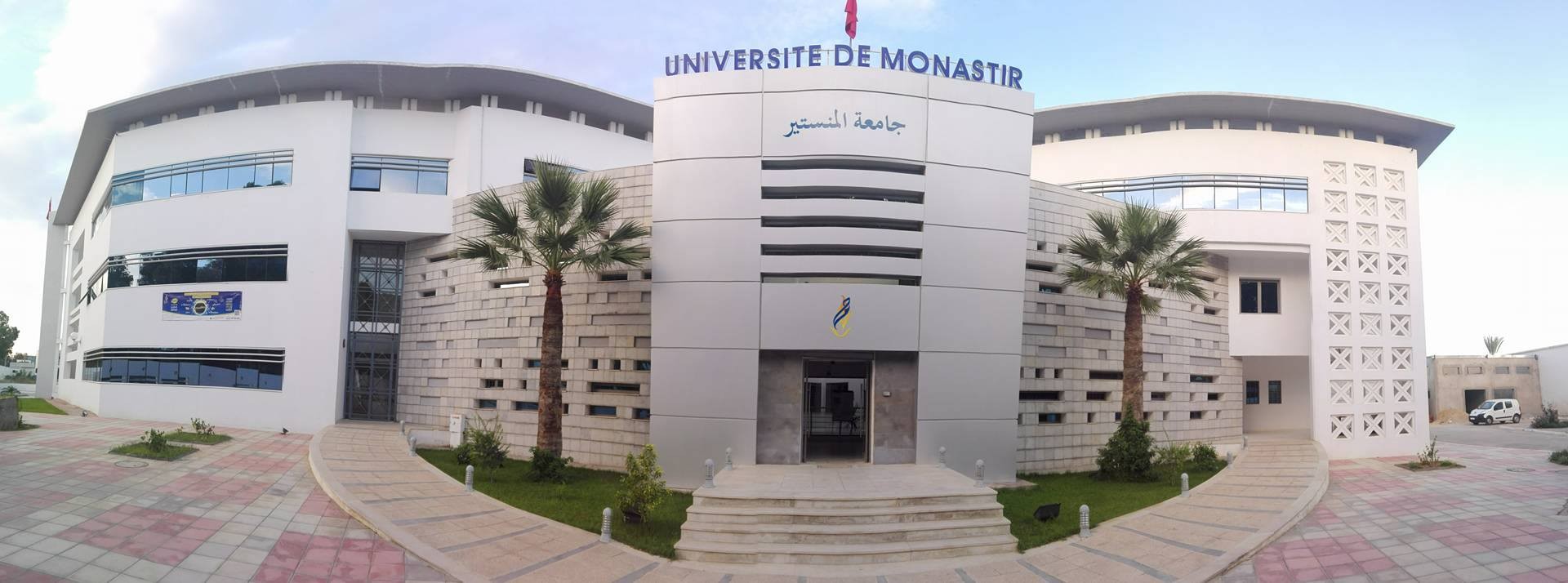
Today we examine the catalog of several ANSI-accredited, consortia and ad hoc standard developers with titles relevant to the planning, construction and management of the built environment of education communities nested within human settlements characterized by a high population density, extensive infrastructure, and various economic, social, and cultural activities. In other words, from the point of view of a campus as a “city within a city” with attention to infrastructure.
Several organizations and bodies in the United States that develop model codes and standards related to zoning and land use. These model codes and standards are often adopted or referenced by municipalities in their zoning ordinances. Here are some prominent organizations and their model codes:
Each of the foregoing titles have some bearing upon decisions about land use. However, keep in mind, that zoning regulations are primarily established at the local level by municipalities, cities, and counties, rather than through national standard bodes. These organizations and their codes provide guidance and best practices for zoning, but specific regulations can vary significantly between different jurisdictions. They are frequently incorporated by reference into regulations by governments at all levels.
Join us today with the login credentials at the upper right of our home page.
Here are some community colleges in the United States that are embedded within cities, offering students the advantages of an urban setting:
City College of San Francisco – San Francisco, California
Los Angeles City College – Los Angeles, California
Borough of Manhattan Community College – New York, New York
Miami Dade College – Wolfson Campus – Miami, Florida
City College of Chicago – Chicago, Illinois
Seattle Central College – Seattle, Washington
Austin Community College – Rio Grande Campus – Austin, Texas
Houston Community College – Central Campus – Houston, Texas
San Antonio College – San Antonio, Texas
Portland Community College – Cascade Campus – Portland, Oregon
Washtenaw Community College – Ann Arbor-Ypsilanti, Michigan
These community colleges not only provide access to higher education but also offer the benefits of being located within major urban centers, including proximity to job markets, cultural institutions, and public transportation.
The River Thames with St. Paul’s Cathedral on Lord Mayor’s Day
Today we examine standards, codes and regulations that inform how educational settlement essential works interacts with host community infrastructure. Use the login credentials at the upper right of our home page.
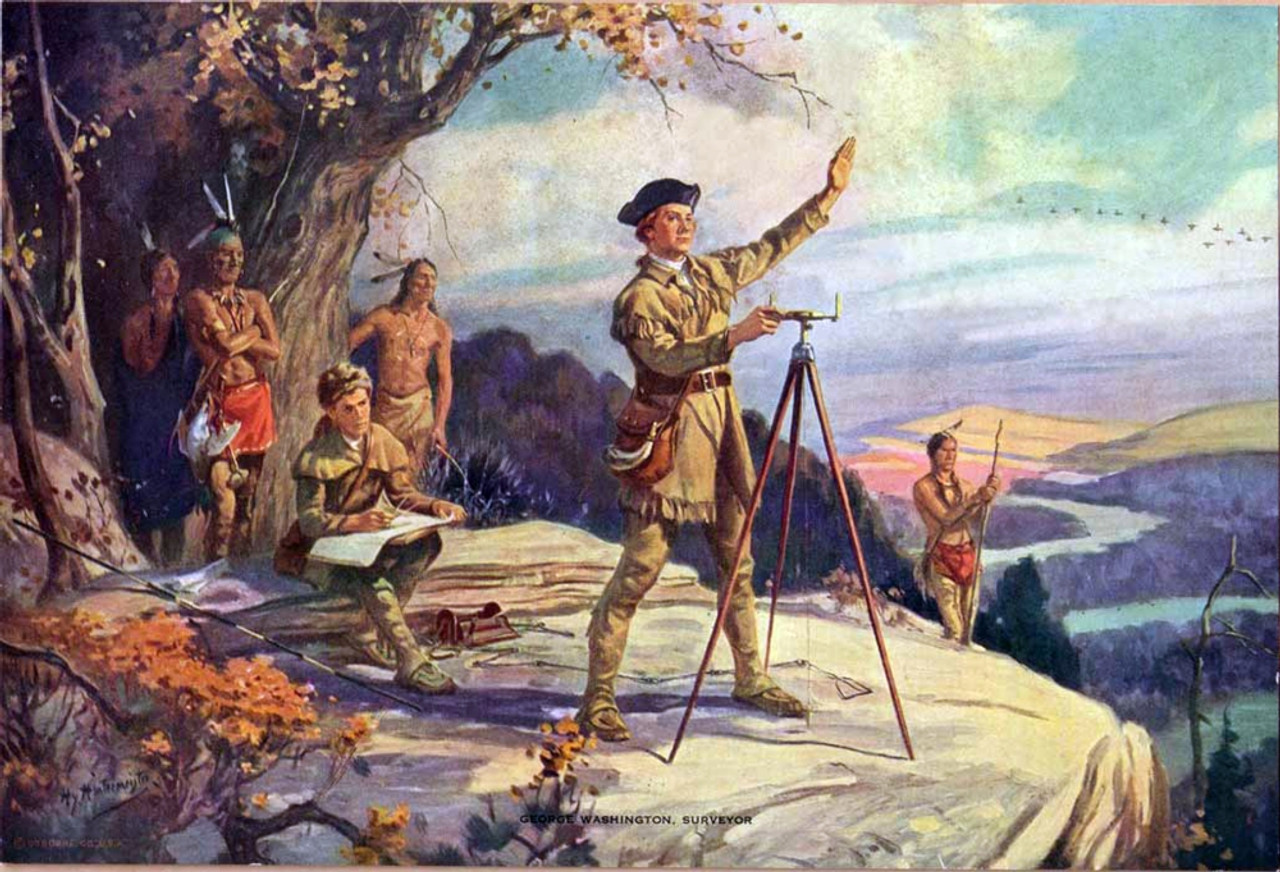
In the United States, land surveying is regulated by various professional organizations and government agencies, and there are several technical standards that must be followed to ensure accuracy and consistency in land surveying.
The best practice for land surveying is set by the “Manual of Surveying Instructions” published by an administrative division of the United States Department of the Interior responsible for managing public lands in the United States. The manual provides detailed guidance on the procedures and techniques for conducting various types of land surveys, including public land surveys, mineral surveys, and cadastral surveys.
Another important set of model standards for land surveying is the Minimum Standards for Property Boundary Surveys* published by the National Society of Professional Surveyors. These standards provide guidance on the procedures and techniques for conducting property boundary surveys, including the use of appropriate surveying equipment, the preparation of surveying maps and plats, and the documentation of surveying results. Land surveyors in the United States are also required to adhere to state and local laws and regulations governing land surveying, as well as ethical standards established by professional organizations such as the American Society of Civil Engineers.
The Morrill Land-Grant Act of 1862 granted each state 30,000 acres of federal land for each member of Congress from that state to establish colleges that would teach agriculture, engineering, and military tactics. This legislation led to the establishment of many public universities, including the Texas A&M University, the University of Wisconsin and Michigan State University.
United States Infrastructure: C Schools: D+ Energy: D+ Broadband: C+
America earned a better infrastructure grade. Its schools did not. For the education industry, the enduring problem is the stewardship of aging buildings, utility systems and supporting infrastructure.
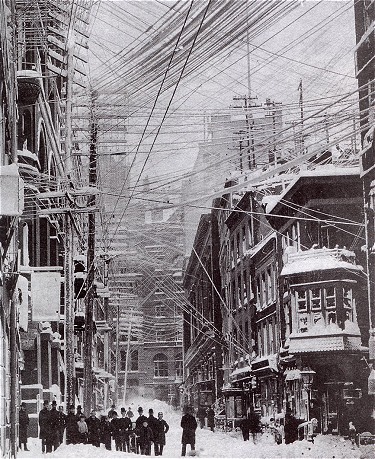
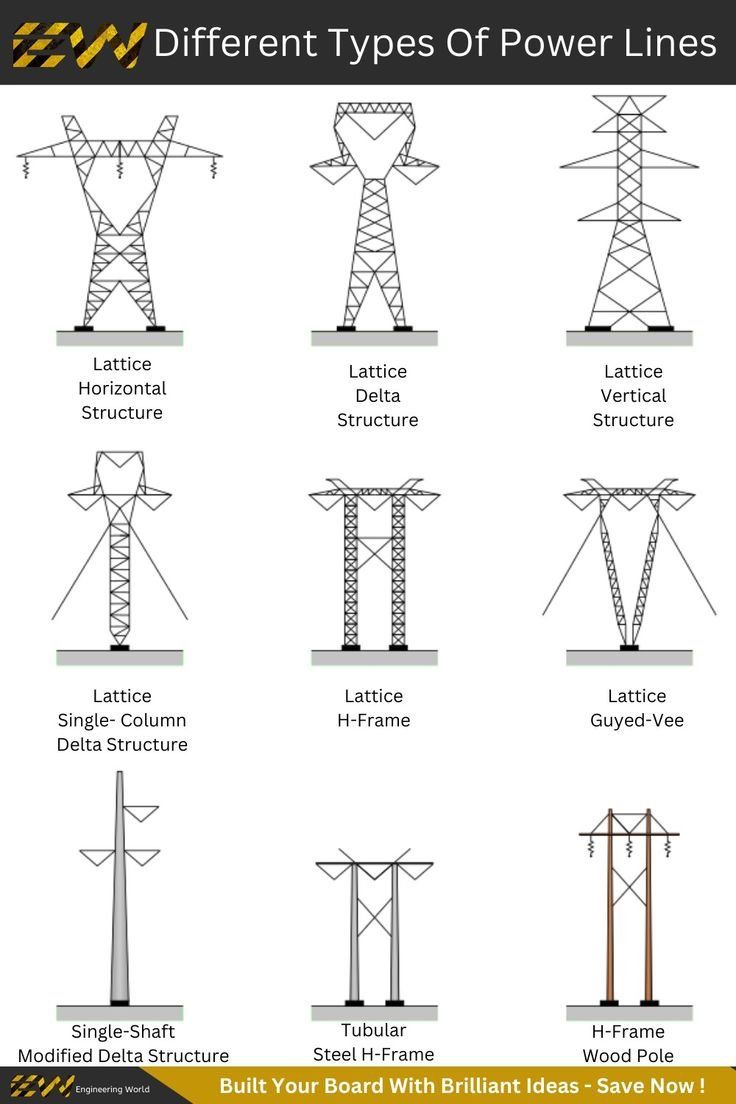
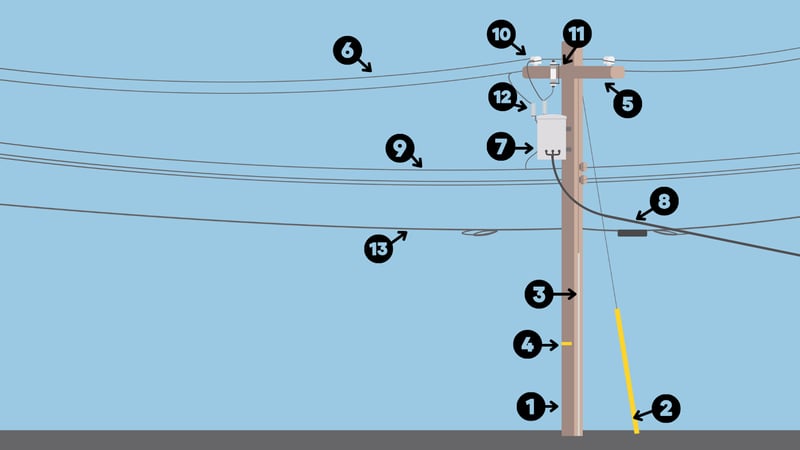
Abstract: This guide identifies the mechanisms and an analytic approach for developing consistent rules, agreements, and/or methodologies for the evaluation and inter-entity cooperation managing pole attachments on utility infrastructure that can contain both electric supply as well as communications wireline and wireless facilities.
The common safety codes and accepted good industry practices for joint use are referenced, including items such as clearances and strength/loading requirements, appropriate work rules during installation, maintenance and restoration, and general guidelines. The considerations within this guide can be used to help perform a detailed assessment of attachment installations where communications antennas and related wireline and wireless equipment are to be co-located on joint use structures.
Scope: This guide provides recommendations for the development of consistent guides, agreements, and/or methodologies for the evaluation and inter-company cooperation on managing pole attachments on Electric Utility infrastructure.
Purpose: The Joint Use Guide documents consistent approaches, methodologies and rules for the sharing and co-location of equipment with electric Transmission & Distribution (T&D) facilities for communications such as antennae and/or cable. With the emergence of new communications networks and emerging technologies which depend on widely distributed communications {e.g. 5G and Internet of Things ( IoT)}, the needs of vertical real-estate for use in communications is expected to dramatically increase in the coming years. While electric T&D facilities provide an excellent platform to help meet these needs, there are significant safety and reliability issues associated with their use.
CIP-014-4 strengthens the physical-security framework for transmission stations, substations and associated primary control centers whose loss through physical attack could cause instability, uncontrolled separation or cascading within an Interconnection. The revised standard tightens risk-assessment timelines, clarifies applicability and strengthens independent verification and oversight.
University cogeneration: Large campus cogenerating plants do not become subject to CIP-014-4 simply because it operates in parallel with the utility grid. The standard is directed principally at qualifying Transmission Owners and Transmission Operators and the critical transmission facilities identified through the prescribed risk assessment. When the plant gets to about 75 MVA and is connected at greater than 100 kV ( a fairly common “service” interconnect voltage, the NERC registration, the ownership boundary and the topology of the high-voltage interconnection all become consequential. The University of Michigan and MIT plants — the largest in the USA — lie on the boundary
Practical implication: Large research universities with interconnected cogeneration should nevertheless examine the physical security of the campus–utility interface: high-voltage substations, switchyards, protection and control systems, communications, black-start capability and operating arrangements with the serving utility. A campus facility outside CIP-014-4 may still affect — or depend upon — a transmission facility that is inside it. Resilience therefore becomes a shared engineering problem even where regulatory responsibility does not.
University district energy systems are significant stakeholders in bulk electrical transmission reliability because large educational settlements behave much like small cities. Hospitals, laboratories, data centers, residence halls, athletic facilities and central utility plants create substantial, concentrated electrical loads whose interruption may have consequences extending beyond ordinary commercial outages.
Many universities also operate combined heat and power plants, generators, thermal storage, microgrids and other distributed energy resources. These assets can reduce transmission demand, support local resilience and, where market and interconnection arrangements permit, participate in demand response or other grid-support activities. Conversely, disturbances on the bulk transmission system can disrupt campus generation, utility distribution and critical research or clinical operations.
Universities therefore occupy both sides of the reliability equation: they are dependent loads and potential reliability resources. Transmission planning, protection, restoration priorities, interconnection requirements and emergency operating procedures can directly affect the continuity, cost and resilience of university district energy systems.
Key point for us: FERC directed NERC on computational/large loads (E-1, RD26-7-000) — Ordered the North American Electric Reliability Corporation (NERC) to develop and submit new or modified Reliability Standards addressing reliability risks from integrating computational loads (e.g., data centers) into the Bulk-Power System, plus revisions to its Rules of Procedure (including registry criteria for such loads). Filings due by December 31, 2026.
The Commission voted on a series of mostly consent agenda items focused on electric reliability, market rules, compliance, infrastructure, and related matters. Some of them are relevant to large, sometimes privatized, campus power systems:
Major initiative to accelerate large-load interconnections. The Commission’s headline action was the issuance of six “show cause” orders directing every jurisdictional RTO/ISO (except Texas/ERCOT) to justify or reform how they connect very large electric loads, particularly AI data centers. The objective is to reduce delays while protecting grid reliability and ensuring that costs are appropriately assigned.
Large customers expected to bear infrastructure costs. FERC made clear that new large loads should generally pay for the transmission and distribution upgrades needed to serve them, rather than shifting those costs onto existing retail customers. This principle is expected to influence future tariff filings nationwide
Encouragement of customer-owned generation. The Commission encouraged tariff structures that would allow large customers to supply some or all of their own electricity—such as on-site generation, microgrids, or other behind-the-meter resources—to reduce impacts on the bulk power system.
MISO emergency demand-resource improvements. The Commission conditionally accepted tariff revisions from MISO that improve the visibility, dispatch, and operation of demand-side resources during grid emergencies beginning with the 2028–2029 planning year. This strengthens reliability during extreme system conditions.
A clear policy shift toward speed-to-power. The June meeting signaled perhaps the strongest policy emphasis in years on rapidly connecting new electric demand while maintaining reliability. The Commission characterized the integration of very large loads—especially AI-related facilities—as a national priority and indicated that existing interconnection practices may no longer be adequate
For universities, research campuses, hospitals, semiconductor manufacturers, and data center developers, the June 2026 meeting represents a significant shift in federal policy. Rather than treating large-load requests as exceptional cases, FERC is moving toward standardized, faster interconnection procedures coupled with clearer cost-allocation rules. Institutions planning major campus expansions or new energy-intensive facilities should monitor the forthcoming tariff revisions from their regional transmission organizations, as these changes could substantially affect project schedules, interconnection costs, and opportunities to incorporate on-site generation or microgrids.
Key Reliability & Cybersecurity Actions. FERC approved important updates to Critical Infrastructure Protection (CIP) Reliability Standards. These included modernized rules for virtualization (allowing secure use of virtual machines), enhanced security management controls for low-impact cyber systems (CIP-003-11), and refinements to the definition of “control center” to better protect high-risk assets. The changes aim to strengthen the bulk-power system against rising cyber threats and extreme weather while reducing unnecessary administrative burdens.
Electric Rate and Complaint Resolutions. The Commission resolved several long-running rate complaints, including setting a base return on equity (ROE) of 9.57% for New England Transmission Owners. It addressed complaints involving spot market sales exceeding price caps in the WECC region and cost allocation issues in MISO related to DOE emergency orders. Several tariff revisions and generator interconnection filings were also accepted.
Other Actions. FERC modernized Electric Quarterly Report (EQR) filing requirements, authorized multiple asset transactions and dispositions, and approved several natural gas pipeline, storage, and abandonment projects. A presentation on the 2025 State of the Markets Report was also delivered.
FERC’s involvement in CHP plants at universities and hospitals depends on and how the facility interacts with the bulk electric power system and wholesale markets. In many cases, FERC’s role is indirect—but it can become significant under certain conditions. We cover this topic separately in our periodic US Department of Energy Combined Heat & Power eCATALOG
Next Open Meeting: May 21. Keep in mind that much “bandwidth” is devoted to administrative issues; the technical specifics of primary interest to us referenced in case dockets that are referenced here: FERC Online
The current full complement of five FERC commissioners is relatively new as of December 23, 2025. The two most recent additions — Chairman Laura V. Swett (term expiring June 30, 2030) and Commissioner David A. LaCerte (term expiring June 30, 2026) — were confirmed by the U.S. Senate on October 7, 2025.
Ω
This restored FERC to its full five members after prior vacancies and transitions earlier in the year. The other commissioners (David Rosner, Lindsay S. See, and Judy W. Chang) have been in place since mid-2024 or earlier, but the current lineup only fully formed about two and a half months ago.
Ω
This followed changes tied to the new administration, including shifts in majority and leadership.
January 22. Issues of interest discussed at the FERC Open Meeting on January 22, 2026, centered primarily on electric sector matters related to generator interconnection reforms, expedited processes for resource adequacy. Our interest lies in the effect of FERC action will have on the utility costs of educational settlements which, of course, practically involves all utilities and how those decisions are reflected in state tariffs.
One issue of particular interest for Michigan: Midcontinent Independent System Operator, Inc. (MISO) Expedited Resource Addition Study (ERAS) process (Docket No. ER25-2454-002): The Commission addressed arguments on rehearing and sustained its prior July 21, 2025, order approving MISO’s ERAS framework. This provides an expedited interconnection study process for generation projects addressing urgent near-term resource adequacy and reliability needs in the MISO region. Discussions involved balancing reliability concerns (e.g., load growth, resource shortfalls) against claims of undue discrimination or preference in interconnection queuing, as raised by public interest groups. We will see these conclusions reflected in Michigan Public Service Commission action.Other agenda elements likely included routine administrative matters (e.g., A-1 Agency Administrative Matters, A-2 Customer Matters/Reliability/Security/Market Operations) and consent items (often non-controversial electric, gas, hydro, or certificate matters voted en bloc without discussion).
No major presentations were noted, and the meeting focused on these reliability/interconnection and market integrity issues amid broader grid challenges like queue backlogs, rapid load growth, and transitioning resources.The Q&A afterward involved energy media, with emphasis by Laura V. Swett on reliability concerns ahead of likely winter storms. The next public open meeting is scheduled for Thursday, February 19th.
December 18. The public meetings are dominated by administrative procedures and mutual admiration. Technical issues that require in-depth, expert-level understanding of complex laws, rules, guidelines, and precedents beyond surface-level awareness appear deeper into the FERC website. There you will generally find:
Nuanced interpretation of statutes and agency decisions
Awareness of historical context and evolving policies
Insight into how rules interact with technical, economic, and operational realities
Impacts of changes and navigate compliance strategically
As interest and time allows we can pick through technical specifics regarding FERC oversight of interstate electricity with the IEEE colleagues.
New update alert! The 2022 update to the Trademark Assignment Dataset is now available online. Find 1.29 million trademark assignments, involving 2.28 million unique trademark properties issued by the USPTO between March 1952 and January 2023: https://t.co/njrDAbSpwBpic.twitter.com/GkAXrHoQ9T