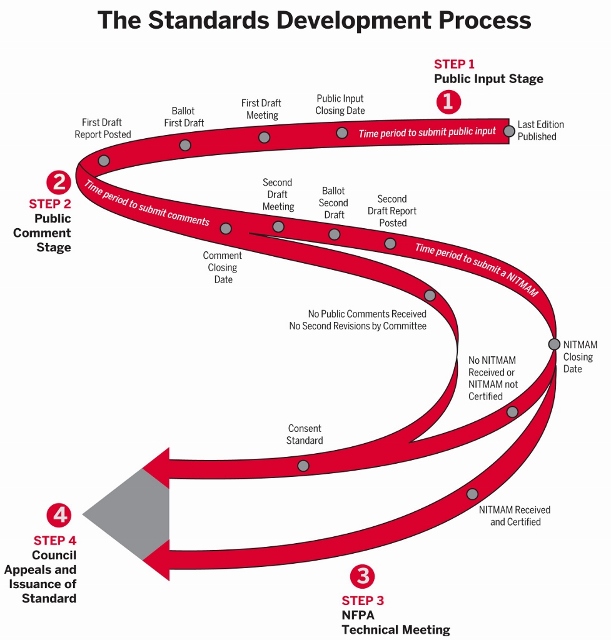
In stabilized standards, it is more cost effective to run the changes through ANSI rather than a collaborative workspace that requires administration and software licensing cost. Accordingly, redlines for changes, and calls for stakeholder participation are released in ANSI’s Standards Portal:
Send your comments to Dave Panning. (See Dave’s presentation to the University of Michigan in the video linked below.
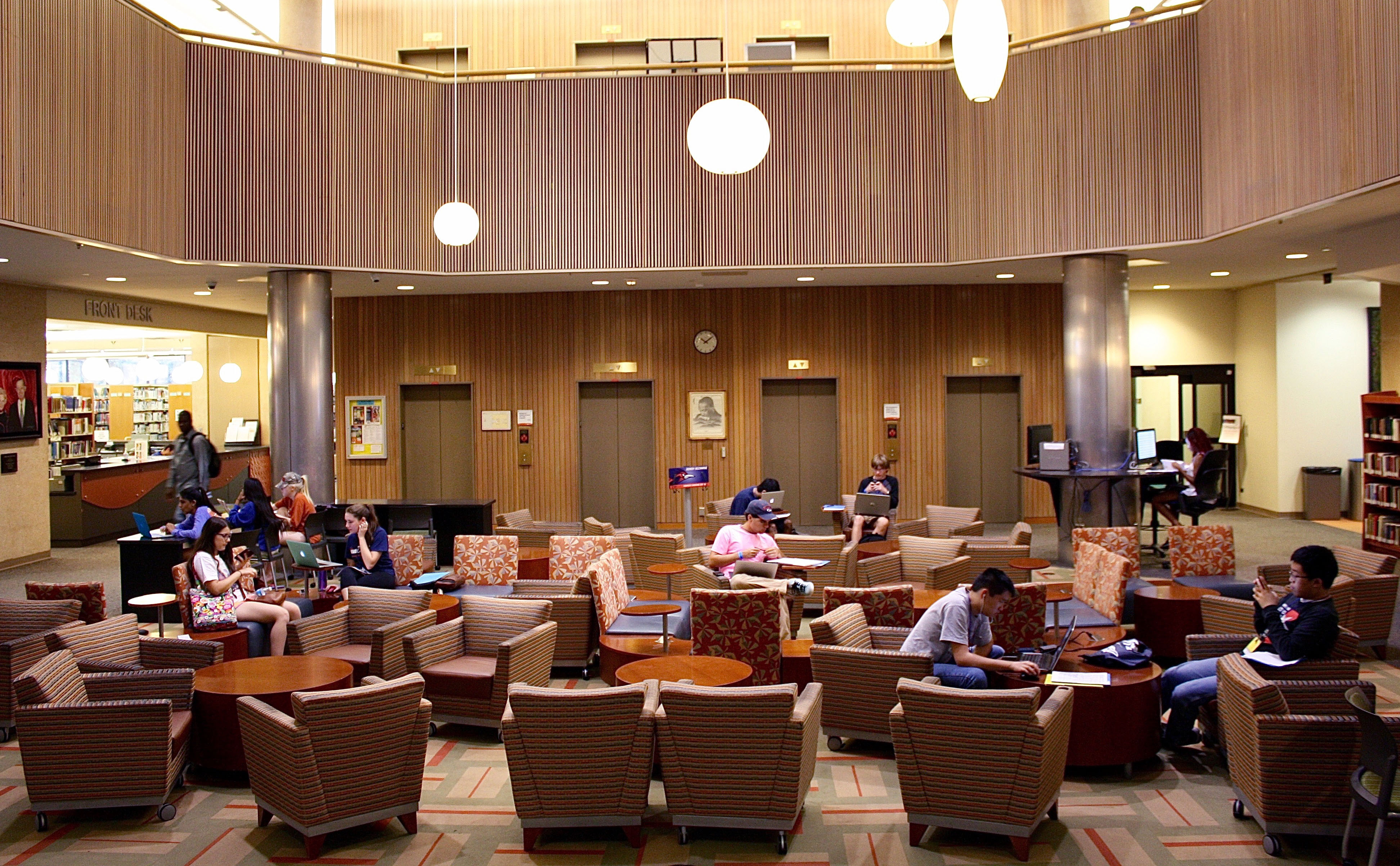
John Peace Laptop Library Lounge | University of Texas, San Antonio
We find a great deal of interest in sustainable furniture climbing up the value chain and dwelling on material selection and manufacture. We encourage end-users in the education industry — specifiers, department facility managers, interior design consultants, housekeeping staff and even occupants — to participate in BIFMA standards setting. You may obtain an electronic copies for in-process standards from David Panning, (616) 285-3963, dpanning@bifma.org You are encouraged to send comments directly to BIFMA (with copy to psa@ansi.org). David explains its emergent standard for furniture designed for use in healthcare settings in the videorecording linked below:
Issue: [15-267]
Contacts:Mike Anthony, Christine Fischer, Jack Janveja, Dave Panning
In 1936, a team of @NIST researchers, including optical physicist Irvine Gardner, joined National Geographic Society to observe June solar eclipse with a 9-inch astrographic lens Gardner designed. He has 9 patents, including for the wide-angle binocular telescope & range finder. pic.twitter.com/BblX8FnTBL
…When we talk about standards in our personal lives, we might think about the quality we expect in things such as restaurants and first dates. But the standards that exist in science and technology have an even greater impact on our lives. Technical standards keep us safe, enable technology to advance, and help businesses succeed. They quietly make the modern world tick and prevent technological problems that you might not realize could even happen…”
Neil Armstrong: Moon Walker. Innovator. Boilermaker.
When it comes to space exploration, Purdue University stands out — 27 astronauts strong. Neil Armstrong (BS aeronautical engineering ’55) was the first person to walk on the moon. Eugene Cernan (BS electrical engineering ’56)… pic.twitter.com/qDHv71NEqK
Found this photo with my sister… and it took me back. Remember when beauty was just how we lived? No filters— just real smiles 💛 pic.twitter.com/yQ159KvZqa
Tune in to our latest podcast ‘Building a global Quantum Industry: Explaining, Scaling and Standardising Quantum Technologies’ where experts draw upon quantum’s most exciting applications.https://t.co/dFun1MTkDE
Evolution of the standards system in Australia is tracking the evolution of the United States standards system administered by the American National Standards Institute. In many economic sectors adherence to Australian Standards is mandated by legislation, however, access to the standards are often cost prohibitive, particularly to small business and sole traders.
Principal petitioner Andrew Gardso, an electrical engineer, states,
“This in essence will force small organisations and sole traders out of business or necessitate services being performed without having access to these standards.”
Access to Standards Australia Construction codes can cost more than $2673 for three years’ access to the National Construction Code set of standards. A petition to the Australian parliament’s House of Representatives seeks free or affordable access to essential standards that govern the safety and consistency of products services and systems, including design and construction.
Article 206 Non-Power-Limited Remote-Control and Signaling Circuits | Article 300 General Requirements for Wiring Methods and Materials | Article 335 Instrumentation Tray Cable — formerly Article 727 | Article 720 Limited-Energy System Installations | Article 721 Limited-Energy Power Sources | Article 722 Limited-Energy Cables | Article 723 Raceways, Cable Routing Assemblies, and Cable Trays for Limited-Energy Systems | Article 724 Class 1 Power-Limited Remote-Control and Signaling Circuits | Article 725 Class 2 and Class 3 Power-Limited Circuits | Article 726 Class 4 Fault-Managed Power Systems | Article 728 Fire-Resistive Cable Systems | Article 760 Fire Alarm Systems | Article 772
Chapter 9 Tables
Top 10 Issues
Issue
Summary
1. Consistency of Code Language
Standardize terminology throughout the NEC by eliminating inconsistent wording, duplicate phrases, and varying expressions that describe the same technical concepts.
2. Compliance with the NEC Style Manual
Many proposals seek removal of redundant requirements already addressed elsewhere in the Code, resulting in a cleaner, more concise document.
3. Restoring Lost Requirements
Numerous submitters argue that important technical provisions disappeared during recent article reorganizations and should be restored.
4. Article Organization
Improve article formatting, numbering, and overall structure to make the NEC easier to navigate and maintain.
5. Emerging Technologies
Expand the Code to better accommodate fault-managed power, battery energy storage, portable power systems, EV-based power sources, hydrogen technologies, and new circuit classifications.
6. Installation Clarification
Clarify requirements for raceways, wet locations, roof decks, cable trays, conductor spacing, barriers, and other installation practices.
7. Installer Safety & Reliability
Enhance electrical safety through improved wiring practices, better physical protection, stronger cable support requirements, and fewer failure points.
8. Definition Ownership
Assign definitions to the Code-Making Panels having primary technical expertise to improve long-term consistency and maintenance.
9. Coordination with Other Standards
Improve harmonization between the NEC and companion standards such as UL, ANSI, NFPA 79, and hazardous-location requirements.
10. Reducing Complexity
A recurring objective is to simplify the NEC by reducing duplication, improving readability, and making the Code easier for installers, inspectors, designers, trainers, and licensing authorities to use.
The Public Inputs demonstrate a broad desire to make the National Electrical Code more consistent, technically complete, better coordinated with related standards, and easier to understand without compromising electrical safety. Many proposals emphasize restoring requirements inadvertently lost during recent reorganizations while preparing the Code to accommodate rapidly emerging electrical technologies.
Mike recommends these issues as priority for the Joint IEEE IAS/PES committee
N.B. Public Input No. 2633-NFPA 70-2026 [ Global Input ] PDF Page 6, regarding re-organization of the NEC into below 1000 V and above 1000 V.
Noteworthy proposal concepts:
Cable trays interfering with HVAC ductwork and fire sprinkler lines. Parallel cable tray feasibility
Difficulty accessing lighting fixtures and fire alarm components for maintenance.
Potential violation of plenum clearance and airflow requirements. Some cable trays in plenums reportedly contain non-plenum-rated cables, which is a fire code violation.
Document flags this as a high-priority remediation item before any LED lighting retrofit proceeds.
Existing security wiring (CCTV, access control, intrusion detection) is a mix of old analog coax and early Cat 5 cables.
Many runs exceed recommended length for reliable video transmission. Frequent signal degradation and reliability complaints.
Security cables are sharing overcrowded cable trays with power-limited lighting control wires and fire alarm cabling.
Risk of electromagnetic interference (EMI) noted due to proximity to higher-voltage lines.
Plenum space constraints make it difficult to add new IP-based security cameras without major reorganization.
Current security wiring cannot support newer high-resolution IP cameras or PoE+ powered devices.
Several editorial proposals by Mike Holt. (He’s generally correct on clarity improvements that he needs for educational purposes)
Ω
For discussion next meeting, when we march through all proposals of interest to IEEE:
When electricians work in ceiling plenums above hallways while students pass below, several serious hazards emerge. Tools, screws, cable scraps, or ceiling tiles can fall, causing head injuries or slips. Disturbed dust, fiberglass, or potential asbestos particles may rain down, creating respiratory risks.
Live electrical work on lighting or cable trays raises shock/fire dangers if a fault occurs or debris shorts circuits. Open plenums can compromise fire-rated barriers, allowing smoke or flames to spread rapidly in an emergency.
Noise and visual distractions increase trip hazards for students. Without full barricades, lockout/tagout, and proper fall protection, these overhead activities expose young people to preventable injury. Scheduling work after hours or using full corridor closures is essential.
Power-limited (Class 2) cabling operates at low voltage (<60V DC) with current/power caps (~100VA), dramatically reducing shock and fire risks. Installation is simpler and cheaper—no conduit or heavy mechanical protection needed in many cases, allowing flexible routing. LEDs run cooler and more efficiently with remote drivers, improving lifespan and energy savings. Easier maintenance and safer for retrofits.
Severe distance and power limits due to voltage drop and 100W/5A caps require multiple drivers or shorter runs. Higher upfront costs for specialized power supplies. Potential reliability issues from more connection points. Less suitable for high-power or long-distance applications compared to line-voltage wiring.
Public Inputs Relevant to School and College Facilities
Campus Facility
Relevant Issue
Why It Matters
Student Health Centers, Medical Schools & Campus Hospitals
Improved protection of underground feeders, raceways, and wiring methods, together with replacement of conductors damaged by water, fire, corrosion, or severe physical impact.
Enhances electrical reliability for healthcare occupancies where continuous operation is essential.
Athletic Stadiums & Arenas
Improved protection of underground services, direct-buried conductors, warning ribbons, and raceways.
Supports reliable electrical service for stadium lighting, scoreboards, concessions, and outdoor utility infrastructure.
Temporary Athletic & Campus Events
Recognition of modern portable power sources, including battery energy storage systems and portable fuel cells, in addition to traditional generators.
Useful for commencement ceremonies, concerts, athletic tournaments, festivals, and temporary event power.
Research Laboratories
Expanded wiring methods for hazardous (classified) locations, including ITC-HL cable installations.
May affect university research laboratories, pilot plants, engineering facilities, and chemical research buildings.
Residence Halls & Classroom Buildings
Improved protection against concealed wiring damage caused by nails, screws, and furring strips during construction and renovation.
Helps reduce wiring damage during frequent campus remodeling and maintenance projects.
Campus Utility Infrastructure
Clarifications involving direct boring, underground raceways, service feeders, and warning ribbon installation.
Relevant to the large underground electrical distribution systems commonly found on university campuses.
Although these proposals would benefit campus infrastructure, the CMP-3 transcript contains very little discussion directed specifically at educational occupancies. Topics such as healthcare facilities (Article 517), stadium emergency systems, data centers, laboratories as occupancies, residence halls, libraries, and central utility plants largely fall within the jurisdiction of other NEC Code-Making Panels such as CMP-1 and CMP-15 where Mike has been a Principal or Alternate for IEEE.
April 29, 2026
At the request of IEEE Joint IAS/PES Standards Michigan, Mike Anthony moved to CMP-3 from CMP-15.
Articles Under CMP 3
Article 300 — General Requirements for Wiring Methods and Materials
Article 335 — Instrumentation Tray Cable (in some references for the 2029 cycle)
Article 590 — Temporary Installations (being relocated/renumbered in the 2026 cycle, e.g., potentially to Article 140 in Chapter 1, as temporary wiring is not treated as a special occupancy)
Article 720 — Limited-Energy System Installations (new/general article covering wiring methods for limited-energy systems)
Article 723 — Raceways, Cable Routing Assemblies, and Cable Trays for Limited-Energy Systems (newly created in the 2026 cycle)
Article 725 — Class 2 and Class 3 Remote-Control, Signaling, and Power-Limited Circuits
Article 726 — Class 4 Fault-Managed Power Circuits and Equipment
Article 727 — Instrumentation Tray Cable
Article 728 — Fire-Resistive Cable Systems
Article 760 — Fire Alarm Systems (power-limited and non-power-limited portions)
CMP 3 also handles associated content in: Chapter 9 — Tables, including Tables 11(A) & (B) and Tables 12(A) & (B) (related to conductor properties and other supporting tables for the above topics).
Notes on Changes and Scope CMP 3 focuses on general wiring rules, cable types, raceways/trays for low-energy applications, and signaling/communications-related wiring (distinct from higher-power utilization equipment or special occupancies handled by other panels).
In the 2026 NEC cycle, there has been significant reorganization of Chapter 7 to consolidate limited-energy systems under articles like 720–726 (and related ones), moving away from older structures. This includes new articles for raceways/cable trays specific to limited-energy systems and adjustments to scopes for clarity.
Article 206 (Non-Power-Limited Remote-Control and Signaling Circuits) appears in some 2026-related references as newly designated or relocated material handled in this area. Temporary installations (Article 590) are transitioning out of “special” categories in restructuring efforts.
During today’s sessions of the IEEE E&H Committee and our own we will prepare draft proposals relevant to the safety and sustainability agenda of the USA education facility industry. Use the login credentials at the upper right of our home page.
The University of Michigan has supported the voice of the United States education facility industry since 1993 — the second longest tenure of any voice in the United States. That voice has survived several organizational changes but remains intact and will continue its Safer-Simpler-Lower Cost-Longer Lasting priorities on Code Panel 3 in the 2029 Edition.
Today, during our customary “Open Door” teleconference we will examine the technical concepts under the purview of Code Panel 3; among them:
Article 206 Signaling Circuits
Article 300 General Requirements for Wiring Methods and Materials
Article 335 Instrumentation Tray Cable
Article 590 Temporary Installations
Chapter 7 Large sections of limited energy cabling for signaling and information technology
Since the lifespan of educational buildings make the building core and shell susceptible to multiple changes not typically associated with commercial buildings, additional pathways should be placed in areas where the core and shell components of the facility are likely to re-main for extended periods of time
It is recommended that all areas of an educational building have wireless coverage unless prohibited
Introduction. [Abstract]. The rapid growth of data centers, with their enormous energy and water demands, necessitates targeted policy interventions to mitigate environmental impacts and protect local communities. To address these issues, states with existing data center tax breaks should adopt sustainable growth policies for data centers, mandating energy audits, strict performance standards, and renewable energy integration, while also requiring transparency in energy usage reporting. “Renewable energy additionality” clauses should ensure data centers contribute to new renewable capacity rather than relying on existing resources. If these measures prove insufficient, states should consider repealing tax breaks to slow unsustainable data center growth. States without tax breaks should avoid such incentives altogether while simultaneously implementing mandatory reporting requirements to hold data centers accountable for their environmental impact. Broader measures should include protecting local tax revenues for schools, regulating utility rate hikes to prevent cost-shifting to consumers, and aligning data center energy demands with state climate goals to avoid prolonging reliance on fossil fuels.
New update alert! The 2022 update to the Trademark Assignment Dataset is now available online. Find 1.29 million trademark assignments, involving 2.28 million unique trademark properties issued by the USPTO between March 1952 and January 2023: https://t.co/njrDAbSpwBpic.twitter.com/GkAXrHoQ9T





 Issue: [15-267]