
El Paso
- Home Page 250


Streets of Laredo
This content is accessible to paid subscribers. To view it please enter your password below or send mike@standardsmichigan.com a request for subscription details.

Architecture of power systems: Special cases
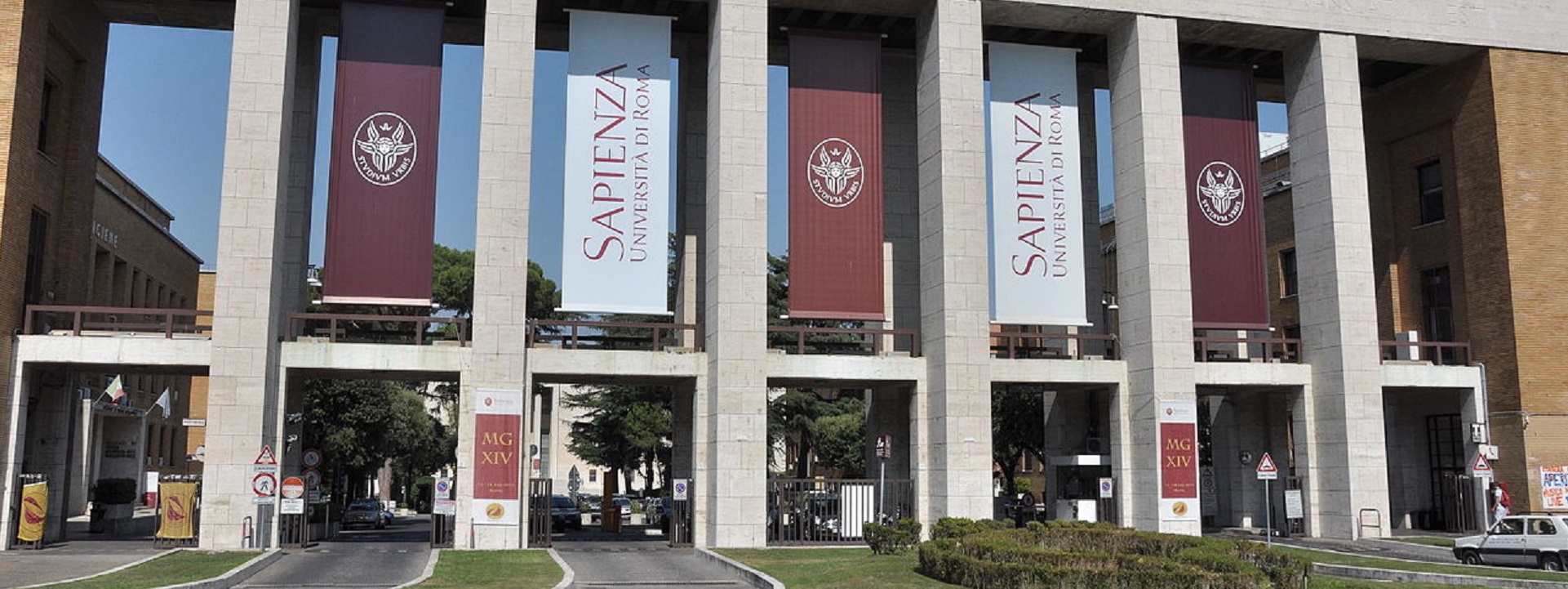
Sapienza – Università di Roma

The architecture of electric power systems: Some special cases
Abstract Modeling of the electric system “architecture” aims to achieve performances of operation, maintenance and safety. The paper discusses about the criteria in designing the normal and special cases that need a structured architecture complying with electrical loads extensively distributed and with installation requirements proper to external stresses hazard as earthquake, fire, flood, extreme environment conditions. Also advanced architectural buildings outside of the typical and classical configurations require tailored solutions for the electrical systems. The general criterion of designing power distributions is to structure the system in two or more levels from the utility up to the terminal equipment adopting a number equal or lower of voltages. The criterion of the barycentered distribution is generally applied for defining the dimension and the voltage of each distribution level. In critical facilities, it is necessary to ensure that electrical service will be available during and after a hazardous event and so all the components should have adequate ratings and be installed in a proper manner. A special power distribution, “brush-distribution”, is suitable for the strategic buildings with higher risk for seismic event, for the photovoltaic systems against extreme temperature conditions and for the road tunnels against the fire.
PURCHASE INFORMATION: IEEE Digital Library

Higher Education Accreditation Standard
United States Department of Education
National Association of State Boards of Education
“Apology” Defense of Socrates | Plato
Accreditation is a process that involves evaluating the overall quality of an institution and its programs, including the qualifications and expertise of faculty members. Accreditation is institution-specific, and individual professors are not typically accredited separately. Instead, the accreditation process assesses the overall effectiveness of the educational institution and its ability to meet certain standards.
IRS 990 (Non-Profit Explorer: Council For Higher Education Accreditation
The Council for Higher Education Accreditation claims to be the national advocate and institutional voice for self-regulation of academic quality through accreditation — a non-profit organization with 3,000 degree-granting colleges and universities and recognizes 60 institutional and programmatic accrediting organizations.
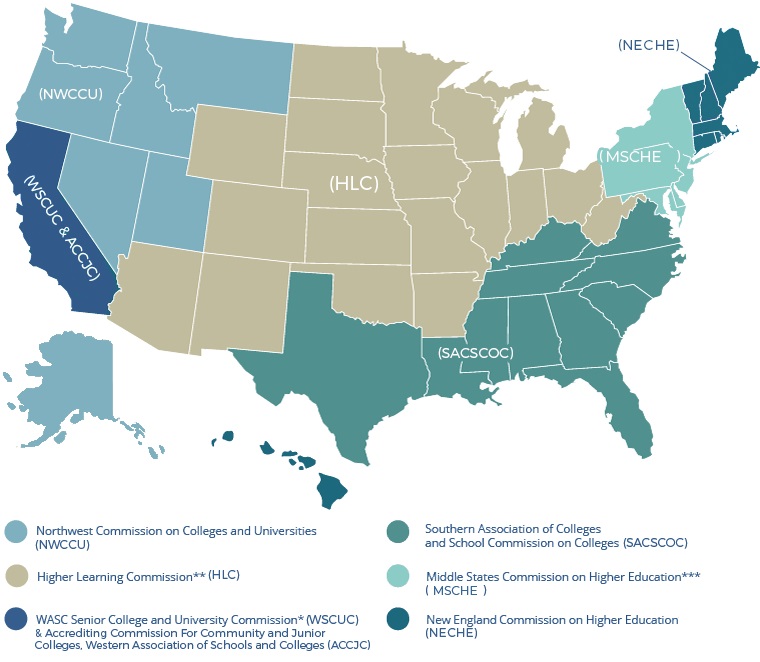
In the United States, the accreditation of college and university programs, including the evaluation of faculty qualifications, is typically managed by regional accrediting agencies; each with hegemonic claims. They are united with a common interest in money coming from the U.S. Department of Education which controls money flow.
While the CHEA plays a role in overseeing accrediting bodies, the direct influence on the quality of facilities lies with the institutions themselves and the accrediting agencies that evaluate them.
Accreditation standards may touch upon aspects of facilities, but the day-to-day management and improvement of facilities are typically the responsibility of the individual higher education institutions.
The regional accrediting agencies in the United States include:
- Higher Learning Commission (HLC) – Covers the central United States.
- Middle States Commission on Higher Education (MSCHE) – Covers the mid-Atlantic region.
- New England Commission of Higher Education (NECHE) – Covers the New England states.
- Northwest Commission on Colleges and Universities (NWCCU) – Covers the northwest region.
- Southern Association of Colleges and Schools Commission on Colleges (SACSCOC) – Covers the southern United States.
- WASC Senior College and University Commission (WSCUC) – Covers the western United States.

Deep 3D Body Landmarks Estimation for Smart Garments Design
Deep 3D Body Landmarks Estimation for Smart Garments Design
Annalisa Baronetto, et. al
Chair of Digital Health | Friedrich-Alexander-Universität Erlangen-Nürnberg
Abstract: We propose a framework to automatically extract body landmarks and related measurements from 3D body scans and replace manual body shape estimation in fitting smart garments. Our framework comprises five steps: 3D scan acquisition and segmentation, 2D image conversion, extraction of body landmarks using a Convolutional Neural Network (CNN), back projection and mapping of extracted landmarks to 3D space, body measurements estimation and tailored garment generation. We trained and tested the algorithm on 3000 synthetic 3D body models and estimated body landmarks required for T-Shirt design. The results show that the algorithm can successfully extract 3D body landmarks of the upper front with a mean error of 1.01 cm and of the upper back with a mean error of 0.78 cm. We validated the framework the framework in automated tailoring of an electrocardiogram (ECG)-monitoring shirt based on the predicted landmarks. The ECG shirt can fit all evaluated body shapes with an average electrode-skin distance of 0.61 cm.
Narrowband Application in Intelligent Fire Protection System


Art Studios

“De Schilderkonst” 1666 Johannes Vermeer
2024/2025/2026 ICC CODE DEVELOPMENT SCHEDULE
Last update: September 30 2021
Safety and sustainability for any facility begins with an understanding of who shall occupy the built environment and what they will be doing in it. Since we are guiding young people toward their goal of building things that are useful and beautiful we select the International Building Code as a starting point for an occupancy that requires a more elevated concern for safety than a typical classroom.
2021 International Building Code Section 307 High Hazard Group H
High-hazard occupancies in each of the International Code Council code development groups A, B and C; fetch back to these classifications.
Public input for the 2024 International Building Code will be received until January 8, 2024.
For the purpose of formulating our own proposals we begin with the developmental transcripts of the previous code cycle. Recommended search terms: “Section 307”, “Studio”, “Classroom” “University” will give you a sample of the ideas in play. The complete monograph is linked below:
2021 Group A Complete Proposed Changes Monograph (2306 Pages)
2021 PUBLIC COMMENT HEARING SCHEDULE September 21 – 26, 2021
Webcast: 2021 Group A Public Comment Hearings

Titles in the ICC catalog are relevant to nearly every study unit in our Syllabus. See our CALENDAR for topics and do not be shy about clicking in any business day at 16:00 UTC (11 AM ET).
Issue: [18-166]
Category: Various
Colleagues: Mike Anthony, Marcelo Hirschler, Richard Robben
More
Mount Holyoke University: Safety Guide for Art Studios
Standard Methods of Fire Tests for Flame Propagation of Textiles and Films
IEEE: Textile humidity sensors
Fire at Pratt Institute Destroys Studios and Artwork of Students
Princeton University Art Safety


Game Day Chili
This content is accessible to paid subscribers. To view it please enter your password below or send mike@standardsmichigan.com a request for subscription details.
Student Health Services
This content is accessible to paid subscribers. To view it please enter your password below or send mike@standardsmichigan.com a request for subscription details.
Mirrored Walls
This content is accessible to paid subscribers. To view it please enter your password below or send mike@standardsmichigan.com a request for subscription details.
New update alert! The 2022 update to the Trademark Assignment Dataset is now available online. Find 1.29 million trademark assignments, involving 2.28 million unique trademark properties issued by the USPTO between March 1952 and January 2023: https://t.co/njrDAbSpwB pic.twitter.com/GkAXrHoQ9T
— USPTO (@uspto) July 13, 2023
Standards Michigan Group, LLC
455 East Eisenhower Parkway, Suite 300
Ann Arbor, MI 48108 USA
888-748-3670
DIRECTIONS
 |
 |
|
 |
 |
|
 |
 |