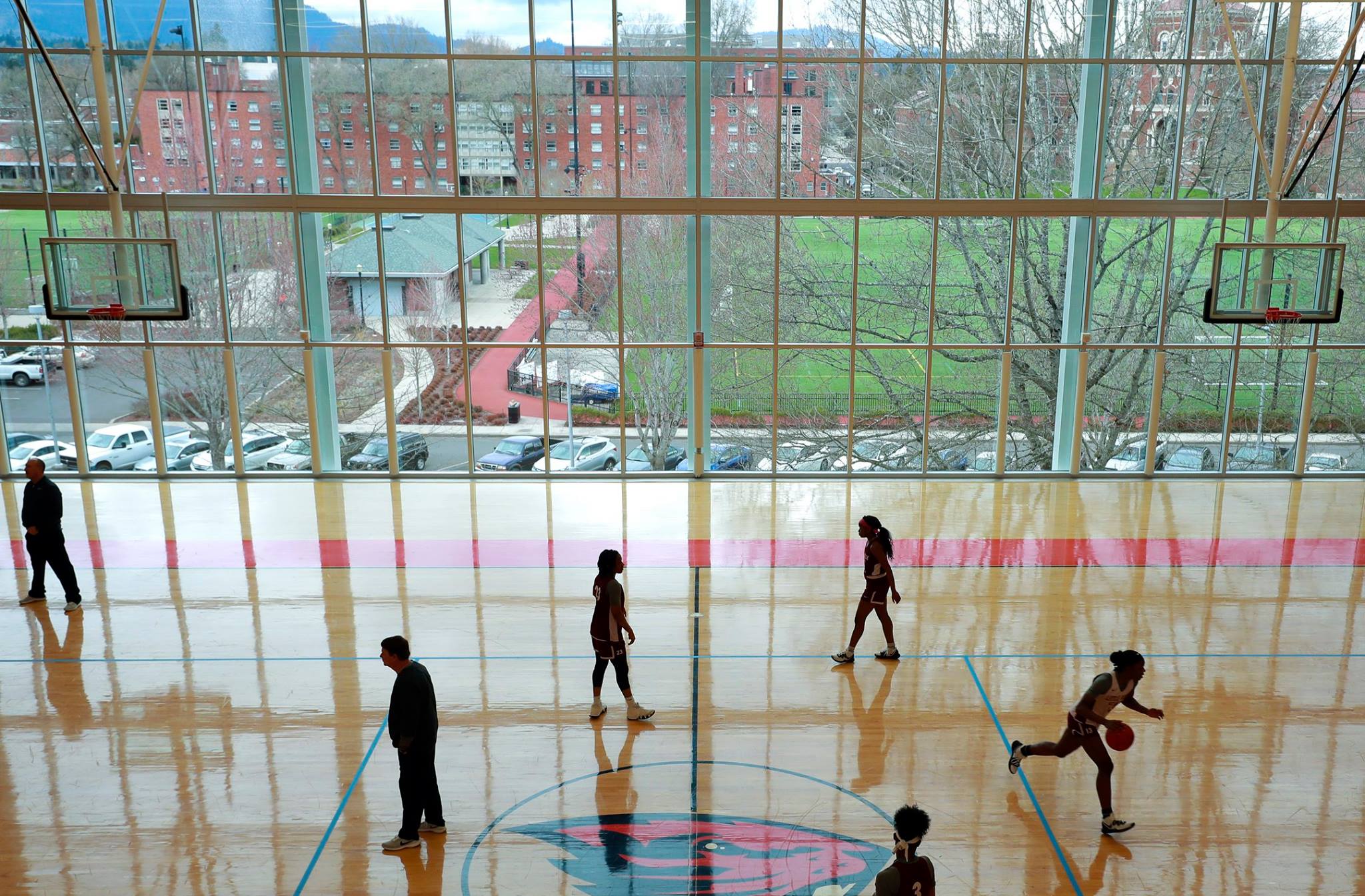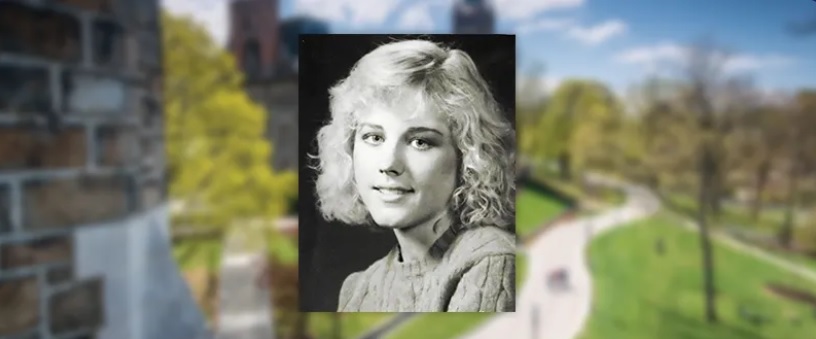

Call us biased, but we have the best group of future occupational therapists in @CSU_OT 💚💛
Last week’s convocation, where we welcomed our cohorts of OT Rams back to campus, was filled with good vibes and high energy for the year ahead 🐏⚡️ pic.twitter.com/8wTJ2rPi8S
The Great Lakes have always carried more than ships. They have carried languages, ideas, students, and friendships from one shore to another.
— Standards Michigan (@StandardsMich) July 1, 2024
McGill figure parmi les meilleures universités du monde. 🌎 Classée 27e au palmarès 2025 du Center for World University Rankings, elle se situe dans le top 0,2 % des 21 462 établissements évalués
Like many folk traditions of saying “Rabbit, rabbit” to your colleagues on the first day of the month has an unclear origin and has several variations and interpretations. We use it a reason to explore university research into food sources; the proper business of education communities everywhere. In one version of the tradition, saying “Rabbit, rabbit” or “White rabbit” as the first words upon waking on the first day of the month is believed to bring good luck for the rest of that month. It is thought to ensure good fortune, happiness, and general positivity throughout the coming weeks.
The specific origins and reasons behind this tradition are difficult to trace, as superstitions often evolve and are passed down through generations. It’s worth noting that this practice is not universally known or followed, and its popularity may vary among different regions and communities. Ultimately, the saying “Rabbit, rabbit” on the first day of the month is an example of a charming and whimsical superstition that some individuals enjoy participating in as a fun way to start the month on a positive note.
ABSTRACT. Human-animal interaction has been studied in a variety of settings and for a range of populations, with some findings pointing towards its benefits for physical, mental and social human health. Technological advances opened up new opportunities for researchers to replicate human-animal interactions with robotic and graphical animals, and to investigate human-animal relationships for different applications such as mental health and education. Although graphical animals have been studied in the past in the physical health and education domains, most of the time, their realizations were bound to computer screens, limiting their full potential, especially in terms of companionship and the provision of support. In this work, we describe past research efforts investigating influences of human-animal interaction on mental health and different realization of such animals. We discuss the idea that augmented reality could offer potential for human-animal interaction in terms of mental and social health, and propose several aspects of augmented reality animals that warrant further research for such interactions.
In 2005 in Louisville, Kentucky, a volunteer discovered that many elementary school children relied on school meals and faced hunger over the weekend. While the organization serves children of every background and partners with public schools nationwide, its name reflects a simple faith-inspired conviction: caring for one’s neighbor through practical acts of compassion.
Local volunteers, congregations, civic groups and businesses work together to place child-friendly food into students’ backpacks each Friday, helping ensure they return to school on Monday nourished, ready to learn and reminded that their community has not forgotten them.
In 2012 the Royal Oak Rotary Club launched a branch in Michigan Oakland County Michigan.
Today we update our understanding of best practice catalogs for outdoor and indoor watersport; primarily swimming and rowing. Use the login credentials at the upper right of our home page.
USA Swimming and the National Collegiate Athletic Association Swimming are two distinct organizations that oversee different aspects of competitive swimming in the United States. USA Swimming governs competitive swimming in the United States across all age groups and skill levels, while NCAA Swimming specifically focuses on collegiate-level swimming and diving competitions within the NCAA framework. Both organizations play crucial roles in the development and promotion of swimming in the United States.
Governing Body:
USA Swimming is the national governing body for the sport of swimming in the United States. It is responsible for overseeing competitive swimming at all levels, from grassroots programs to elite national and international competitions.
NCAA Swimming: NCAA Swimming is part of the National Collegiate Athletic Association (NCAA), which governs intercollegiate sports in the United States. NCAA Swimming specifically deals with collegiate-level swimming competitions among universities and colleges.
Scope:
USA Swimming is responsible for organizing and regulating competitive swimming for all age groups and skill levels, from youth swimmers to Masters swimmers (adults). It oversees swim clubs, hosts competitions, and develops national teams for international events.
NCAA Swimming: NCAA Swimming focuses exclusively on college-level swimming and diving competitions. It sets the rules and guidelines for swimming and diving programs at NCAA member institutions.
Membership:
Individuals, swim clubs, and teams can become members of USA Swimming, allowing them to participate in USA Swimming-sanctioned events, access coaching resources, and benefit from the organization’s development programs.
NCAA Swimming: NCAA Swimming is composed of collegiate athletes who compete for their respective universities and colleges. Athletes are typically student-athletes who represent their schools in NCAA-sanctioned competitions.
Competition Format:
USA Swimming hosts a wide range of competitions, including local, regional, and national meets, as well as Olympic Trials and international events. Swimmers compete as individuals, representing their swim clubs or teams.
NCAA Swimming: NCAA Swimming primarily consists of dual meets, invitational meets, and conference championships at the collegiate level. Swimmers represent their respective universities or colleges, earning points for their teams in dual meets and competing for conference and national titles.
Scholarships:
USA Swimming itself does not offer scholarships. Scholarships for competitive swimmers are typically awarded by colleges and universities based on an athlete’s performance and potential.
NCAA Swimming: NCAA member institutions offer scholarships to talented student-athletes in various sports, including swimming. These scholarships can cover tuition, room, board, and other expenses, making NCAA swimming an avenue for athletes to receive financial support for their education.
The Burk-Bergman Boathouse is one of the oldest and most distinguished collegiate rowing facilities in the United States. Located at 11 Kelly Drive on Philadelphia’s historic Boathouse Row, it serves as the home of the University of Pennsylvania’s men’s heavyweight, men’s lightweight, and women’s varsity rowing programs. It is also the only collegiate boathouse on Boathouse Row; the remaining boathouses belong to rowing clubs and other organizations.
A medal in the Champ Fours, and we’re bringing the MacMahon Cup Team Points trophy back to Boathouse Row! Great weekend up in Boston!
A little less dramatic than a year ago (THANK GOODNESS!!!) but it’s always exciting to see your name come up during the NCAA selection show! Still feeling the vibes this morning! Work ahead.#FightOnPenn ❤️💙 pic.twitter.com/8IjPwG3Zun
Penn rowing traces its origins to 1854, but the present boathouse was constructed in 1875–1876 for the University’s College Boat Club, making it among the oldest surviving collegiate boathouses in America. Over the next century, successive additions responded to growing participation, but the resulting building became a patchwork of spaces with limited accessibility and aging infrastructure. In 2022, following a comprehensive restoration and expansion, the facility was renamed the Burk-Bergman Boathouse in honor of legendary Penn rowing coaches Joe Burk and Stan Bergman, whose combined coaching careers span much of the twentieth century and produced national champions, Olympians, and Ivy League titles.
How to Get Recruited for Men’s College Rowing: Times, Standards and What Coaches Look For https://t.co/iwdmGimQvh
The IAPMO code development process is one of the best in the land. Its Read-Only Access — needed for light research — is also the best in the land; unlike other ANSI accredited standards developers (who shall be un-named). The current edition is dated 2024, with the 2027 revision accepted public input until March 3, 2025 according the schedule linked below:
New update alert! The 2022 update to the Trademark Assignment Dataset is now available online. Find 1.29 million trademark assignments, involving 2.28 million unique trademark properties issued by the USPTO between March 1952 and January 2023: https://t.co/njrDAbSpwBpic.twitter.com/GkAXrHoQ9T