
Israeli Birth Rate
- Home Page 119


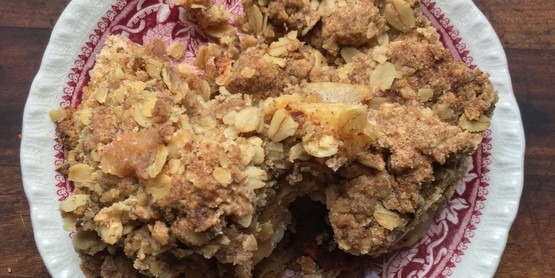
Farmhouse Apple Crisp
“…When I was growing up, my mom would make apple crisp in a giant pan. As soon as the crisp came out of the oven, my sisters and I would descend on the hot pan like ravenous vultures, happily devouring every last crumb. Although this version won’t make the giant pan-sized apple crisp that my mom made, it will allow you to enjoy the exact same delicious apple crisp that my sisters and I did, and still do to this day.” — Marybeth Mitcham
CE Steuben’s Veggie Van is back with its summer schedule — now making stops in Steuben, Chemung and Yates counties! The mobile market brings fresh, local produce to rural residents at an affordable cost – and will be on the road through the fall. 🥕🍎https://t.co/7xwa84eBgh pic.twitter.com/nXQt9IbT7Z
— Cornell Cooperative Extension (@ccecornell) July 10, 2025

Conan O’Brian
Conan O’Brien on comics who just say “fuck Trump” all the time:
“You’re being co-opted because you’re so angry. You’ve been lulled. It’s like a siren leading you into the rocks. You’ve been lulled into just saying ‘F Trump. F Trump. F Trump. Screw this guy.’ And I think you’ve…
— Zack Sharf (@ZSharf) January 9, 2026
The UK has become a prison island. pic.twitter.com/QpNKGKVvnE
— DogeDesigner (@cb_doge) January 10, 2026
Most prestigious universities in the world, 2025.
1. 🇺🇸 Harvard University
=2. 🇺🇸 MIT
=2. 🇬🇧 University of Oxford
=4. 🇺🇸 Stanford University
=4. 🇬🇧 University of Cambridge
6. 🇺🇸 University of California, Berkeley
7. 🇺🇸 Princeton University
8. 🇨🇳 Tsinghua University
9. 🇺🇸 Yale… pic.twitter.com/9FSPPrQzNr— Infodex (@infodexx) January 9, 2026
Charlie Kirk (August 12, 2025): “Has U.S. President Donald Trump gone too far?”

College Bowl Games
Football Stadium Facility Standards
Your 2026 Rose Bowl Champion Indiana Hoosiers. pic.twitter.com/ULms8vwhy5
— Indiana Football (@IndianaFootball) January 2, 2026
🏈
Thru Dec. 27, @ESPNCFB‘s non-CFP bowl viewership is up 13%, averaging 2.7M viewers with several games reaching multi-year highs
🏈 @PopTartsBowl | 8.7M viewers⁰🏈 @PinstripeBowl | 7.6M⁰🏈 @taxslayerbowl | 6.0M⁰🏈 @RateBowl | 4.4M⁰🏈 @LABowlGame | 3.8M⁰🏈 @FRBowl | 3.1M pic.twitter.com/AH0LfKYINz
— ESPN PR (@ESPNPR) January 2, 2026
Thru Dec. 27, @ESPNCFB‘s non-CFP bowl viewership is up 13%, averaging 2.7M viewers with several games reaching multi-year highs
🏈 @PopTartsBowl | 8.7M viewers⁰🏈 @PinstripeBowl | 7.6M⁰🏈 @taxslayerbowl | 6.0M⁰🏈 @RateBowl | 4.4M⁰🏈 @LABowlGame | 3.8M⁰🏈 @FRBowl | 3.1M pic.twitter.com/AH0LfKYINz
— ESPN PR (@ESPNPR) January 2, 2026
INTENSITY!
PASSION!
FINISH!#GoCanes | @CFBPlayoff pic.twitter.com/3ICty0djpx— Miami Hurricanes Football (@CanesFootball) January 2, 2026
Navy closes out their winningest two-year span EVER with a victory at the AutoZone Liberty Bowl 🔥🙌 pic.twitter.com/gEExNcpRip
— ESPN College Football (@ESPNCFB) January 3, 2026
ORANGE BOWL CHAMPIONS!
Oregon defeats Texas Tech to advance to the College Football Playoff Semifinals!#GoDucks x @CFBPlayoff pic.twitter.com/TsLyj65U6q
— Oregon Football (@oregonfootball) January 1, 2026
No Bones About It 🦴
Ole Miss 39 | Georgia 34#SugarBowl x #HottyToddy pic.twitter.com/xh6e45narJ
— Ole Miss Football (@OleMissFB) January 2, 2026
Bully Wind
This content is accessible to paid subscribers. To view it please enter your password below or send mike@standardsmichigan.com a request for subscription details.

Lord of the Flies
This content is accessible to paid subscribers. To view it please enter your password below or send mike@standardsmichigan.com a request for subscription details.

New Faculty Aptitude Test
This content is accessible to paid subscribers. To view it please enter your password below or send mike@standardsmichigan.com a request for subscription details.

Classes and Classifications
This content is accessible to paid subscribers. To view it please enter your password below or send mike@standardsmichigan.com a request for subscription details.
Birth Tourism
This content is accessible to paid subscribers. To view it please enter your password below or send mike@standardsmichigan.com a request for subscription details.
Vista Pavilion
This content is accessible to paid subscribers. To view it please enter your password below or send mike@standardsmichigan.com a request for subscription details.
New update alert! The 2022 update to the Trademark Assignment Dataset is now available online. Find 1.29 million trademark assignments, involving 2.28 million unique trademark properties issued by the USPTO between March 1952 and January 2023: https://t.co/njrDAbSpwB pic.twitter.com/GkAXrHoQ9T
— USPTO (@uspto) July 13, 2023
Standards Michigan Group, LLC
455 East Eisenhower Parkway, Suite 300
Ann Arbor, MI 48108 USA
888-748-3670
DIRECTIONS
 |
 |
|
 |
 |
|
 |
 |