Athletic Equipment Safety Standards

Loading
loading...

Athletic Equipment Safety Standards

October 1, 2025
mike@standardsmichigan.com

No Comments

“The National Game” | Arthur Streeton (1889)

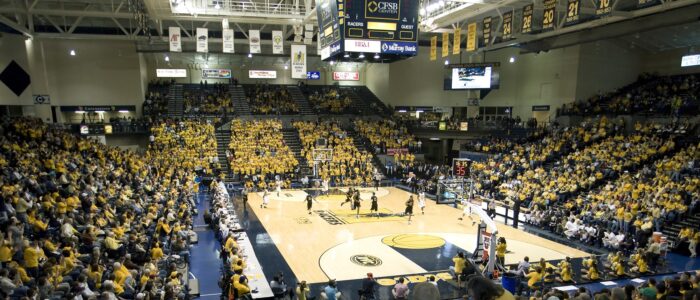
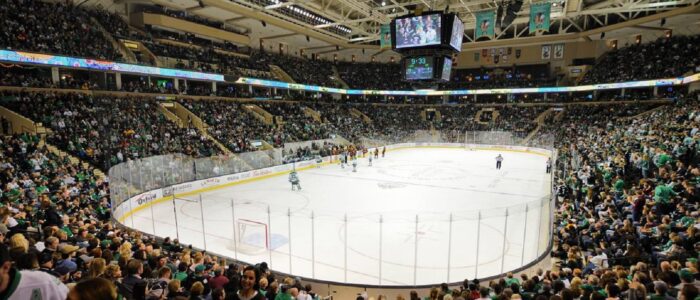
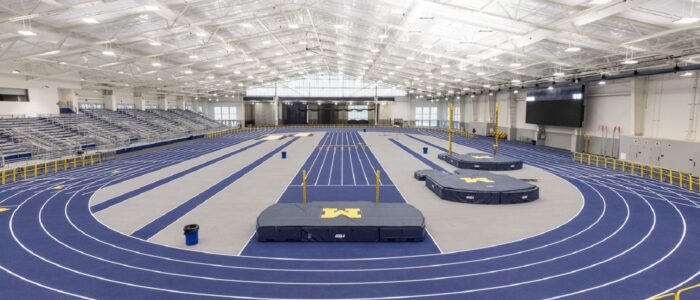
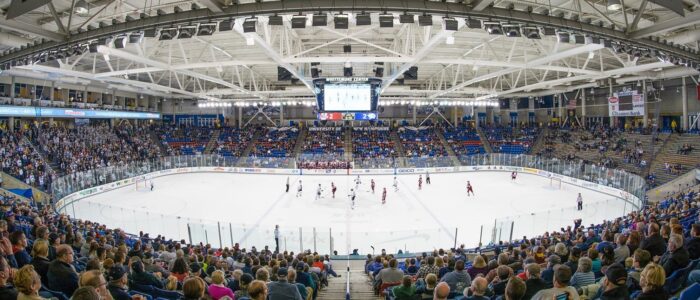
Recreational sports, athletic competition, and the facilities that support it, are one of the most visible activities in any school, college or university.   They have requirements for safety and sustainability at the same scale as the academic and healthcare enterprises.   According to IBISWorld Market Research, Sports Stadium Construction was a $6.1 billion market in 2014, Athletic & Sporting Goods Manufacturing was a $9.2 billion market in 2015, with participation in sports increasing 19.3 percent by 2019 — much of that originating in school, college and university sports and recreation programs.

Accordingly, we have been following movement in the standards suites developed by the National Collegiate Athletic Association, the American Society of Testing Materials, and the National Operating Committee on Standards for Athletic Equipment (NOCSAE)   We also follow developments in the International Standards Organization’s  ISO/TC 83: Sports and other recreational facilities and equipment; a standard suite with the German Deutsches Institut für Normung (DIN) as the global Secretariat and the American National Standards Institute as the US Technical Advisory Group.
NOCSAE, the National Operating Committee on Standards for Athletic Equipment, is an independent and nonprofit standards development body with the mission to enhance athletic safety through scientific research and the creation of performance standards for athletic equipment.  From its mission statement:

NOCSAE is comprised of a board of directors representing stakeholders from a number of groups – including consumer and end users, equipment manufacturers and reconditioners, athletic trainers, coaches, equipment managers, and academic and sports medicine associations. These diverse interests have joined forces in an attempt to arrive at a common goal of reducing sports-related injuries.

The NOCSAE suite of standards follows American due process requirements set by ANSI.  Its standards development landing page is linked below where you will find instructions about how to comment on all NOCSAE titles at any time:

NOCSAE Standards Matrix

Wagner College v. Sacred Heart

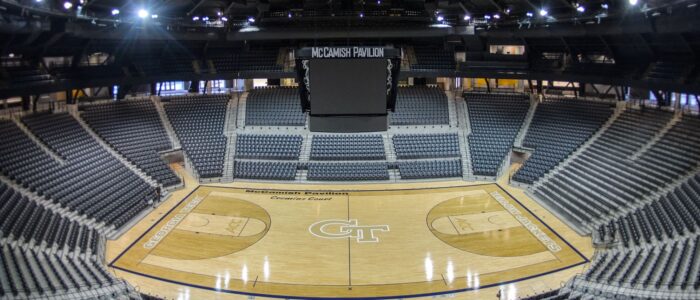
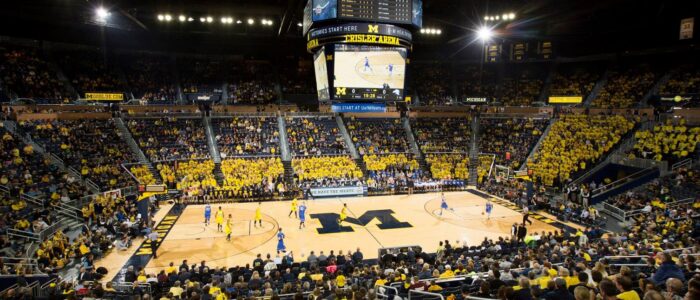
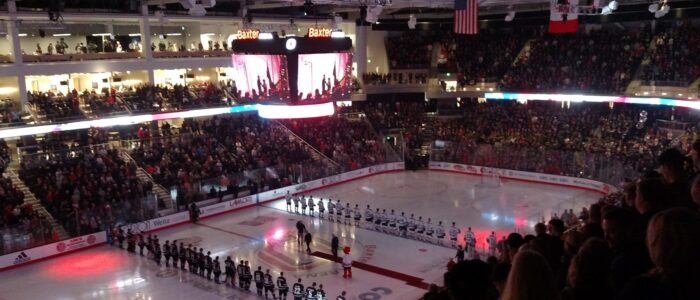
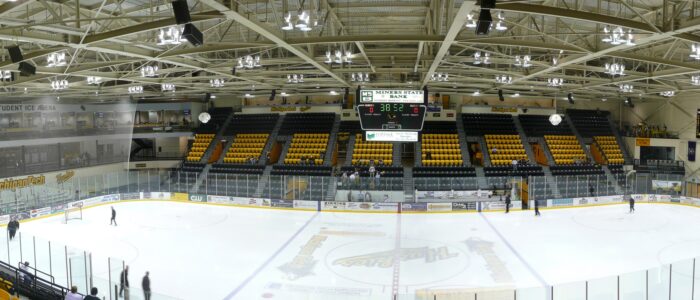
At the moment, our advocacy resources give priority to athletic facilities (and their integration into #SmartCampus safety and sustainability systems) over athletic products There is sometimes interaction between the two — artificial turf and protective equipment standards need to support one another; for example.  However, our priority lies in persuading the leadership of the education industry get the user-interest (i.e. athletic facility managers) to participate in ANSI standards development processes.

The NOCSAE suite, and all other athletic and recreational product, facility and management standards is on the standing agenda of our periodic Sport colloquia.   See our CALENDAR for the next teleconference; open to everyone.

Issue [15-169]

Contact: Mike Anthony, Jack Janveja

Category: Athletics and Recreation

#StandardsMassachusetts


Architectural Billings

October 1, 2025
mike@standardsmichigan.com
No Comments

Architectural Record September 24, 2025 

AIA Global Campus for Architecture & Design

Selecting architects for designing large educational campus buildings typically involves a structured process that ensures the chosen architect meets the project’s functional, aesthetic, and budgetary requirements. Here’s an overview of the typical steps involved:

1. Defining Project Goals and Requirements

  • The institution or client identifies the purpose of the building, the estimated budget, sustainability goals, and any specific design or functional needs.
  • A detailed Request for Proposal (RFP) or Request for Qualifications (RFQ) is prepared, outlining project objectives, scope, timeline, and submission requirements.

2. Public Announcement or Invitations

  • The RFP/RFQ is distributed through professional networks, industry publications, or procurement platforms.
  • Invitations may also be sent directly to pre-identified firms with expertise in similar projects.

3. Initial Submissions

  • Interested architectural firms submit their qualifications or proposals. These typically include:
    • Firm portfolio: Highlighting past projects, especially in educational architecture.
    • Design approach: How the firm plans to address the project goals.
    • Team composition: Key personnel and their relevant experience.
    • References and certifications.

4. Shortlisting Candidates

  • A committee reviews submissions and shortlists firms based on criteria such as experience, design philosophy, project understanding, and compatibility with the client’s goals.

5. Interviews and Presentations

  • Shortlisted firms are invited for interviews to present their ideas, discuss their approach, and answer questions.
  • Some institutions may request preliminary concept designs to gauge creativity and alignment with the campus’s vision.

6. Evaluation of Proposals

  • Proposals are evaluated based on:
    • Design capability: Innovation, sustainability, and functional design.
    • Experience: Success in similar projects.
    • Cost efficiency: Ability to meet the budget without compromising quality.
    • Cultural fit: Alignment with the institution’s mission and values.

7. Final Selection

  • The committee selects the architect based on scoring, deliberations, and sometimes a voting process.
  • Contract negotiations follow, detailing scope, fees, and deliverables.

8. Community and Stakeholder Engagement

  • In some cases, stakeholders, including faculty, students, and local communities, are involved in providing feedback or participating in design workshops.

9. Formal Approval

  • The governing board of the institution or a similar authority often gives final approval.

This process ensures transparency, accountability, and the selection of the most qualified architect for the project.


Related:

American Planning Association

Society for College and University Planning

Higher Education Facilities Act of 1963

Carnegie Classifications

Bechtel Projects

Beauty in a World of Ugliness

Duncan Stroik Architect

American Vitruvius

Robie House

Architecture and Aesthetic Education

Fellows Coffee Shop

September 30, 2025
mike@standardsmichigan.com
, , , , , ,
No Comments

“I have found that it is the small everyday deeds of ordinary folk

that keep the darkness at bay.”

— J.R. R. Tolkein


Annual Report and Accounts 2023/24: £1.310 billion

Tolkien, author of “The Lord of the Rings” and “The Hobbit,” completed his studies at the University of Birmingham in 1915. He graduated with first-class honors in English Language and Literature. After graduation, Tolkien went on to serve in World War I before embarking on his distinguished career as a writer and academic.

Old Joe: Campus Romances

Old Joe Clocktower | Fixing Old Joe

Home

Roger Scruton “Why Intellectuals are Mostly Left”


Coffee

How Coffee Loves Us Back

The Perfect Cup of Coffee

Best Coffee Spots Near Campus

Social Experiment: Giving College Students Coffee

Bruin Café


Drive Time Bias By Omission

September 30, 2025
mike@standardsmichigan.com
No Comments

This content is accessible to paid subscribers. To view it please enter your password below or send mike@standardsmichigan.com a request for subscription details.

Colloquy (September)

September 29, 2025
mike@standardsmichigan.com
No Comments

Open agenda; Not Too Organized. Whatever anyone wants to talk about.  We do meet once a month like this.  Use the login credentials at the upper right of our home page.

Evensong “Last Rose of Summer”

We are moving across the street!  Details forthcoming

Join us for lunch 11:45 AM – 1:15 PM every Third Wednesday

University of Michigan Business School Executive Dining Room (Under construction until 2026) | University of Michigan Golf Course Dining Room

If we were running that upgrade of the dining facility at the business school — instead of Sodexo — we would complete it in six months.  Alas, by some strange bureaucratic configuration, the project is taking 24 months.  Until then we meet at the Golf Course on the South Athletic Campus where, admittedly, parking is easier.


Retrodiction

Education & Healthcare Facility Electrotechnology Committee


The Business of Standards Never Stops

September 29, 2025
mike@standardsmichigan.com
, , ,
No Comments

Standards for a Kitchen Symphony | November/December 2024

ASTM International (formerly known as the American Society for Testing and Materials) is a globally recognized organization that develops and publishes technical standards for a wide range of products, systems, and services. These standards are used by manufacturers, regulatory bodies, and other stakeholders to ensure that products and services are safe, reliable, and of high quality.

In the field of measurement science, ASTM plays an important role in developing standards and guidelines for measurement techniques and practices. These standards cover a wide range of topics related to measurement science, including the calibration of instruments, the characterization of measurement systems, and the validation of measurement results. They are used by researchers, engineers, and other professionals in academia, industry, and government to ensure that measurements are accurate, precise, and reliable.

ANSI Public Review


ASTM standards for measurement science are developed through a process that involves input from experts in the field, including researchers, industry professionals, and regulatory bodies. These standards are updated regularly to reflect advances in measurement science and technology, as well as changes in industry and regulatory requirements.  This is a far better way to discover and promulgate leading practice.  In fact, there are regulations intended to restrain the outsized influence of vertical incumbents in legislative precincts where market-making happens.

Federal Participation in Consensus Standards

Previous Posts

Language Proficiency

Standard Specification for 100 % Cotton Denim Fabrics

Performance of Buildings

$500 Capstone Project Stipend Available to Students

Where There is Smoke…There Doesn’t Have to be Fire

Athletic Performance Properties of Indoor Sports Floor Systems

Professor of the Year

Women in Standards


Hops

September 27, 2025
mike@standardsmichigan.com
,
No Comments

This content is accessible to paid subscribers. To view it please enter your password below or send mike@standardsmichigan.com a request for subscription details.

Tennis Court Lighting

September 26, 2025
mike@standardsmichigan.com
No Comments

This content is accessible to paid subscribers. To view it please enter your password below or send mike@standardsmichigan.com a request for subscription details.

Report

September 26, 2025
mike@standardsmichigan.com
No Comments

This content is accessible to paid subscribers. To view it please enter your password below or send mike@standardsmichigan.com a request for subscription details.

Layout mode
Predefined Skins
Custom Colors
Choose your skin color
Patterns Background
Images Background
Standards Michigan
error: Content is protected !!
Skip to content