I’m in charge of dinner tonight, so Little Miss H and I are going to make Tomato Soup and Grilled Cheese sandwiches! It’s such an easy dinner that she can do almost all of it herself, I’ll just need to talk her through it. Find my recipe in the comments! pic.twitter.com/GVAi3t0I8f
This content is accessible to paid subscribers. To view it please enter your password below or send mike@standardsmichigan.com a request for subscription details.
The first movement of the 1931 “Grand Canyon Suite is a tone poem about dawn breaking over the Grand Canyon. It builds slowly through layered, ascending sonorities and expanding textures, mirroring the sun’s creeping rays.
It swells to full-orchestral climax of brass, capturing the canyon’s majestic reveal. The gentle ascent uses impressionistic colors rather than strong melodies, creating a cinematic sense of awe. The melodies are original.
♫
♫
“The Grand Canyon” 1912 Elliot Daingerfeild | North Carolina Museum of Art
The relative thinness of most Asian classical music repertoires helps explain why East Asian students so often excel in the Western tradition. Western classical music presents an immense, densely notated canon—centuries of works across every genre, style period, and technical demand—that requires years of systematic absorption. By contrast, the core repertoires of Chinese, Japanese, and Korean court and literati traditions are far smaller in volume and more limited in formal complexity. They rely heavily on oral transmission, short fixed pieces, or improvisation within narrow modal frameworks rather than the cumulative weight of thousands of fully notated, stylistically differentiated scores.
This comparative sparsity leaves Asian students with fewer deeply internalized musical habits, finger patterns, or stylistic reflexes competing for neural and muscular real estate. When they begin serious Western training, their ears and hands encounter less interference from prior classical conditioning. They can therefore allocate nearly all practice time and cognitive resources to mastering the specific demands of Western notation, equal temperament, functional harmony, large-scale form, and historically informed interpretation—without simultaneously maintaining fluency in a rival dense canon. The result is accelerated technical acquisition and a clearer channel for the intense, focused discipline that Western conservatory training rewards.
In other words, no one likes Asian classical music as much as Western classical music — even Asians — and this explains why they outperform Founding Stock American students in most classical orchestras. Founding Stock Americans are drawn to other American musical traditions.
We observe Europe unraveling under a perfect storm of mass Third-World migration, catastrophic demographics, and chronic economic stagnation, echoing the continent’s historical cycles of decline before major ruptures.Since 2015, over 10 million predominantly low-skilled migrants (mostly young Muslim males from MENA and sub-Saharan Africa) have entered the EU, driven by Merkel’s open-door policy and ongoing Mediterranean routes. Native birth rates hover at 1.3–1.6 children per woman (replacement = 2.1), while the median age in Germany, Italy, and Spain now exceeds 45–48 and is heading toward 55 by 2050.
.
By 2040, Germany will have more people over 70 than under 20. Pension and healthcare systems built for a 1960s worker-to-retiree ratio of 6:1 now face 2:1 and are sliding toward 1:1, requiring either crushing tax hikes or benefit cuts neither voters nor politicians will accept.Economic growth has averaged <1% annually for a decade in the eurozone core. Deindustrialization (energy prices tripled after Russia sanctions and Nord Stream loss), regulatory strangulation, and the need to subsidize both a swelling non-working migrant underclass and a ballooning elderly native population have choked investment.
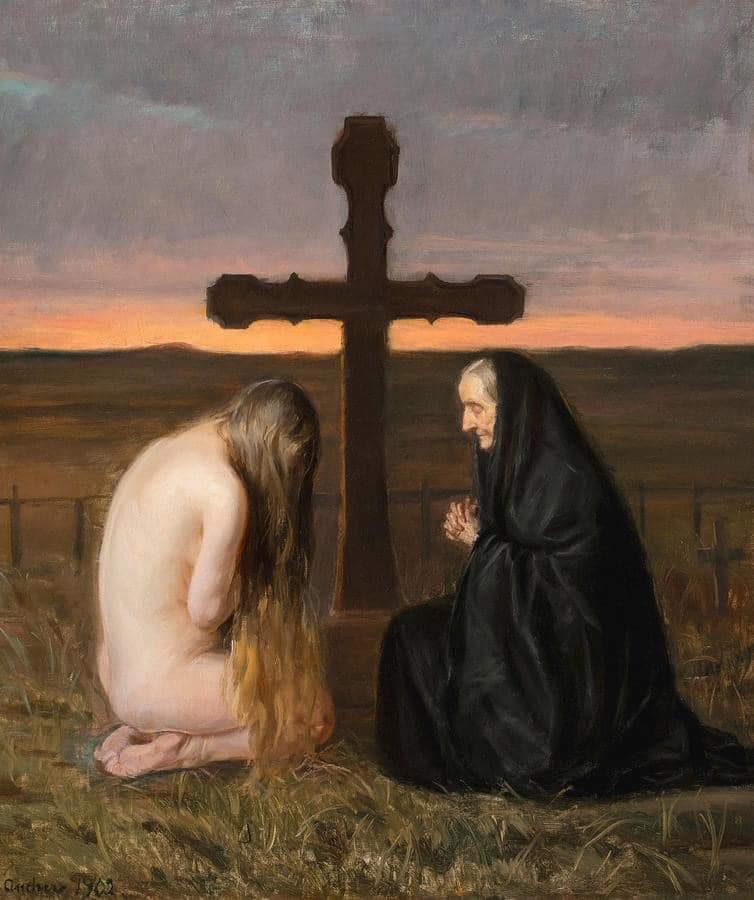
“Grief” Anna | Anna Ancher (1859 – 1935)
Welfare states that once absorbed modest immigration now hemorrhage funds while social cohesion collapses amid rising crime, no-go zones, and parallel societies.Europe is aging out, filling the gap with incompatible human capital, and running out of money to paper over the contradictions. History says this combination ends in tears, usually violent ones.
The Flying Tigers, officially the First American Volunteer Group (AVG), were American pilots led by Claire Lee Chennault, formed in 1941 to aid China against Japanese forces during the Second Sino-Japanese War. Equipped with Curtiss P-40 Warhawks, they were tasked with defending Chinese skies and supply lines. However, the Flying Tigers did not directly stop the Rape of Nanking, which occurred from December 1937 to January 1938, as they were not yet formed.
By the time they saw combat on December 20, 1941, after Pearl Harbor, Nanjing had already fallen. Their role was significant later, defending key areas like Kunming and the Burma Road, disrupting Japanese air operations, and boosting Chinese morale. With only 62 combat-ready pilots, they destroyed 296 Japanese aircraft, but their impact came post-Nanjing, aiding China’s broader resistance against Japanese aggression.
The Degree Course in Viticulture and Enology has the main objective of training oenological technicians with adequate skills to establish and manage wineries, enhancing both the agricultural product and the wine derived from it. This objective is pursued by providing, first, adequate basic scientific and cultural knowledge, based on mathematical, physical, chemical and biological sciences and, subsequently, professionalizing skills in the wine sector, aimed at developing operational skills of an agro-technological and managerial nature as well as framing the production activity from a historical, geographical, economic and environmental point of view….[Click image]
This content is accessible to paid subscribers. To view it please enter your password below or send mike@standardsmichigan.com a request for subscription details.
“View of the Colosseum” 1747 Giovanni Paolo Panini
Play is the making of civilization—how one plays the game
more to the point than whether the game is won or lost.
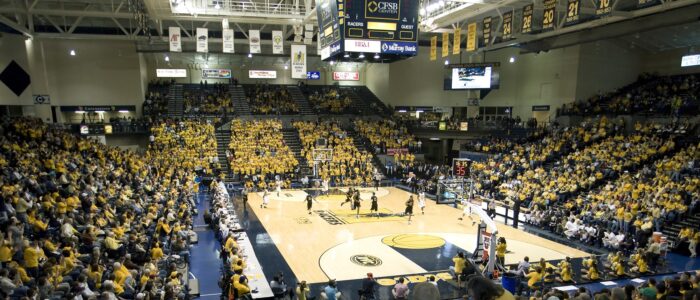
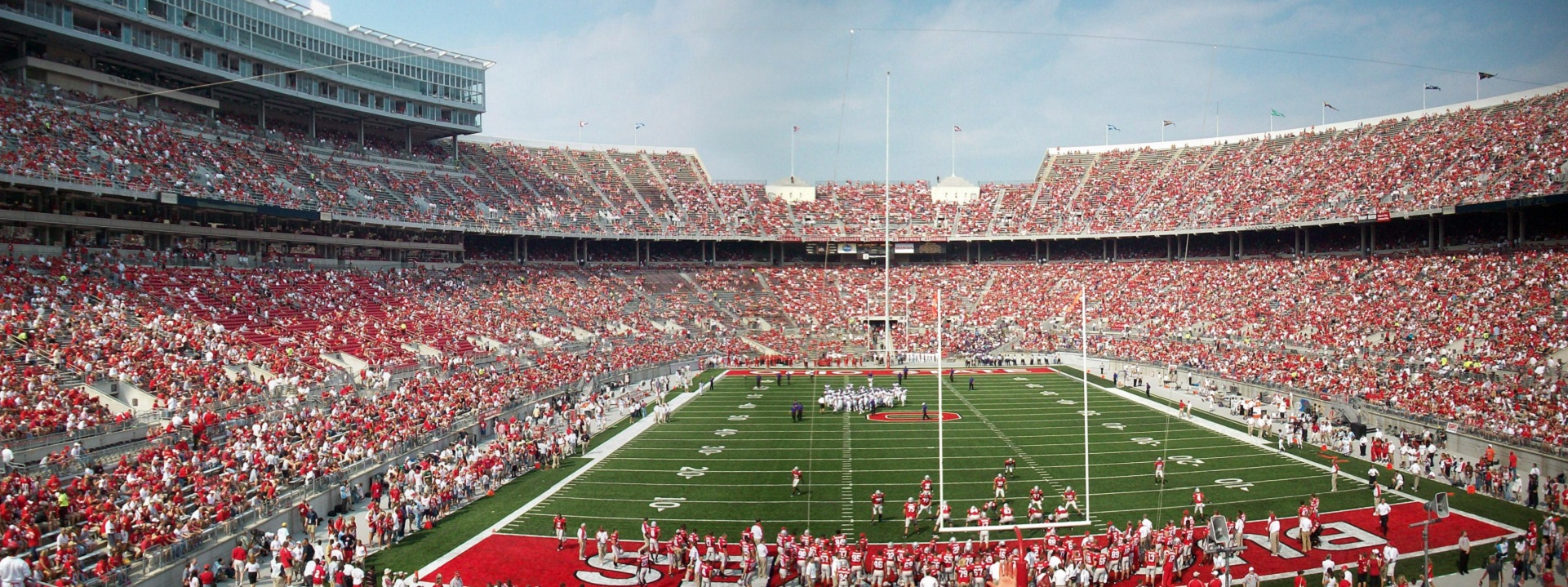
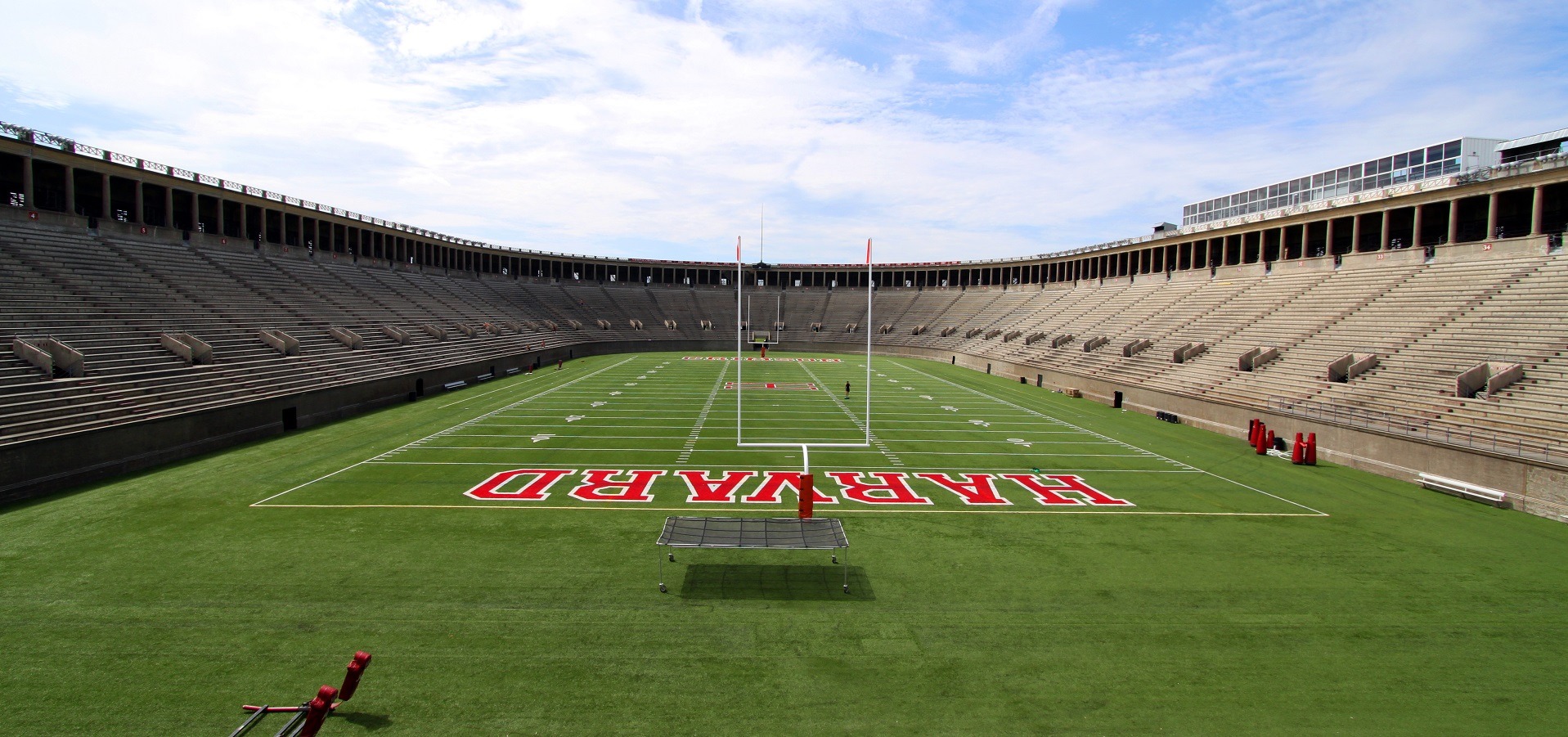
The purpose of this standard is to establish the minimum requirements to safeguard health, safety and general welfare through structural strength, means of egress facilities, stability and safety to life and property relative to the construction, alteration, repair, operation and maintenance of new and existing temporary and permanent bench bleacher, folding and telescopic seating and grandstands. This standard is intended for adoption by government agencies and organizations setting model codes to achieve uniformity in technical design criteria in building codes and other regulations.
This title is on the standing agenda of our Sport, Olahraga (Indonesian), رياضة (Arabic), colloquia. You are welcomed to join us any day at with the login credentials at the upper right of our home page.
At the April International Code Council Group A Hearings there were three candidate code changes related to the safety standard of care for athletic venues:
These concepts will likely be coordinated with another ICC regulatory product —ICC 300 – Standard on Bleachers, Folding and Telescopic Seating, and Grandstands — covered here previously. ICC 300 is a separate document but some of the safety concepts track through both.
The ICC Public Comment Hearings on Group A comments in Richmond Virginia ended a few days ago (CLICK HERE). The balloting is being processed by the appropriate committee and will be released soon. For the moment, we are happy to walk through the proposed changes – that will become part of the 2021 International Building Code — any day at 11 AM Eastern time. We will walk through all athletic and recreation enterprise codes and standards on Friday, November 2nd, 11 AM Eastern time. For access to either teleconference, click on the LIVE Link at the upper right corner of our home page.
Issue: [15-283]
Category: Athletics & Recreation, Architectural, Public Safety
Contact: Mike Anthony, Richard Robben, Jack Janveja
The International Code Council has launched a new revision cycle for its consensus document — ICC 300 – Standard on Bleachers, Folding and Telescopic Seating, and Grandstands. The purpose of the effort is the development of appropriate, reasonable, and enforceable model health and safety provisions for new and existing installations of all types of bleachers and bleacher-type seating, including fixed and folding bleachers for indoor, outdoor, temporary, and permanent installations. Such provisions would serve as a model for adoption and use by enforcement agencies at all levels of government in the interest of national uniformity.
Comments are due December 4th. The document is free. You may obtain an electronic copy from: https://www.iccsafe.org/codes-techsupport/standards/is-ble/. Comments may be sent to Edward Wirtschoreck, (888) 422-7233, ewirtschoreck@iccsafe with copy to psa@ansi.org)
* With some authority, we can claim that without Standards Michigan, many education industry trade associations would not be as involved in asserting the interest of facility managers in global consensus standards development processes. See ABOUT.
May Balls are typically organized by committees of students from the hosting college, who plan and coordinate various aspects of the event, including the theme, decorations, catering, entertainment, and ticket sales.
The proceeds from May Balls go towards charitable causes or to support college funds. The event provides an opportunity for students to celebrate the end of the academic year, socialize with peers, alumni, and guests, and create lasting memories of their time at Cambridge.
New update alert! The 2022 update to the Trademark Assignment Dataset is now available online. Find 1.29 million trademark assignments, involving 2.28 million unique trademark properties issued by the USPTO between March 1952 and January 2023: https://t.co/njrDAbSpwBpic.twitter.com/GkAXrHoQ9T