
Standard Norge i ny visuell profil

Loading
loading...

Standard Norge i ny visuell profil

September 4, 2026
mike@standardsmichigan.com
No Comments

The Royal Court of Norway

Kong Harald V

Uni Kristiania

Nærmere Deg, Min Gud

NTNU News: Message from the Rector on the Passing of the King

Garden Quadrangle

Minneord: Universitetet i Bergen minnes Kong Harald V med dyp takknemlighet.

European monarchy is sometimes misunderstood abroad as government by hereditary rulers. In countries such as Norway, its more interesting function is almost the reverse: the family remains while governments come and go.

A king is a son before he is a sovereign, later a husband and father and, with luck, a grandfather. The public watches these passages across an entire lifetime. In return, the royal family appears at the passages of national life: schools opened, universities founded, ships launched, marriages celebrated, disasters mourned and the dead remembered.

The arrangement gives otherwise abstract ideas — nation, inheritance, duty, continuity — a human form. Haakon VII could lay a university foundation stone and, seventy-five years later, his grandson Harald could return to the same institution.

Its significance is therefore less political than temporal.  A familial monarchy asks each generation to receive something, care for it and hand it on.

Building Construction Management

Welcome to Norway Township Michigan

Holy Spirit Catholic School | Norway Michigan https://www.facebook.com/photo.php?fbid=722413066395195&set=pb.100058795255295.-2207520000&type=3

Holy Spirit Catholic School | Norway Michigan

 

Fennel Citrus Chicken Salad

September 3, 2026
mike@standardsmichigan.com
, , , ,
No Comments

Statement of Net Position 2024: $1.341B (PDF Page 24) | Kendall Reagan Nutrition Center


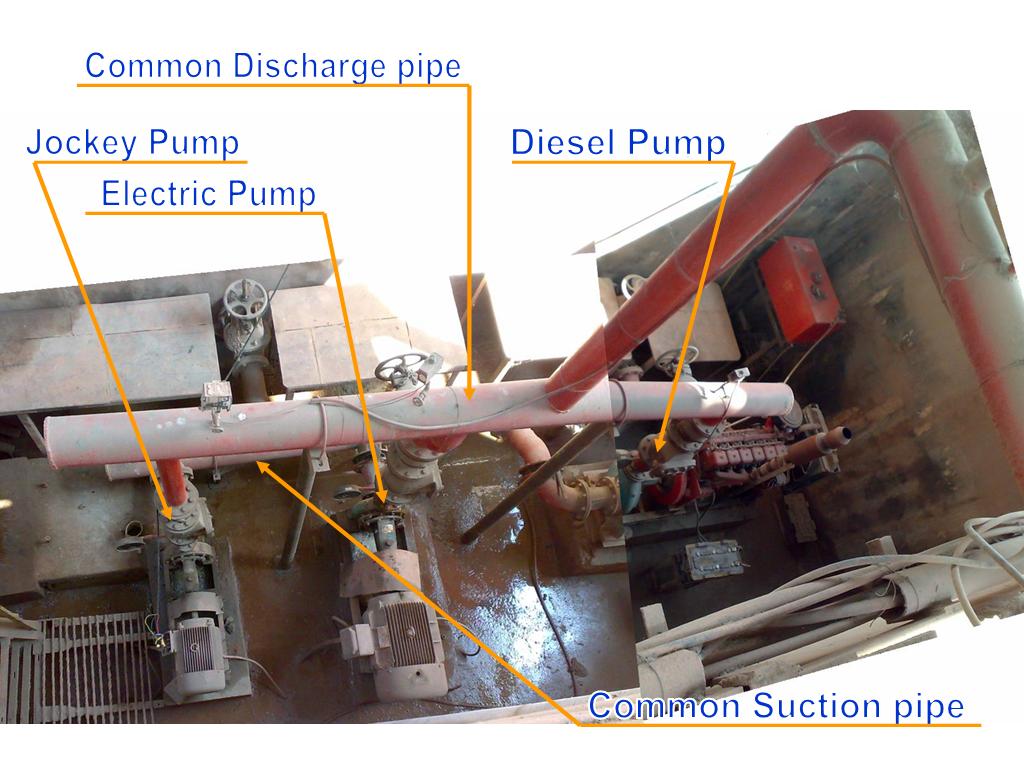
Sprinklers

September 3, 2026
mike@standardsmichigan.com
No Comments

Our engagement in standards setting for educational settlements dates back to the early 1990s at the University of Michigan, when our Safer–Simpler–Lower Cost–Longer Lasting agenda was established. Today, at the usual hour, we revisit some of those “code wins” and examine the state of the art in fire protection across the wide range of occupancy classes found in on-campus and off-campus facilities.

Consider the following questions. We have answers—or opinions—on all of them.

  1. Who owns institutional policy for the inspection, testing and maintenance of sprinkler, standpipe and fire pump systems—Facilities, EH&S, the fire marshal or some combination?
  2. To what degree should on-campus facilities maintenance extend its services to off-campus student housing, including fraternity and sorority houses?
  3. When a developer proposes a student high-rise apartment building, how much of the municipal water and fire protection infrastructure should be upgraded to assure code-required standpipe pressure?
  4. What are the labor classifications, licensing requirements and scopes of work of the various fire protection technicians?
  5. How closely are fire alarm technicians and wet- and dry-pipe sprinkler technicians coordinated?
  6. Which fire protection work should be performed by in-house staff and which should be contracted to specialty firms?
  7. How should deferred maintenance and capital renewal of aging sprinkler piping, valves, fire pumps and associated water infrastructure be prioritized against other life-safety work?
  8. Who is responsible for managing impairments when a sprinkler, standpipe or fire pump system must be taken out of service, particularly in continuously occupied buildings?
  9. How should facilities management coordinate sprinkler-system records, inspection results and correction of deficiencies with the local fire department and authority having jurisdiction?
  10. When an existing building is renovated or repurposed, who determines whether the existing fire protection infrastructure remains adequate for its new occupancy and use?
  11. How is sprinkler water managed—during testing, flushing, draining and system maintenance—and where does that water ultimately go?
  12. Would you like to see a copy of the 8′ x 8′ “Compliance Chart” developed by University of Michigan Plant Operations to coordinate the work of fire alarm and wet/dry extinguishment system technicians?

Use the login credentials at the upper right of our home page.


Campus Fire Safety Month

Reliability Analysis for Power to Fire Pumps

September 3, 2026
mike@standardsmichigan.com
, ,
No Comments

Reliability Analysis for Power to Fire Pump Using Fault Tree and RBD

Robert Schuerger | HP Critical Facilities (Project Lead, Corresponding Author) 

Robert Arno | ITT Excelis Information Systems

Neal Dowling | MTechnology

Michael  A. Anthony | University of Michigan


Abstract:  One of the most common questions in the early stages of designing a new facility is whether the normal utility supply to a fire pump is reliable enough to “tap ahead of the main” or whether the fire pump supply is so unreliable that it must have an emergency power source, typically an on-site generator. Apart from the obligation to meet life safety objectives, it is not uncommon that capital on the order of 100000to1 million is at stake for a fire pump backup source. Until now, that decision has only been answered with intuition – using a combination of utility outage history and anecdotes about what has worked before. There are processes for making the decision about whether a facility needs a second source of power using quantitative analysis. Fault tree analysis and reliability block diagram are two quantitative methods used in reliability engineering for assessing risk. This paper will use a simple one line for the power to a fire pump to show how each of these techniques can be used to calculate the reliability of electric power to a fire pump. This paper will also discuss the strengths and weakness of the two methods. The hope is that these methods will begin tracking in the National Fire Protection Association documents that deal with fire pump power sources and can be used as another tool to inform design engineers and authorities having jurisdiction about public safety and property protection. These methods will enlighten decisions about the relative cost of risk control with quantitative information about the incremental cost of additional 9’s of operational availability.


CLICK HERE to order complete paper

Push-Cart Cold Brew

September 2, 2026
mike@standardsmichigan.com
, ,
No Comments

BLOOMINGTON WEATHER

Standards Indiana | Indiana University Total Net Position: $5.223B


Ideal Financial Year

September 2, 2026
mike@standardsmichigan.com
No Comments

Sometimes there are no standards; only comparisons.  An examination of representative essential works (infrastructure) charges that appear on student invoices.

“The Consummation of Empire” 1836 Thomas Cole

Room, Board & Boiler: A Selection

University of Mississippi (Ole Miss):

Capital Improvements Fee

— used to fund facility construction and improvements. The fee is assessed by term and prorated by credit hour, with a full-time maximum.

University of Oregon:

Building Fee

— supports construction and debt service for capital projects, principally student centers, health centers and recreation facilities. A separate Recreation Center Fee also supports construction, debt service, maintenance and operations.

University of Central Florida:

Capital Improvement Fee

— $6.76 per credit hour, shown separately in the university’s tuition and fee schedule.

Florida Gulf Coast University:

Capital Improvement Fee

— $6.76 per credit hour, separately identified in the published tuition and fee schedule.

Florida Atlantic University:

Capital Improvement Fee

— $6.76 per credit hour, itemized separately from tuition and other mandatory fees.

University of Kansas:

Building Fee

— separately identified among required student fees. KU also identifies facilities, maintenance and equipment charges within student health and recreation fees.

Kean University:

Capital Improvement Fee

— supports debt and qualifying renovation and construction projects. The university also identifies building maintenance and upgrades within its University Centers Fee.

Western Michigan University: Tuition and Required Fees

Translatio Studii

September 2, 2026
mike@standardsmichigan.com
, , ,
No Comments

This content is accessible to paid subscribers. To view it please enter your password below or send mike@standardsmichigan.com a request for subscription details.

Layout mode
Predefined Skins
Custom Colors
Choose your skin color
Patterns Background
Images Background
Standards Michigan
error: Content is protected !!
Skip to content