The lyrics were originally written in German by poet Matthias Claudius in 1782 as part of a larger work titled “Paul Erdmanns Fest” which reflects an appreciation for the agricultural cycle. The hymn was later translated into English by Jane Montgomery Campbell in 1861. The melody most commonly associated with the hymn is a traditional German tune, adapted by Johann Abraham Peter Schulz.
The hymn expresses gratitude for the earth’s bounty and acknowledges God as the ultimate provider of all good things. Its verses celebrate the act of sowing and reaping, emphasizing the cooperation between human effort and divine blessing. “We Plow the Fields and Scatter” has become a staple in Christian liturgy, particularly during harvest celebrations and Thanksgiving services, symbolizing a collective acknowledgment of and thanks for God’s abundant gifts.
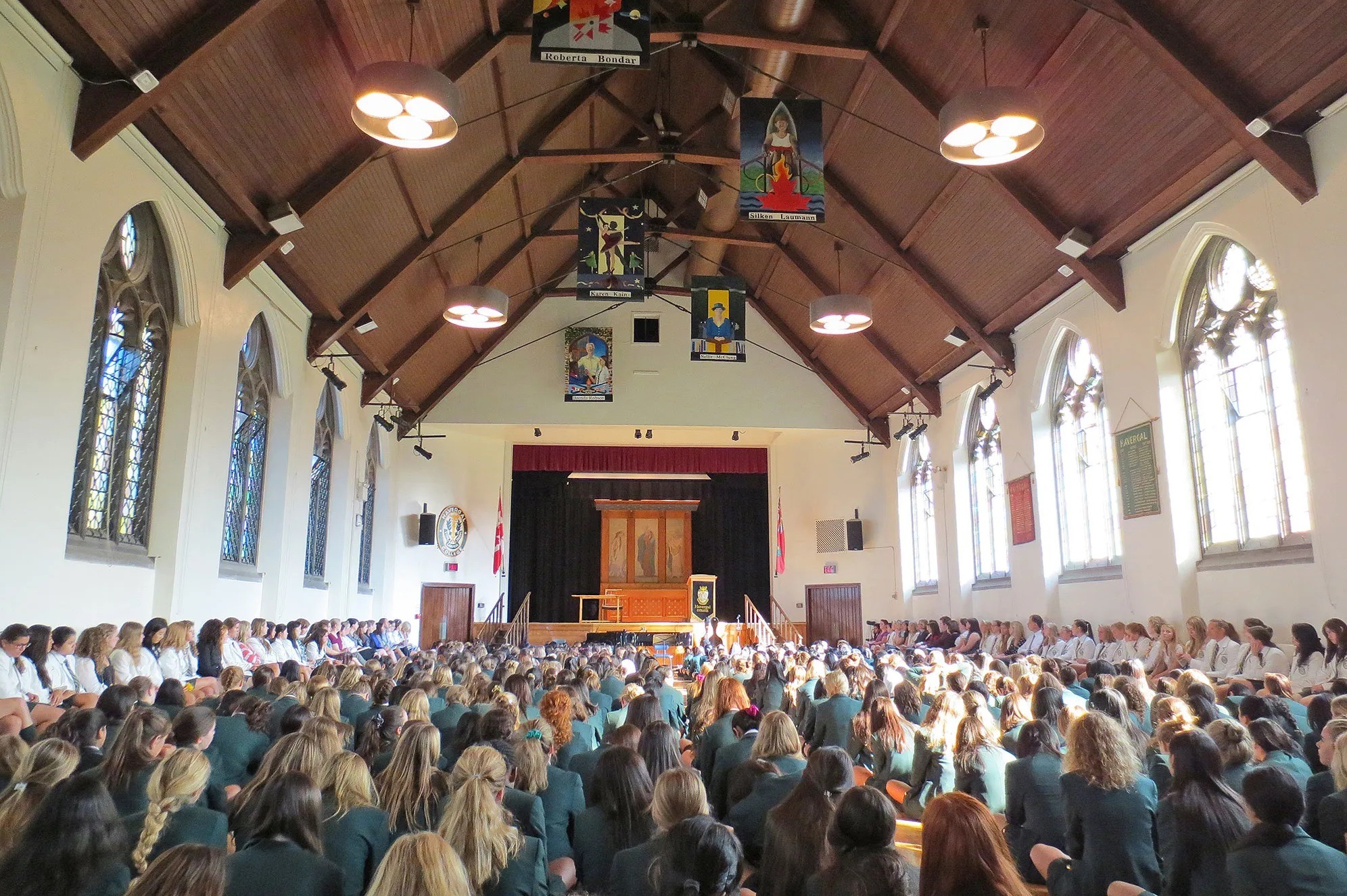
Enjoyed welcoming graduating students from Havergal College to Parliament Hill
https://t.co/vJvaFlo5DN
https://t.co/hLZKjLiEBR
https://t.co/MNkXdsqLUX https://t.co/Dw6advw93I
This content is accessible to paid subscribers. To view it please enter your password below or send mike@standardsmichigan.com a request for subscription details.
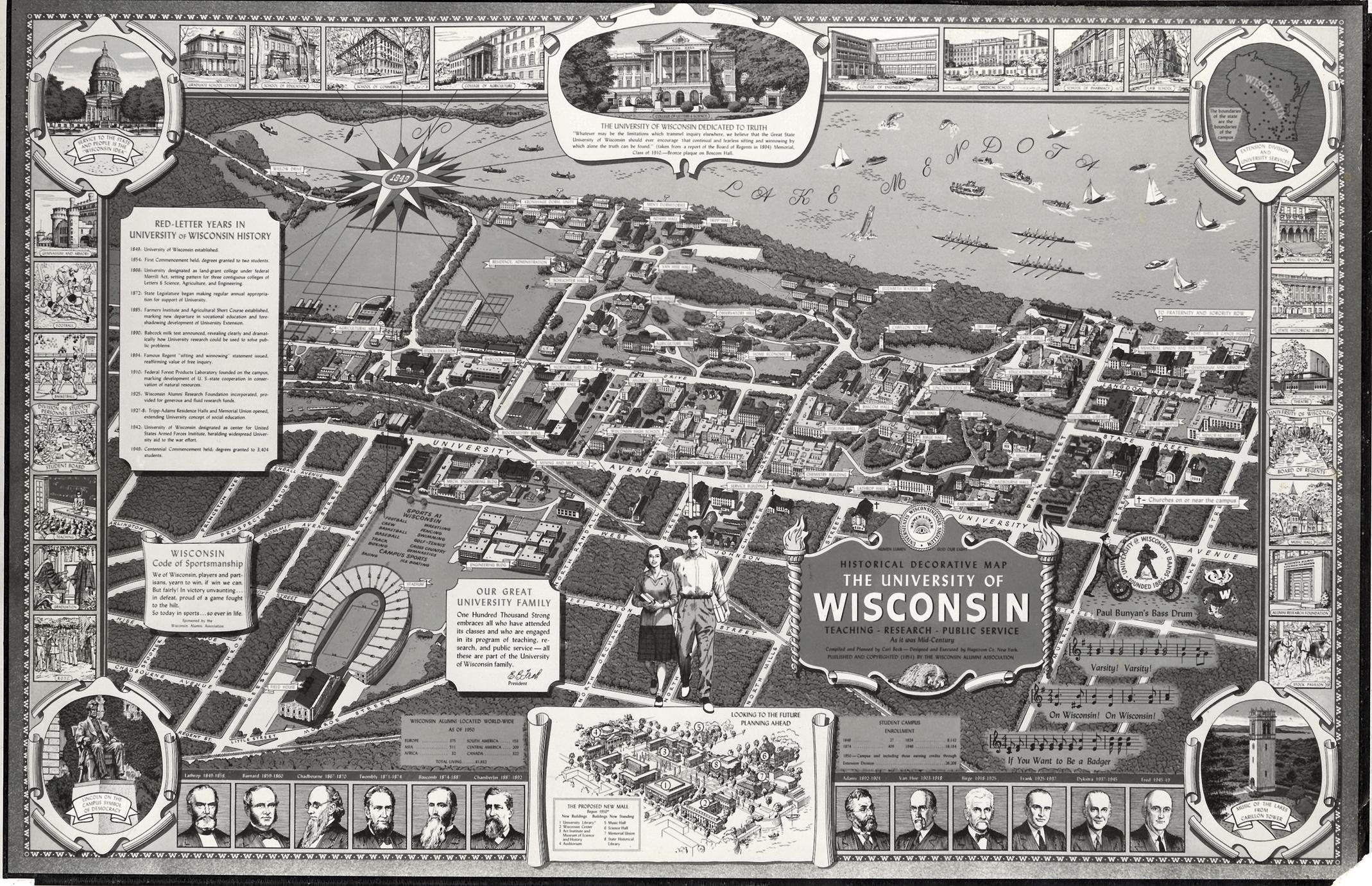
I’m so excited to share that I will be joining the University of Wisconsin-Madison Department of Neurology as a Neuropsychologist this fall, with a special focus on neuro-oncology and epilepsy! #OnWisconsinpic.twitter.com/JuS1Von6AB
Abstract: The amount of the electrical energy used for the interior lighting of medium and large buildings is generally considerable. The European Standard EN15193 was devised to establish conventions and procedures for the estimation of energy requirements of lighting in buildings by an energy performance numeric indicator. This methodology is based on the three derating factors that consider the influence of the daylight exploitation, the occupancy behavior and, if present, of a constant illuminance sensor. The factors are evaluated by a statistical approach on the basis of general reference data tabulated by the same Standard, not considering more detailed parameters of the control system that can impact severely in the effective energy savings. The Standard methodology appears extremely useful for a preliminary evaluation. For a more accurate evaluation, this paper suggests an improvement of the procedure that considers the effective operation time and occupancy behavior, the type of control and lamps, the number of control groups, the technique of modulation (dimming or switching), and the delay in turning off. The suggested procedure is compared with the Standard one to highlight the improvements.
The ISO 21001 project has matured considerably since our original 2019 coverage. ISO 21001:2018 has been withdrawn and replaced by ISO 21001:2025, Educational organizations — Management systems for educational organizations — Requirements with guidance for use. The second edition continues the effort to adapt management-system principles to schools, universities, training organizations and other providers of education and learning services. Responsibility resides with ISO/TC 232, Education and learning services.
The supporting infrastructure is also expanding. In June 2026 ISO published ISO/PAS 25171:2026, providing guidance for auditing ISO 21001 management systems, including suggested questions, evidence and measures for evaluating conformity. The development is
significant: what began as an effort to translate lessons from industrial quality management into education now has a second-edition requirements standard together with dedicated auditing guidance and an increasingly mature conformity-assessment framework.
“The Attributes of the Arts and the Rewards Which Are Accorded Them” | Jean Baptiste Siméon Chardin (1766)
“Education is simply the soul of a society as it passes from one generation to another.”
–G.K. Chesterton
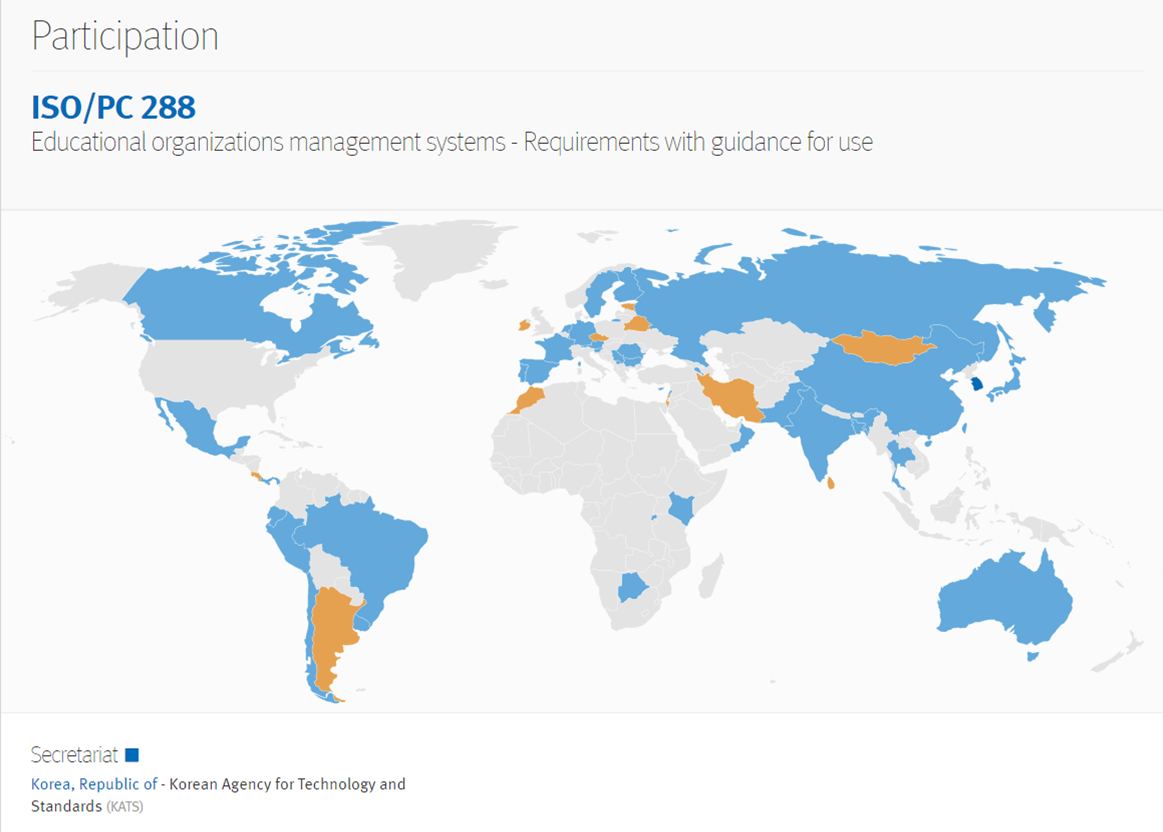
Since 2013 we have been following developments in an International Organization for Standardization committee: ISO 288 – Educational organizations management systems – Requirements with guidance for use; a committee spun off from the committee that develops the more widely known ISO 9000-family of quality management standards prepared for industries and global regulatory agencies. The global Secretariat is South Korea; with 40 participating member nations and 11 observing nations. The status of this project can be tracked at the link below (You will need login credentials)
It is noteworthy that the US education industry is not a participant in this global standard which will likely have implications for standards setting for all aspects of educational organizations including the management of Massive Open Online Courses which we have covered in previous posts.
The ISO/TC 288 has reached a milestone with its May 1st of the First Edition of ISO 21001:2018 (Click on image). A Spanish translation is still ongoing under the auspices of PC 288, once it will be delivered, ISO/PC 288 will be disbanded. Another ISO Committee — TC 232 — is currently requesting to have its scope modified (enlarged) to be able to standardize subject pertaining to formal education too (its current scope is limited to non-formal learning and education). The result of this request is expected for the end of December. Should it be granted, TC 232 will be able to take care of ISO 21001 maintenance (e.g. revision of the standard) in the future.
We are happy to discuss any ISO consensus product any day at 11 AM Eastern Time. We also walk through the developmental status of all international standards once per month. See our CALENDAR for the next teleconference; open to everyone. Use the login credentials at the upper right of our homepage.
In terms of total spend, the US elementary and secondary school industry is about twice the size of the higher education industry according to IBISWorld. About $100 billion is in play every year for both (which we cover during our Ædificare colloquia); with higher education spending only half of what elementary and secondary school systems spend on facilities.
Note that some districts are including construction for faculty housing.
Our focus remains on applying global standard to create educational settlements that are safer, simpler, lower-cost and longer-lasting — not on the hurly-burly of local school bond elections. We recommend consulting the coverage in American School & University for more detailed and more timely information.
Boulder Valley School District, Colorado — especially useful because the district itself has an excellent “Resilient Schools: Responding to declining enrollment” page. On September 22 it approved closing Douglass, Mesa and Flatirons elementary schools for 2027–28, along with relocations and consolidation. Boulder Valley School District Boulder Valley — Resilient Schools Plan
Duval County Public Schools, Florida — four elementary schools closed for 2026–27: Don Brewer, George Washington Carver, Hyde Grove and Hidden Oaks. The district explicitly describes the process as “right-sizing.”Duval County Public Schools Duval County — Consolidations and Closures
Miami-Dade County Public Schools, Florida — approved nine closures/consolidations for 2026–27 after enrollment fell about 4% in one year. The district expected roughly $10 million in savings. K-12 Dive
Houston-area districts, Texas — particularly striking: districts across the Houston region closed 26 campuses over the past year, citing combinations of declining enrollment, aging buildings and budget deficits. Houston ISD itself approved 12 closures. Houston Chronicle
Poudre School District, Colorado — very current. Its planning committee recommended nine school closures and two consolidations this week. Superintendent Brian Kingsley points directly to fewer births, high cost of living and fewer families residing in the area. KUNC Poudre school-closure report
Norfolk Public Schools, Virginia — particularly valuable for the long view. Enrollment fell from 34,023 in 2005–06 to 24,754, a 27% decline. Norfolk consequently adopted a phased plan to close and consolidate nine schools through 2034. Norfolk.gov
Salem-Keizer Public Schools, Oregon — plans to close as many as eight elementary schools in 2027. District enrollment, recently above 40,000, is projected to fall toward 35,000 over five years.
Our Office of Engineering & Technology maintains the U.S. Table of Frequency Allocations, manages Experimental Licensing & Equipment Authorization programs, regulates operation of unlicensed devices, and conducts engineering & technical studies. https://t.co/MATs1ThyxL#FCC101
The FCC is the United States’ primary authority for communications laws, regulation and technological innovation. We provide a link to the August 3rd meeting during which time rules for Digital FM Radio and Non-Federal Spectrum Usage were discussed. Campus Security Radio, National Public Radio and Student Radio are central features of education community culture and safety and are typically available when the internet is not.
New update alert! The 2022 update to the Trademark Assignment Dataset is now available online. Find 1.29 million trademark assignments, involving 2.28 million unique trademark properties issued by the USPTO between March 1952 and January 2023: https://t.co/njrDAbSpwBpic.twitter.com/GkAXrHoQ9T