Elevator Safety Code

Loading
loading...

Elevator Safety Code

May 14, 2026
mike@standardsmichigan.com
No Comments

Today, special attention to managing elevator passengers trapped in elevators during power outages.  Incident management involves the following:

  1. Automatic battery-lowering systems (standard in modern elevators) gently descend the car to the nearest floor and open the doors within minutes.
  2. Backup generators or UPS units keep lights, intercoms, and ventilation running.
  3. Mandatory two-way communication and remote monitoring allow instant contact with 24/7 response teams.
  4. Fire-service phase II keys and firefighter overrides ensure rapid rescue.
  5. Clear emergency instructions and regular maintenance of brakes and overspeed governors prevent falls.

These redundancies, required by ASME A17.1 codes in most jurisdictions, have made prolonged entrapments extremely rare and almost never dangerous.

2026 National Electrical Code Article 620: Elevators, Dumbwaiters, Escalators, Moving Walks, Platform Lifts, and Stairway Chairlifts.

CMP-12 Public Input TranscriptCMP-12 Public Comment Transcript

American School & University: Modernizing Elevator Emergency Communications on School and University Campuses

Elevator,  escalator  and moving walk systems are among the most complicated systems in any urban environment, no less so than on the  #WiseCampus in which many large research universities have 100 to 1000 elevators to safely and economically operate, service and continuously commission.  These systems are regulated heavily at state and local levels of government and have oversight from volunteers that are passionate about their work.

These “movement systems” are absorbed into the Internet of Things transformation.  Lately we have tried to keep pace with the expansion of requirements to include software integration professionals to coordinate the interoperability of elevators, lifts and escalators with building automation systems for fire safety, indoor air quality and disaster management.  Much of work requires understanding of the local adaptations of national building codes.

Some university elevator O&M units use a combination of in-house, manufacturer and standing order contractors to accomplish their safety and sustainability objectives.

In the United States the American Society of Mechanical Engineers is the dominant standards developer of elevator and escalator system best practice titles;  its breakdown of technical committees listed in the link below:

A17 ELEVATORS AND ESCALATORS

STDMi: Elevator Backup Power

C&S Connect: ASME Proposals Available for Public Review

Public consultation on a new standard for electrical inspector qualifications closes May 27th.

ASME A17.7/CSA B44.7 – 20XX, Performance-based code for elevators and escalators (280 pages)

Safety Code for Existing Elevators and Escalators

Guide for Inspection of Elevators, Escalators, and Moving Walks

Guide for Elevator Seismic Design

As always, we encourage facility managers, elevator shop personnel to participate directly in the ASME Codes & Standards development process.   For example, it would be relatively easy for our colleagues in the Phoenix, Arizona region to attend one or more of the technical committee meetings; ideally with operating data and a solid proposal for improving the A17 suite.

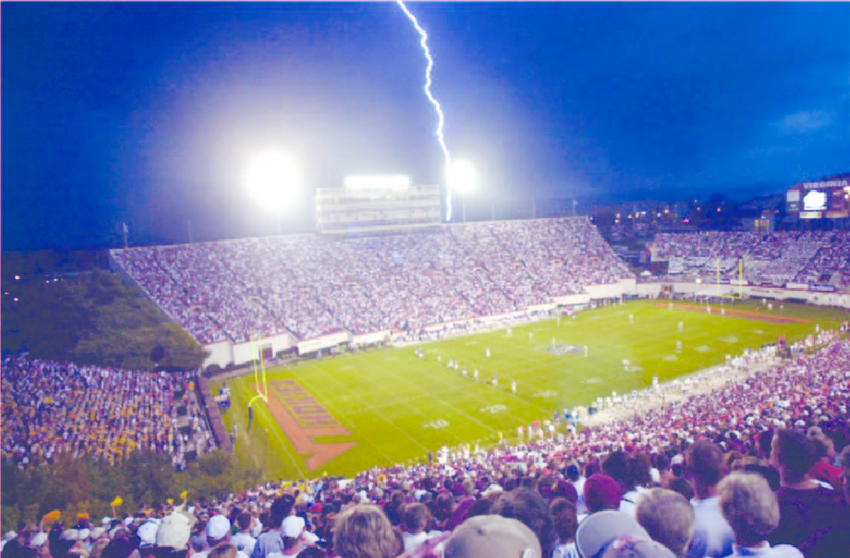
University of Wisconsin Stadium Elevator


All ASME standards are on the agenda of our Mechanical, Pathway and Elevator & Lift colloquia.  See our CALENDAR for the next online teleconferences; open to everyone.  Use the login credentials at the upper right of our home page.


Issue: [11-50]

Category: Electrical, Elevators, #WiseCampus

Colleagues: Mike Anthony, Jim Harvey, Richard Robben, Larry Spielvogel


More:

Bibliography: Elevators, Lifts and Moving Walks

ISO/TC 178 Lifts, escalators and moving walks

Human Factors Using Elevators in Emergency Evacuation

Archive / Elevator Safety Code


Rogers Building

May 14, 2026
mike@standardsmichigan.com

No Comments

The earliest installation of a passenger elevator in a university building in the United States was at the Massachusetts Institute of Technology in Cambridge.  In 1861, Otis Brothers & Co., the company founded by Elisha Graves Otis, installed the first passenger elevator in this three-story structure that housed laboratories, classrooms, and offices for faculty and students.

This early installation of a passenger elevator marked an important milestone in the history of vertical transportation on college and university campuses, and it paved the way for the adoption of elevators in other educational institutions as they expanded in size and height over time.

Department of Facilities

The History of Elevators

Standards Massachusetts

Chelsea Buns

May 13, 2026
mike@standardsmichigan.com
No Comments

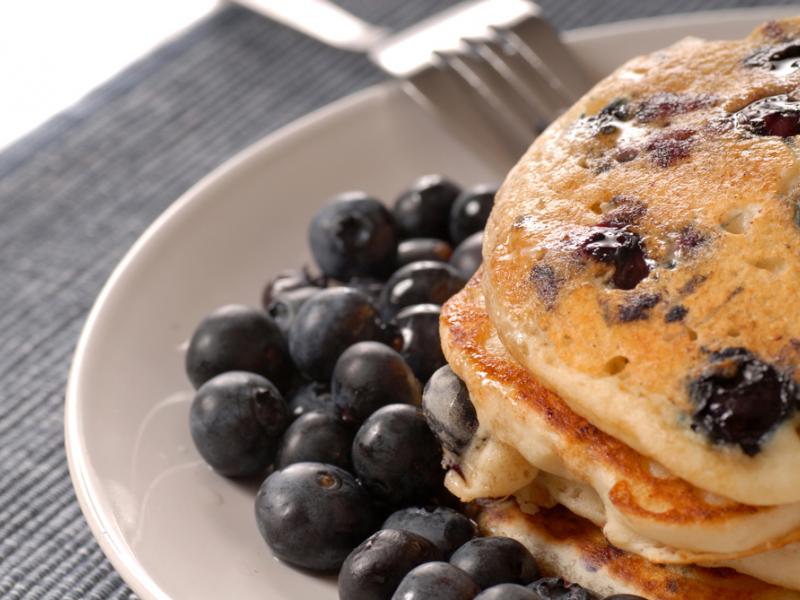
These square, spiraled buns originated in early 18th-century London at the Chelsea Bun House, a royal-favored spot selling spiced, fruit-filled yeast buns to Georgian nobility. They cut a foodway path across Britain as an indulgent treat, settling at “Fitzbillies Bakery” on Trumpington Street eventually making first landfall in North America at Penn State University as “Grilled Stickies”.

https://x.com/acambridgediary/status/1901914588813066507

University of Cambridge

Food Safety Management

Pennsylvania

Onward State: “Make Your Own Grilled Stickies”

Penn State Berkey Creamery: Ye Olde College Diner Stickies

Cinnamon Roll Stickies

Dietary Supplements

May 13, 2026
mike@standardsmichigan.com
No Comments

This content is accessible to paid subscribers. To view it please enter your password below or send mike@standardsmichigan.com a request for subscription details.

Water Towers

May 13, 2026
mike@standardsmichigan.com
No Comments

This content is accessible to paid subscribers. To view it please enter your password below or send mike@standardsmichigan.com a request for subscription details.

Food Safety

May 13, 2026
mike@standardsmichigan.com

No Comments

Overdoor, France, ca. 1825; | Smithsonian Design Museum

Education communities have significant food safety responsibilities.  Risk gets pushed around global food service counterparties; a drama in itself and one that requires coverage in a separate blog post.*

Since 2013 we have been following the development of food safety standards; among them ANSI/NSF 2: Food Equipment one of a constellation of NSF food safety titles whose provisions cover bakery, cafeteria, kitchen, and pantry units and other food handling and processing equipment such as tables and components, counters, hoods, shelves, and sinks.  The purpose of this Standard is to establish minimum food protection and sanitation requirements for the materials, design, fabrication, construction, and performance of food handling and processing equipment.

It is a relatively stable standard; developed to support conformance revenue for products.  A new landing page seems to have emerged in recent months:

Food and Beverage

https://www.nsf.org/testing/food


You may be enlightened by the concepts running through this standard as can be seen on a past, pre-pandemic agenda:

NSF 2 Food Safety 2019 Meeting Packet – Final Draft

NSF 2 Food Safety 2019 Meeting Summary – August 21-22 Ann Arbor NSF Headquarters

NSF 2 Food Equipment Fabrication Agenda – FEF – TG – 2021-01-12

Not trivial agendas with concepts that cut across several disciplines involving product manufacture, installation, operation and maintenance.  We find a very strong influence of organizations such as Aramark and Sodexo.   More on that in a separate post.

Ranchview High School Cafeteria / Irving, Texas

This committee – along with several other joint committees –meets frequently online.  If you wish to participate, and receive access to documents that explain the scope and scale of NSF food safety standards, please contact Allan Rose, (734) 827-3817, arose@nsf.org.   NSF International welcomes guests/observers to nearly all of its standards-setting technical committees.   We expect another online meeting hosted by this committee any day now.

Keep in mind that all NSF International titles are on the standing agenda of our Nourriture (Food) colloquia; open to everyone.  See our CALENDAR for the next meeting.

University of Indiana

Issue: [13-113] [15-126]

Category: Facility Asset Management, Healthcare, Residence Hall, Athletics

Colleagues: Mike Anthony, Tracey Artley, Keith Koster, Richard Robben

*See “Food Safety Risk Management: Evidence-Informed Policies and Decisions, Considering Multiple Factors, Food and Agriculture Organization of the United Nations”


LEARN MORE:

ANSI Blog | Changes to NSF 2 Food Safety Equipment Standard

NSF International Food Safety 2018 Meeting Summary – 2018-08-22 – Final Draft

2017 Food Code | US Food & Drug Administration

Hygiene Requirements For The Design Of Meat And Poultry Processing Equipment

ARCHIVE: NSF 2 Food Safety

Commercial Kitchens

May 13, 2026
mike@standardsmichigan.com
No Comments

2026 PUBLIC COMMENT AGENDA | Complete Monograph 2087 Pages

2025 GROUP B PROPOSED CHANGES TO THE I-CODES: Complete Monograph (2630 pages)

Quick View of Results

36 kitchen related proposals were reviewed during our precious sesssion

2024 GROUP A PROPOSED CHANGES TO THE I-CODES: Complete Monograph (2658 pages)

Commercial kitchens offer several benefits, such as efficient food preparation and large-scale production, allowing businesses to meet high demand. They provide professional-grade equipment and ample space, enabling chefs to explore culinary creativity. Commercial kitchens also promote hygiene and food safety standards, with dedicated cleaning protocols and inspections. However, hazards can arise from the high-temperature cooking equipment, sharp tools, and potentially hazardous substances. There is also a risk of burns, slips, and falls, emphasizing the importance of proper training and safety measures. Adequate ventilation and fire safety systems are vital to prevent accidents and maintain a healthy working environment.

The International Code Council is re-configuring its code development process in nearly every dimension. While that situation stabilizes let us review the back-and-forth on this topic during the previous revision cycle (linked below):

2021 International Building Code Section 306 Factory Group F Moderate Hazard

2021 International Fire Code Section 606 Commercial Cooking Equipment and Systems

The International Code Council has recently re-configured its code development calendar:

2024/2025/2026 ICC CODE DEVELOPMENT SCHEDULE

Public hearings on the proposed changes happen in Orlando, April 7-16.

This is a summary of the actions taken on the 2024 Comments on Proposed Changes to the ICC International Codes at the October 23-28, 2024 Committee Action Hearings #2 held at the Long Beach Convention Center, Long Beach, California.  Balloting of local building code officials is now underway.

Commercial kitchen electrical power wiring requirements are covered extensively in Article 210 through Article 215 of the National Electrical Code.  Standards action in this domain is referred to IEEE Education & Healthcare Facility Committee.

ASHRAE International: Calculating Airflow Rates, Cooking Loads in Commercial Kitchens

Related

International Mechanical Code: Chapter 10 Boilers, Water Heaters and Pressure Vessels

AGA Response to The Atlantic Article about Natural Gas Cooking

Thomas Edison State University: Undergraduate Certificate in Gas Distribution

International Fire Code

Farmer’s Dinner Theatre

May 12, 2026
mike@standardsmichigan.com
, , , ,
No Comments

Cooperative Extension Service

“Kentucky Landscape” 1832 James Pierce Barton

Kentucky

This project was created a few years ago in Kentucky to bring awareness to farm safety  through a dinner theatre is continuing to gain momentum in rural communities. The focus now is more on farm mental health and wellness. 

https://youtu.be/ztDxdsWW4q0?si=qaQ6OTpKSSP2mMY3

Standards Kentucky


Morrill Land Grant Act

This program has been adopted or implemented by extension services and related organizations in several other states. This initiative uses short plays performed during a community dinner to educate farmers and their families on health, safety, mental health, and farm-related issues in an engaging, non-traditional way:

  • Nebraska — Cooperative Extension services have hosted events as part of the program’s expansion.
  • North Carolina — The program is active through local extension efforts.
  • Tennessee — Events have been held, often in collaboration with extension agents.
  • Virginia — Particularly notable in the Shenandoah Valley, where Virginia Cooperative Extension offices (e.g., in Rockingham County) partnered with local groups like Valley Urgent Care and Future Farmers of America (FFA) chapters to organize Farm Safety Dinner Theaters, adapting the UK model for community-based participatory approaches.

The program is designed to be replicable nationwide. The University of Kentucky provides an online Farmers Dinner Theater Toolkit for any cooperative extension service, community group, or organization to stage their own events, customizing scripts to local needs. This has enabled wider adoption beyond the original sites. These efforts focus on helping farmers by addressing critical topics like injury prevention, hearing loss, skin cancer, stress, and suicide awareness in a social, farmer-friendly setting that encourages discussion and behavior change.

Layout mode
Predefined Skins
Custom Colors
Choose your skin color
Patterns Background
Images Background
Standards Michigan
error: Content is protected !!
Skip to content