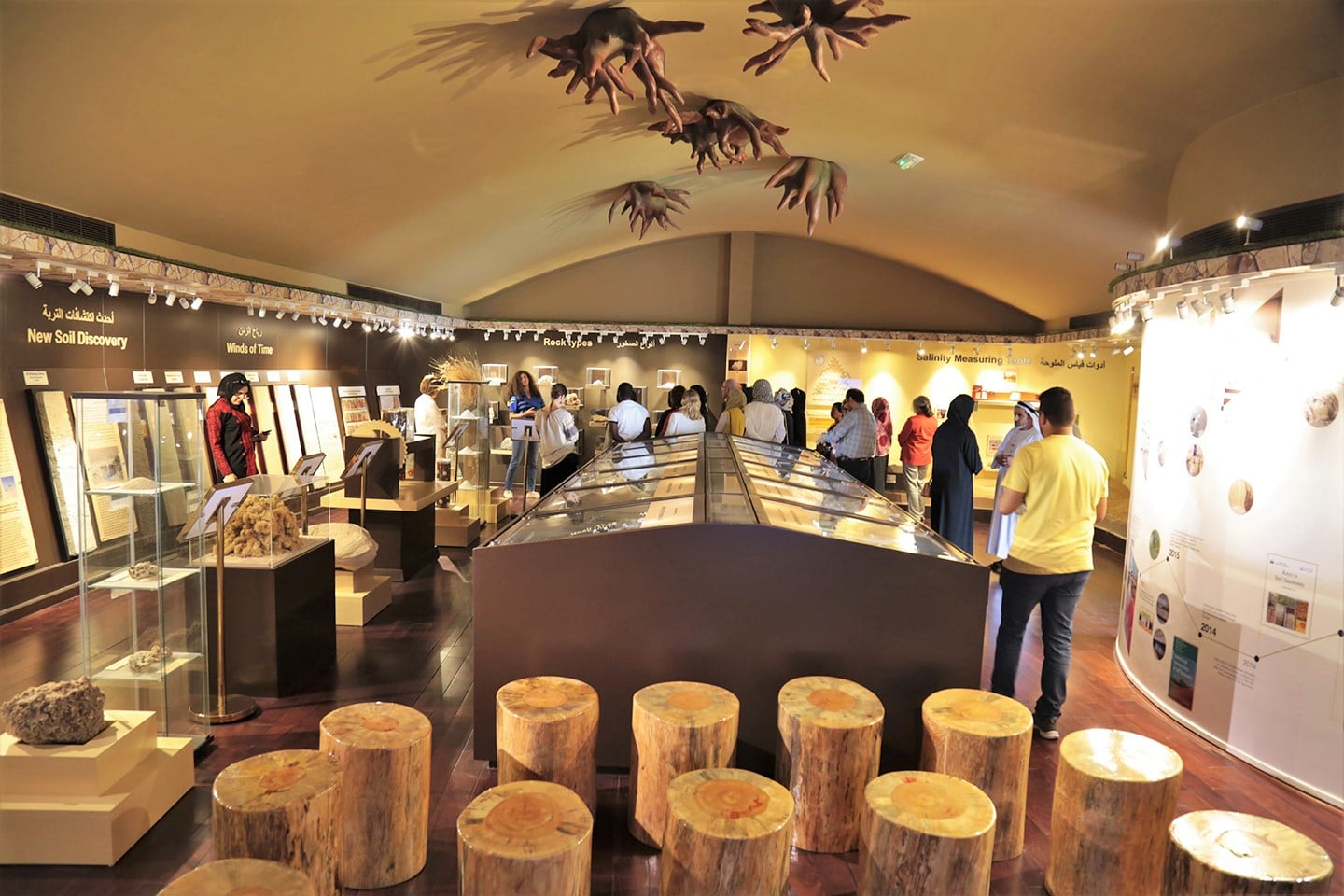
The World Soil Museum hosts a range of educational programs and workshops for students, researchers, and other visitors who are interested in learning more about soil science. These programs cover topics such as soil classification, soil management, and soil conservation, and they are designed to help people understand the vital role that soils play in supporting agriculture, ecosystems, and human societies around the world.
The American Association of State Highway and Transportation Officials is a standards setting body which publishes specifications, test protocols, and guidelines that are used in highway design and construction throughout the United States. Despite its name, the association represents not only highways but air, rail, water, and public transportation as well. Its technical committees are responsible for route numbering recommendations.
Although AASHTO sets transportation standards and policy for the United States as a whole, AASHTO is not an agency of the federal government; rather it is an organization of the states themselves. Policies of AASHTO are not federal laws or policies, but rather are ways to coordinate state laws and policies in the field of transportation.
One of its consensus products — the so-called “Green Book” — is heavily referenced in campus design guidelines and construction contracts because most education communities exist within municipal infrastructure. Power, water supply, sewers to schools and campuses large and small all tend to follow transportation pathways. The Green Book is revised periodically, the 2018 Edition the most recent.
We do not advocate in this product at the moment but follow the movement in concepts relevant to education communities; notably the recent reorganization that emphasizes transportation of people, rather than focusing primarily on moving vehicles. A new chapter discusses multimodal level of service and puts greater emphasis on lower-speed, walkable, urban zones in which new mobility technologies are emerging (such as micro-scooters on campuses)
We maintain the AASHTO catalog on our Pathways, Zoning and Mobility colloquia. See our CALENDAR for the next online meeting, open to everyone.
The large number of entries in the category of school campuses, which encompasses locations in many places in the United States and Canada, testifies to the importance of educational clients to the success of the Olmsted firm. It also reflects the ever-increasing importance that education came to occupy in American life after the Civil War. Frederick Law Olmsted was of a generation of social thinkers who gave credence to the notion that the physical environment of learning- buildings and grounds- played a significant role in the success of education. Olmsted had planned campuses for the new universities, notably Cornell University and Stanford University; his successors carried on and expanded this sphere of landscape architecture. The names of many well-known colleges and universities, such as Wellesley College, Johns Hopkins University and Princeton University, highlight the list of commissions from institutions of higher education. Together with many private and public universities, the Master List includes public elementary schools and secondary schools, religious and private schools, private preparatory schools, normal schools, liberal arts colleges, women’s colleges, and agricultural colleges. The bulk of the projects in this category date from the first three decades of the twentieth century, the time during which John Charles Olmsted and Frederick Law Olmsted Jr. guided the firm.
As is the case in other thematic project categories, many of the school campus projects have a job number but this Master List shows no associated plans. This does not necessarily mean the firm did not take on design work for these clients. For example, Gallaudet College (the present Gallaudet University) in Washington, D.C., was an important Olmsted project. Researchers are also advised to consult the thematic category of Ground of Residential Institutions, which includes some educational clients.
Text taken from The Master List, written by Francis R. Kowsky
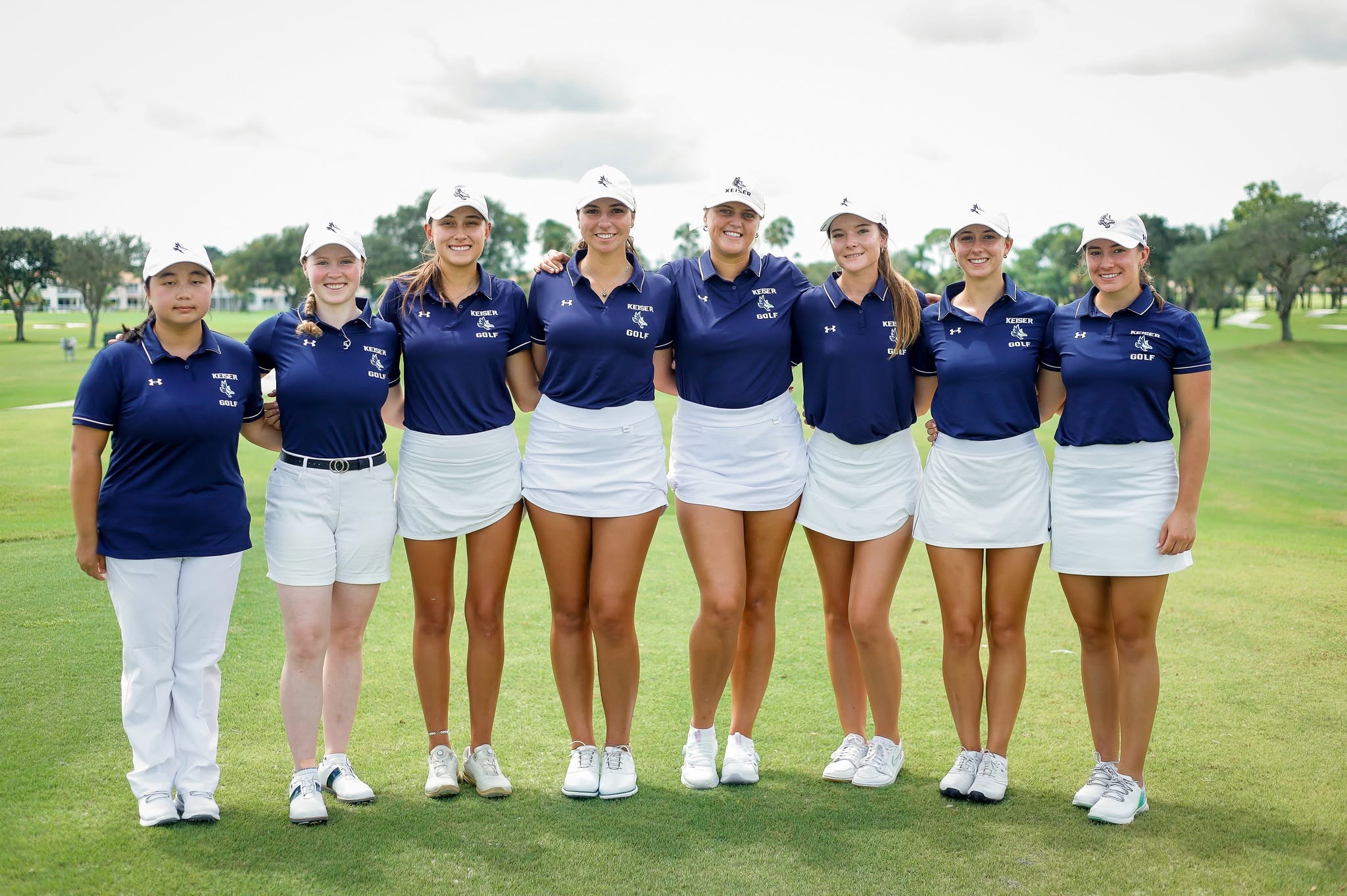
Keiser University College of Golf & Sport Management
Federal regulations that apply to the landscaping of education communities are fairly stable; though land use issues tend to be capricious. Some federal regulations deal with fair trade in the purchase of landscaping materials; others deal with chemical safety; still others deal with personal protective equipment for works.
The federal government recognizes three major segments of this industry:
Landscape Design and Consultation
Landscape Installation and Maintenance
Tree Pruning and Arboriculture
For worker safety we consult the Occupational Safety and Health Administration home page:
From time to time we find Notices and Proposed Regulations — or notices of state-level adaptations of federal regulations — whistling across our radar. When they are meaningful and contribute to lower cost we will post the commenting opportunity.
The following voluntary American National Standards Institute (ANSI) titles may be applicable to the landscaping and horticultural units in education communities. Compliance with ANSI standards does not ensure compliance with OSHA policy, although the requirements of some ANSI standards have been adopted within OSHA standards. This list is provided for reference use only.
A10.14, Requirements for Safety belts, Harnesses, Lanyards, Lifelines, and Drop Lines for Constructional and Industrial Use
Z308.1, Minimum Requirements for Workplace First Aid Kits
Z359.1, Safety Requirements for Personal Fall Arrest Systems, Subsystems, and Components
We maintain all related best practice literature on the standing agenda of our periodic Bucolia teleconferences during which time we sort through proposed regulations, organize a response to them. War stories always welcomed. Stories about successes even more welcomed. See our CALENDAR for the next online meeting.
A school corridor is public space: scheduled, supervised, noisy and continuously shared. The locker interrupts that public world with a very small enclosure assigned to one person. The student cannot really live there, yet can leave things there. That simple permission—to leave something behind and find it again later—creates an elementary form of home.
Today at the usual hour we will sort through the upper layers of the applicable standards. Use the login credentials at the upper right of our home page.
The resemblance to a bedroom is stronger than it first appears. Both become repositories for the unfinished business of daily life: clothing, books, photographs, notes, food, sports equipment, forgotten objects and small things carrying disproportionate sentimental value. Both also acquire an arrangement intelligible mainly to their occupant. What looks like disorder to an adult may be a perfectly serviceable personal geography.
We focus our exploration of the applicable standards to the following:
ICC — building installation and circulation. The 2024 IBC gives us the building interface rather than a locker product specification. The important starting point is IBC §1003.3, Protruding Objects: objects with leading edges 27–80 inches above the floor generally cannot project more than 4 inches into a circulation path, and projections cannot reduce the required accessible-route width. That’s immediately relevant to corridor-mounted lockers, trim, handles and projecting hardware. We should also examine anchorage/nonstructural seismic requirements and the Chapter 11 accessibility references.
AWI — the product/casework side. ANSI/AWI 0641-2019, Architectural Wood Casework is probably our better starting point for built-in wood/laminate school lockers. It covers base, wall and tall casework and establishes material and structural-performance requirements. ANSI/AWI 1235-2024, Specialty Casework is useful as a secondary reference, particularly for unusual built-in configurations; AWI itself characterizes 0641 as its institutional-duty application and 1235 as the higher specialty/laboratory duty level.
ADA — individual locker accessibility. This one is exceptionally clean. §225.2.1 requires at least 5% but no fewer than one of each type of locker to comply with §811. Section 811 then requires clear floor space, accessible reach range and operable parts complying with §309. For our purposes, §309 is especially interesting because it takes us directly to the latch/lock/handle interface rather than merely locker dimensions.
We will deal with athletic and art school lockers separately.
Today we unpack the latest in codes, standards, guidelines, recommendations and safety legislation that set the standard of care for the design, manufacture and maintenance of interior fixtures such as carpet, furniture, bookshelves and ceiling tiles, plumbing fixtures — a large part of what construction industry professionals find in CSIGroup MasterFormat Division 12 — Furnishings. — i.e. “Things that are not nailed down” Such things can elude infrastructure budgets that are dominated by real assets fixed in place.
Other accredited standards developers in this domain:
In large research universities, it is common for building service personnel engaged in keeping facilities clean and tidy to constitute the largest proportion of permanent employees.
In stabilized standards, it is more cost effective to run the changes through ANSI rather than a collaborative workspace that requires administration and software licensing cost. Accordingly, redlines for changes, and calls for stakeholder participation are released in ANSI’s Standards Portal:
Send your comments to Dave Panning. (See Dave’s presentation to the University of Michigan in the video linked below.
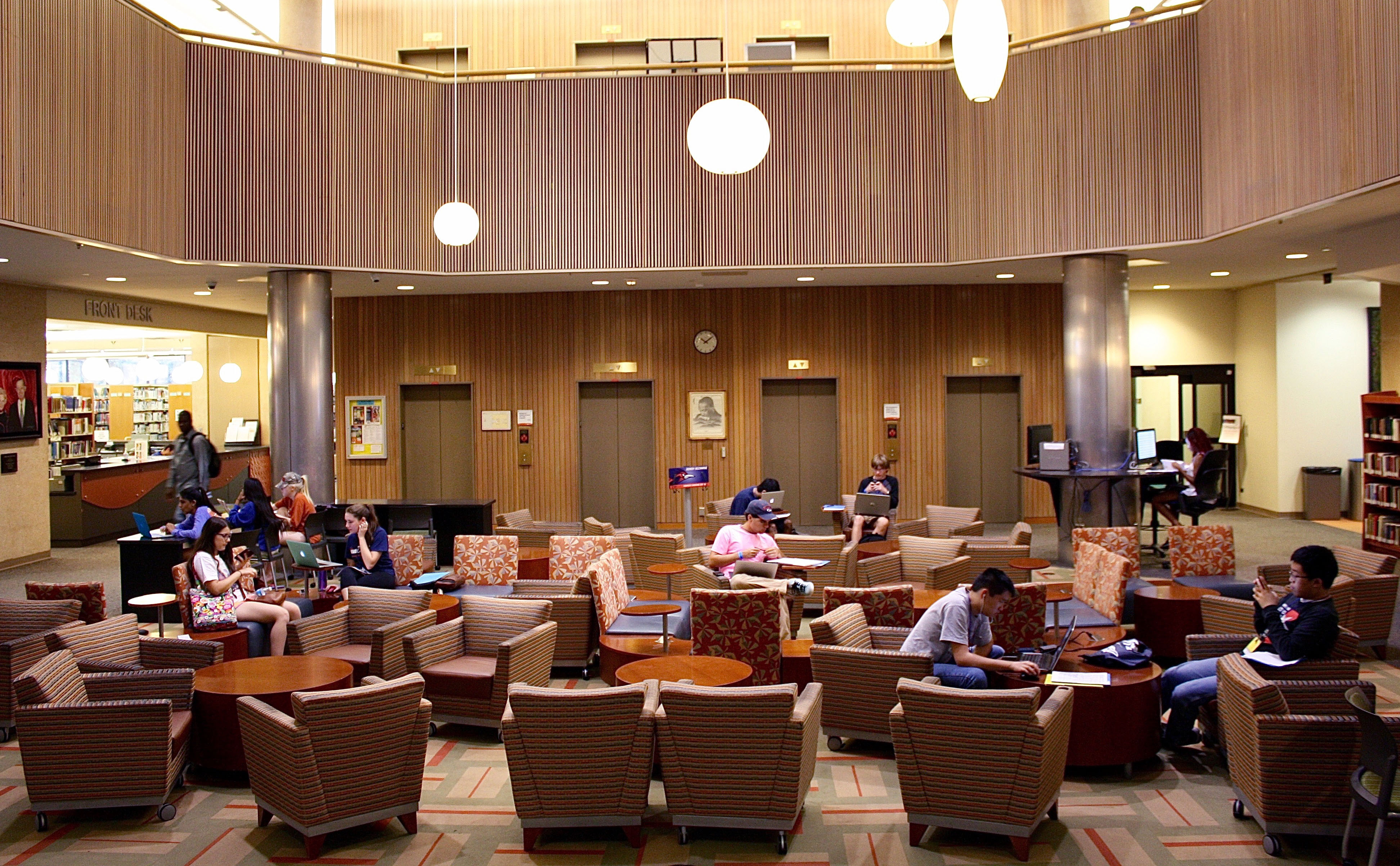
John Peace Laptop Library Lounge | University of Texas, San Antonio
We find a great deal of interest in sustainable furniture climbing up the value chain and dwelling on material selection and manufacture. We encourage end-users in the education industry — specifiers, department facility managers, interior design consultants, housekeeping staff and even occupants — to participate in BIFMA standards setting. You may obtain an electronic copies for in-process standards from David Panning, (616) 285-3963, dpanning@bifma.org You are encouraged to send comments directly to BIFMA (with copy to psa@ansi.org). David explains its emergent standard for furniture designed for use in healthcare settings in the videorecording linked below:
Issue: [15-267]
Contacts:Mike Anthony, Christine Fischer, Jack Janveja, Dave Panning
In 1936, a team of @NIST researchers, including optical physicist Irvine Gardner, joined National Geographic Society to observe June solar eclipse with a 9-inch astrographic lens Gardner designed. He has 9 patents, including for the wide-angle binocular telescope & range finder. pic.twitter.com/BblX8FnTBL
…When we talk about standards in our personal lives, we might think about the quality we expect in things such as restaurants and first dates. But the standards that exist in science and technology have an even greater impact on our lives. Technical standards keep us safe, enable technology to advance, and help businesses succeed. They quietly make the modern world tick and prevent technological problems that you might not realize could even happen…”
Neil Armstrong: Moon Walker. Innovator. Boilermaker.
When it comes to space exploration, Purdue University stands out — 27 astronauts strong. Neil Armstrong (BS aeronautical engineering ’55) was the first person to walk on the moon. Eugene Cernan (BS electrical engineering ’56)… pic.twitter.com/qDHv71NEqK
Found this photo with my sister… and it took me back. Remember when beauty was just how we lived? No filters— just real smiles 💛 pic.twitter.com/yQ159KvZqa
New update alert! The 2022 update to the Trademark Assignment Dataset is now available online. Find 1.29 million trademark assignments, involving 2.28 million unique trademark properties issued by the USPTO between March 1952 and January 2023: https://t.co/njrDAbSpwBpic.twitter.com/GkAXrHoQ9T