
Job Site
- Home Page 56


Strawberry Iced Latte
Cal Poly: University Budget 2024-2025 *
Facilities Management & Development | $1.2B Student Housing Expansion

College of Agriculture, Food and Environmental Sciences
“Do you remember the Shire, Mr. Frodo? It’ll be spring soon. And the orchards will be in blossom. And the birds will be nesting in the hazel thicket. And they’ll be sowing the summer barley in the lower fields… and eating the first of the strawberries with cream. Do you remember the taste of strawberries?” — Sam Gamgee (J.R.R. Tolkien (from ‘The Return of the King’ 1955)
California’s Collapse Is Far Worse Than Reported | Douglas Murray
📢 Have you heard? Cal Poly has once again been named a top producer of Fulbright U.S. Scholars! Learn more about the three impressive faculty that are taking their expertise global 🌎
🔗https://t.co/KhuUY01jf2 pic.twitter.com/cIYoWvvjbw
— Cal Poly (@CalPoly) March 10, 2025

Deuteronomy 30
Standards North Carolina
Duke University Chapel arose from James B. Duke’s conviction that spiritual life should occupy a visible place at the center of a great university. In 1925, while surveying the wooded site of the future West Campus with President William Preston Few, Duke selected its highest point for a chapel—a “great towering church” intended to influence generations of students. His broader philanthropy supplied the financial foundation for Duke University and its new campus; the Chapel itself ultimately cost about $2.2 million.
Designed by the Philadelphia firm of Horace Trumbauer, principally through chief designer Julian Abele, the Chapel is an American interpretation of English Gothic architecture rather than a copy of any particular church. Its 210-foot tower establishes it as the visual and symbolic center of West Campus. The cornerstone was laid in October 1930, construction continued for more than two years and the building was formally dedicated in 1935.
Today the Chapel operates as an interdenominational Christian institution supporting worship, preaching, sacred music and community ministries. Its stewardship is also a substantial facilities undertaking. Duke invested $19.2 million in its 2015–16 restoration, addressing the limestone ceiling and roof while upgrading HVAC, electrical and audiovisual systems and refurbishing stained glass and woodwork—an example of the continuing maintenance required to preserve monumental university architecture for daily use.



Johann Sebastian Bach: Brandenburg Concerto No. 3 in G Major
Congratulations to all our students who placed on the 2023 Fall Dean’s List! #GoEags #studentsuccess
Full list: https://t.co/JFMZpggRU8 pic.twitter.com/6ELJKW1hfO
— EWU (@EWUEagles) January 26, 2024
Thank you to our friends at @BECU for a generous $10,000 #GivingTuesday donation to support EWU student success! If you would like to help us ensure Eastern students remain Eagle Strong, please give online at https://t.co/MEhLdEm5J9 by midnight tonight. pic.twitter.com/TljlUooxfx
— EWU (@EWUEagles) December 1, 2021

Animal Safety

“One of the Family” 1880 | Frederick George Cotman

NFPA 150 Fire and Life Safety in Animal Housing Facilities Code has entered its s025 revision cycle. Many education communities are responsible for animal safety in academic units, research enterprises. museums and even — as in the United Kingdom — large farm animals that wander freely on campus with students, faculty and staff. The number of colleges and universities that permit students to live with their pets has expanded; and with it the responsibilities of university administration.
From the document scope:
This standard shall provide the minimum requirements for the design, construction, fire protection, and classification of animal housing facilities. The requirements of NFPA 150 recognize the following fundamental principles:
(1) Animals are sentient beings with a value greater than that of simple property.
(2) Animals, both domesticated and feral, lack the ability of self-preservation when housed in buildings and other structures.
(3) Current building, fire, and life safety codes do not address the life safety of the animal occupants. The requirements found in NFPA 150 are written with the intention that animal housing facilities will continue to be designed, constructed, and maintained in accordance with the applicable building, fire, and life safety codes.
The requirements herein are not intended to replace or rewrite the basic requirements for the human occupants. Instead, NFPA 150 provides additional minimum requirements for the protection of the animal occupants and the human occupants who interact with those animals in these facilities.
A full description of the project is linked below:
Fire and Life Safety in Animal Housing Facilities Code
Access to the 2025 Edition is linked below:
We provide the transcript of the back-and-forth on the current 2022 edition to inform how education communities can contribute to the improvement of this title; a subject that stirs deep feelings about animal safety in research enterprises.
We contribute to NFPA 150: SAFETY IN ANIMAL HOUSING FACILITIES https://t.co/PxSznGDGw1 #TotalCostofOwnership pic.twitter.com/BmJ0HgvpQ3
— Standards Michigan (@StandardsMich) March 9, 2016
Public comment on the Second Draft of the 2025 Edition will be received until March 27, 2024.
We have been advocating risk-informed animal safety concepts in this document since the 2013 Edition and have found that it is nearly impossible to overestimate the sensitivity of educational communities to the life safety of animals — either for agriculture or medical research.
We maintain the entire NFPA catalog on the standing agenda of our Prometheus colloquia. See our CALENDAR for the next online meeting; open to everyone.
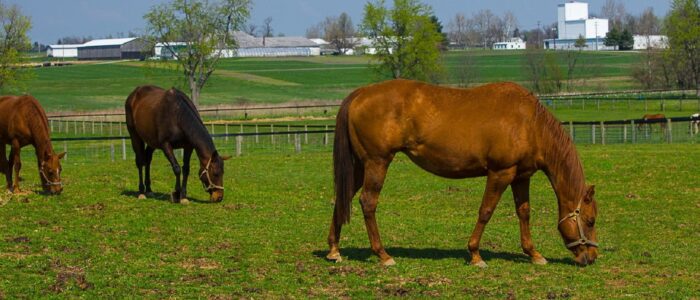
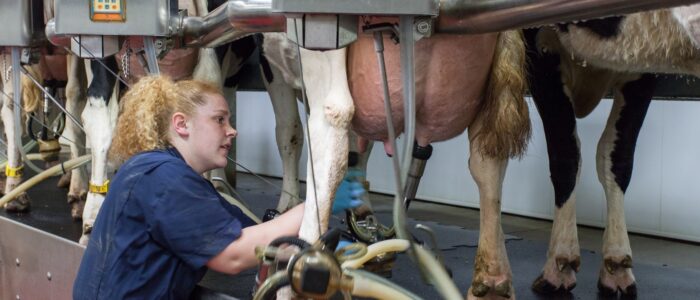
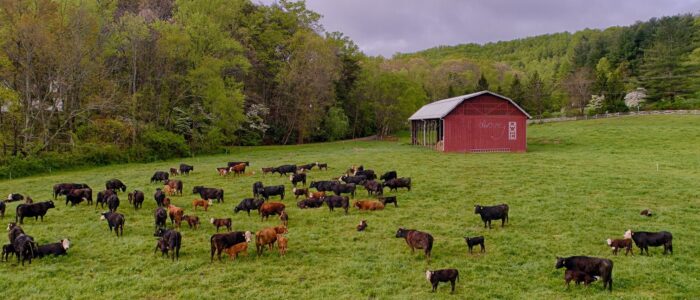
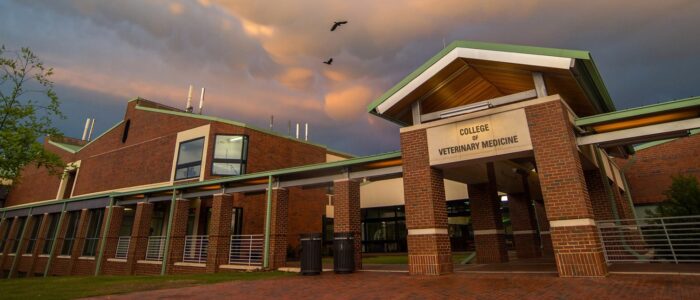
Kids raised right….
— Carissa (@njoyzgrl81) April 6, 2024
Issue: [11-1] and [19-5]
Category: Fire Protection, Facility Asset Management, Academic, Risk Management
Colleagues: Mike Anthony, Josh Elvove, Joe DeRosier
More:
”Create in me a pure heart, O God, and renew a steadfast spirit within me.„ Psalms 51:10
Have a blessed Sunday all who feed humanity! #dairy #beef … pic.twitter.com/BG68A4Sn5h— Ion Moraru 🇺🇦 (@IonMoraruDairy) February 18, 2024
‘Tension and Uncertainty’: How a diverse technical committee rife with opposing viewpoints created the new NFPA 150 https://t.co/sqam82C0G7 pic.twitter.com/BvcveX6dwM
— NFPA (@NFPA) December 31, 2018
Bibliography:
National Institute of Health: Policy on Humane Care and Use of Laboratory Animals
International Building Code: Section 304 (Business Group B): Animal hospitals, kennels and pounds
Terrestrial Animal Health Code
IEEE Guide for Animal Deterrents for Electric Power Supply Substations
IEEE Livestock Monitoring System
Ventilation Design Handbook on Animal Research Facilities
HVAC Design in Animal Facilities
USDA Animal Welfare Information Center
US Department of Agriculture: Animal Welfare Act and Animal Welfare Regulations
S. 4288: Reducing Animal Testing Act
Protecting Animals When Disaster Strikes

Christ Chapel
“De re aedificatoria” | Leon Battista Alberti
Christianity is surging in America.
We will not become Europe.
— Eric Daugherty (@EricLDaugh) October 25, 2025
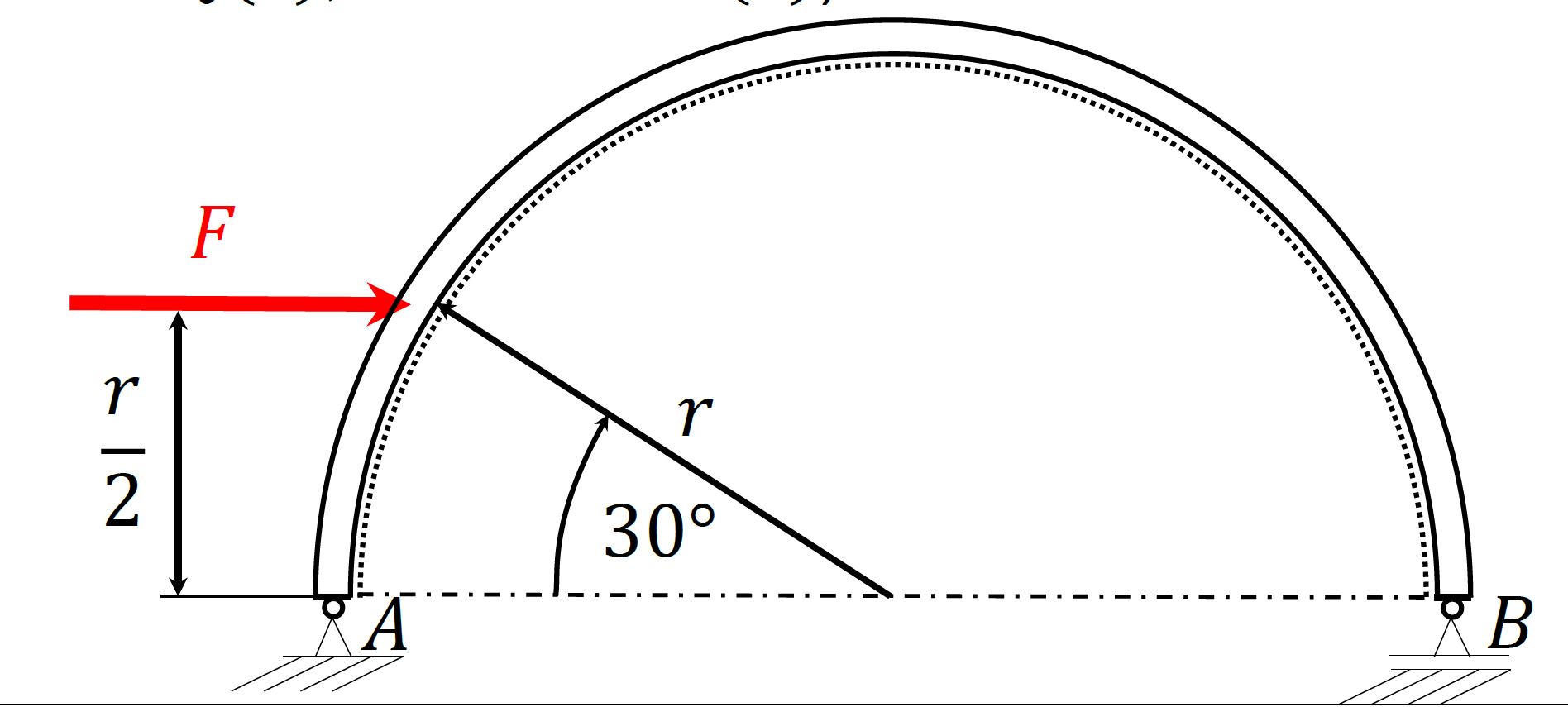
Compute the stress curves for the half-circular arch beam

Readings / PYROTECHNIC ARTS & SCIENCES IN EUROPEAN HISTORY

“Royal Fireworks 1749” | CLICK ON IMAGE
FIREWORKS: PYROTECHNIC ARTS AND SCIENCES IN EUROPEAN HISTORY
Simon Werrett | University College London
Fireworks are synonymous with celebration in the twenty-first century. But pyrotechnics—in the form of rockets, crackers, wheels, and bombs—have exploded in sparks and noise to delight audiences in Europe ever since the Renaissance. Here, Simon Werrett shows that, far from being only a means of entertainment, fireworks helped foster advances in natural philosophy, chemistry, mathematics, and many other branches of the sciences.
Fireworks brings to vibrant life the many artful practices of pyrotechnicians, as well as the elegant compositions of the architects, poets, painters, and musicians they inspired. At the same time, it uncovers the dynamic relationships that developed between the many artists and scientists who produced pyrotechnics. In so doing, the book demonstrates the critical role that pyrotechnics played in the development of physics, astronomy, chemistry and physiology, meteorology, and electrical science. Richly illustrated and drawing on a wide range of new sources, Fireworks takes readers back to a world where pyrotechnics were both divine and magical and reveals for the first time their vital contribution to the modernization of European ideas.


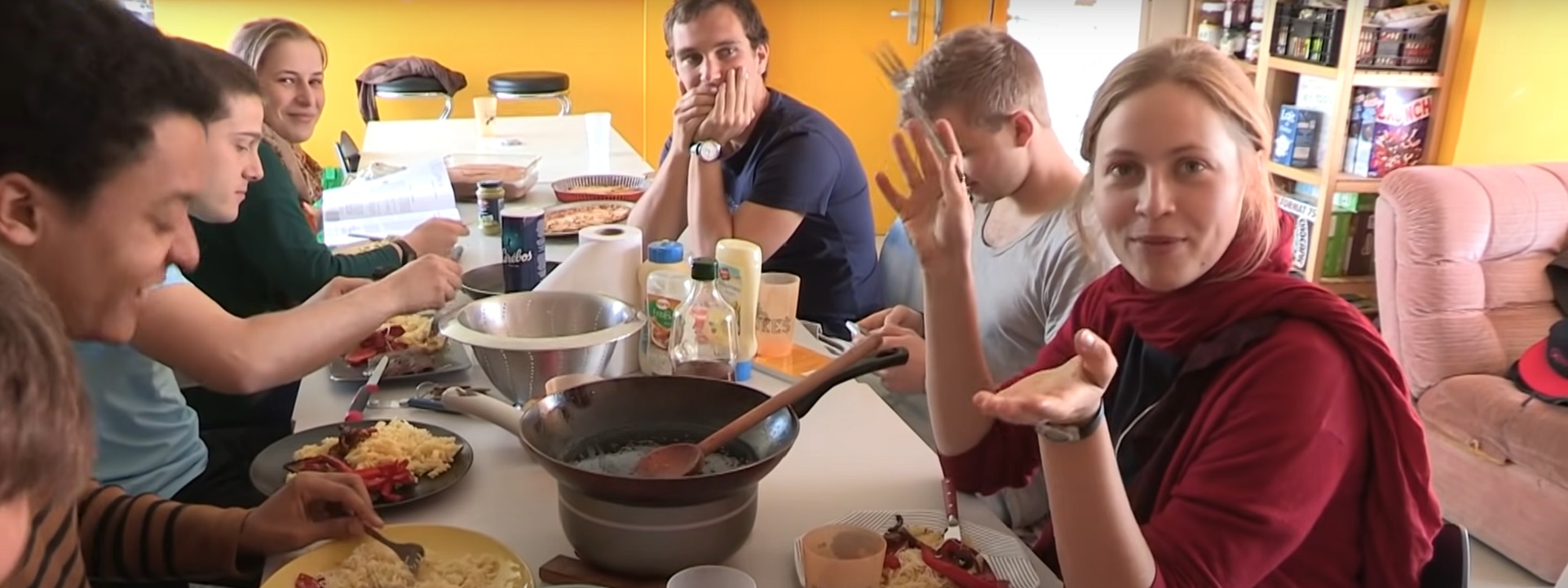
Municipalization

Municipalization refers to a local governmental unit purchasing a merchant utility; a practice gathering pace in university towns in recent years. It is a very large transaction. Best practice discovery and promulgation begins with an accumulation of case studies before any concepts stabilize into a “standard”. Today at the usual hour we examine a few representative case studies. Use the login credentials at the upper right of our home page.
This topic is a standing item on the agenda of the IEEE Education & Healthcare Facilities Committee
Relata:
New update alert! The 2022 update to the Trademark Assignment Dataset is now available online. Find 1.29 million trademark assignments, involving 2.28 million unique trademark properties issued by the USPTO between March 1952 and January 2023: https://t.co/njrDAbSpwB pic.twitter.com/GkAXrHoQ9T
— USPTO (@uspto) July 13, 2023
Standards Michigan Group, LLC
455 East Eisenhower Parkway, Suite 300
Ann Arbor, MI 48108 USA
888-748-3670
DIRECTIONS
 |
 |
|
 |
 |
|
 |
 |